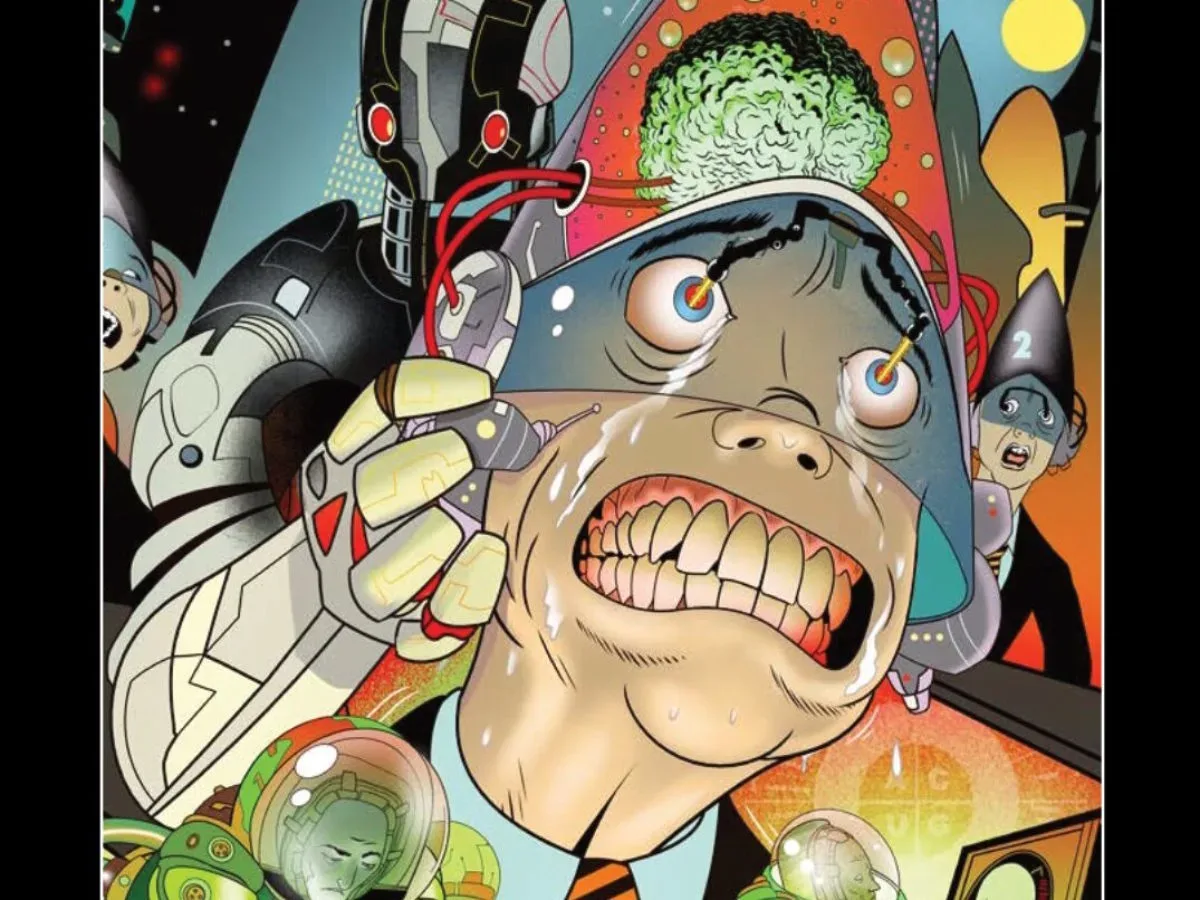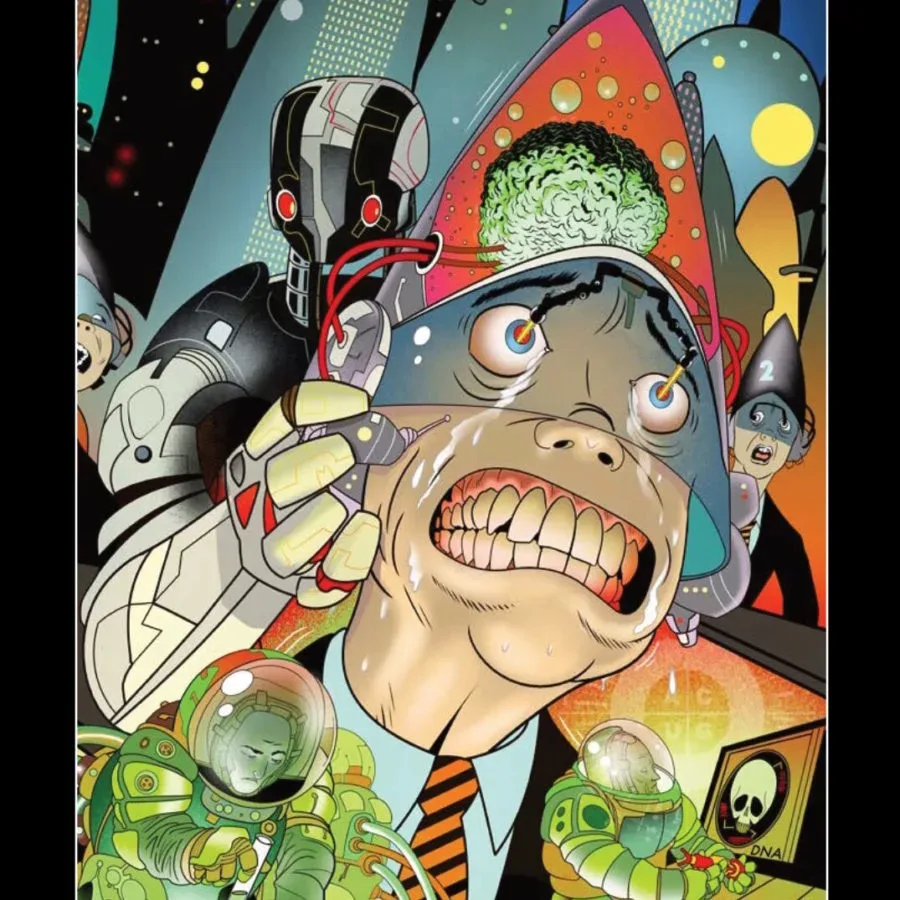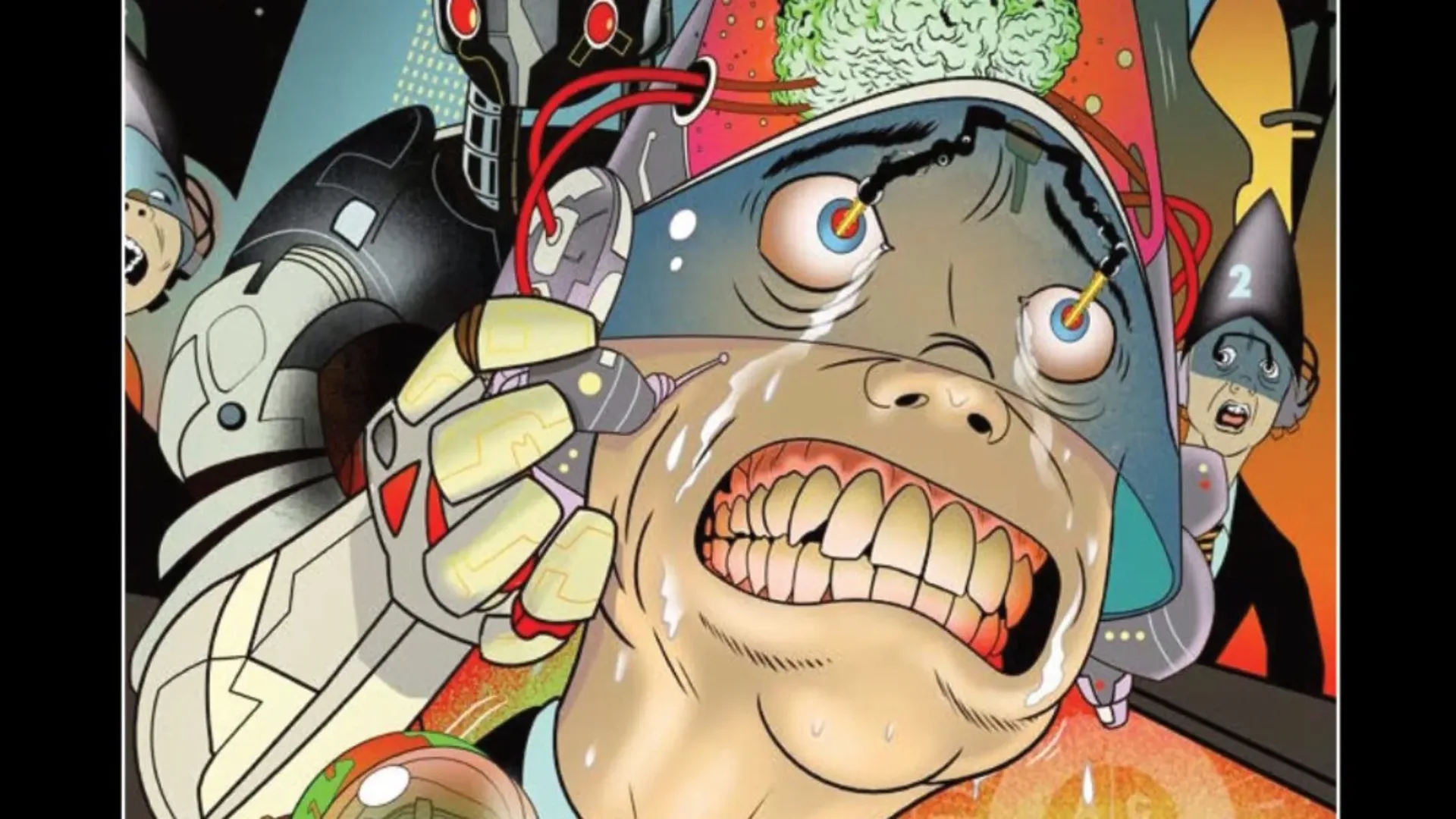
Alien Books’ New York Comic Con 2026 ashcan is set to introduce Sick Futures, a science-fiction horror anthology described as the publisher’s first original series. The project brings together writer Peter Milligan with artists Goran Sudžuka, Exequiel Fernández Roel, Magenta King and Stewart K. Moore, and it places a single unsettling question at the center of its premise: how much of a person can be replaced before that person is no longer human?
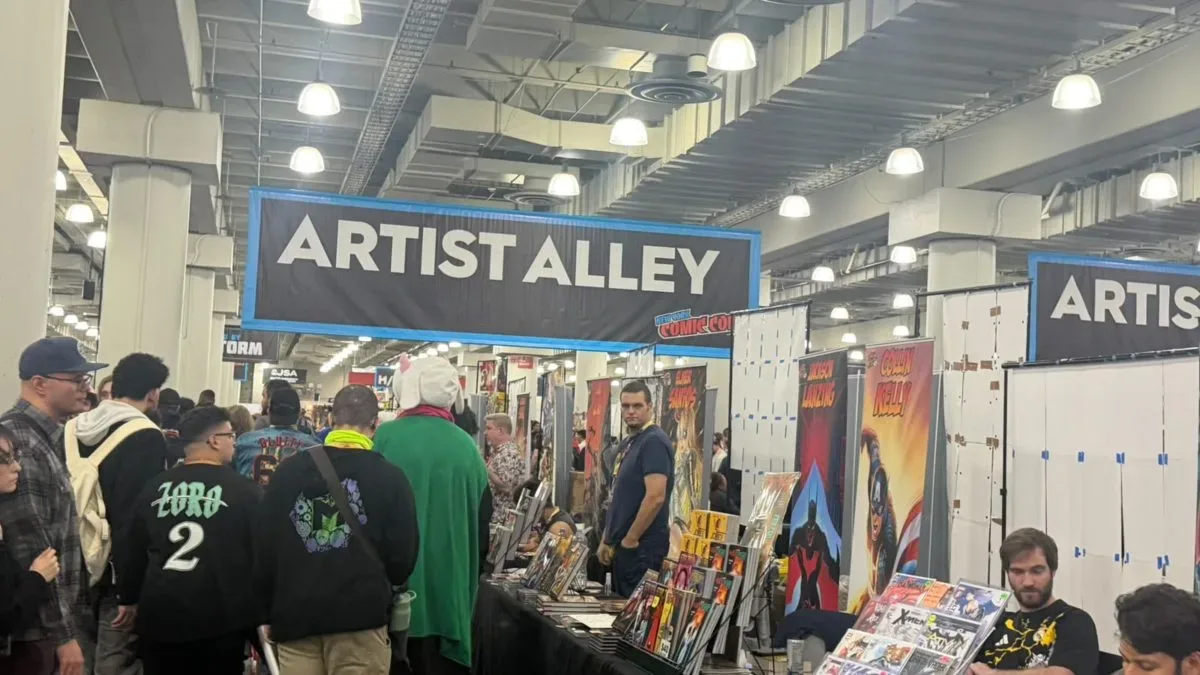
The physical ashcan will be available exclusively at IDW booth #4451 during New York Comic Con. It also previews three other Alien Books projects: Zorro: Annual #1, Zorro: Blood of the Past #1, and Tarzan and the Minotaur #1.
For comics readers, an ashcan is generally a small-format promotional comic or preview edition. In this case, it is a convention-only physical item intended to provide an early look at several forthcoming books rather than a confirmation of every project’s final release details. The supplied information identifies the creators and premises, but does not specify release dates, formats beyond the ashcan, issue prices, or wider availability for the individual comics.
Sick Futures turns technological change into body horror
Sick Futures #1 is framed as an anthology, meaning it will use multiple self-contained stories or concepts rather than relying on one uninterrupted plot. That structure suits the series’ broad central concern: technology advancing faster than people can psychologically, physically and ethically adjust to it.
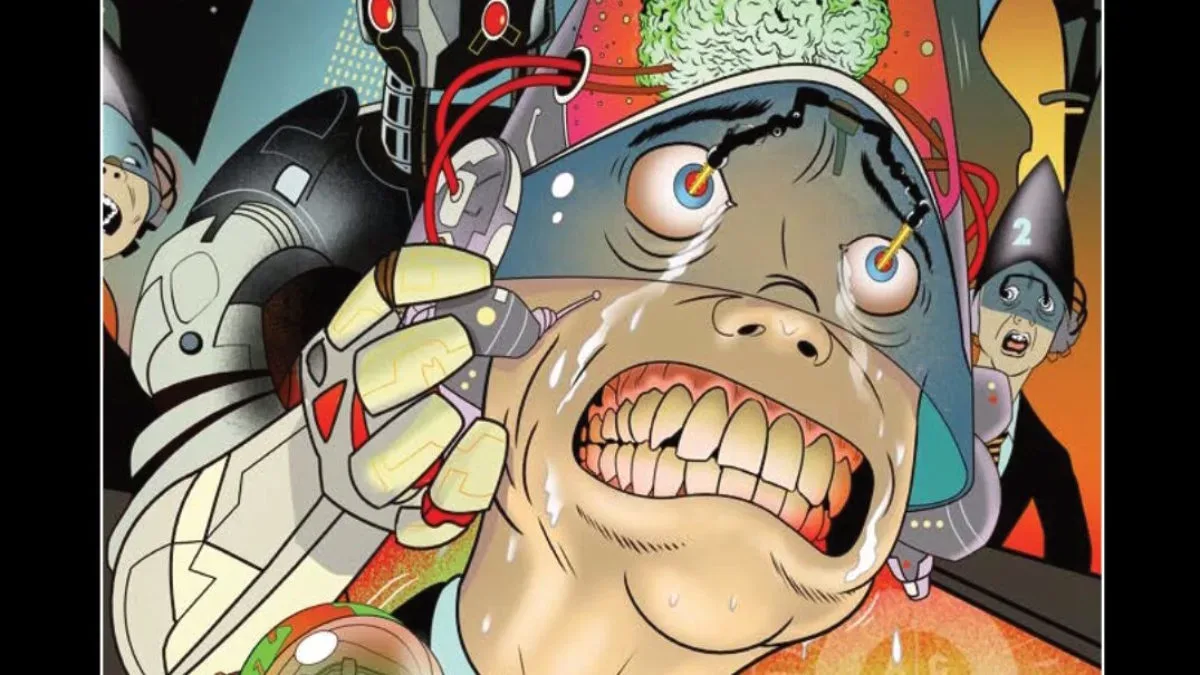
The announced material points to science fiction that treats innovation not as a clean upgrade, but as a source of illness, alienation and mutation. Its horror is expected to range from psychological collapse to extreme biological transformation. The scenarios named for the series include emotional simulators that trigger deadly paranoia, grief tied to obsolete or broken devices, synthetic skin that separates from its owner and seeks to reclaim itself, polluted material developing a form of life, and human flesh gradually being supplanted by artificial intelligence.
That last concept connects directly to the title’s reference to the Ship of Theseus paradox. In philosophy, the paradox asks whether an object remains the same object after every one of its components has been replaced. Applied to a human being, it becomes a useful engine for speculative horror: if organs, skin, memories, thoughts or decision-making are replaced bit by bit, is there a clear point at which the original self disappears? Sick Futures appears interested in making that abstract question physical and frightening.
The anthology’s other labels also clarify its intended territory. Body horror uses changes to the body—often invasive, uncontrolled or grotesque—to create fear. Bioengineering, in this context, refers to technological intervention in biological systems; the announced premise explicitly focuses on what happens when such intervention goes wrong. Meanwhile, the series’ use of AI is not limited to machinery behaving badly. It is concerned with identity: the possibility that technology might imitate, modify or ultimately displace the human parts of a person.
From a prior short story to an original series
Sick Futures previously appeared as a short story in Heavy Metal Magazine, and the new project expands the concept into an ongoing original series for Alien Books. The credited creative lineup suggests that the anthology will use several artists, which can be especially effective for a collection of distinct horror ideas: each scenario can have its own visual atmosphere without requiring every story to look identical.
Peter Milligan is credited as the writer of the debut, with Goran Sudžuka and Exequiel Fernández Roel named alongside him for Sick Futures #1. The broader announcement also names Magenta King and Stewart K. Moore as artists associated with the series. The ashcan’s description does not break down which artist handles each individual story, so readers should treat the listed creators as the announced team rather than assume a specific story-by-story assignment.
The creative premise is deliberately more provocative than predictive. Nothing in the available details establishes these concepts as forecasts of real products or technologies. Instead, the series uses familiar modern anxieties—dependence on devices, artificial intelligence, environmental toxicity, medical intervention and digitally mediated emotion—as raw material for fictional horror. That distinction matters because the appeal seems to be less about literal technological realism and more about pushing consequences to disturbing extremes.
What is known about the other comics in the ashcan
While Sick Futures supplies the event’s new original-series hook, the NYCC ashcan also gives established adventure properties new stories. The projects share a classic pulp-adventure foundation, but their stated premises head in very different directions.
Zorro: Annual #1 puts Bernardo on a dangerous stagecoach
Zorro: Annual #1 is a one-shot by writer Rodolfo Santullo, artist Matías Bergara and colorist Magenta King. Its plot begins when a notorious murderer escapes the Santa Bárbara presidio and assumes the identity of a stagecoach passenger. Bernardo is caught among the passengers while a group of bandits closes in, leaving Zorro to race across the California desert in an effort to stop a massacre.
The stagecoach setup gives the one-shot a contained suspense premise: the killer’s assumed identity means the danger is concealed among a limited group of strangers, while the threat outside the coach is just as immediate. The announcement also says the annual will include a classic Zorro short story as a bonus. Since it is labeled a one-shot, readers can reasonably expect a complete adventure rather than the opening chapter of a longer numbered miniseries.
Blood of the Past brings a new governor to Los Angeles
In Zorro: Blood of the Past #1, Alex Segura writes and Goran Sudžuka illustrates a story built around a governor attempting to expose Zorro’s secret identity. The conflict escalates beyond a standard pursuit, however: corruption, murder and vengeance are all named as part of the story’s darker direction. Diego must navigate an unsettled Los Angeles, confront the new governor, and deal with someone from his past whose return changes the situation.
Where the annual emphasizes a high-pressure travel mystery, Blood of the Past appears to approach Zorro through personal history and political danger. The supplied material does not say how many issues the series will run, so its scope beyond the first issue remains unconfirmed.
Tarzan and the Minotaur begins with the Mangani’s disappearance
Tarzan and the Minotaur #1 is the first of two issues, written by Federico Mele with art by Ariel Olivetti. Tarzan’s ordinary role defending the jungle from hostile hunters is interrupted when he wakes to find every member of the Mangani gone after a mysterious woman’s nighttime visit. His mission is therefore personal as well as adventurous: he must find his family.
The title’s reference to the Minotaur signals a mythic element, but the announced synopsis does not explain precisely how that figure enters the story. The firm details are the disappearance of the Mangani, the mysterious woman and Tarzan’s search. Olivetti is the credited artist for the two-issue story.
Why the ashcan matters for NYCC attendees
The key practical point is straightforward: the physical ashcan is described as exclusive to IDW booth #4451 at New York Comic Con. Convention-exclusive does not, by itself, establish a print run, resale value or long-term rarity, and none of those details have been provided. It does establish where attendees will need to go if they want this particular physical preview.
For readers deciding where to focus, the ashcan covers two distinct interests. Sick Futures is the new-property draw: an original sci-fi horror anthology centered on technology’s impact on identity and the body. The Zorro and Tarzan material is the legacy-adventure side, offering a standalone Zorro annual, a separate Zorro series launch, and the beginning of a two-issue Tarzan mystery.
It is also a useful example of how a convention sampler can serve different audiences at once. Someone drawn to Milligan’s technology-driven horror can use it as an introduction to the new series, while readers interested in classic masked-avenger or jungle-adventure fiction can sample the related titles in the same item. For broader comics context, see our look at comics-centered October news.
At this stage, the clearest expectation is an early preview rather than a complete release roadmap. Alien Books has identified the creative teams and story setups, and confirmed the NYCC booth location for the ashcan. More specific publication information for Sick Futures, Zorro: Blood of the Past, and the other featured comics has not been included in the available announcement.