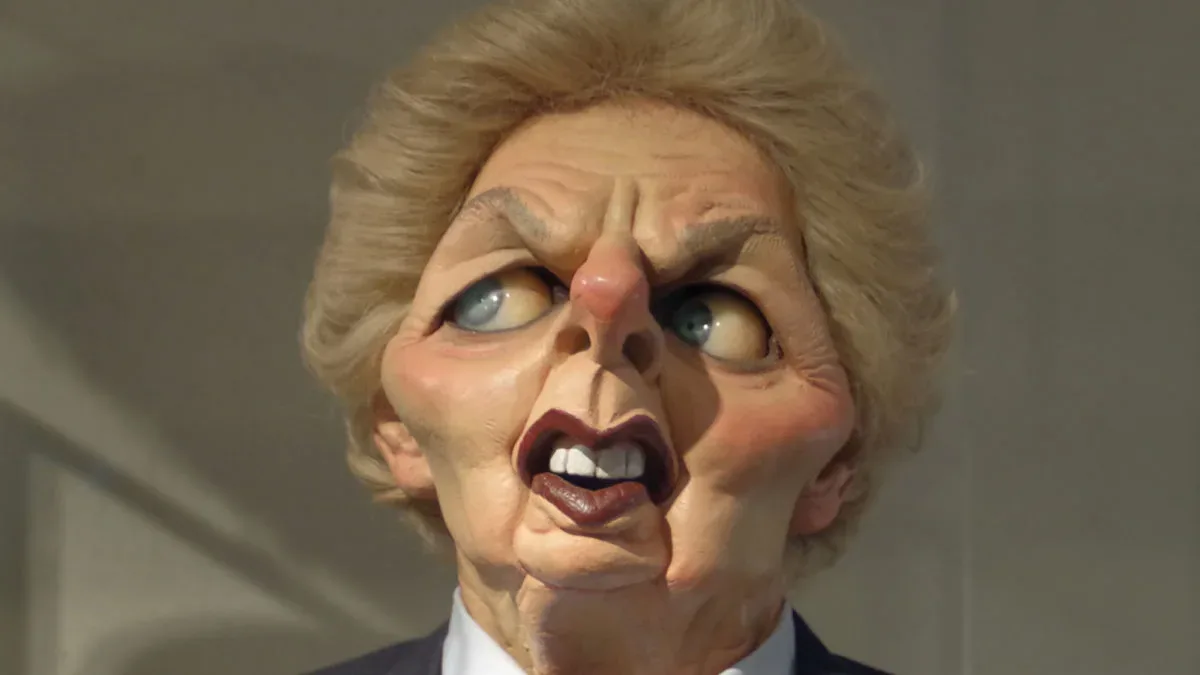
Peter Fluck, the British caricaturist, cartoonist and artist who co-created Spitting Image, has died aged 85. Fluck died at his home in Cornwall in the early hours of Saturday after a short illness, his family said.
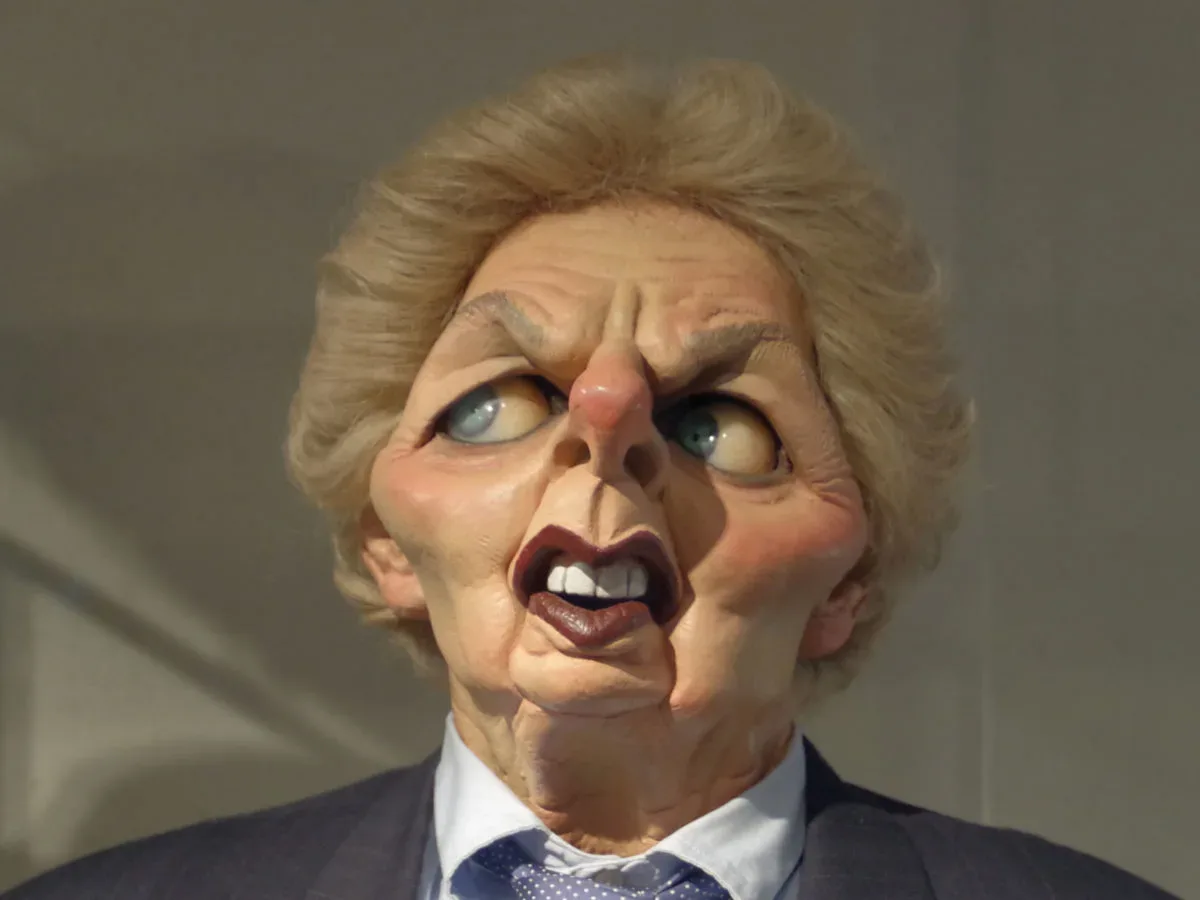
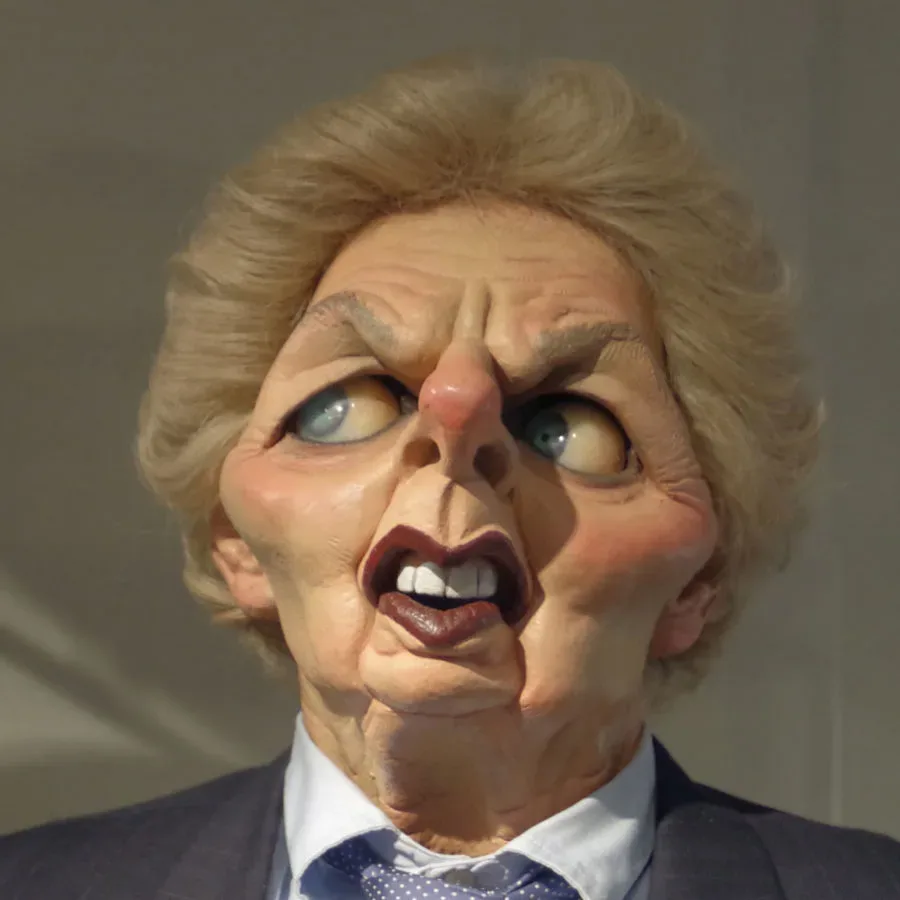
With fellow artist Roger Law, Fluck developed a highly distinctive form of three-dimensional caricature that moved from print work into the foam-rubber puppets of Spitting Image. Launched on ITV in 1984 with Martin Lambie-Nairn, the series used exaggerated, life-size puppet versions of politicians, royals and celebrities to make its satirical point with a visual bluntness that conventional topical comedy could not match.
Its achievement was not simply to make famous people recognisable. Fluck and Law’s designs had to compress public image, mannerism and perceived character into a head that could work in a television studio, be operated by a puppeteer and read instantly on screen. That combination of craft and caricature became central to the programme’s identity.
From Cambridge art students to “Luck and Flaw”
Peter Nigel Fluck was born in Cambridge on April 7, 1941. He met Roger Law at the Cambridge School of Art, where the pair discovered common ground in sculpture, political cartoons and caricature. Before television, they worked under the name Luck and Flaw, creating three-dimensional cartoons and caricatures for newspapers and magazines.
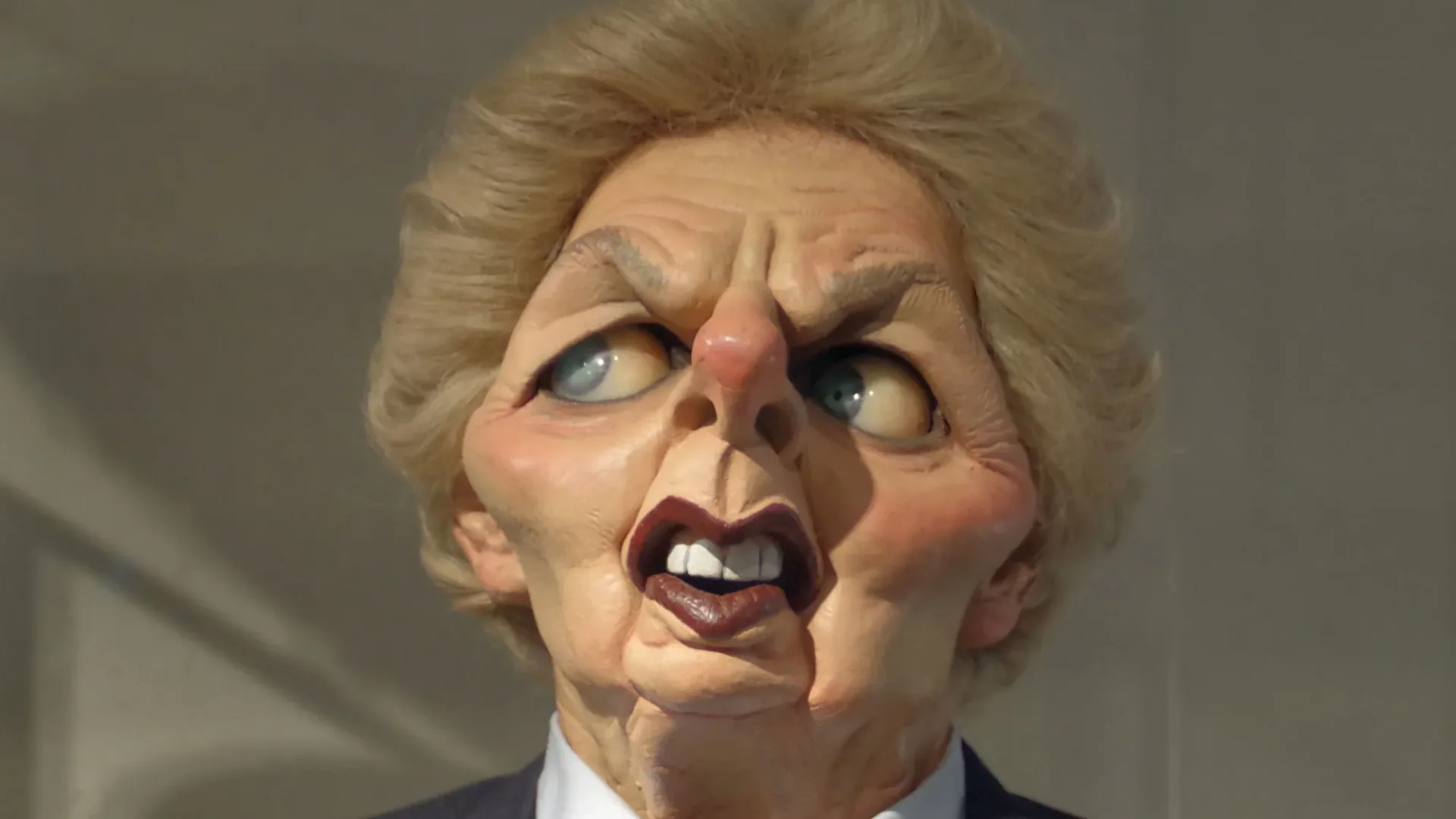
That early work matters because it explains why Spitting Image never felt like a standard puppet show with famous names attached. The puppets came from an illustration and sculptural tradition: a face was deliberately distorted to make an argument. A huge jaw, a narrowed stare, a tiny body or an aggressive posture could communicate a satirical reading before the character spoke.
Caricature, in this sense, is not merely an accurate portrait made funny. It is selective exaggeration. It takes recognisable features and heightens them until they become a shorthand for how a public figure is understood. Fluck’s work helped translate that shorthand from a still drawing into an object that could appear in sketches, inhabit a set and be physically animated.
With Lambie-Nairn, Fluck and Law brought the approach to ITV in 1984. Spitting Image went on to run for 18 series until 1996. At its height, it drew roughly 15 million viewers, while also earning BAFTAs and two Emmys.
Why the puppets were the punchline
The show’s political satire was unsparing. Its puppet versions of Margaret Thatcher, John Major and members of the royal family were not designed to be flattering approximations. They were deliberately grotesque comic constructions, built around the programme’s chosen targets and jokes. Fluck reportedly held that appearing as a puppet was, in one sense, a sign that a politician had truly arrived in public life.
That idea captures the peculiar status the programme achieved. A place in its cast could signal cultural relevance, but it also meant surrendering control over one’s image to artists and writers who had no obligation to be kind. The series made its targets familiar to a mass audience through a new, exaggerated visual language.
Its appeal also depended on scale. Political cartoons can be immediate and forceful on a page, but television puppetry made the distortion move, speak and occupy the same physical space as other characters. The result was an unusually tactile form of satire: heads, hands, clothes, props and performances all combined to make a public figure into a comic invention.
For viewers, that meant the puppet was often more than an impression. It became a memorable alternative version of the person it represented. The artistic labour behind that effect is a major part of Fluck’s legacy, even when the on-screen attention naturally went to the topical material and voice performances.
How a drawing became a television puppet
Fluck described the production process in practical terms in a 2014 interview. The work began with photographs and a caricature design. That design was sculpted in clay, then used to create a mould. From the mould came a foam-rubber skin that could be worn and operated by a puppeteer.
The workflow reveals a constraint that made the finished work more impressive: a cartoon can ignore physical limits, while a television puppet cannot. An artist may draw an impossibly long nose or enormously oversized head, but a studio prop has to fit through doorways, function under lights and allow a performer to manipulate it. Fluck noted that some exaggerations simply could not be made at the dimensions a drawing might suggest.
Foam rubber was especially important to the visual result. It enabled the heads to be expressive while remaining light enough for performance. A puppet was therefore neither a conventional sculpture nor an ordinary costume piece. It had to preserve the contours of a caricature while becoming a usable screen tool.
The puppets were life-size, and the wardrobe solution was characteristically economical: clothing could be sourced second-hand rather than made by a dedicated costume department. Fluck also recalled the logistical routine of transporting quantities of puppet heads by lorry from the East India Docks to Birmingham studios, joking about the nightmare possibility of the vehicle opening and the heads spilling onto a fast lane.
That image underlines the scale behind a programme frequently remembered for its chaos and irreverence. The satire may have looked wild, but it rested on repeatable processes of reference gathering, drawing, sculpting, mould-making, dressing, transport and puppeteering. Its sharpness was built, literally, by hand.
A legacy beyond the original run
ITV described Fluck’s contribution to television satire as unrivalled, pointing to the combination of inventive puppetry, caricature and carefully observed humour that made the series part of the cultural landscape. The programme’s original run ended in 1996, but the visual idea it established has continued to be associated with British political satire.
Fluck was not involved with the later BritBox or YouTube revivals. After the original series, he moved away from the puppet work and much of the attention surrounding it. He settled in Cadgwith, Cornwall, where he continued his own artistic practice through ceramics, printmaking and mobiles. His work was exhibited in London, St Ives and Edinburgh.
That subsequent work is a useful reminder that Spitting Image was one chapter in a longer creative life. The television programme made the widest public impact, but Fluck’s career began in drawn and sculptural caricature, and he continued making art well beyond the series’ final original episode.
For readers following wider television culture, our coverage of a drama project moving into HBO development offers a separate look at how ideas progress through contemporary TV production. Fluck’s career belongs to a very different production model, one in which the makers’ physical objects were inseparable from the programme itself.
Remembering an artist of public faces
Fluck’s family said that the spirit of Spitting Image was era-defining and emphasised his distinctive cutting edge as a caricaturist. They also described him as a private person who avoided fame and attention. That contrast is fitting: he helped create some of television’s loudest and most confrontational faces, while living much of his later life outside their glare.
He married Anne-Cécile de Bruyne in 1963. She, along with their daughter and son, survives him.
Peter Fluck’s work demonstrated that a political cartoon did not have to stay flat on a page. Through sculpture, latex, foam rubber and ruthless visual observation, he helped make caricature into a physical force on television—one capable of making public figures impossible to overlook and, often, impossible to see in quite the same way again.
Shop the products
Check current price, model and availability at the retailer.