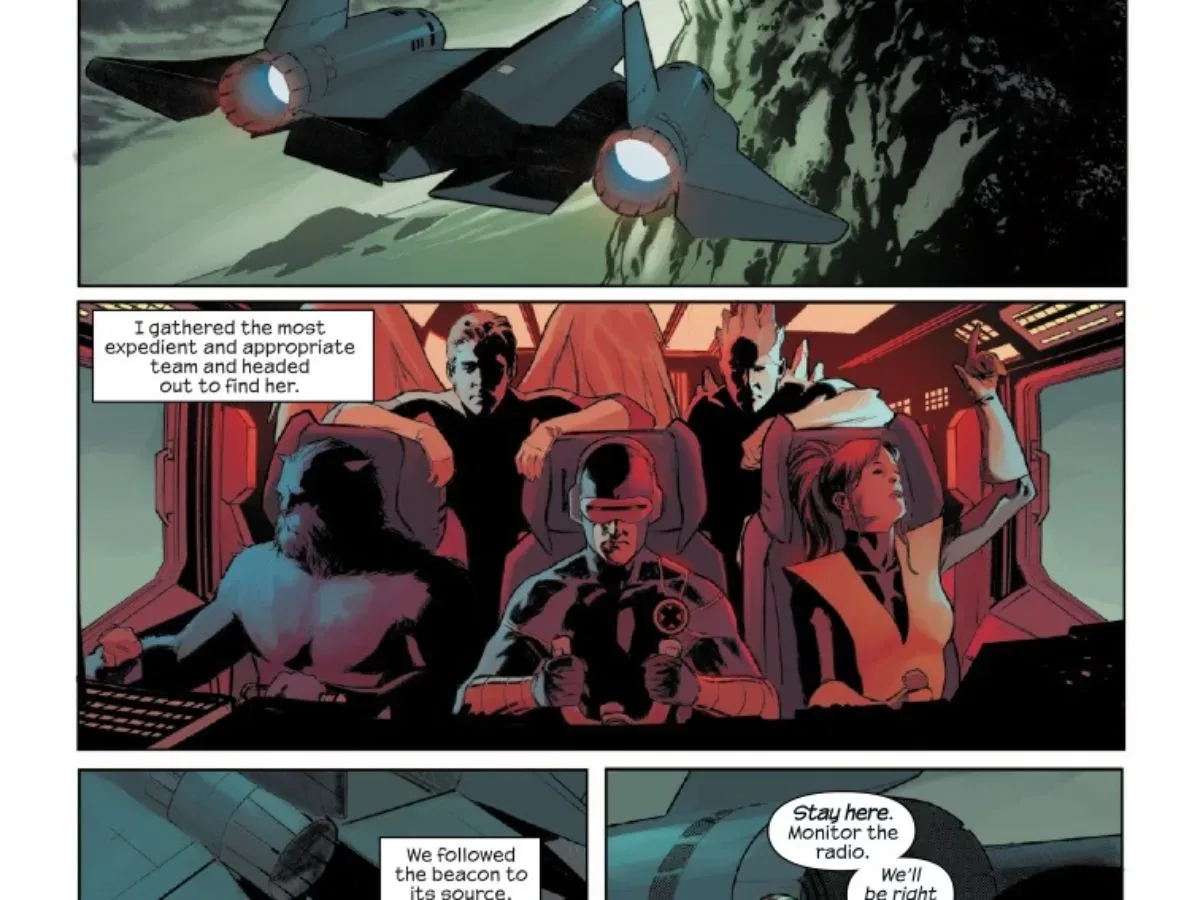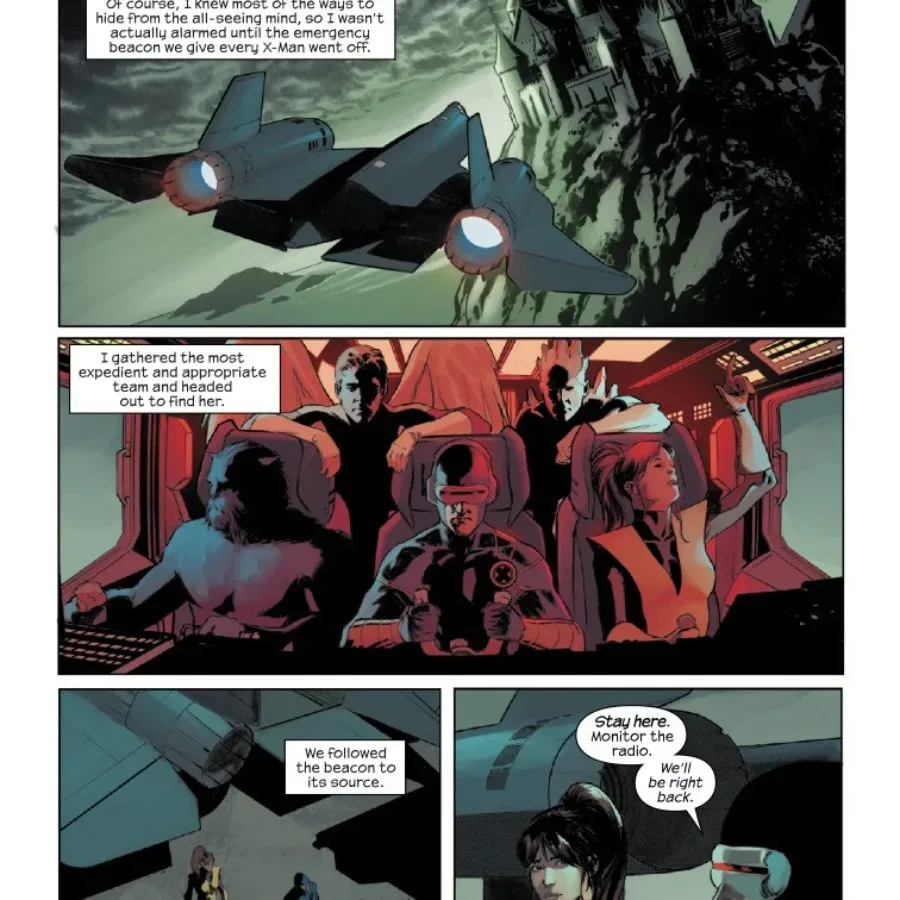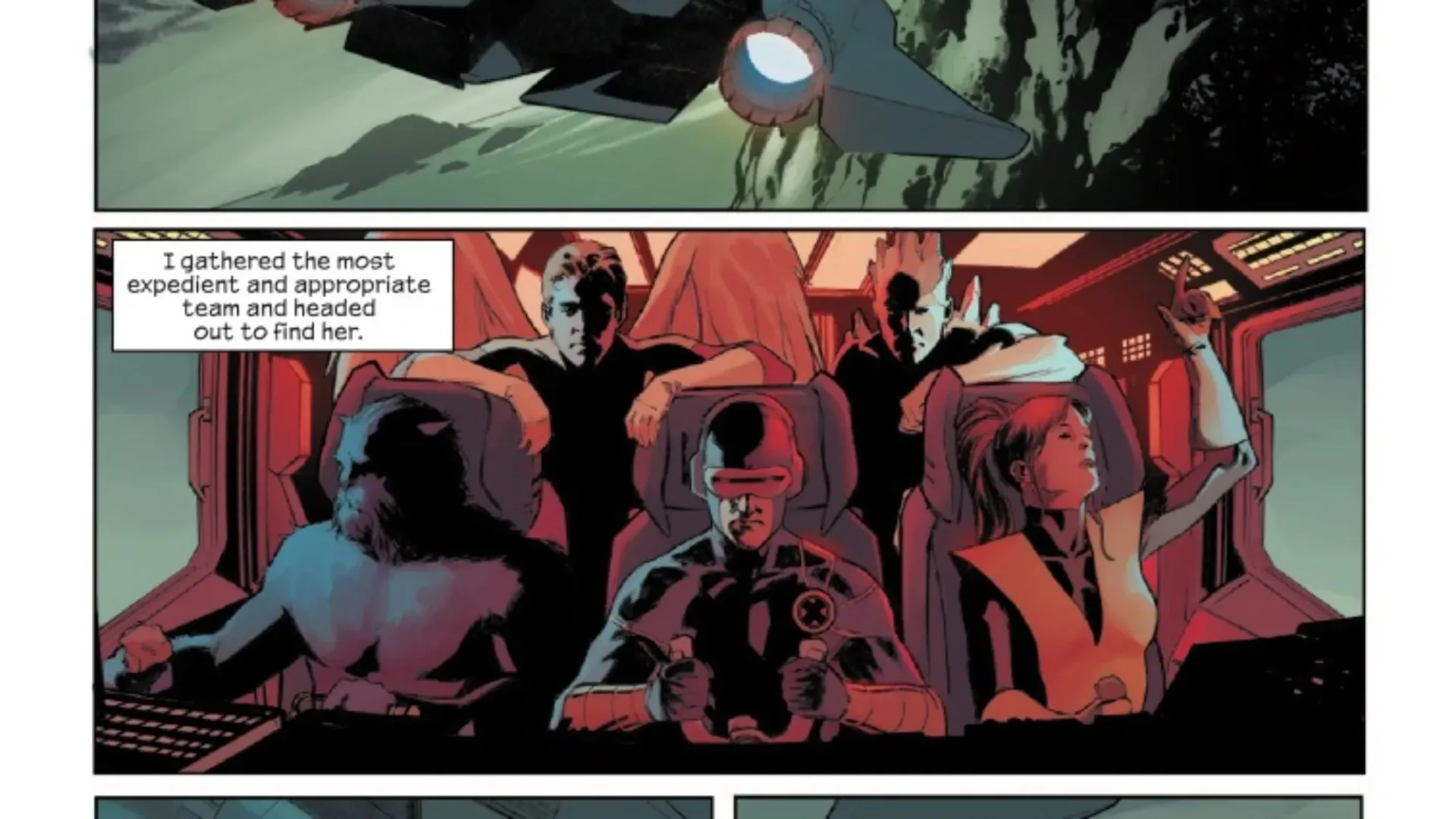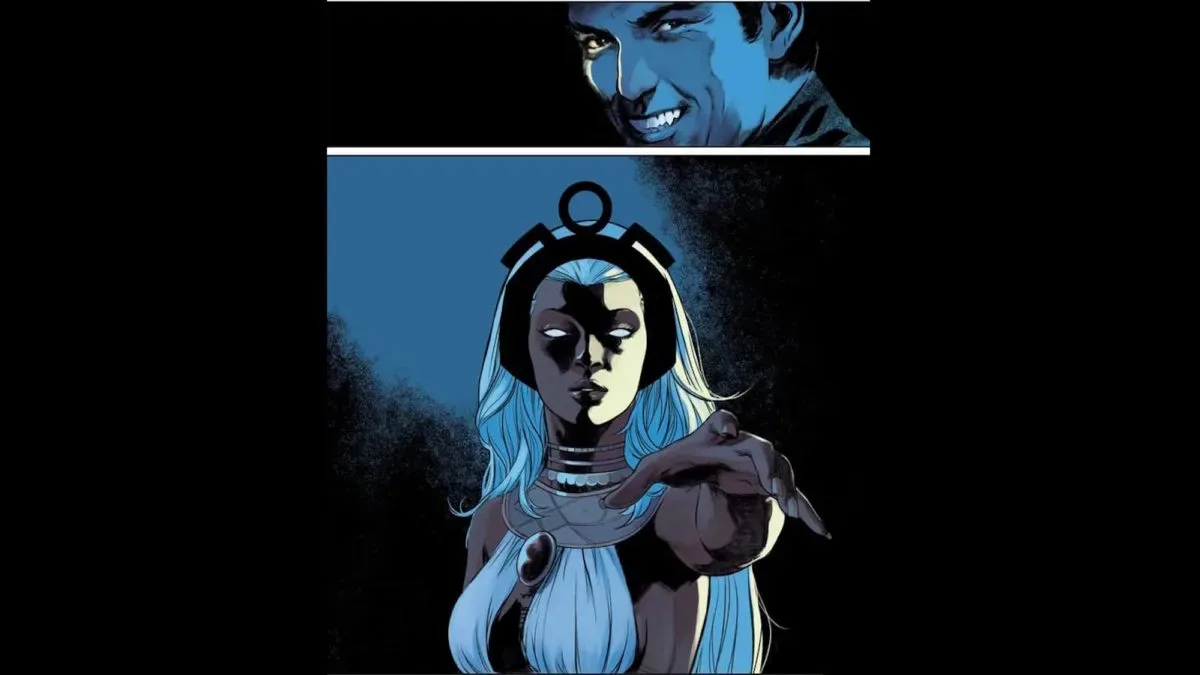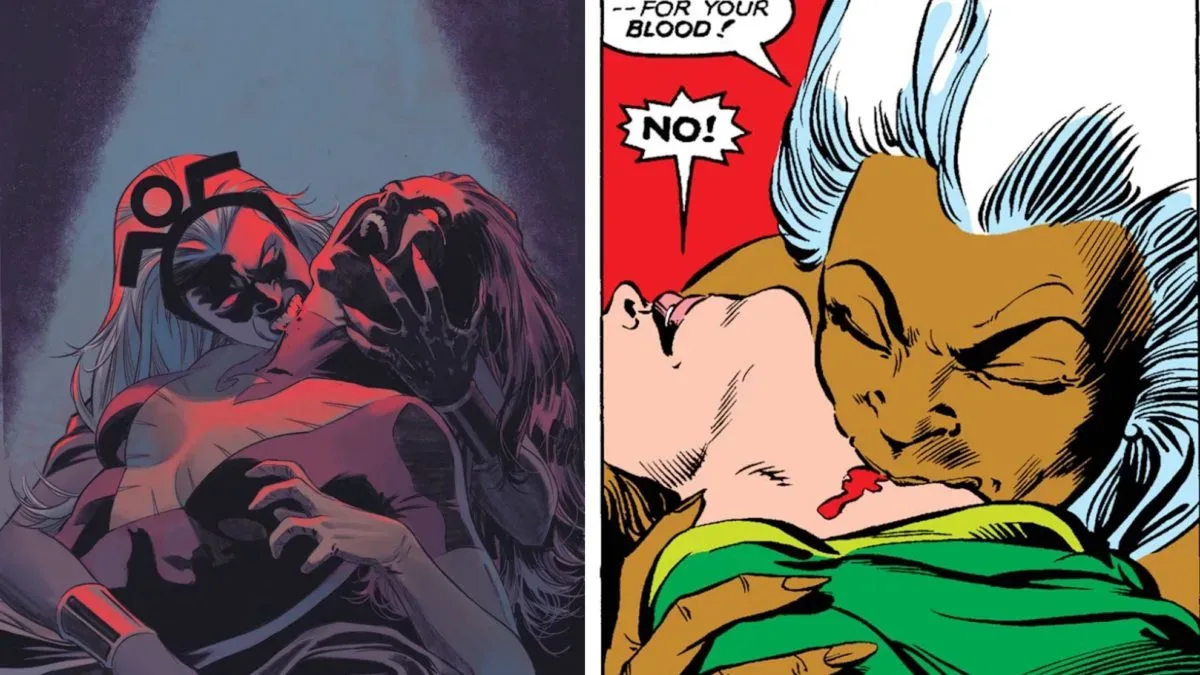
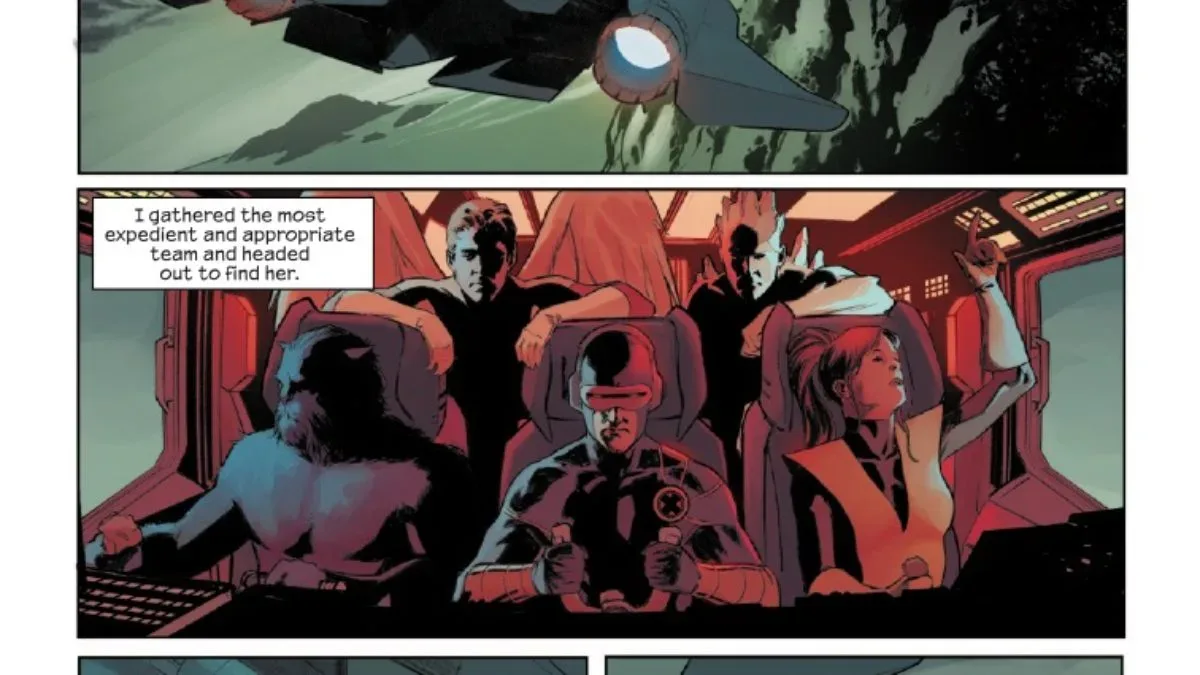
Midnight X-Men #2 is scheduled to go on sale November 18, 2026, bringing an unusually compact official pitch: “Eat. Prey. Love.” The second issue of Marvel’s Midnight X-Men is credited to writer Jonathan Hickman and artist Matteo Della Fonte, with a main cover by Dike Ruan. It will be a 32-page release priced at $4.99 in the U.S.
The solicitation provides almost no plot explanation beyond those three words, which makes tone the clearest signal available. “Eat. Prey. Love.” twists a familiar phrase into something more threatening, while the book’s Parental Advisory designation points to a story intended for older readers. Material accompanying the preview also indicates that Beast objects to the team’s plan, though the circumstances, threat and full roster have not been detailed in the supplied information.
A three-word premise leaves room for dread
A brief solicitation is not a full synopsis. It does not establish a setting, antagonist, mission objective or outcome, and readers should be careful not to treat the phrase as confirmation of a literal hunt, a specific creature, or any particular narrative structure. Still, it functions as a strong tonal tease.
Each word carries a different implication. “Eat” can evoke appetite, consumption or survival. “Prey” turns the language toward pursuit and vulnerability. “Love,” arriving last, adds an unsettling contrast: it could suggest desire, loyalty, obsession, affection or a deliberately ironic resolution. Together, the wording is more evocative of horror-inflected mutant fiction than a straightforward superhero mission statement.
That ambiguity is likely the key part of the preview at this stage. Rather than revealing the issue’s mechanics in advance, the solicitation gives prospective readers a mood: dangerous, intimate and potentially grotesque. The title Midnight X-Men already establishes a nocturnal identity, and this second-issue tagline reinforces that direction without promising details that have not been announced.
What the mature-reader labels tell readers—and what they do not
The listing uses both Parental Advisory wording and a Rated T+ designation. Those are the supplied labels, and the apparent difference is worth noting rather than smoothing over. In practical terms, both signal that the issue is not being positioned as an all-ages comic. They do not, on their own, reveal precisely whether the content involves violence, language, horror imagery or another mature theme.
“Parental Advisory” is an audience-content flag, not a plot spoiler. It tells a buyer that the publisher expects material that may be unsuitable for younger readers. It should not be read as evidence for a particular level of gore or any specific scene. With so little narrative copy available, the rating is mainly useful as a tone and audience indicator.
For readers assembling a pull list, the practical takeaway is simple: expect a darker edge than a broadly youth-oriented superhero issue, but wait for fuller official descriptions or the comic itself before making claims about its content. The preview supports an ominous atmosphere; it does not support a detailed account of what the X-Men face.
The creative credits currently attached to issue #2
Jonathan Hickman and Matteo Della Fonte are named as the issue’s writer and artist, respectively, while Dike Ruan is credited for the cover. The available listing does not identify additional interior-art, color, lettering or editorial credits, so those should not be inferred from the information presently available.
Credit information matters because a comic’s creative team describes who is responsible for the issue’s writing and art, while a cover credit identifies the artist for that edition’s primary cover. A cover can establish the visual identity used to market an issue, but it is not automatically a statement about who drew the interior pages. Here, the supplied credits make that distinction: Della Fonte is identified with the issue itself, and Ruan with the cover.
Fans looking for more comic-book preview coverage can also see the announced premise for Lobo #9, another upcoming issue built around a deliberately morbid setup. The two books are separate releases, of course, and no crossover or shared storyline is indicated.
Edition and variant-cover details
The standard issue carries the product code 75960621668000211. Several variant editions are also listed, offering different cover art and, in two cases, retailer-incentive ratios. A retailer incentive is a variant tied to a shop’s ordering volume—for example, a 1:25 variant generally corresponds to one eligible variant for every 25 qualifying copies ordered. That ordering structure concerns retailer distribution, not story content.
- Cover B: Lucas Werneck’s Midnight Bloodbath Variant, product code 75960621668000221.
- Cover C: Skan’s Midnight Special Variant, product code 75960621668000231.
- Cover D: Juann Cabal’s Midnight Horror Homage Variant, product code 75960621668000241.
- Cover E: Joshua Swaby’s Midnight Gallery 1:25 Variant, product code 75960621668000216.
- Cover F: Skan’s Midnight Special Virgin 1:50 Variant, product code 75960621668000217.
The listed U.S. price is $4.99 for each named variant, with a listed Canadian price of $6.25. “Virgin” in comic-cover terminology generally means a cover design without the usual logo and trade dress; in this case, the supplied listing specifically names Skan’s 1:50 edition as a Midnight Special Virgin variant. It describes the presentation of the cover, not a separate story or expanded edition.
Similarly, labels such as “Bloodbath,” “Horror Homage,” “Gallery,” and “Midnight Special” identify cover programs. They may establish a visual theme, but they do not independently confirm what happens in the interior story. Buyers who only want the narrative can look for the standard issue; those who prefer a specific artist or cover format can use the names and product codes to communicate clearly with a comic retailer.
What is confirmed before release
The facts presently available are focused on publication information rather than plot. Midnight X-Men #2 is a Marvel release dated for November 18, 2026; it is 32 pages and priced at $4.99 in the U.S.; Hickman and Della Fonte are credited as writer and artist; Ruan is credited for the main cover; and the issue’s official teaser is “Eat. Prey. Love.” It carries mature-audience signaling through Parental Advisory language and a Rated T+ listing.
Everything beyond that should remain analysis, not certainty. The wording and rating create a clear expectation of a darker, more mature mutant adventure, and Beast’s reported objection hints that the group may be making a risky choice. But the supplied material does not establish the story’s villain, location, stakes, continuity significance or ending. For now, the strongest case for the issue is its compact, unsettling pitch—and the promise that its meaning will be clearer when the comic reaches shelves.