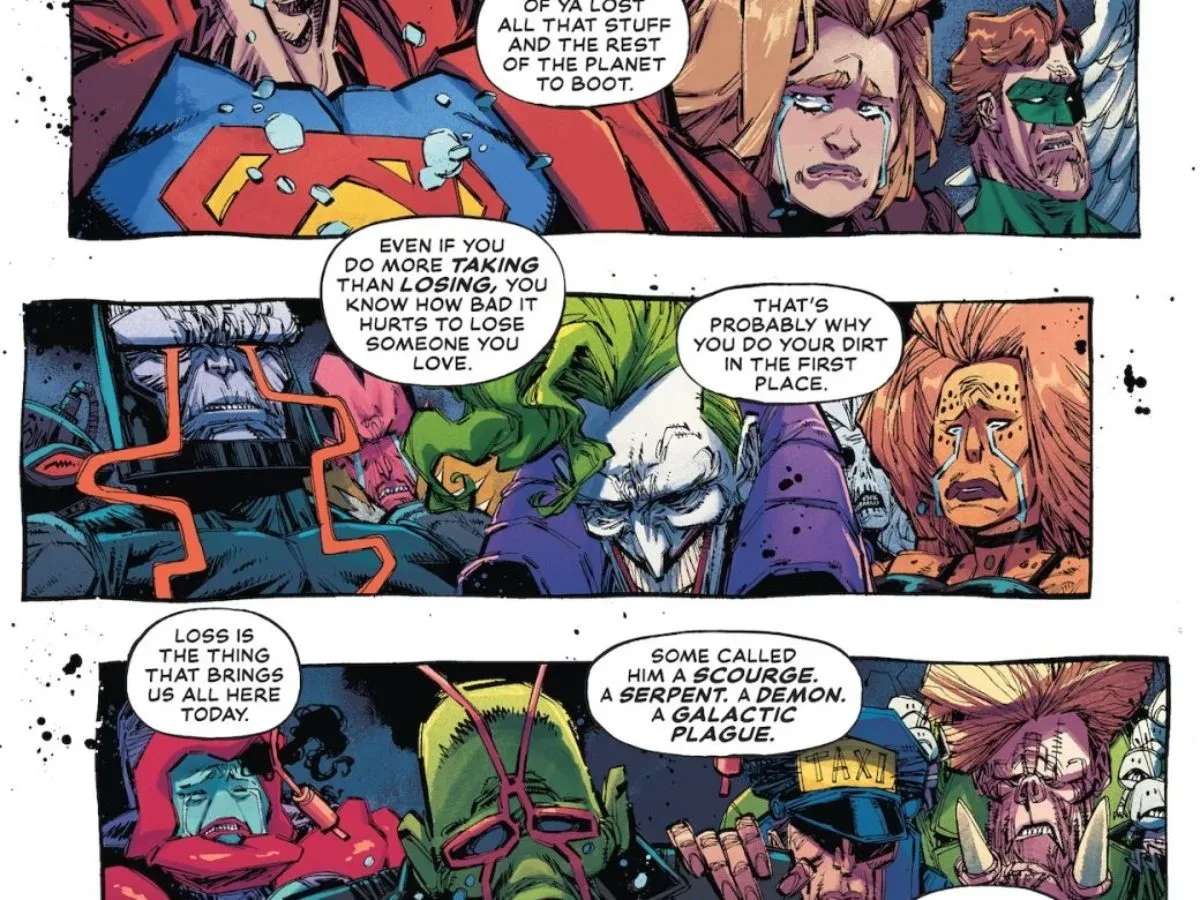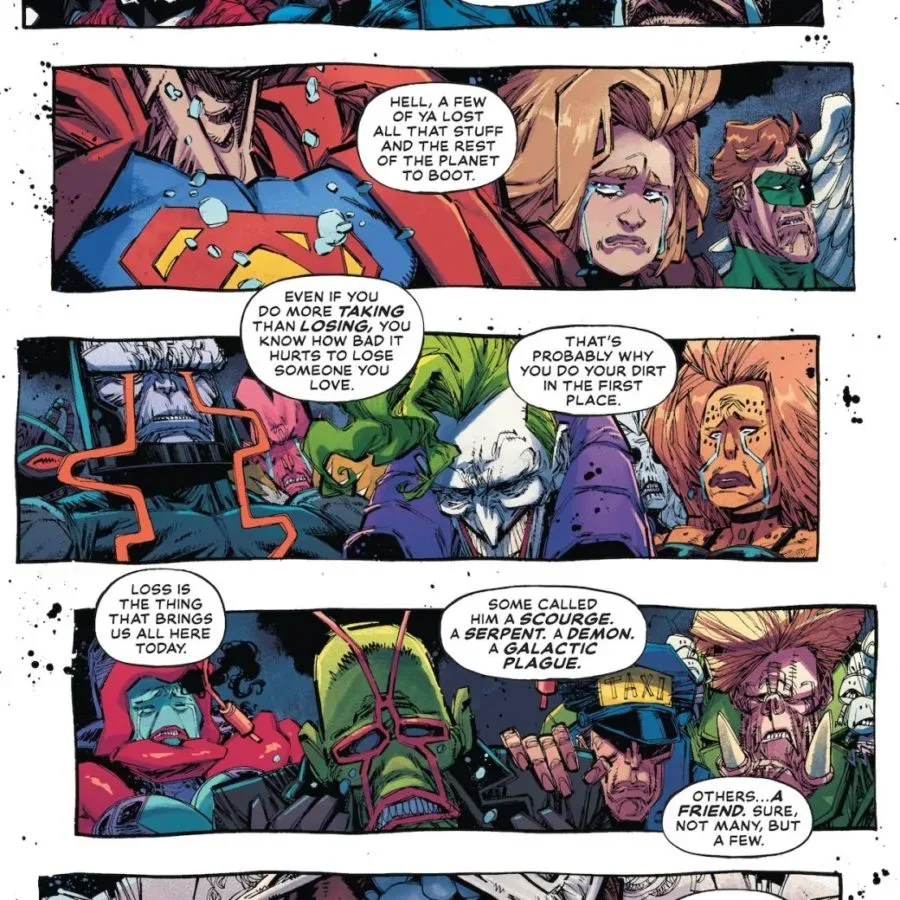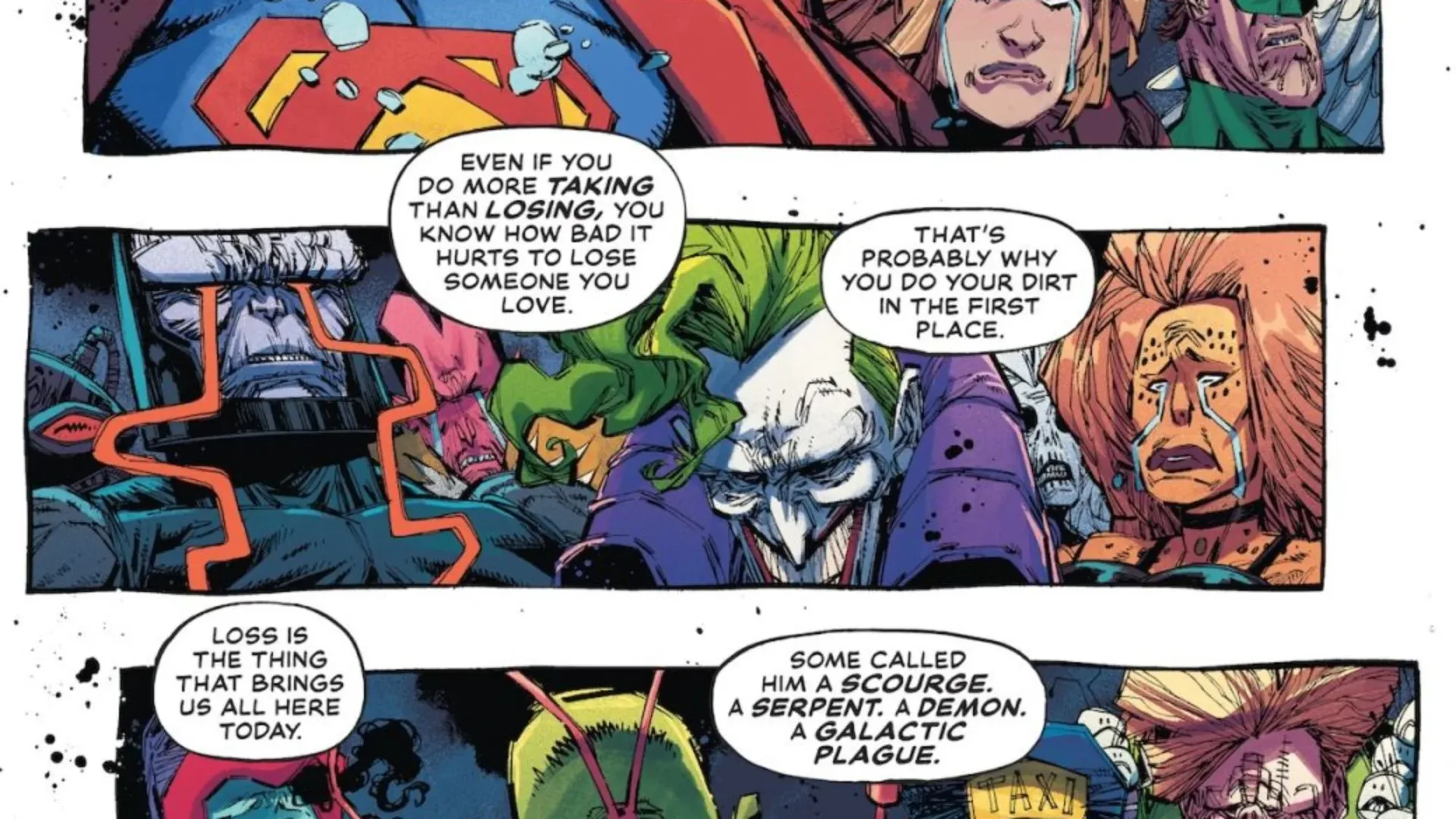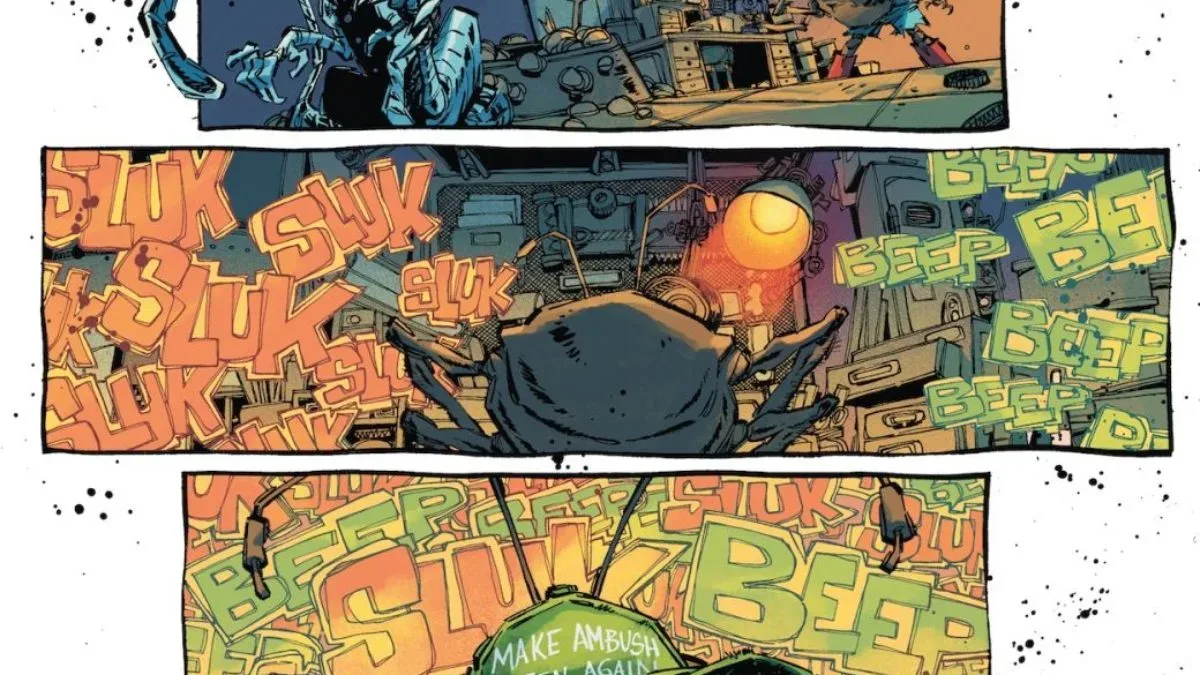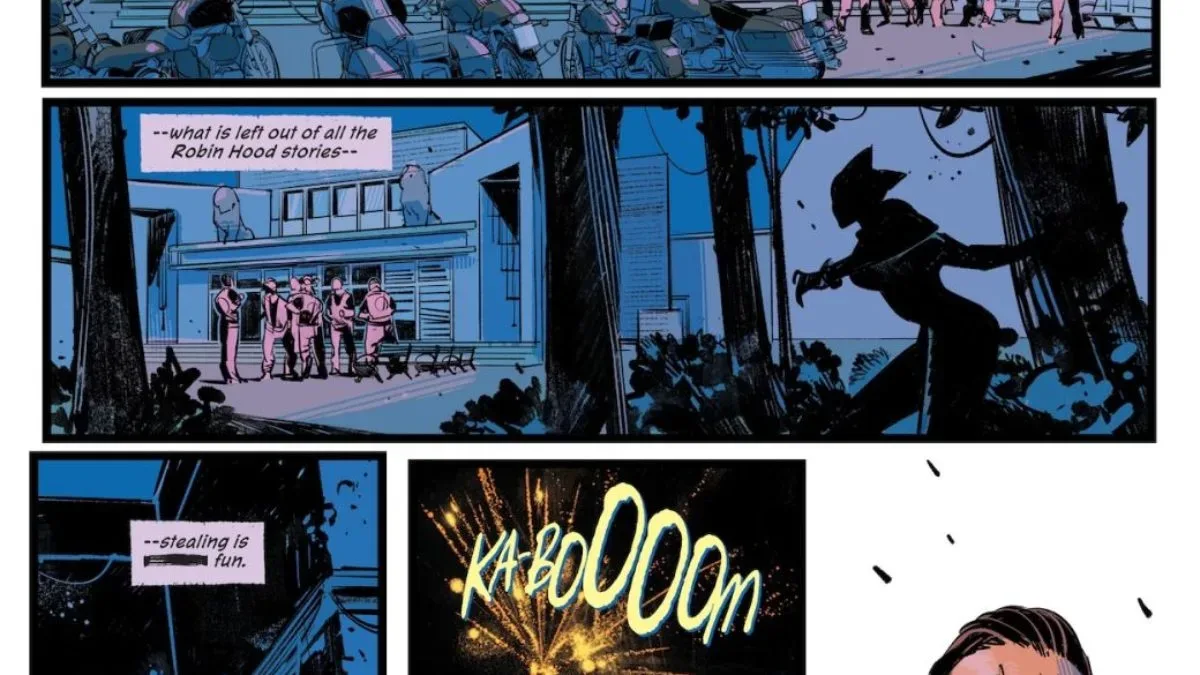
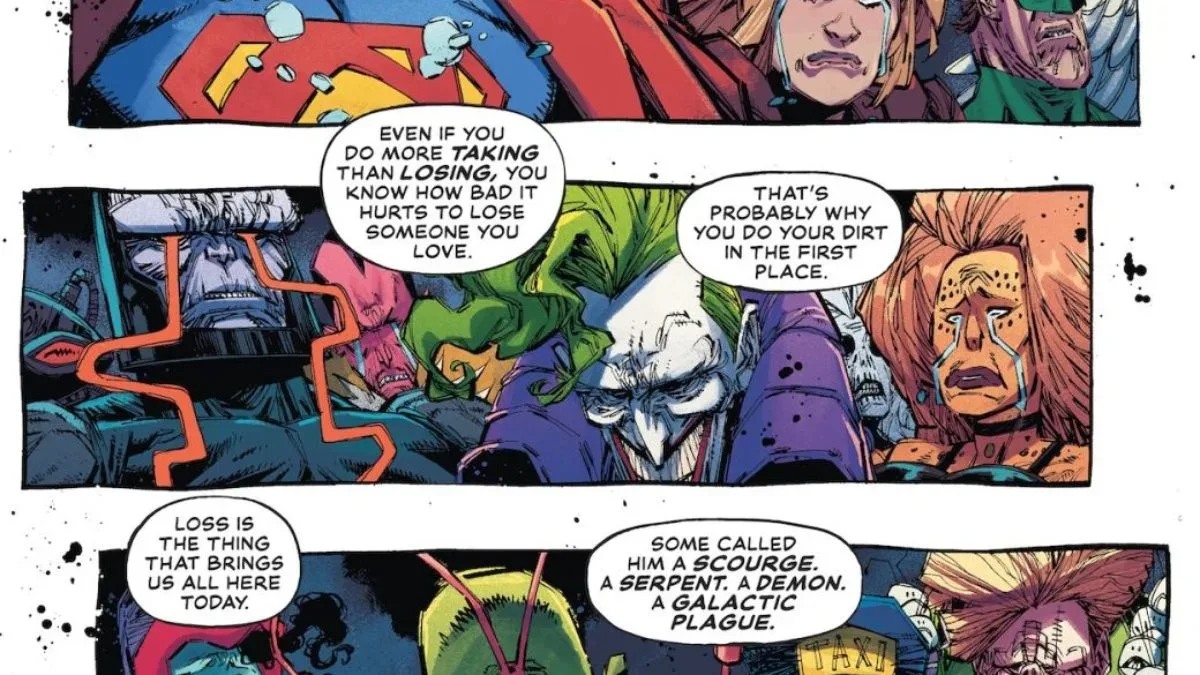
DC is preparing to put the Main Man in the ground—or at least make an extremely loud, extremely Lobo-shaped attempt at it. Lobo #9, subtitled “Burial for a Bastich,” is scheduled for comic shops on November 18, 2026, and its central premise is appropriately direct: Lobo sacrificed his life to stop the Blood Garnet Lantern, and the people left behind have to reckon with a universe that no longer has him in it.
That premise is not being presented as a quiet farewell. The issue’s setup promises a DCU-wide response from characters who are outwardly carrying on but are, beneath the surface, hurt by Lobo’s absence. And because a Lobo funeral would not be complete without at least one complication involving the deceased person refusing to stay respectfully deceased, his ghost is also part of the story.
The solicitation calls that spectral angle “LoBOO,” which is the sort of joke readers should expect from an issue titled “Burial for a Bastich.” It also leaves the crucial question hanging: what does Lobo himself think about everybody gathering to mourn him?
What Lobo #9 establishes
The issue follows Lobo’s sacrifice to stop the Blood Garnet Lantern. The supplied description does not explain the Lantern’s origins, powers, or the full mechanics of Lobo’s sacrifice, so readers looking for those answers will need to find them in the series itself. What is clear is the immediate aftermath: Lobo is treated as dead, his absence has become a shared problem for the universe, and the DCU’s response is framed as grief mixed with stoicism.
That tension gives the issue more to work with than a standard superhero memorial scene. A funeral in comics can be a plot device: it creates a place where allies, rivals, bystanders, and unexpected visitors can occupy the same space, even if they would not normally choose to do so. Here, the description specifically asks which figures might step up to fill the “beefy hole” left by Lobo. That wording signals a question of legacy as much as mourning.
It is also worth separating what the solicitation confirms from what it merely invites readers to speculate about. Lobo’s ghost is explicitly part of the premise. A lasting death, a resurrection, a replacement character, and the exact identities of attendees are not confirmed by the material provided. The teaser is designed to make those possibilities feel plausible without settling them in advance.
Why the ghost matters
In superhero fiction, a ghost is not automatically a promise that a character has returned to active life. It can be a literal supernatural presence, an observer’s point of view, a temporary storytelling device, or a way to give the supposedly departed hero a voice in their own memorial. The solicitation does not specify which route Lobo #9 takes.
Still, the concept gives the issue an unusual advantage. A conventional funeral story makes the dead character the subject of everyone else’s memories. A ghostly Lobo could make him an active commentator on those memories. For a figure whose identity is bound up with bombast, defiance, and a willingness to puncture solemnity, that creates room for a story that can acknowledge loss without becoming reverential for long.
The “LoBOO” gag establishes the tonal boundary. The book is engaging with sacrifice and grief, but it is doing so through Lobo’s particular brand of irreverence rather than promising a straightforwardly somber issue. That is a practical expectation-setting detail for readers: the funeral is important, but the book is unlikely to treat the occasion as humorless.
A DCU mourning story, not just a solo detour
The language around the issue broadens the scale beyond Lobo’s immediate circle. Rather than simply saying that friends and allies gather to mourn, the description places the response across the DCU. That does not confirm a definitive guest list, but it does position the issue as one interested in how a larger shared universe registers the absence of a character as disruptive as Lobo.
The teaser’s description of people “putting up a strong front” is especially notable. It suggests the issue may use public composure as a contrast with private hurt. In simple terms, the dramatic engine is not only “Who misses Lobo?” but “Who will admit that they miss Lobo?” That can make a memorial story more revealing, because grief is often shown through denial, duty, irritation, or attempts to preserve routine rather than a speech at a graveside.
For comics readers, it is also a reminder that a funeral issue can function as an entry point without necessarily resolving every piece of prior continuity. The immediate facts are concise: Lobo made a sacrifice, he stopped the Blood Garnet Lantern, and the living are now dealing with it. Readers who have followed the run will have more context for the event, while the issue’s public, character-focused premise provides a clear emotional setup for anyone arriving for the fallout.
Those keeping an eye on other superhero-comic stories built around an absent central figure can also see a related setup in Midnight Spider-Man #2’s approach to Peter Parker’s absence. The narrative circumstances are different, but both premises show how removing a familiar presence can turn the surrounding cast and setting into the subject.
Creative team and editions
Skottie Young is credited as writer on Lobo #9, with Jorge Corona credited for interior art and the main cover. The issue is also listed with covers by Daniel Warren Johnson, Scott Hepburn, and Montos.
For collectors and readers deciding which copy to seek out, the available listing identifies the following editions:
- Lobo #9, Jorge Corona cover
- Lobo #9, Daniel Warren Johnson cover
- Lobo #9, Scott Hepburn cover
- Lobo #9, Montos cover
The listing associates the three named alternate-cover entries with a $4.99 price, while the solicitation also gives the issue an SRP of $3.99. Because those figures appear together in the provided catalog information, buyers may want to check the specific edition and local shop listing before purchasing rather than assume every version has the same cover price.
What readers should watch for
The most immediate draw is the collision between an earnest DCU memorial and Lobo’s posthumous presence. The issue appears positioned to ask several connected questions without revealing their answers: Who does the loss affect most? Who shows up? Who tries to act as though it is business as usual? And can a funeral remain a funeral when its subject is apparently still able to offer an opinion?
There is also the broader question of what it means to fill Lobo’s role. The solicitation phrases this as a search for figures who can rise to meet the gap he leaves behind. That is not necessarily a promise of a new Lobo or a direct successor. It is better understood as a thematic prompt: Lobo’s place in this corner of the DCU has created a vacuum, and the issue will explore who feels it and how.
For now, the confirmed shape of the story is a death aftermath, a memorial, a grieving ensemble, and a ghost with “strong feelings” about the proceedings. That is plenty of combustible material for a Lobo comic. Whether “Burial for a Bastich” becomes a permanent farewell, a temporary detour, or something stranger remains intentionally unanswered.
Release details
- Title: Lobo #9
- Story title: “Burial for a Bastich”
- Publisher: DC Comics
- Release date: November 18, 2026
- Writer: Skottie Young
- Artist and main cover: Jorge Corona
- Additional covers listed: Daniel Warren Johnson, Scott Hepburn, Montos
- Listed SRP: $3.99