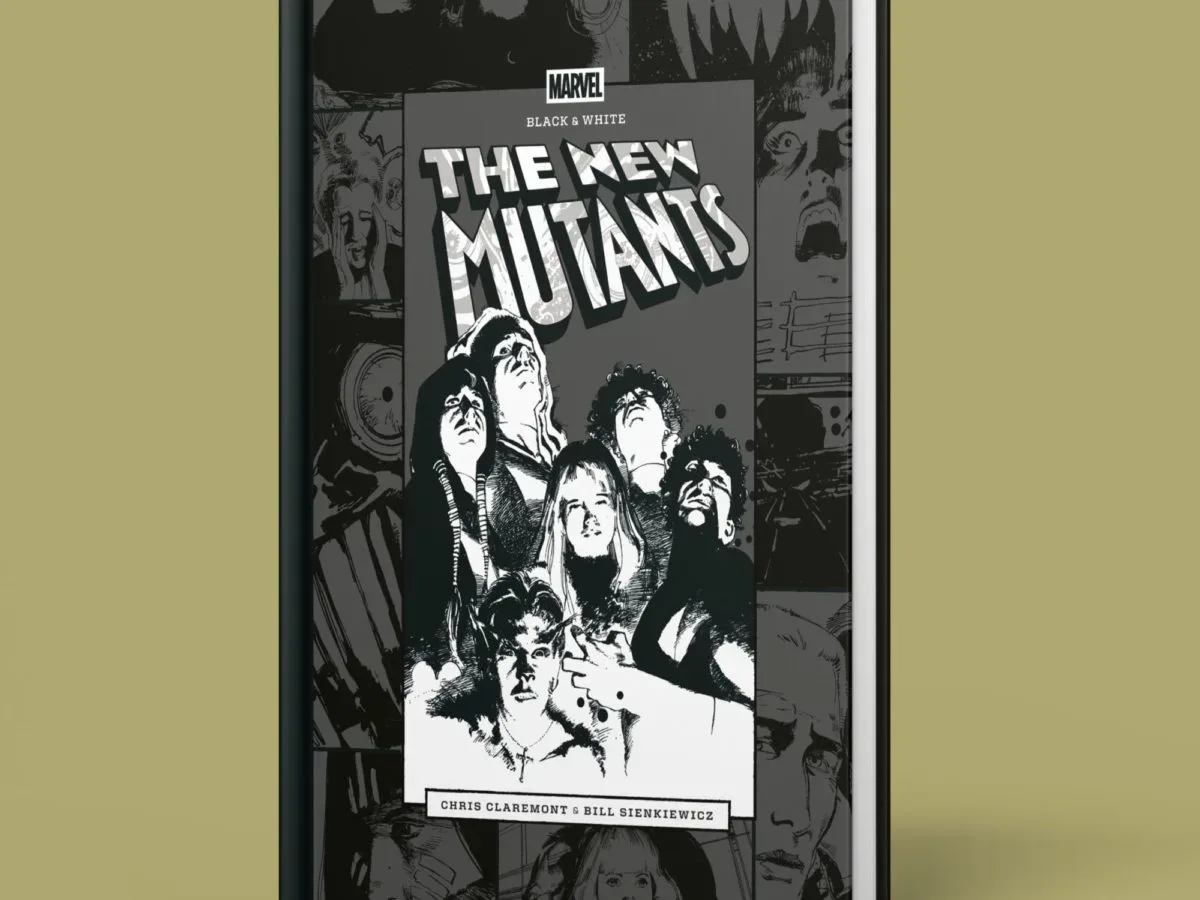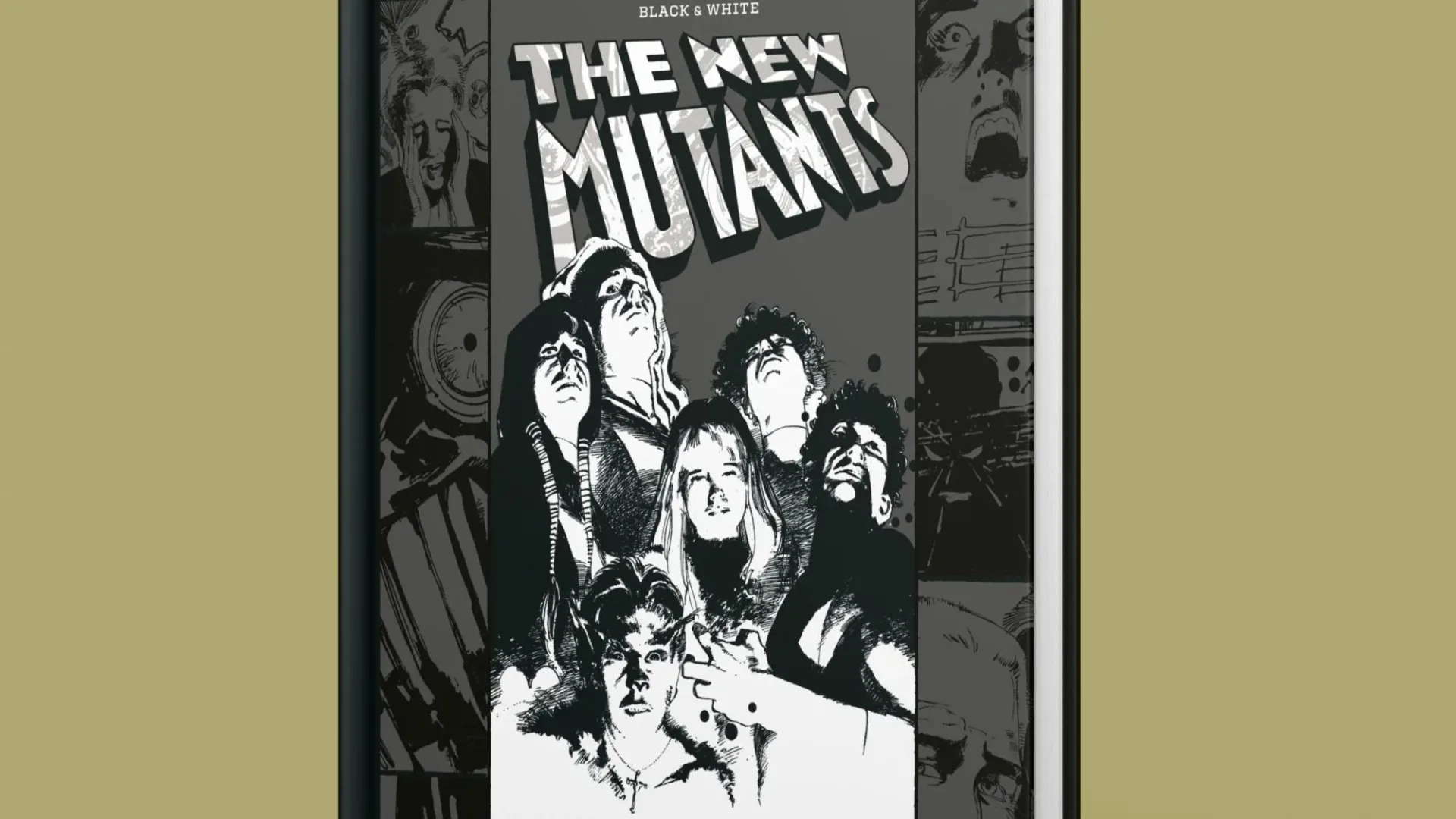
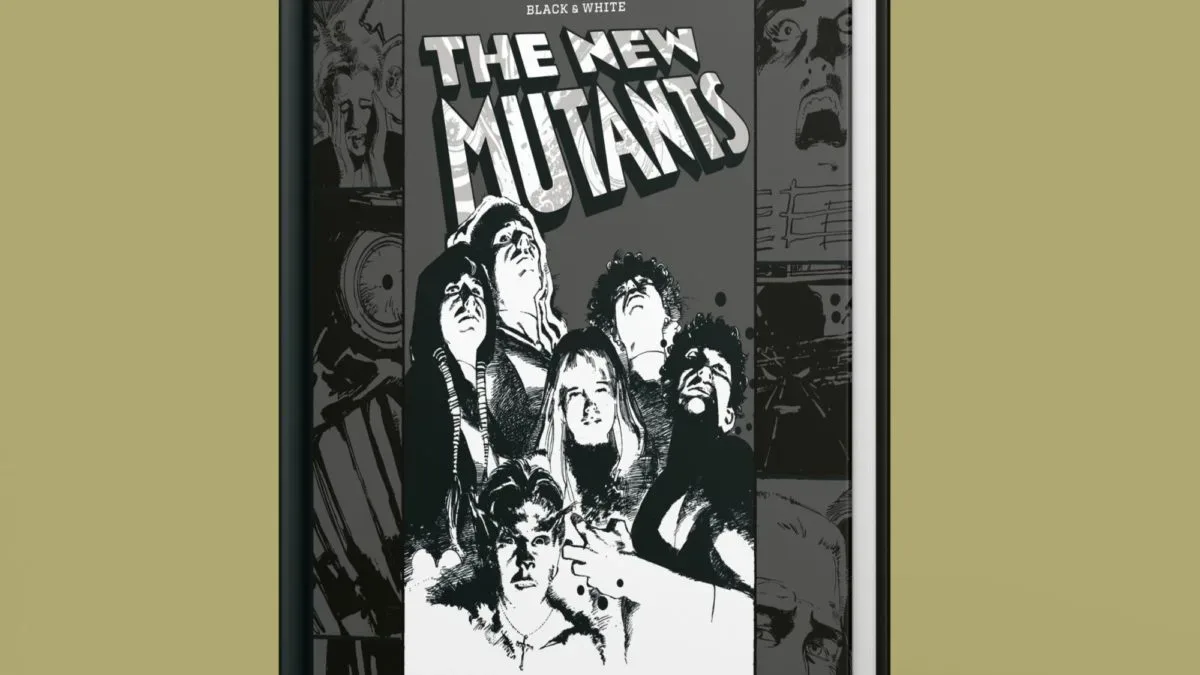
Bill Sienkiewicz’s startling New Mutants artwork is getting an edition built around the thing that made it so disruptive: the line. Marvel Black & White: New Mutants, due from Dark Horse Books on August 24, 2027, is an oversized hardcover collecting Chris Claremont and Sienkiewicz’s celebrated “Demon Bear” storyline alongside later reunion material, cover art and reproductions of original pages in black and white.
The 192-page book will reprint The New Mutants #18 through #21, including the double-sized #21. Those issues place Danielle Moonstar at the center of an escalating supernatural threat, then give Sienkiewicz room to transform the team’s world into a harsh, unstable nightmare. The hardcover will also contain the 2019 New Mutants: War Children one-shot, which reunited Claremont and Sienkiewicz, plus an assortment of Sienkiewicz covers from the period.
At 8.775 by 12.5 inches, the format is considerably larger than a standard comic collection. It is priced at $60 in the US and £47 in the UK. New commentary and background are credited to Chris Ryall and John Lind.
A Marvel archive presented through Dark Horse
The volume continues a line of oversized archival Marvel editions published by Dark Horse Books. Its preceding entry is a Barry Windsor-Smith Weapon X hardcover scheduled for February. That arrangement makes the line notable beyond its individual contents: classic Marvel material is being presented by Dark Horse in editions designed to emphasize the artists’ original drawing rather than simply reproduce a familiar reading copy.
That distinction matters especially for Sienkiewicz. A conventional collection chiefly serves the narrative—panels, captions, colors and dialogue working in concert at a relatively compact size. A black-and-white archival presentation shifts attention toward visual construction. Readers can more readily follow the marks that establish depth, movement, texture and emotion: rough hatching, dense pools of ink, abrupt shifts from detailed figures to distorted forms, and the white space surrounding them.
“Black and white” here should not be read as a claim that the original issues were created without color. Rather, the edition includes story pages reproduced from Sienkiewicz’s black-and-white line art. In comics terms, line art refers to the underlying drawn and inked imagery before coloring. Removing color can make an artist’s decisions about contour, shadow and composition much easier to study, though it also changes how the page is experienced. Color is normally part of the finished comic; this format instead spotlights another layer of the work.
What the Demon Bear saga collects
The central material comes from The New Mutants #18, #19, #20 and #21, written by series co-creator Chris Claremont. The story draws on Danielle Moonstar’s fear and grief surrounding the Demon Bear, a creature connected to a traumatic vision from her childhood.
Danielle, a Cheyenne mutant able to project people’s deepest fears, had been haunted by the bear since early in the series. As a child, she saw a vision in which the creature killed her parents, William and Peg Lonestar. When they later disappeared on a hunting trip, Danielle was left carrying guilt as well as fear.
In issue #18, she chooses to confront the threat by herself outside Xavier’s school, in the snow, carrying a bow. She appears to bring the bear down, but it rises again and nearly kills her. Her teammates find her badly injured. As she is operated on at Mid-County Medical Center during a blizzard, the danger moves toward the rest of the New Mutants.
The setup is important because the saga’s stakes are not merely another fight with a large monster. Danielle’s personal history gives the attack emotional weight, while the hospital setting and blizzard put the characters in a pressured, isolated environment. It is a story about a young team confronting an enemy tied directly to one member’s anguish—an approach that helps explain why this arc remains a defining New Mutants reference point.
Why Sienkiewicz’s pages suit this format
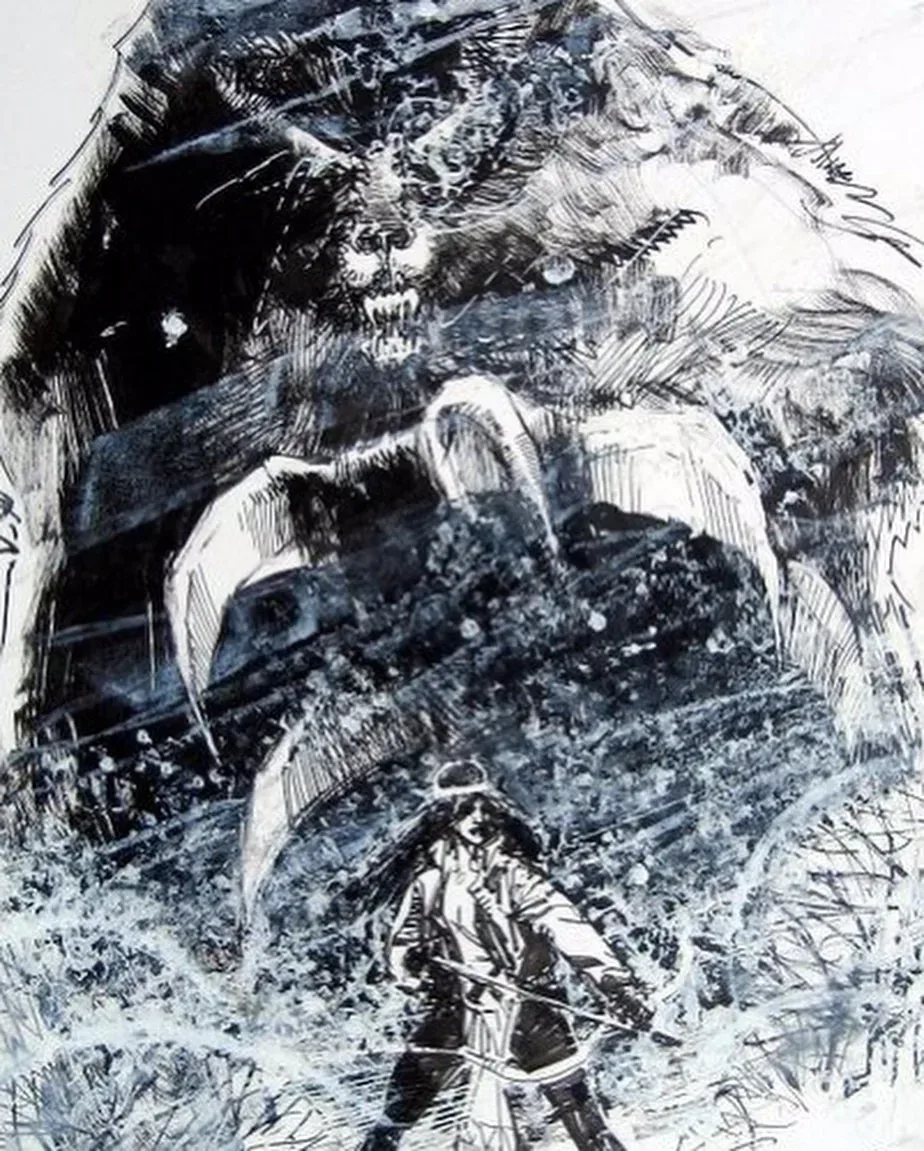
Sienkiewicz had only recently taken over the art when the Demon Bear storyline arrived. His work pushed the title away from a straightforward superhero-book look and toward something more unnerving. The creature is presented as an enormous, feral accumulation of claws, teeth and dark mass, seemingly too large and volatile for the space of a comic page.
That effect is more than an illustration of scale. The scratchy, expressive rendering makes the bear feel difficult to contain visually, which reinforces the characters’ inability to control the situation. Instead of treating each page as a clean stage for a fight, the art can make the threat feel invasive. The result is closer to nightmare imagery than a routine super-team encounter.
For an oversized black-and-white volume, that makes the choice of material particularly logical. Enlarged pages can reveal the density and variety of the marks, while monochrome reproductions prioritize the relationship between ink and empty space. Original art and cover reproductions add another dimension, allowing the book to function not only as a collection of comics but as a survey of Sienkiewicz’s visual contribution to this era of the title.
There is a practical caveat for readers deciding between editions. The Demon Bear material has already been collected, including in the earlier New Mutants/X-Force: Demon Bear trade. The appeal of Marvel Black & White: New Mutants is therefore not that it represents the only route to the story. It is an edition for readers interested in the scale, paper presentation and black-and-white art emphasis, as well as the added War Children, covers, original artwork and commentary.
War Children connects the original team with a later return
The inclusion of New Mutants: War Children gives the hardcover material from two points in the Claremont-Sienkiewicz partnership. The 2019 one-shot reunited the writer and artist decades after the original Demon Bear issues. Its presence expands the book beyond a narrowly bounded reprint of #18–21, while still keeping the focus on the same two principal creators.
It also makes the collection useful as a compact record of why the original run has had such a long afterlife. The Demon Bear storyline provided a major influence on the 2020 The New Mutants film, and it continues to be cited as an example of the series having an identity beyond being a younger extension of the X-Men. Danielle’s centrality, the blend of fear and superhero drama, and Sienkiewicz’s stylistic turn all help distinguish it.
That legacy does not mean the archival edition is positioned as a replacement for every version of the story. It is a deliberately curated presentation: four original issues, a later reunion one-shot and a selection of art-oriented extras. Readers seeking the entire surrounding run will need to look elsewhere; readers seeking this specific creative peak in a larger art-focused form have a clearer proposition.
What collectors and comics-art readers should note
- Release date: August 24, 2027.
- Publisher: Dark Horse Books.
- Format: 192-page oversized hardcover measuring 8.775 by 12.5 inches.
- Price: $60 / £47.
- Core reprints: The New Mutants #18–21, with #21 in its double-sized form.
- Additional material: 2019’s New Mutants: War Children, period covers, original artwork and black-and-white line-art story pages.
- Editorial context: New commentary and insights from Chris Ryall and John Lind.
For comics collectors, the key consideration is format rather than scarcity claims. Nothing provided indicates a print run, variant cover program or special exclusivity, so the case for the hardcover rests on its oversized dimensions and expanded art material. It is also a reminder that different editions serve different kinds of reading: a trade paperback may be the straightforward story option, while an archival hardcover can foreground the craft behind it.
That craft is especially worth considering in Marvel-adjacent collecting more broadly. Readers who enjoy seeing how Marvel imagery is presented across formats can also explore Marvel Universe Series IV’s nine-card pages and inserts, a very different medium with its own approach to page-scale art and collectible presentation.
Marvel Black & White: New Mutants is ultimately built around a simple but fitting editorial idea: give Sienkiewicz’s work physical room, reduce the distractions around the ink where possible, and pair the landmark Demon Bear material with related art and a later collaboration. With its August 2027 release still ahead, it stands as an art-led alternative for readers returning to Danielle Moonstar’s defining confrontation and for those encountering this chapter of New Mutants for the first time.
Shop the products
Check current price, model and availability at the retailer.