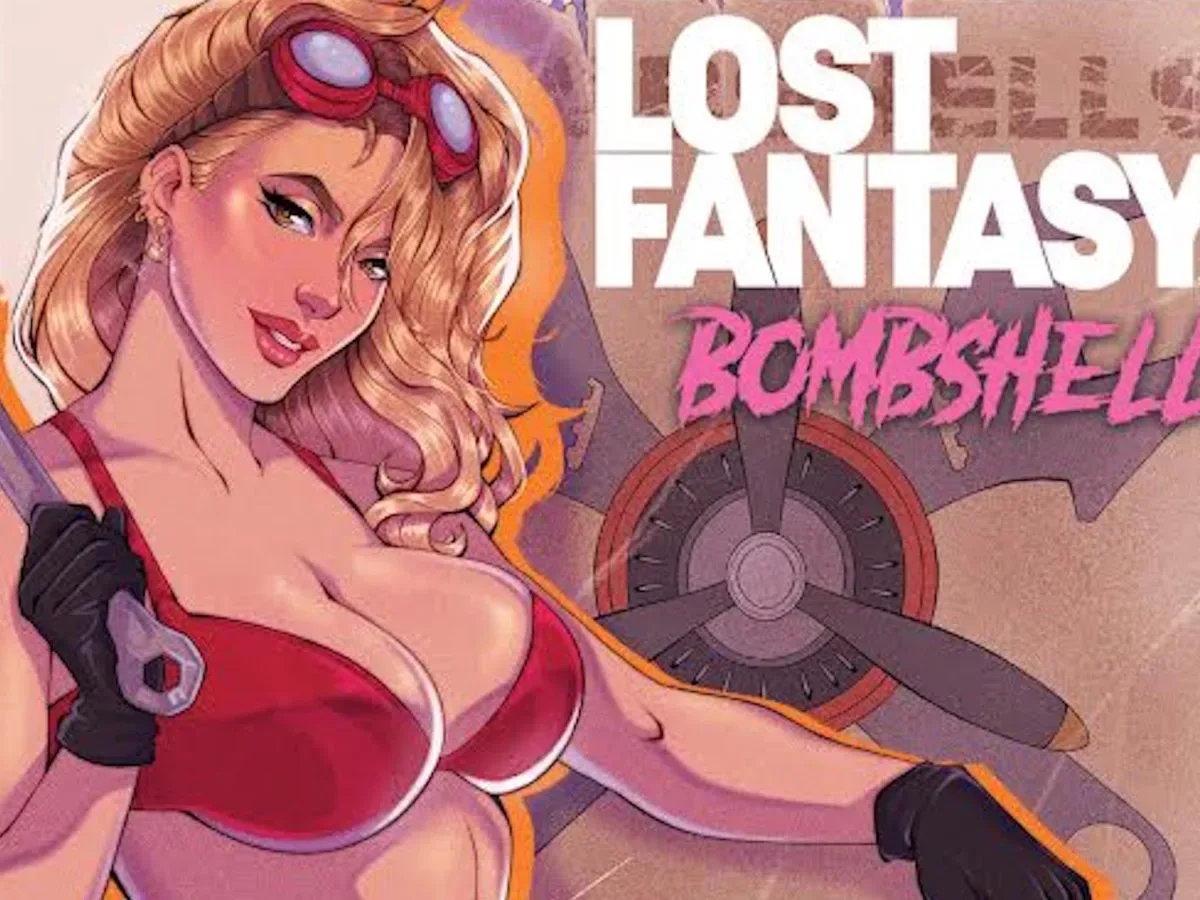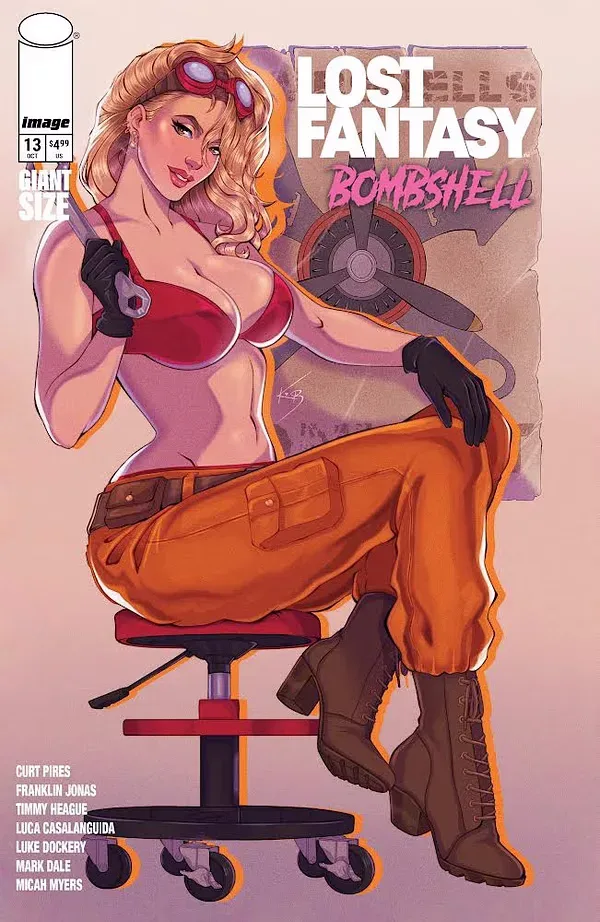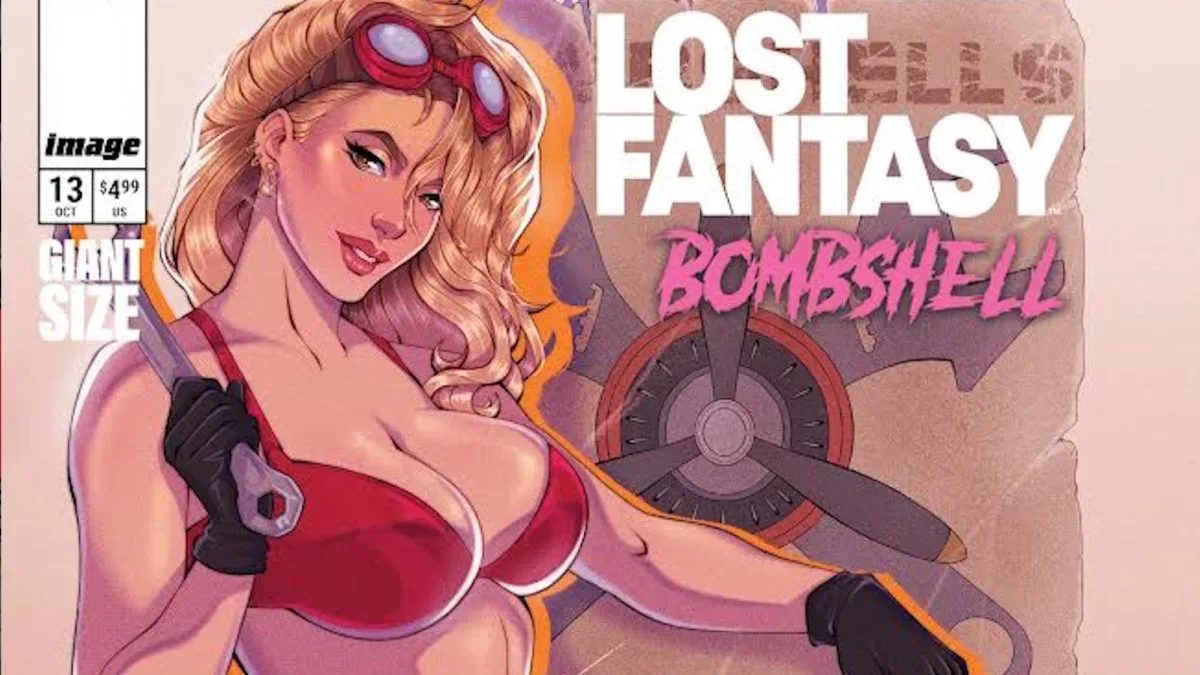
Lost Fantasy #13 is set to do more than begin its advertised Showdown crossover with Fireborn. The October 28 issue will also carry the first installment of Bombshell: Year One: Trouble in Tokyo, a three-part backup centered on Sydney Stevens, better known as Bombshell.
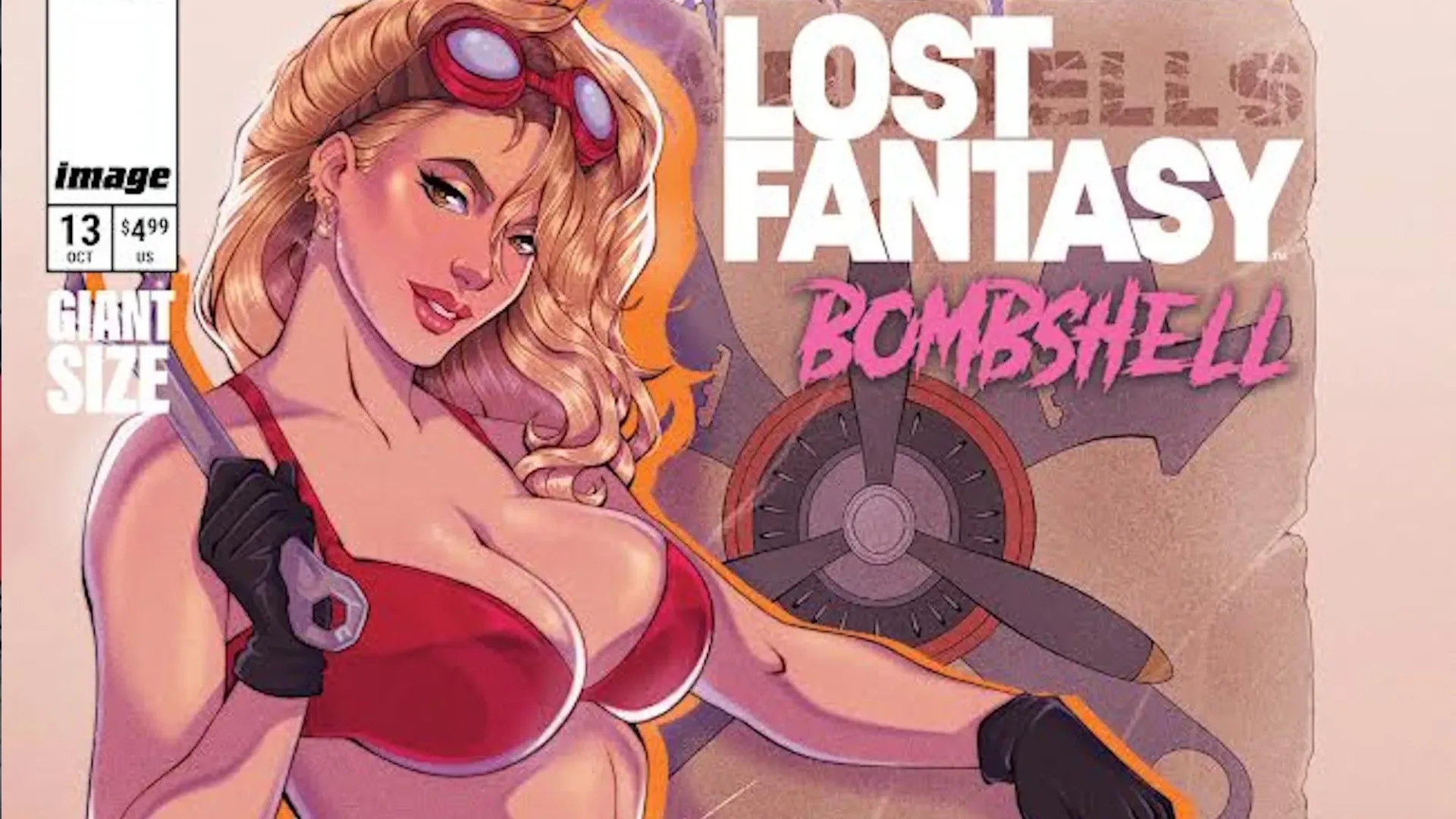
The newly revealed material is written by Curt Pires and Timmy Heague, with art by Giada Belviso. It was not included in the initial solicitation details for issue #13, although later listings for Lost Fantasy #14 and #15 confirm that the Bombshell storyline continues across all three issues. A Bombshell-focused variant cover for #13 by Katt Blanchette has also been added.
A backup with bigger implications for Bombshell
A backup story is a shorter feature printed alongside a comic’s main serial chapter. It can be a useful format for introducing a character, filling in past events, or laying groundwork without diverting the lead story from its immediate plot. Here, the main feature in Lost Fantasy #13 remains Showdown, while Bombshell’s material runs in parallel as an additional chapter.
Bombshell: Year One: Trouble in Tokyo is expected to explore parts of Sydney Stevens’ early history, introduce people around her, and clarify her place in the wider Lost Fantasy setting. The story is also positioned as action-heavy, with allies and opponents entering the picture over its three installments.
“Year One” is generally a label for an origin-era story rather than a claim that a character is literally one year old. In this case, the subtitle points readers toward formative Bombshell material: the experiences, relationships, and conflicts that help establish who Sydney is before—or alongside—her broader role in the shared narrative.
The use of a backup is notable because Bombshell has already appeared in shorter features earlier in the series. A dedicated three-chapter run gives the character a more sustained piece of page space while keeping the central title’s main plot moving. It is not confirmation of a separate Bombshell comic, but it does create a clearer on-ramp should the character receive a larger project later.
Giada Belviso joins the Bombshell story
Belviso is credited as the artist for the new Bombshell backup. The initial issue #13 solicitation did not fully identify the artist for the feature, making the creative-team addition easier to overlook. Belviso’s previous work includes Wolverine and Godzilla.
The main Lost Fantasy chapter in #13 has a different team: Curt Pires and Timmy Heague write it, while Luca Casalanguida provides the interior art and cover. That distinction matters for readers ordering on the strength of a particular artist. #13 is effectively carrying two creative presentations: Casalanguida’s work on the lead crossover chapter and Belviso’s art on Bombshell’s origin-focused backup.
The solicited credits for Lost Fantasy #15 describe the final Bombshell chapter as being by Pires, Heague and “BLEVISA,” an apparent variation in the provided credit spelling. The earlier information identifies Giada Belviso as the artist attached to the arc.
Eamon Winkle, who previously drew Bombshell material, is working with Heague on Halloween The Video Game: The Comic. Belviso’s involvement therefore represents a new visual collaborator for this particular Bombshell storyline rather than a simple continuation of the earlier art team.
How the three-part schedule fits together
The Bombshell chapters are being distributed through consecutive issues of Lost Fantasy:
- Lost Fantasy #13 — October 28, 2026: the opening installment of Bombshell: Year One: Trouble in Tokyo, alongside the first half of Showdown.
- Lost Fantasy #14 — November 25, 2026: “Bombshell Chapter Zero Continues!”
- Lost Fantasy #15 — December 23, 2026: the Bombshell Chapter Zero storyline reaches its conclusion.
There is a slightly unusual naming wrinkle here. The storyline is called Year One in its opening description, while the later solicitations refer to it as Bombshell Chapter Zero. Both labels concern the same three-part backup sequence as presented in the issue information. “Chapter Zero” often signals a story placed before a character’s better-known material, so the two terms are compatible in intent: this appears to be foundational Bombshell storytelling.
Showdown remains the lead attraction in #13
For readers following the shared universe, the bigger event in Lost Fantasy #13 is Showdown, a crossover with Fireborn. The issue’s lead story has Henry and Aaron colliding, while Fireborn #5 tells the other side of the same encounter. Both issues arrive on October 28 and carry a $4.99 cover price.
The setup is deliberately built around perspective. Lost Fantasy #13 frames the event as “One Fight. Two Stories,” while Fireborn #5 describes its approach with a reference to Rashomon. In practical terms, that suggests each series is offering a distinct narrative lens on the same clash, with Henry as the focal point in one book and Aaron in the other.
This kind of two-title design can reward readers who want the fullest version of the event, but it also lets each ongoing series preserve its own protagonist and tone. Crossover storytelling remains a major piece of franchise comics, much as event-scale connections are used in wider superhero media such as the continuing Avengers: Doomsday conversation. The key difference here is that Showdown is explicitly structured as two stories around one fight, released on the same day.
The later Lost Fantasy solicitations raise the stakes beyond the crossover. In #14, Henry races to help Edge and Nihlas on the Infinite Archipelago as the World Wall shatters and Oblivion approaches. By #15, the wall between worlds has fallen, an invasion has begun, Henry and the great hunters are fighting to protect everything, and Edge is tearing a hole in reality.
Meanwhile, Fireborn #6 moves into its second arc, focusing on Aaron’s father Isaac returning to his life and a new adversary targeting Fireborn. Fireborn #7 then places Aaron in a fight for survival, aided by an unlikely ally as the hunt for Fireborn tightens. Those threads underline that the October crossover is not an isolated detour; both books continue directly into their own escalating conflicts.
What readers should know before ordering
The practical point is simple: readers interested in Bombshell should make sure they do not treat #13 as only a crossover chapter. The first Trouble in Tokyo installment is in that issue, even though it was absent from the initial #13 solicitation copy. Missing the first installment would mean entering the backup midway through when #14 arrives in November.
Final order cutoff, often shortened to FOC, is a retailer-ordering deadline used in the direct market. It helps determine how many copies shops commit to before release. Because the Bombshell feature surfaced close to that window for #13, the late clarification may matter to readers who place advance orders through a local comic shop.
There are a few different reasons to consider #13:
- It starts the two-part Showdown event with Fireborn #5.
- It begins Bombshell’s three-part origin-oriented backup.
- It includes a newly added Katt Blanchette Bombshell variant cover.
- It combines the main Lost Fantasy creative team with a separate Bombshell feature illustrated by Giada Belviso.
Anyone mainly interested in the crossover can pair Lost Fantasy #13 with Fireborn #5 on October 28. Anyone following Bombshell’s complete backup should plan for #13, #14, and #15, released monthly through December. The available details support the idea that the character’s role is expanding, but a standalone Bombshell series has not been formally confirmed.
For now, Lost Fantasy #13 looks like an unusually full issue: a shared-universe confrontation on the front end and the quiet launch of a three-chapter Bombshell prequel in the back. The title may be selling a showdown, but Sydney Stevens is getting a meaningful part of the stage.