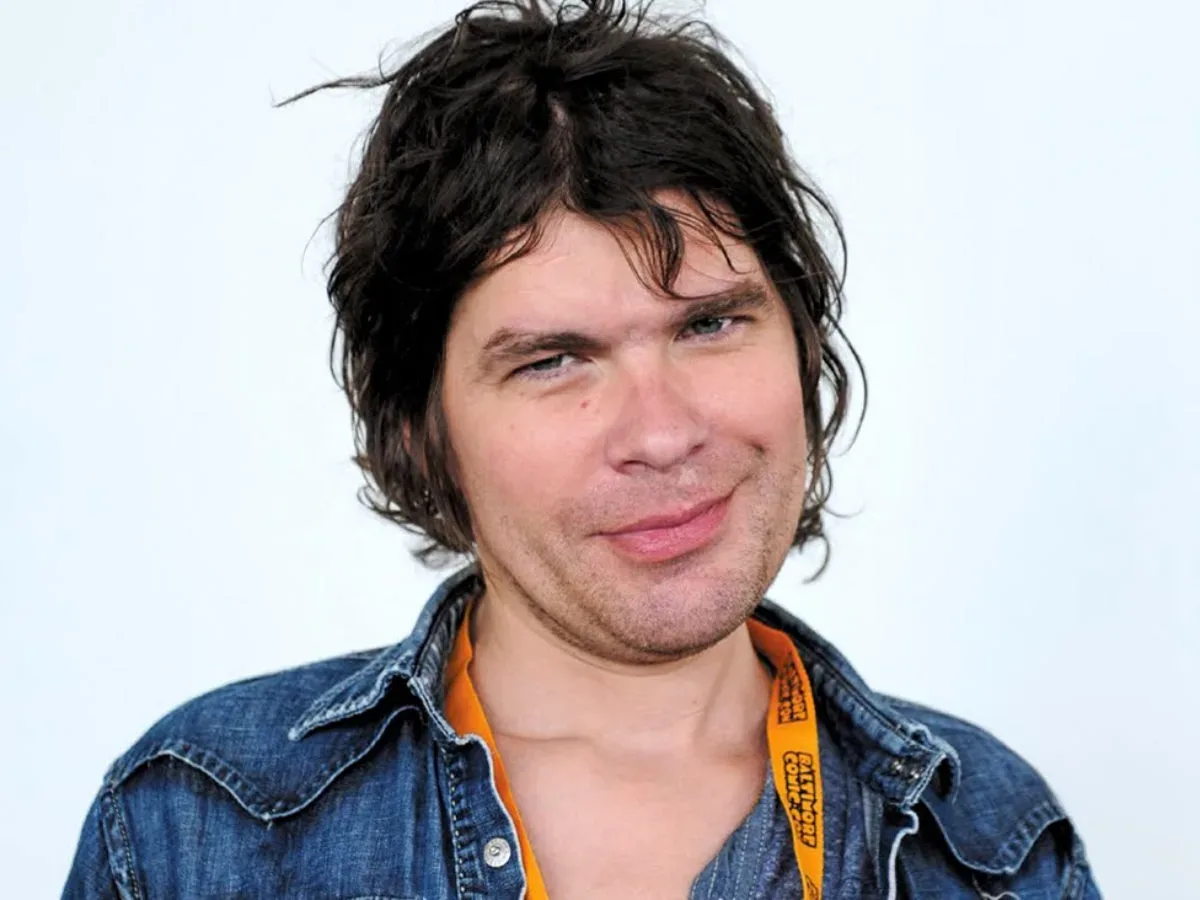
Comic-book variant covers have a habit of turning a single issue into a small event, but Lancer #1 is taking the artist-cover idea in a remarkably literal direction. Bad Idea’s advertised “Paul Pope” variant is not a newly drawn Paul Pope image. It is a photograph of Paul Pope himself, wearing a denim jacket, credited to photographer Kendall Whitehouse.
The joke is deliberate and very much the product. The publisher’s pitch is that a conventional Pope cover may contain his artwork but very little actual Pope; this 1:100 ratio variant therefore offers, by the most technically unassailable possible measure, more Paul Pope per square inch than a typical Paul Pope cover. Pope’s response carries the gag further: he has drawn many covers, but this is the first time he has had to stand still for one.
It is an unusually direct piece of comics marketing, and it arrives for a debut issue already crowded with conspicuous formats. Lancer #1, written by Mike Costa, illustrated by Jake Baker, and colored by Lee Loughridge, is due in stores on October 21, 2026. Its cover lineup also includes work by Jerome Opeña, Chris Burnham, Don Aguillo, and others, alongside a 1:50 virgin Paul Pope cover, an augmented-reality cover described as playable, and a 1:250 edition printed on an actual knife.
What the “Paul Pope” cover actually is
The key point for readers and collectors is simple: the 1:100 “Paul Pope” cover is a photo cover. Pope is the visible subject. It should not be treated as evidence of a newly illustrated Pope composition for the issue, even though the playful title does accurately identify whose likeness is on the book.
That distinction matters because creator-named variants normally lead readers to expect an image drawn by that creator. Here, the title functions as a punchline. The photograph uses Pope’s presence, reputation, and name recognition as the cover’s central concept rather than presenting his linework. Meanwhile, the separate 1:50 virgin Paul Pope edition is the variant that more conventionally fits the expectation of a Pope art cover, based on the provided listing.
“Virgin” is a term generally used for a cover presentation without the usual logo, issue number, barcode, or other trade dress placed over the artwork. In practical terms, that means the 1:50 edition and the 1:100 photo cover are not interchangeable versions of the same thing. They are distinct variants with different visual premises and different ordering thresholds.
Ratio variants: what 1:100 and 1:50 mean
The numbers attached to these editions describe retailer incentive ratios, not a confirmed total print run. A 1:100 variant is tied to a retailer ordering one hundred qualifying copies of the standard issue; a 1:50 variant is tied to fifty qualifying copies. Those ratios can make an edition harder for a shop to obtain than the regular cover, but they do not establish how many copies ultimately exist across all stores.
For anybody planning to seek out a particular Lancer #1 version, that distinction is important. “1:100” does not automatically mean exactly 100 copies were printed, and it does not on its own tell buyers what an individual shop will charge. Retailer ordering, local allocation practices, and after-market demand can all affect access and pricing. No price for the variants themselves is stated here. The standard 32-page, full-color issue has a listed cover price of $5.99.
The final order cutoff for Lancer #1 is September 21, 2026. That is the relevant date for comic shops deciding their orders, rather than a general promise that a specific variant will be on every shelf. Readers who want a particular cover should communicate with their preferred retailer before that deadline, while remembering that a request is not the same thing as a guarantee: a shop must determine whether it can and wishes to meet the applicable incentive threshold.
The variant lineup at a glance
- Standard issue: $5.99, 32 pages, full color.
- “Paul Pope” photo cover: a 1:100 retailer incentive featuring a photograph of Pope by Kendall Whitehouse.
- Virgin Paul Pope cover: a 1:50 retailer incentive.
- Other announced cover concepts: a playable augmented-reality cover and a 1:250 edition printed on an actual knife.
The knife edition is especially unusual enough to deserve careful wording. It is described as a comic book printed on an actual knife, and as a 1:250 variant. No further material, packaging, display, safety, or distribution details are supplied, so prospective buyers should not assume specifics beyond that unusual stated format.
The comic beneath the stunt
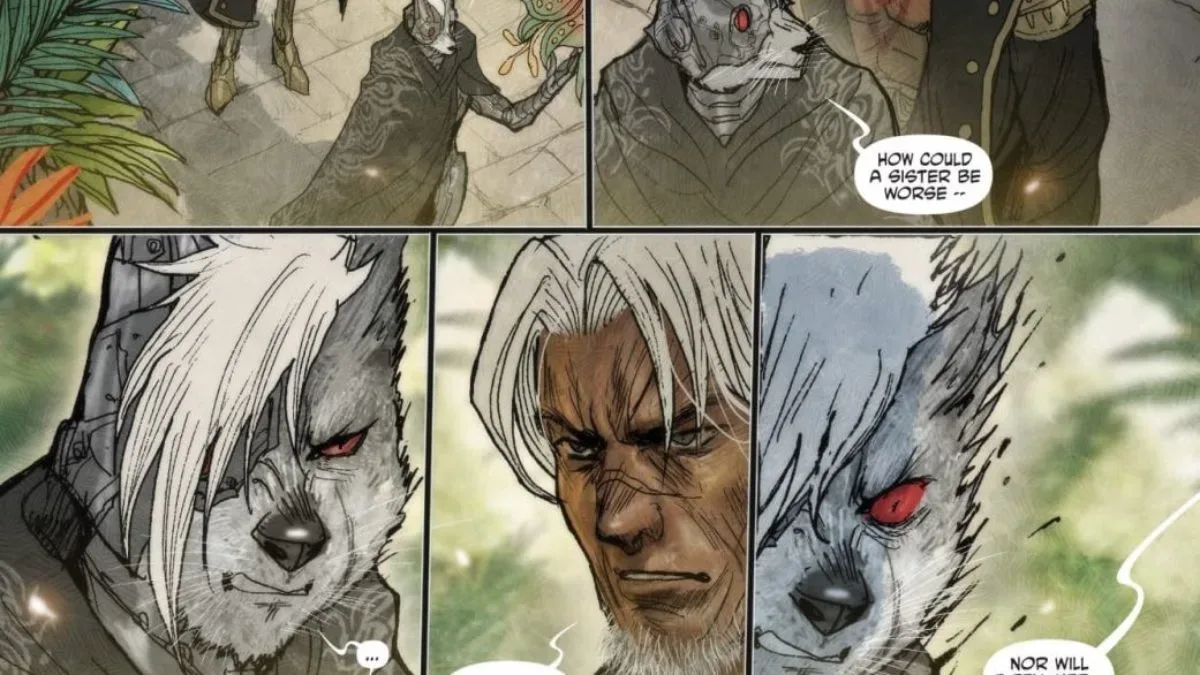
Cover gimmicks may dominate the conversation, but Lancer itself is presented as a brutal near-future action thriller built around app-mediated contract work. In its world, people open an app, accept a hunt, and receive payment to eliminate dangerous species affecting people, property, or profit. The stated examples range across coyotes in California, king cobras in Mumbai, feral camels in Australia, and vampire bats in Brazil.
The central character, military veteran Pete Sanborn, sees the service as something contemporary life does not often offer him: a mission, a paycheck, and the possibility that one more job could be enough. He has already sworn off the app after a Texas wild-hog hunt went disastrously wrong two years earlier. An old military friend then offers an apparently irresistible job: something enormous is living below New York City, and the pay is life-changing.
That setup shifts the series from an unusual labor-market premise toward creature-driven survival horror. The creatures underground are not what the hunters expect, and the threat becomes clearer only after Sanborn is already involved. The promotional framing invokes military action, monster suspense, science-fiction disaster, and gig-economy satire, compactly describing the concept as “Colonial Marines meet DoorDash.”
The app is more than background flavor in that pitch. It provides the mechanism that turns extermination into piecemeal work: a job is accepted, danger is addressed, and payment follows. Applying that arrangement to veterans and high-risk animal hunts lets the premise connect financial pressure with action-thriller stakes. It also gives the New York assignment a clear reason to be tempting even after Sanborn’s earlier experience: the payout is positioned as transformative, not merely attractive.
Why the photo-cover gag fits this launch
There is a shared logic between Lancer’s premise and its attention-grabbing variants. The series takes familiar systems of work and translates them into a heightened genre scenario. Its cover campaign takes a familiar piece of comics language—“a Paul Pope cover”—and translates it with extreme literalness. In each case, the recognizable term remains intact while its expected meaning gets bent into something more absurd or ominous.
The photo cover also does not pretend to be a replacement for Pope’s art. The entire gag relies on the audience understanding the difference. That is why the coexisting virgin Pope variant is notable: one version appears to offer the conventional artist-associated appeal, while the other makes the artist himself the collectible image. They speak to different forms of interest even though both use the same name.
For collectors, the practical appeal may be the cover’s instantly explainable concept. A photograph labeled the “Paul Pope” cover is an easy story to tell, and the 1:100 designation makes it a more limited retailer incentive than the 1:50 virgin edition. For readers, none of that changes the contents of the comic itself: Costa, Baker, and Loughridge are the listed creative team for the 32-page issue. The cover is a format choice, not an indication that Pope drew Lancer’s interiors.
That separation is worth retaining in any buying decision. A striking variant can be the reason someone notices an issue, but it is not necessarily the same as a preferred reading copy. Readers interested chiefly in Sanborn’s subterranean hunt may find the regular $5.99 edition the straightforward option; those pursuing a particular presentation have several increasingly unusual versions to ask a retailer about before the cutoff.
A deliberately literal collectible
Bad Idea has made the Paul Pope cover’s premise impossible to miss: it is Pope’s face, hair, and jacket on the front of Lancer #1, not an abstract tribute or a small cameo tucked into drawn artwork. The point is not subtlety. It is a knowingly over-specific answer to the question of what qualifies as a Paul Pope cover.
Whether the stunt becomes the most sought-after version will depend on orders and collector interest that cannot be known in advance. What is clear now is how the editions differ, when the issue is scheduled to arrive, and what Lancer is about once the cover joke is set aside. The comic launches October 21, 2026, with a near-future hunt beneath New York City and a set of variants ranging from conventional credited covers to a photo, augmented reality, and an actual knife.
For more creature-focused action news, see Aliens: Fireteam Elite 2’s Native Switch 2 release update.