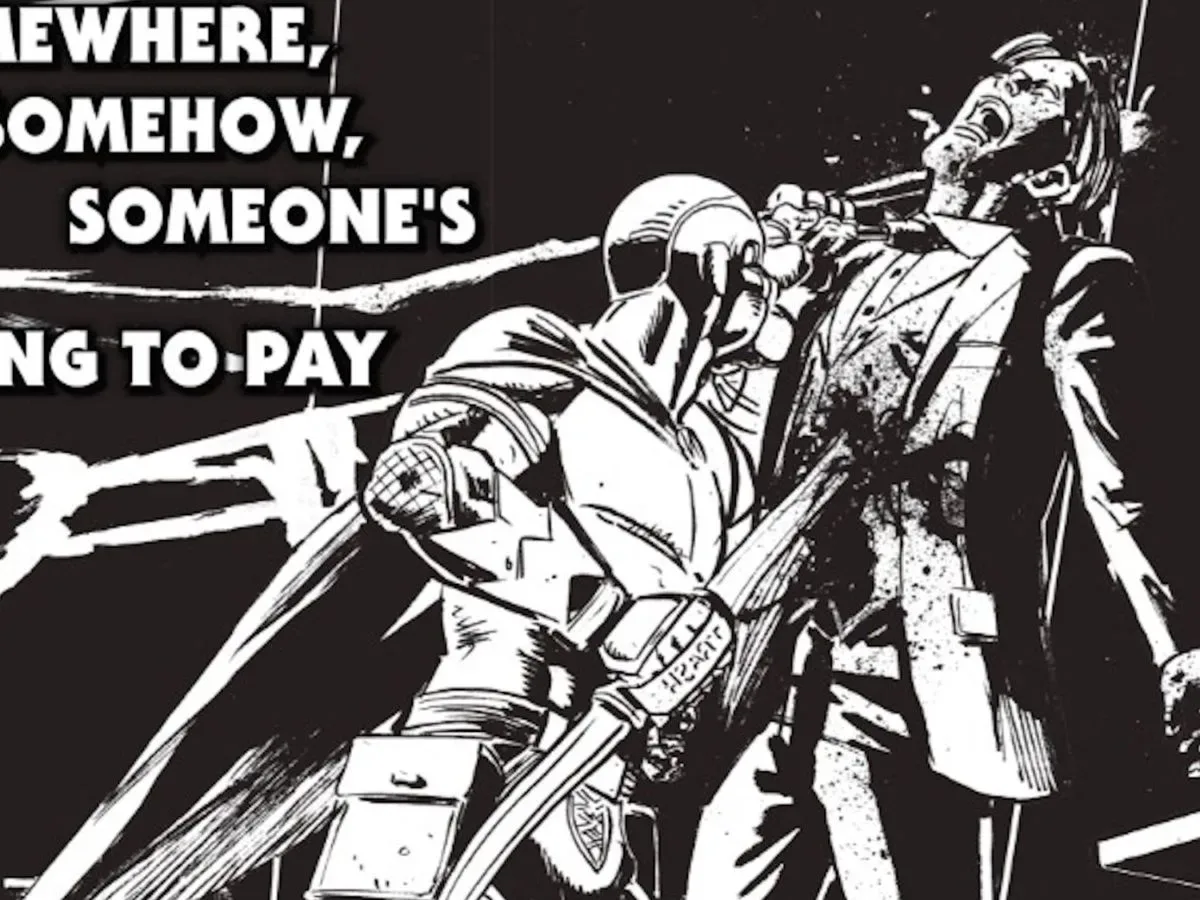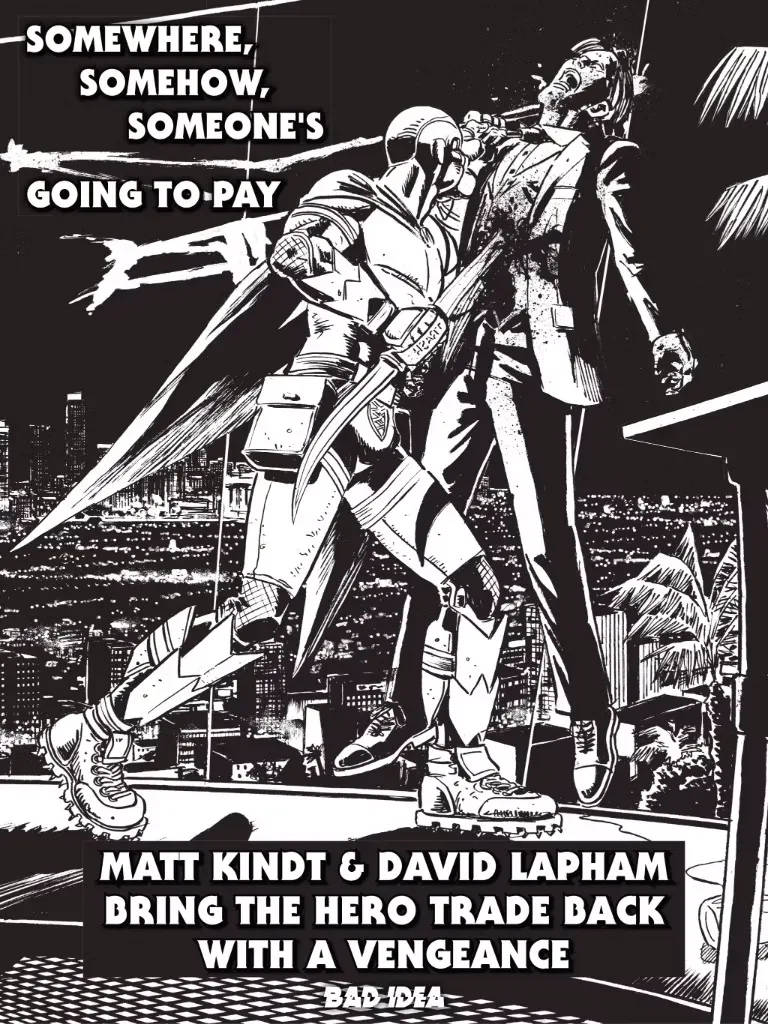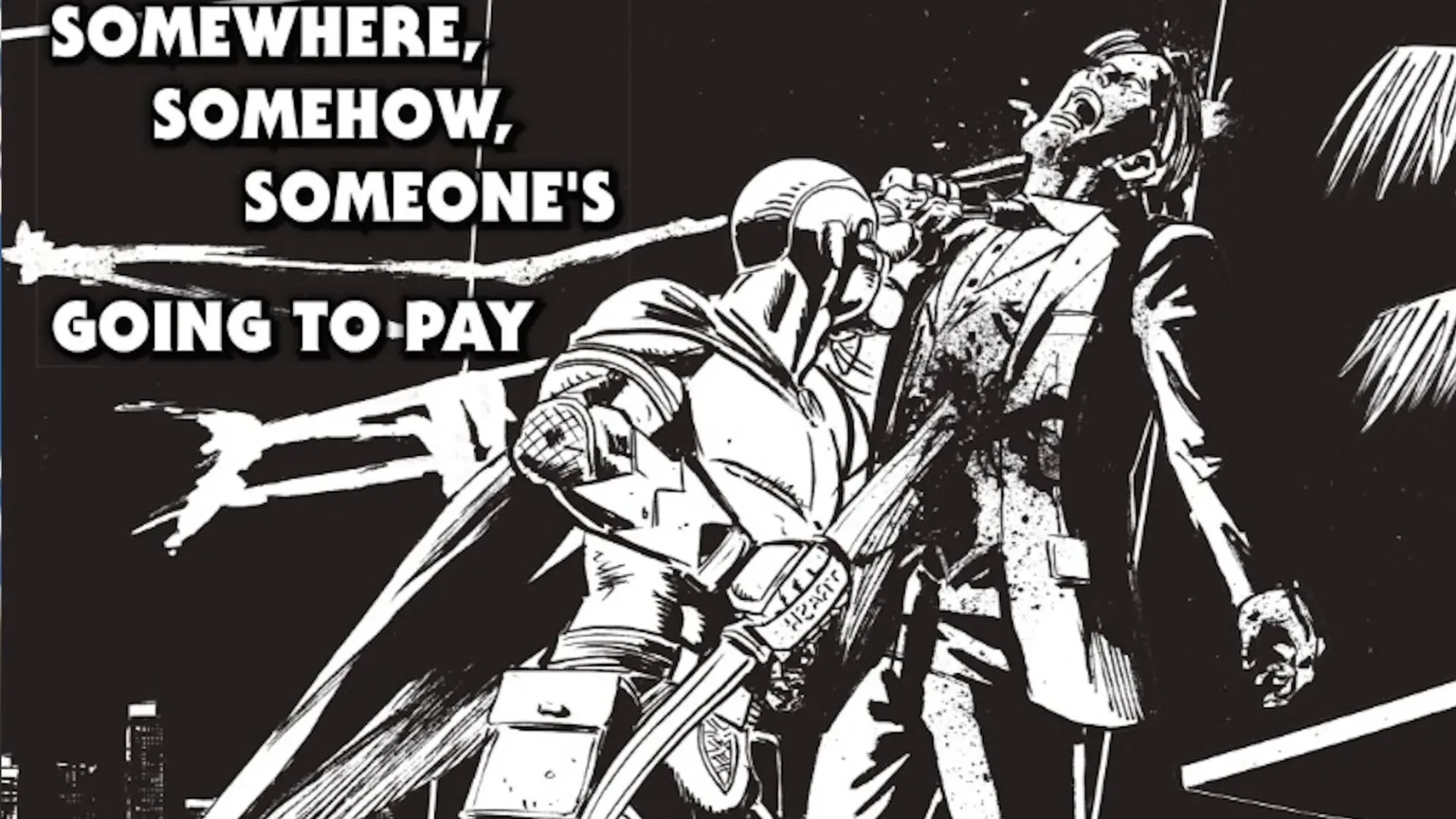
Bad Idea’s January 2027 comic-book lineup is led by The Hero Trade: The Butler #1, a one-shot from writer Matt Kindt and artist David Lapham that puts the consequences of superhero vigilantism at the center of its premise. Due January 6 for $5.99, the issue follows a former partner of a lethal crime-fighter known as The Watch—someone who has decided that stopping criminals through arrest is better than allowing his old ally to execute them.
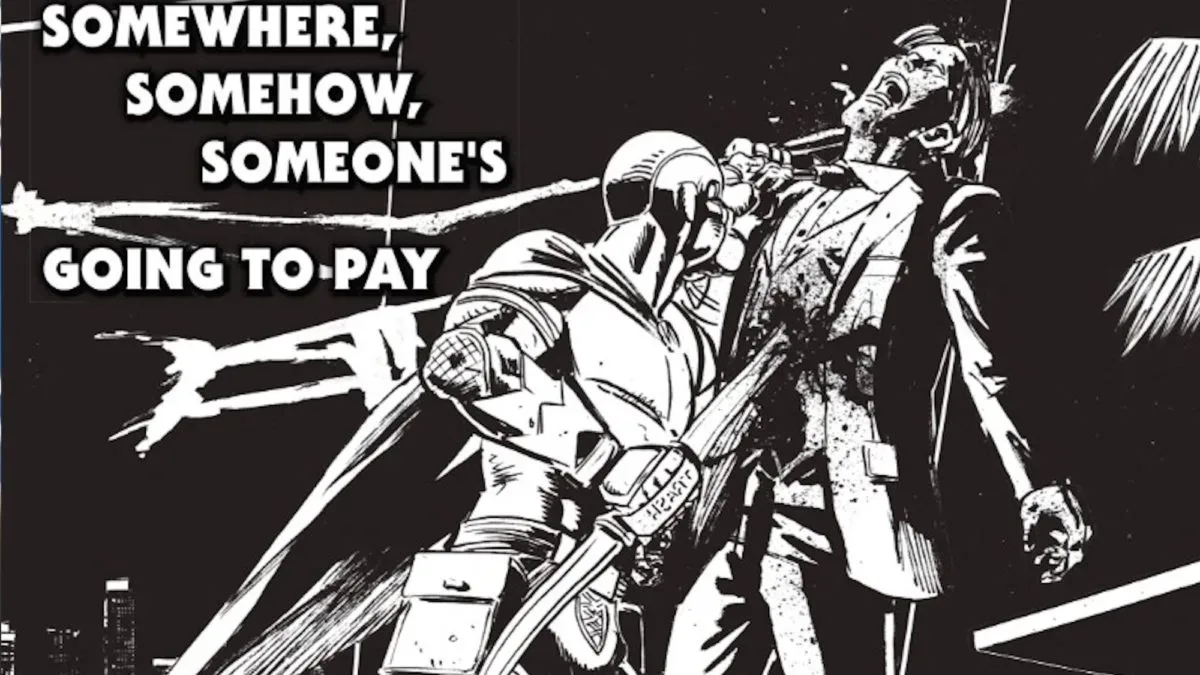
The book is being presented through an unusual formal constraint: it is told entirely in splash pages. The publisher calls the approach “Splashovision,” with black-and-white art and selective spot color. That is a significant part of the pitch rather than a minor production detail. A splash page is generally a comic page dominated by one large image, as opposed to a conventional page broken into several sequential panels. Building a complete one-shot around that format means Kindt and Lapham will have to make the transitions between action, memory, dialogue, and consequence work with fewer visible beats per page.
A superhero story about the person left to clean up
The title character, The Butler, previously fought alongside The Watch. Their partnership has ended because The Butler sees The Watch not as a hero but as an unstable vigilante who acts as judge, jury, and executioner, regardless of collateral damage. The Butler’s new objective is not simply to defeat his former partner in a brawl. He intends to get criminals into the legal system before The Watch can kill them.
That setup gives the story a more specific tension than a standard hero-versus-villain showdown. The Watch and The Butler apparently share an interest in confronting crime, but sharply disagree over what justice means and who gets to administer it. The Watch’s version is final and violent; The Butler’s is built around capture and incarceration. The book’s central conflict is therefore also an argument about accountability, due process, and whether a costume can ever justify unilateral punishment.
For more context, explore TCL TAB 10 Gen 4 Is Listed at $150 With a 10.1-Inch FHD Screen and 128GB Storage.
The title’s “clean-up” idea is equally important. The Watch is described as taking out the trash at night, but the story turns that language back on him: somebody has to deal with what is left behind after a vigilante’s crusade. In this case, that mess includes bodies, street-level damage, and the moral debris created when a supposed protector decides that collateral damage is acceptable. The premise places The Butler close enough to see the operational reality of The Watch’s methods, rather than viewing them from a distance as spectacle.
What “superhero deconstruction” means here
The publisher positions The Hero Trade: The Butler as superhero deconstruction. In comic-book terms, that usually means examining the assumptions behind heroic fiction instead of accepting them automatically. A conventional superhero story may treat extraordinary violence as necessary because the protagonist uses it against obvious evil. A deconstructive story asks harder questions: Who defines evil? Who bears the cost? What happens when a powerful masked figure makes irreversible decisions without oversight?
Based on the solicitation, this one-shot appears focused on those questions at street level. The Watch is not framed as a distant symbol of power; he is a former partner whose choices directly shape The Butler’s mission. The stated contrast between putting people behind bars and putting them “six feet under” makes the conflict legible before readers know the wider details of The Hero Trade.
The creative description invokes the hard-edged black-and-white crime-comic atmosphere associated with Frank Miller’s Sin City, alongside the psychological and political scrutiny often associated with Alan Moore and Dave Gibbons’ Watchmen. Those are reference points for tone and ambition, not evidence that the new issue crosses over with either property. The supplied details identify The Butler as its own Hero Trade story starring The Watch and The Butler.
The splash-page experiment could change the reading rhythm
“Told entirely through splash pages” is a bold promise, especially for a crime story built on pursuit and moral friction. Traditional comics use panel-to-panel sequencing to control pace: a creator can linger on a reaction, accelerate a fight with small fragments, or conceal a detail until the turn of a page. Full-page compositions do something different. They foreground a single moment, setting, figure, or revelation and ask the reader to spend more time inside it.
That can suit the material described for The Butler. The concept revolves around aftermath, ruined streets, body bags, and an exhausted figure facing the consequences of another person’s brutality. Large images could make each location or discovery feel inescapable. Spot color—the use of limited color accents within otherwise monochrome art—may help direct attention toward a key object, a visual motif, or an emotional rupture without abandoning the noir-like black-and-white presentation.
It also creates a challenge. Splash pages can be immediately dramatic, but a full issue of them has to avoid becoming visually uniform. The success of the format will depend on variation in composition, lettering, scene construction, and the way the story moves from one page-sized image to the next. Lapham is credited for both art and cover, making him central to how that experiment lands on the page.
Kindt and Lapham are the only announced creative team for the one-shot: Kindt writes, while Lapham supplies interiors and cover art. The solicitation identifies Kindt with BRZRKR and Lapham with Stray Bullets, but the relevant point for this book is the division of labor. One creator is shaping a plot about competing definitions of justice; the other is carrying the entire visual burden of an all-splash-page presentation.
January’s horror books go in very different directions
Bad Idea’s other January releases lean into horror, although their setups are notably different. It Demands Sacrifice #3, the third chapter of a four-issue series, is scheduled for January 20 at $5.99. The script is credited to Philip Gelatt and David Yarovesky, with art by Adam Pollina and colors by Dean White.
The series’ immediate stakes are supernatural. A portal has been opened, a cult leader called Magus is seeking another sacrifice, and the ritual is intended to summon the ancient demon Asmodeus. Bronson, a young goat whose mother has already been sacrificed, is now the target. The solicitation presents his escape route as a passage through the gates of Hell, while leaving the larger question open: can he save both his family and the world?
As issue three of four, It Demands Sacrifice is explicitly at the penultimate stage of its story. That means this installment is positioned as escalation rather than resolution. The opening of the portal and the threat to Bronson suggest a narrowing window before the final issue, with the cult’s ritual and the demon-summoning plan reaching their decisive phase.
Lancer #3 is also scheduled for January 20 and also carries a $5.99 price. It is described as the third part of a four-issue action-horror story set around a desperate attempt to escape New York’s sewers. Pete Sanborn joined a crew expecting a relatively straightforward job involving gators, equipment, and a quick payday. Instead, survival has become the only apparent priority.
There is one credit detail readers may want to keep in mind. The listing header names Mike Carey as writer, Jake Baker as artist, and Don Aguillo as cover artist. The solicitation copy beneath it instead refers to “writer Mike Costa.” The provided information does not explain the mismatch, so the credited writer cannot be clarified beyond noting that discrepancy. Baker and Aguillo are consistently associated with the interior art and cover, respectively, in the listed credits.
Release details at a glance
- The Hero Trade: The Butler #1 (one-shot) — Written by Matt Kindt; art and cover by David Lapham. $5.99. January 6, 2027.
- It Demands Sacrifice #3 of 4 — Written by Philip Gelatt and David Yarovesky; art and cover by Adam Pollina; colors by Dean White. $5.99. January 20, 2027.
- Lancer #3 of 4 — Listing credits: writer Mike Carey, art by Jake Baker, cover by Don Aguillo; solicitation prose separately names Mike Costa as writer. $5.99. January 20, 2027.
For readers most interested in a formally unusual superhero crime comic, The Hero Trade: The Butler is the key January release: a standalone issue built around the damage that a lethal vigilante leaves behind, and a visual presentation designed to keep every story beat at splash-page scale. Meanwhile, It Demands Sacrifice advances toward a demonic ritual’s endgame, while Lancer continues its sewer-set survival scenario.