Invader Comics’ December 2026 schedule is leaning decisively into horror, but not in just one register. The month’s three listed releases span an illustrated examination of Nosferatu, a holiday-set monster hunt led by an imprisoned Santa Claus, and the violent finale to a frontier horror miniseries. Taken together, they offer distinct routes into the genre: film history, gleefully twisted seasonal mythology, and survival horror built around a fortress under threat.
The releases are spread across two Wednesdays. Marco Fontanili’s Nosferatu: Behind the Horror and Death and the first issue of Shawn Lewis and Ben Perkins’ The Naughty List are both dated for December 16, 2026. This Land Is Old And Dark #3, the closing chapter from Ryan Crowe and Abel Garcia, follows on December 23.
Nosferatu’s troubled life becomes the subject
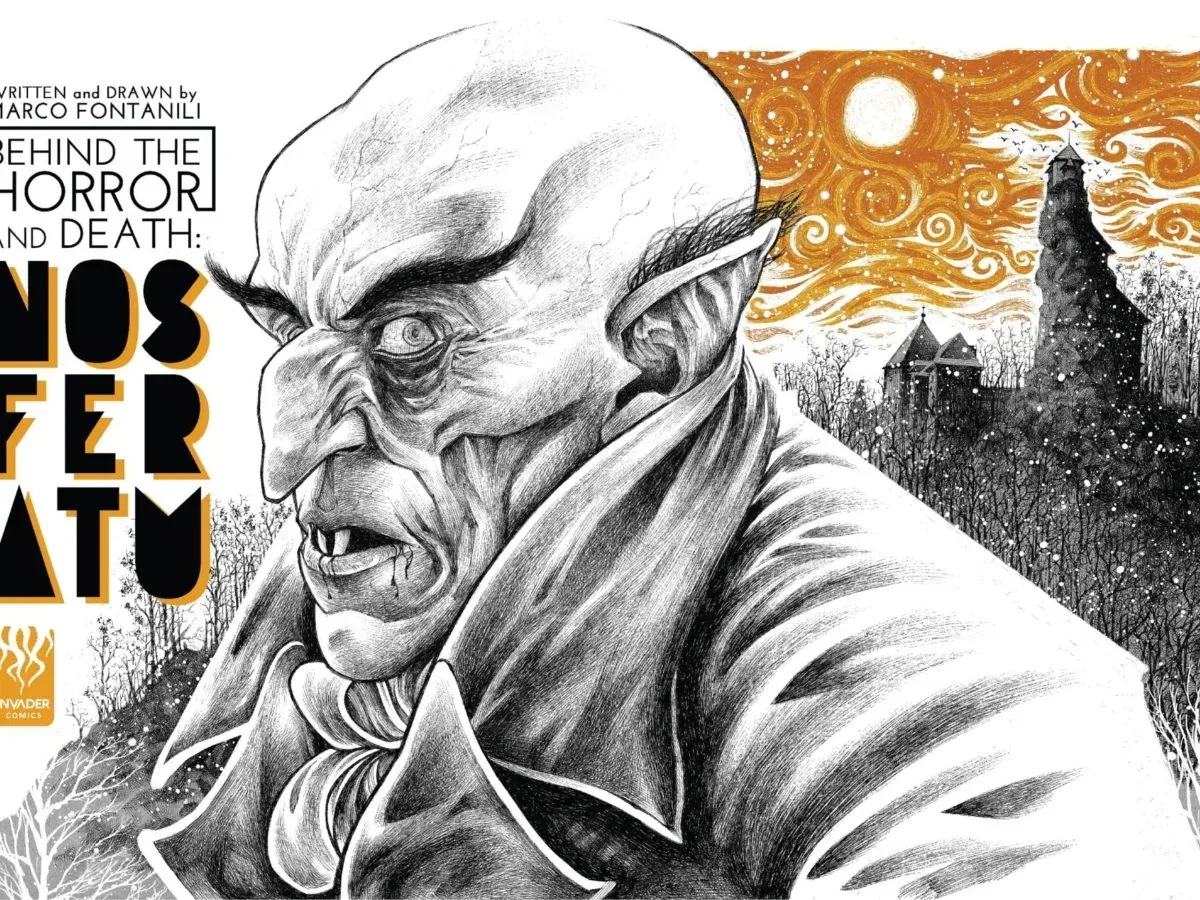
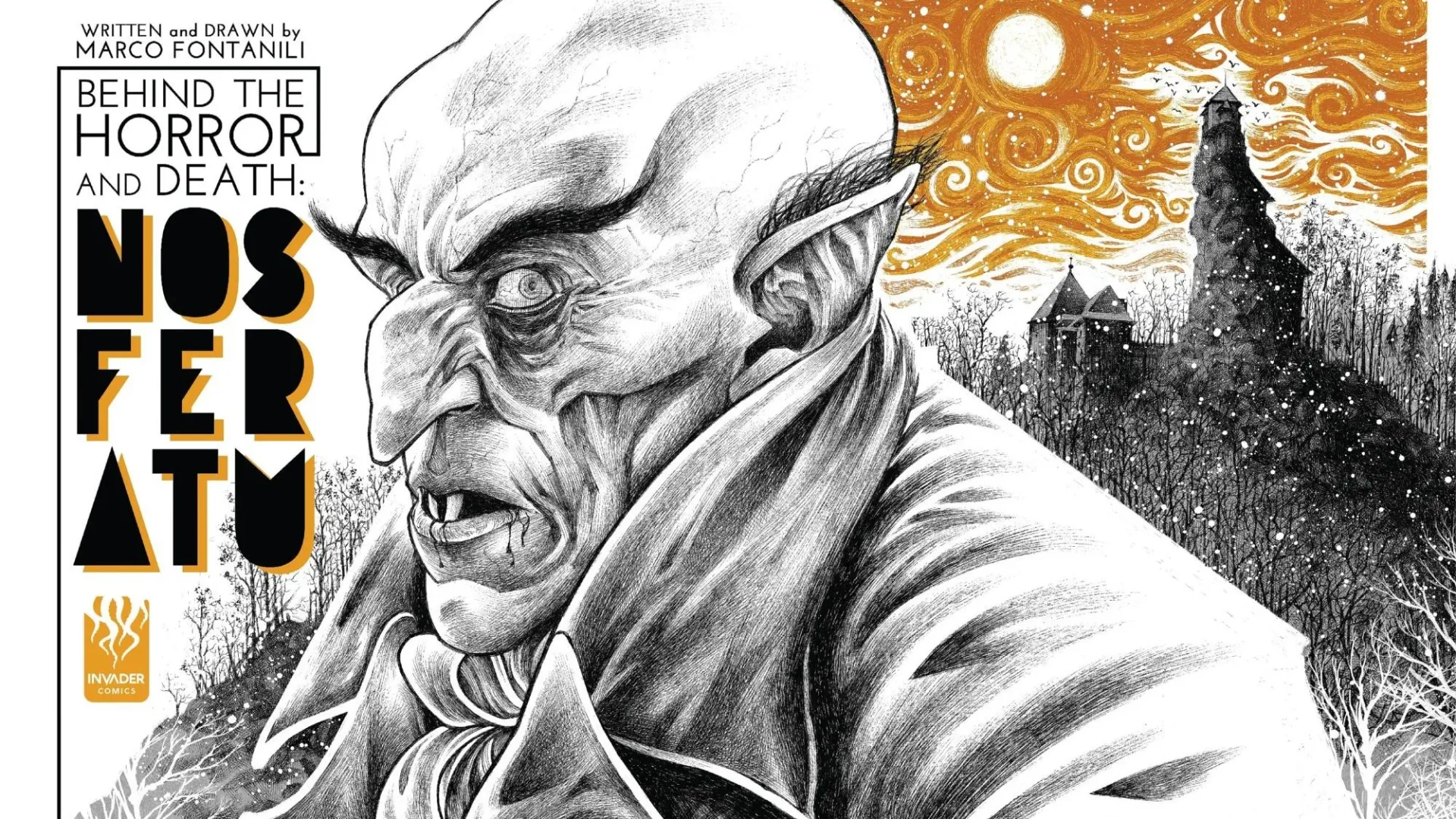
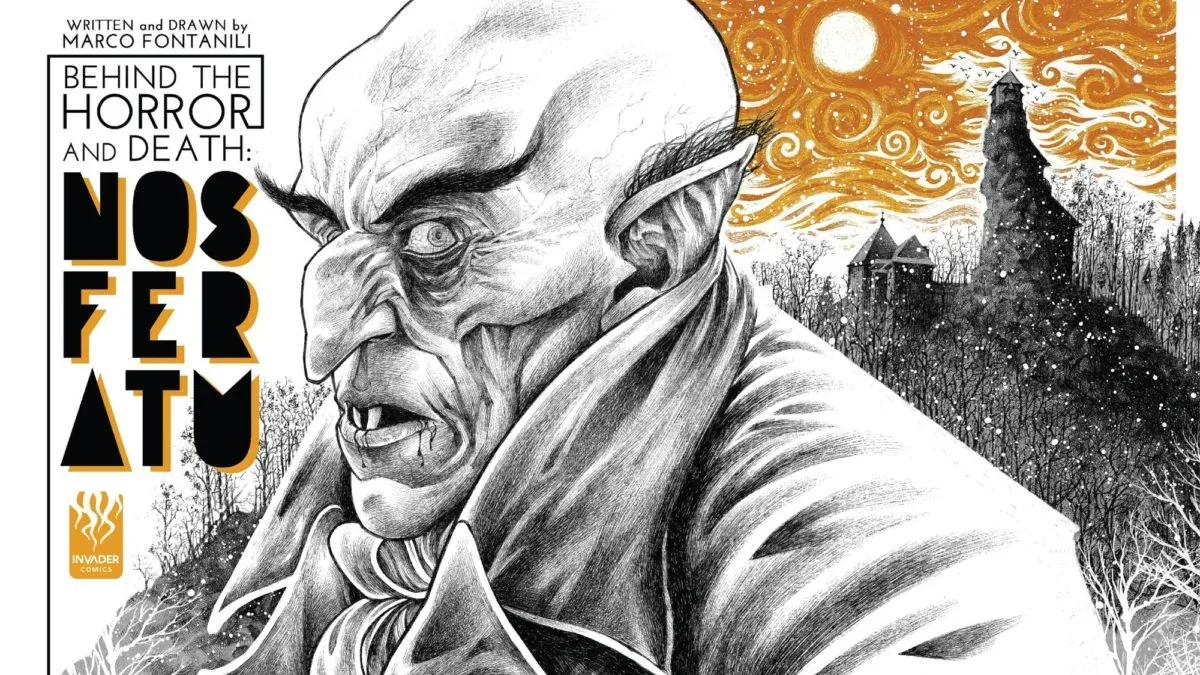
Nosferatu: Behind the Horror and Death is a 176-page paperback by Italian artist Marco Fontanili, who is credited as writer, artist and cover artist. Rather than presenting itself as a new vampire-fiction adaptation, the book is described as an illustrative exploration of the history, life, death and legacy of the classic German Expressionist film Nosferatu.
That distinction matters. This is positioned as a book about a film and its difficult path through history, told through evolving art. Its stated subjects include the movie’s creation, “assassination,” near-extermination and later resurrection. The language signals that the book is concerned not only with the screen story of a vampire, but also with the precarious afterlife of a foundational horror film.
German Expressionism refers to an artistic movement associated with stylized, emotionally heightened imagery. In a film context, the term commonly points readers toward deliberate visual design, including distorted or dramatic compositions and a heightened atmosphere. Fontanili’s emphasis on illustration makes that connection especially appropriate: the listed format suggests a visual retelling or interpretation of the film’s legacy rather than a prose-only account.
The paperback will use a sideways, or landscape, format. That is a practical detail worth noting for prospective readers. A landscape page is wider than it is tall, a shape that can give artwork more room for panoramic scenes, cinematic compositions and image-led sequencing. It also means the book will sit and display differently from a conventional portrait-oriented trade paperback.
At $22.99, the Fontanili volume is the month’s largest listed release in both page count and format. For readers drawn to horror cinema and art books, the appeal is in its declared combination of visual work and historical subject matter. For comics readers, it also represents a reminder that the medium can examine film history through illustration rather than simply translate a familiar property into serial fiction.
The Naughty List turns Christmas mythology into an asylum break
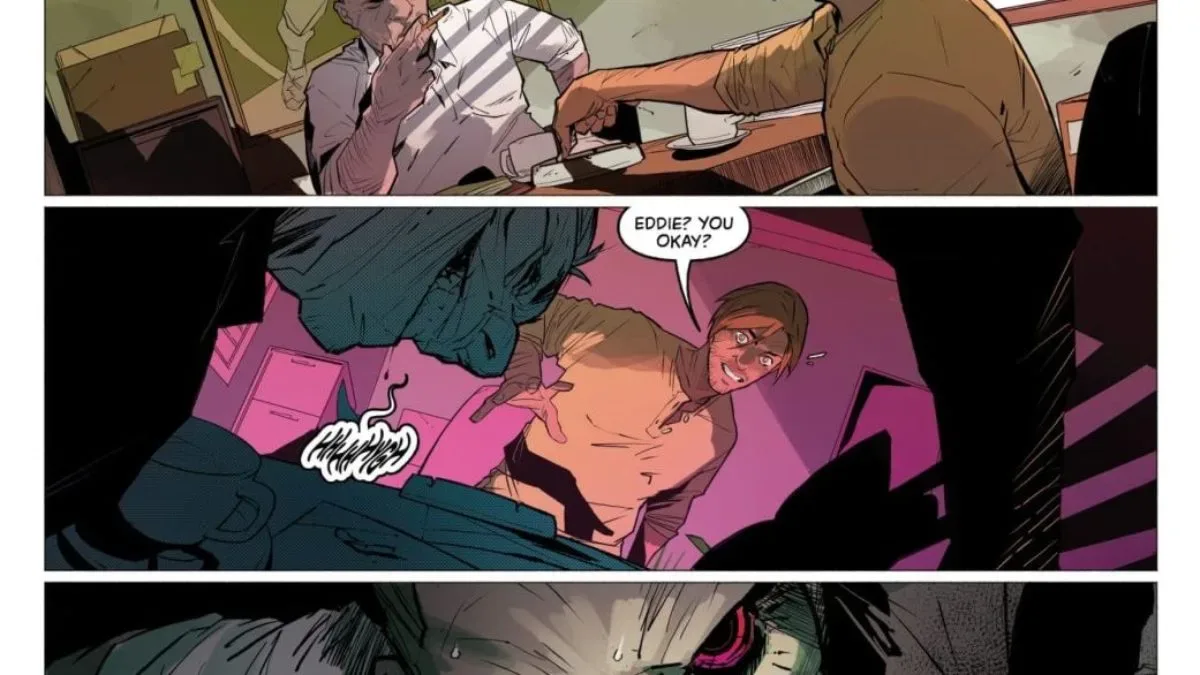
The Naughty List #1 begins a four-issue miniseries written by Shawn Lewis, with Ben Perkins handling both art and the cover. Its premise starts at the North Pole, where a massacre has left the festive setting awash in horror. Santa Claus, depicted here as grizzled and jaded, is accused of carrying it out and confined to a maximum-security asylum intended for mythological figures deemed iconic and insane.
The story’s central reversal arrives when a jailbreak releases a group of deranged holiday icons into the wider world. The confined Santa becomes the one person able to pursue them. That setup establishes a clear horror-action engine for the series: the protagonist begins as a suspected criminal, while the apparent threat emerges from the escaped figures around him.
There is a useful genre term for this sort of setup: holiday horror. It describes horror stories that use the imagery, rituals or characters of a holiday as part of their threat and atmosphere. In this case, Christmas iconography is not background decoration. The North Pole, Santa and holiday legends are the premise’s essential machinery, transformed from safe seasonal symbols into a rogue’s gallery.
Readers should also note the “of 4” designation. That indicates a finite miniseries rather than an open-ended ongoing comic. A limited series has a planned endpoint—in this case, four issues—which can be helpful for anyone deciding whether to start from the debut. The first issue is listed at $5.99 and dated December 16.
The concept’s potential rests on contrast: a familiar holiday figure is framed as both fall guy and hunter, while the supposed world of comfort and celebration becomes the scene of a massacre. The solicitation establishes the broad conflict but does not identify the escaped holiday legends individually, explain Santa’s alleged role in the killing, or specify how the investigation will unfold. Those remain story questions for the series itself, rather than details to assume from the debut’s description.
Fort Courage faces its final breach
The month closes with This Land Is Old And Dark #3, the final issue of the three-part series. Ryan Crowe is credited as writer, Abel Garcia as artist and cover artist, and Myers is also named in the description of the concluding chapter. Priced at $5.99, the issue is scheduled for December 23.
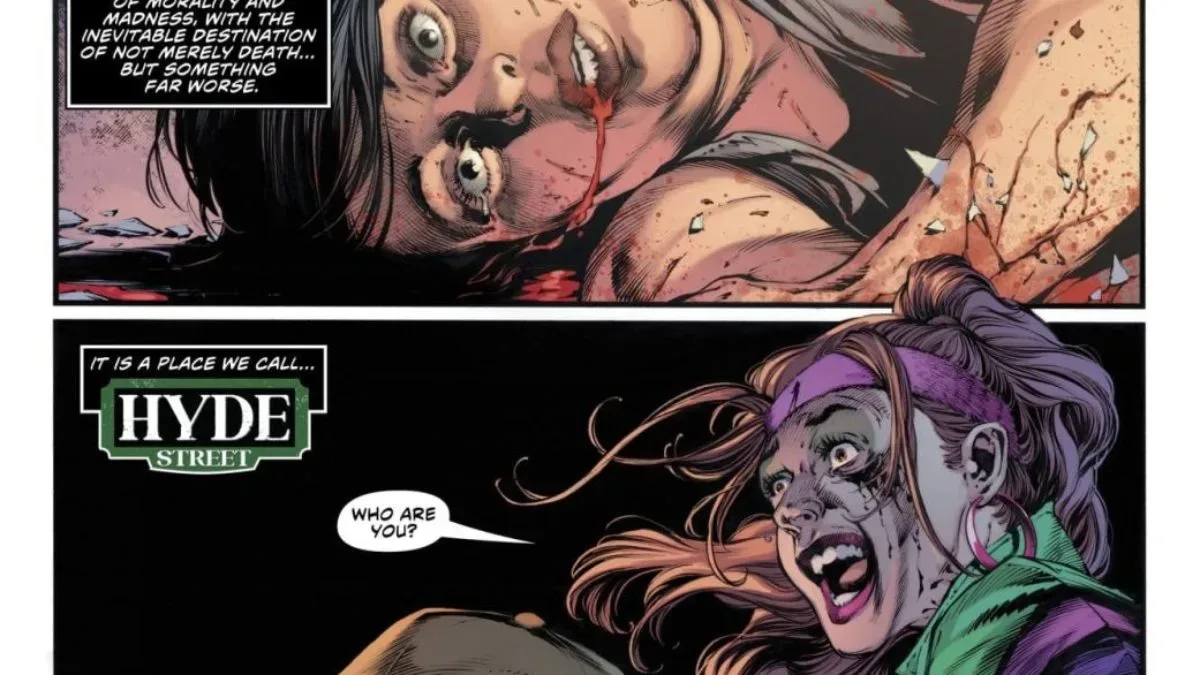
The immediate objective is stark: Jacques Du Lac is racing toward Fort Courage alongside Longhunter and her band of exiles. Inside the fort are Jacques’ wife and daughter. The group’s urgency comes from what Fort Courage has represented up to this point: its walls have kept the horrors of the Vast outside for years. That protection is about to fail.
The finale also promises a revelation about the Skinwalkers, one that Jacques wishes he could erase from memory. Because the description only says that their true nature is exposed, readers should resist treating the label as a complete explanation of what the creatures are or how they operate in the series. What is firmly established is the threat to the fort, Jacques’ attempt to reach his family, and an ending framed as a collapse of the boundary between people and monsters.
The language of walls, exiles and an invading horror gives the issue a siege structure. A siege narrative puts pressure on a defended place and the people trapped within it, making every breach or failed defense consequential. Here, Fort Courage is more than a location: it is the barrier separating its inhabitants from the terrors of the Vast. Its fall therefore carries both physical danger and the symbolic end of the safety it has long provided.
As a final issue, #3 has a different role from The Naughty List #1. The latter needs to establish a world and launch a chase; This Land Is Old And Dark #3 is built to resolve an existing crisis. New readers interested in the Fort Courage storyline may want to begin with the earlier two issues so that Jacques, Longhunter, the exiles and the danger beyond the walls have their intended context.
A compact December slate with three different entry points
These books share an attraction to horror imagery, but their formats and reading commitments are notably different. Fontanili’s Nosferatu project is a standalone 176-page, landscape-format illustrated book. The Naughty List begins a new four-part fictional series. This Land Is Old And Dark delivers a conclusion for readers already following its three-issue story.
- December 16, 2026: Nosferatu: Behind the Horror and Death TP, by Marco Fontanili; 176 pages; $22.99.
- December 16, 2026: The Naughty List #1 of 4, written by Shawn Lewis with art and cover by Ben Perkins; $5.99.
- December 23, 2026: This Land Is Old And Dark #3 of 3, written by Ryan Crowe with art and cover by Abel Garcia; $5.99.
For readers keeping an eye on comic-book publishing and fresh series launches, Invader’s December offerings sit alongside a wider cycle of comics returning to press, including recent news of additional printings for several books. The throughline is not a shared genre, but the variety of ways comics can meet readers: a new issue, a final chapter, a collected visual work, or another run for an already-released debut.
Invader’s three December releases make their pitch plainly. One revisits a landmark horror film through original illustration and a historical lens. One asks Santa to hunt escaped holiday nightmares. One tears down a fort’s longstanding defense against the unknown. Horror readers looking for a specific kind of commitment—standalone volume, new miniseries, or final installment—have a clearly differentiated choice in each case.