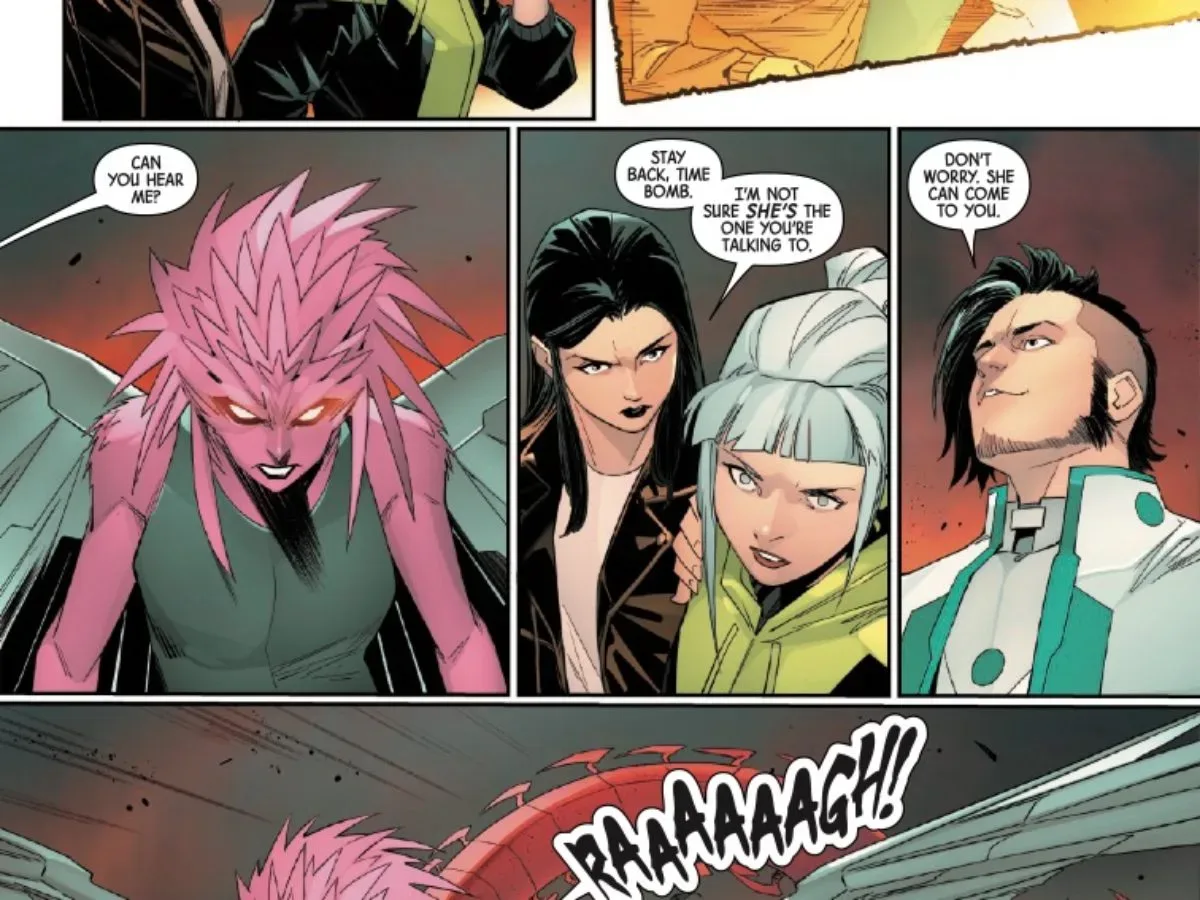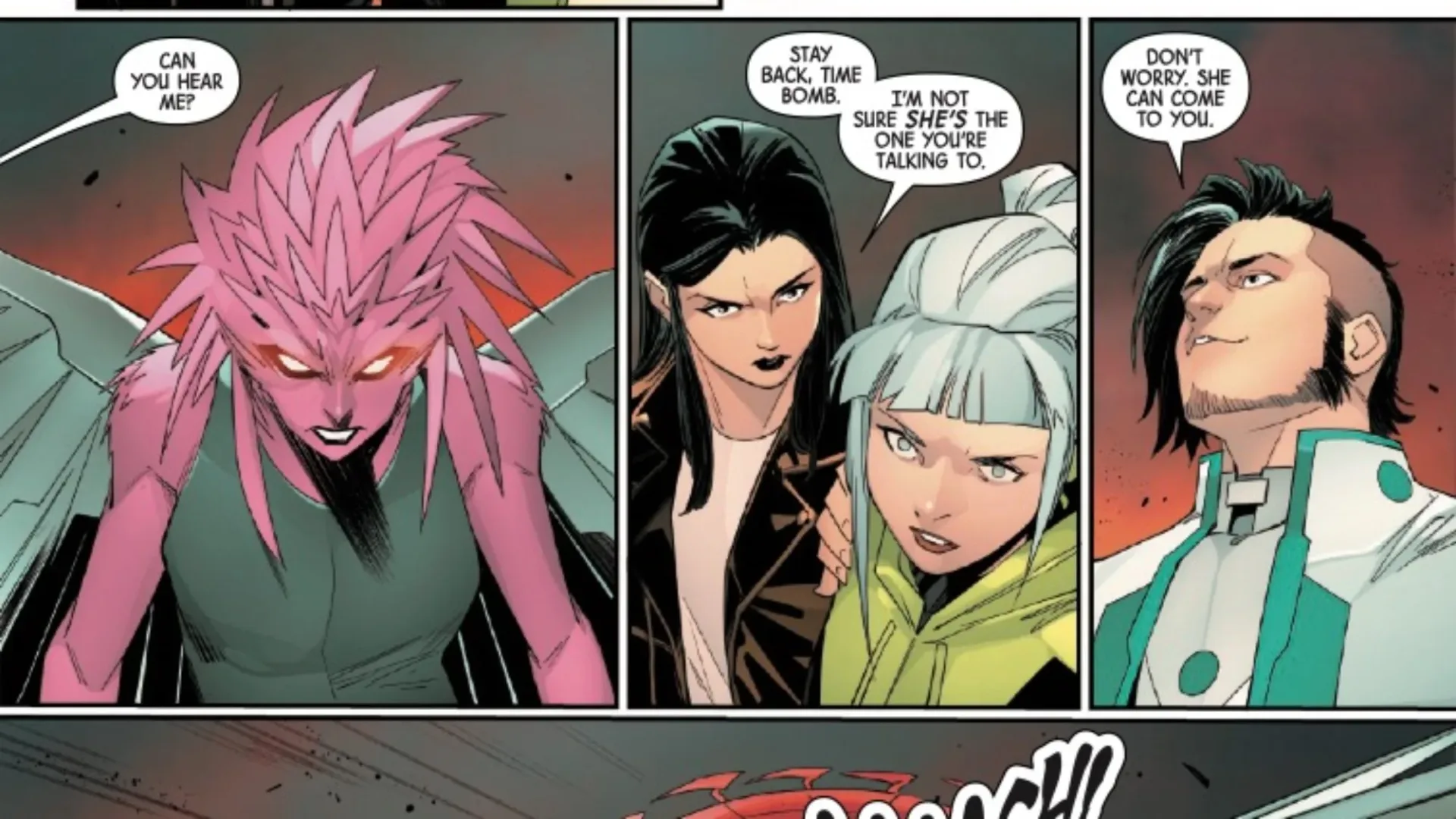
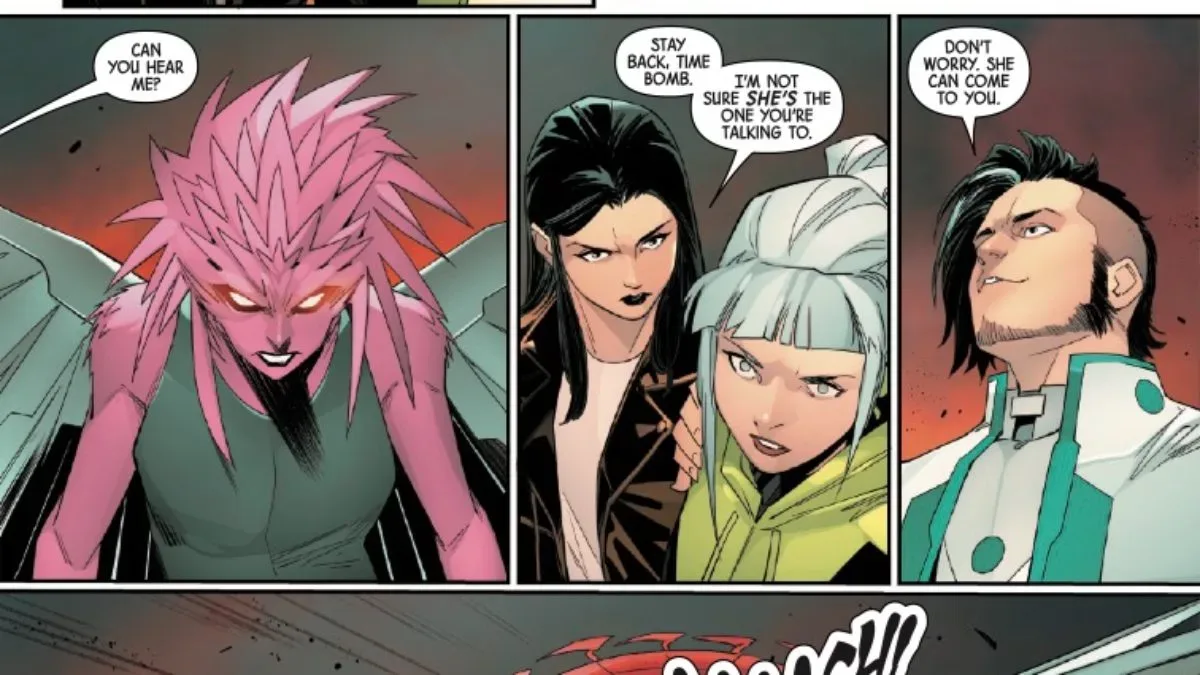
Generation X-23 #10 is positioned as a decisive issue for Laura and Gabby, with the pair trying to reconnect the Generated children with their original families while facing active resistance from the Church of the Generated. Led by X-Infinite, the group is prepared to stop that reunion effort by any means necessary.
The issue is billed as the finale of this conflict, which puts the emphasis squarely on the fate of the Generated rather than treating the family-reunion premise as a simple rescue mission. The central question is not merely whether Laura and Gabby can locate the children or reach their families. It is whether those bonds can be restored at all when a powerful opposing group has built an identity and a cause around keeping the Generated apart from the people who made them.
Marvel lists Jody Houser as writer and Marco Renna as artist, with a cover by Athila Fabbio. A David Lopez variant is also listed. The 32-page, Rated T+ comic carries a $3.99 US price and is listed for sale on November 11, 2026.
A reunion story complicated by ownership and identity
The phrase “original families” immediately makes the stakes more complicated than a conventional homecoming. The Generated are described as kids who were engineered, and the opposing Church is defined by its commitment to them. That creates a collision between two ways of viewing the children: as individuals with a right to their own lives and relationships, and as people whose origin has been turned into the basis for a larger collective ideology.
“Generated” is the key term in the issue’s setup. In this context, it refers to children whose existence was engineered rather than naturally born. The available premise does not establish how each child feels about reunion, what each original family wants, or what conditions led to the separation. Those missing details matter. They leave room for the finale to explore whether recovering a biological or original connection necessarily means restoring a healthy relationship.
That uncertainty is what gives the premise emotional weight. Reuniting people sounds unquestionably positive in a short synopsis, but the act can carry questions of consent, belonging, memory and self-definition. A child may have an origin family without having an uncomplicated sense of family. Likewise, a group that presents itself as a sanctuary may still exercise control over the people it claims to protect.
Laura and Gabby are therefore confronting more than an enemy force. They are entering a dispute in which identity has been organized into doctrine. The Church of the Generated is not just an obstacle placed in the heroes’ path; its very name suggests a group that has transformed the Generated condition into a shared belief system.
What “a church divided” signals for the finale
The issue’s stated hook, “A Church Divided,” points toward a schism: a fracture within a religious or ideological body. In comic-book terms, that can mean an internal dispute over leadership, purpose or the people a group claims to serve. The wording does not confirm exactly who will break with whom, but it establishes that the Church of the Generated may not be as unified as its public position suggests.
X-Infinite is identified as the Church’s leader and the person driving the effort to stop Laura and Gabby. That makes him the clearest opposing force in the available setup. His role also sharpens the moral contrast at the heart of the issue. Laura and Gabby are pursuing reunification; X-Infinite’s organization is fighting to prevent it. Yet the solicitation’s emphasis on a divided church indicates that the conflict may involve more than a clean heroes-versus-villain structure.
For readers, a schism raises several possible tensions without resolving them in advance:
- Whether all members of the Church agree with X-Infinite’s approach.
- Whether the Generated children see the Church as protection, imprisonment, community, or some mixture of all three.
- Whether reconnecting with original families can happen without treating the children as property to be returned.
- Whether Laura and Gabby’s objective will require negotiation as well as confrontation.
Those are analytical possibilities grounded in the issue’s stated conflict, not confirmed plot beats. The official description only promises that the Church will oppose the reunion effort forcefully and that the final outcome for the Generated is at stake.
Why Laura and Gabby fit this conflict
Pairing Laura and Gabby with this particular mission gives the finale a clear thematic focus. Their work is framed around bringing the Generated back into contact with their original families, a goal that centers care and connection rather than a purely tactical win. Even before knowing the exact events of the issue, the premise places them on the side of restoring choices and personal ties that an institution is trying to obstruct.
The pressure comes from the possibility that a well-intentioned mission can still become reductive if it ignores what the children themselves want. That is why the description’s language around “fate” matters. It suggests that the final issue is intended to settle something larger than the immediate standoff with X-Infinite. The outcome could define where the Generated belong and who gets to make that decision.
There is also an important difference between an original family and a chosen family. The solicitation calls attention to the former, while the Church appears to offer a communal identity of its own. The issue may place those concepts in direct opposition, but they do not have to be mutually exclusive in principle. A person can carry a connection to their origins while forming new bonds elsewhere. The drama arises when an outside authority insists that there can be only one acceptable answer.
A compact finale with personal stakes
At 32 pages, Generation X-23 #10 has a limited space in which to resolve its central clash. That makes the framing especially important. Rather than advertising a broad crossover-scale crisis, the issue is presented as a concentrated confrontation built around children, families and a community that fears—or rejects—the idea of returning them to their origins.
“Gut-punching” is naturally promotional language, but it signals the intended tone: an emotionally difficult resolution rather than a routine victory lap. The synopsis does not reveal who prevails, whether the children are reunited, or what becomes of X-Infinite and the Church. That restraint is appropriate for a finale whose premise depends on the reader caring about the consequences of a decision, not simply the mechanics of a fight.
It is also a reminder that superhero stories often use heightened concepts to examine intimate stakes. An engineered group, an organized church and a leader willing to act without limits provide the genre framework. Underneath that framework is a recognizable question: when someone has been separated from their origins and absorbed into a larger system, what does a meaningful reunion look like?
The issue’s technology-and-control imagery also sits beside modern anxieties about connected devices and who has authority over them. That broader concern has practical real-world parallels; for a separate look at the trade-offs surrounding connected appliances, see Smart Refrigerators Promise Convenience, but Their Long-Term Costs Deserve a Hard Look. Generation X-23 #10 is fiction, but its premise similarly turns control, access and autonomy into central concerns.
Release details and variant information
Generation X-23 #10 is listed as a Marvel release on sale November 11, 2026. The standard edition is 32 pages, Rated T+, and priced at $3.99 in the United States. Its listed product code is 75960621449501011.
A David Lopez variant is also listed at $3.99 US and $5.00 CAN, with product code 75960621449501021. The presence of a variant provides an alternate cover option, but it does not indicate different story content; no interior-content distinction is provided in the available release information.
For readers following the arc, this is the issue identified as the finale and the point at which Laura and Gabby’s plan to reunite the Generated with their original families meets its most direct challenge from X-Infinite’s Church. For readers arriving specifically for Laura and Gabby, it promises a conflict that turns their mission into a question of identity, agency and the meaning of home.