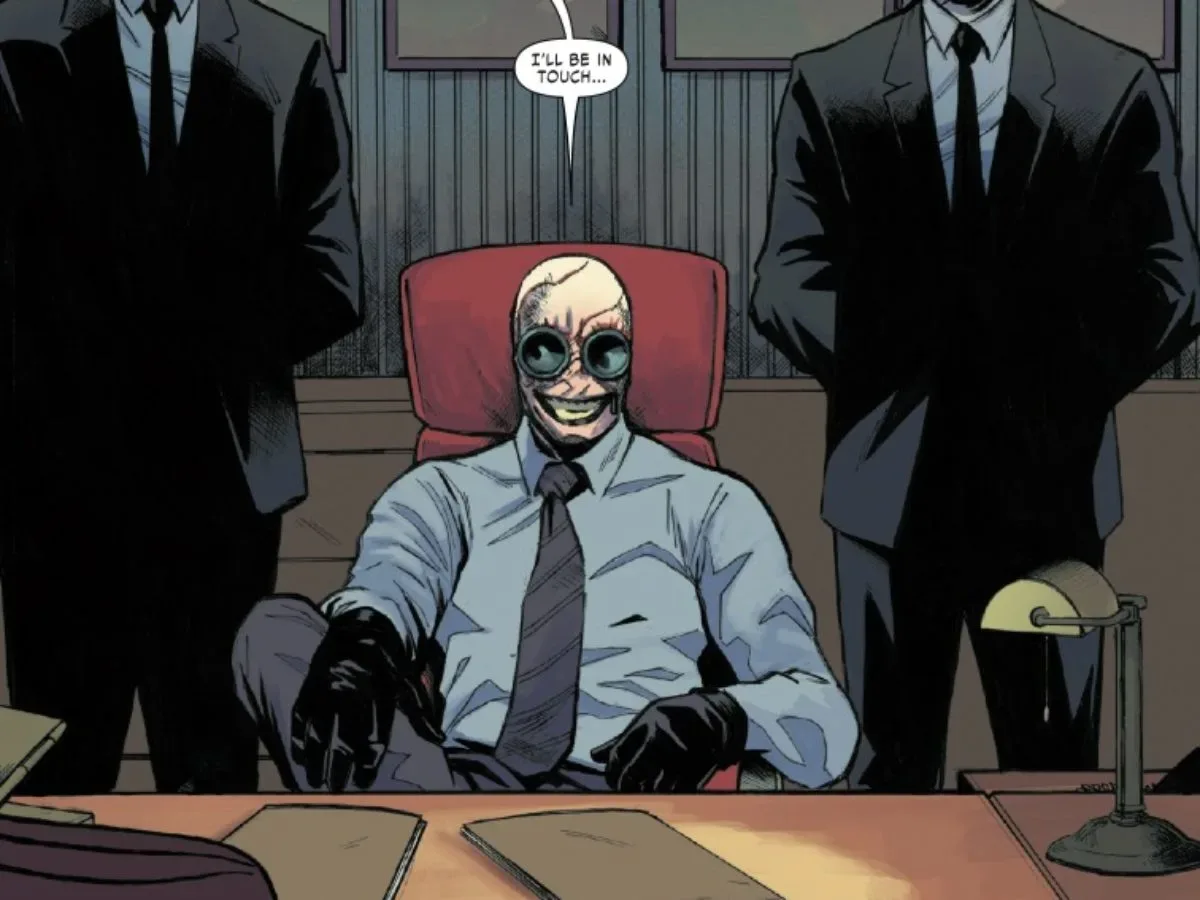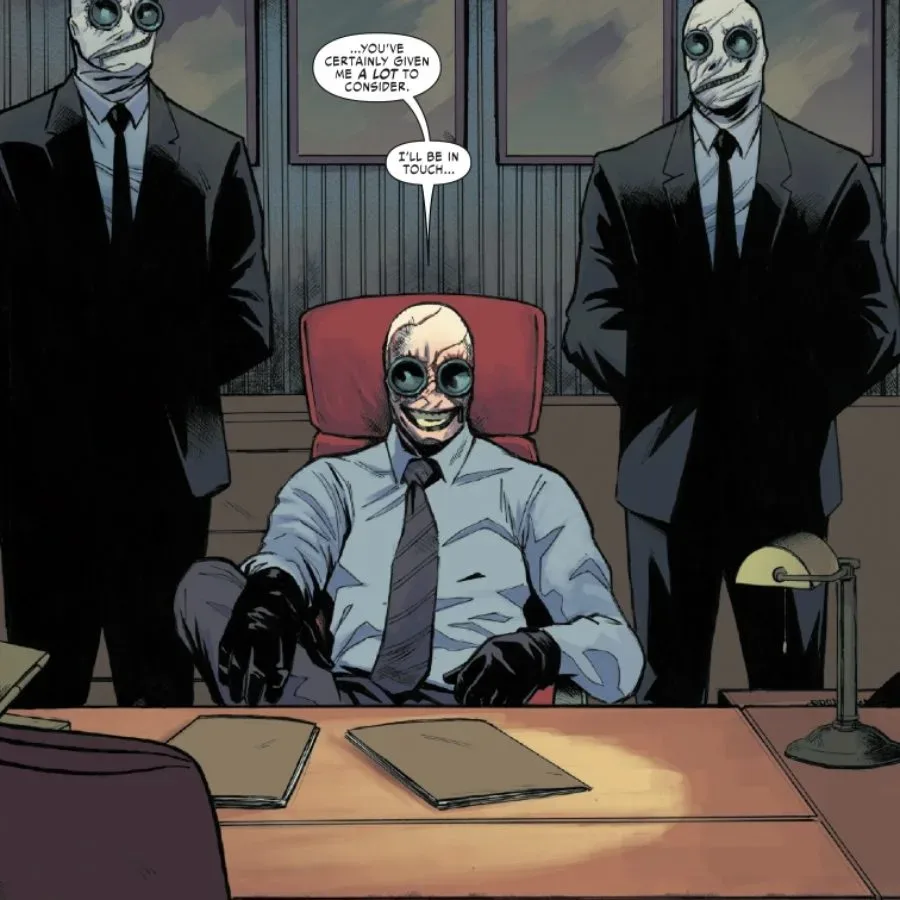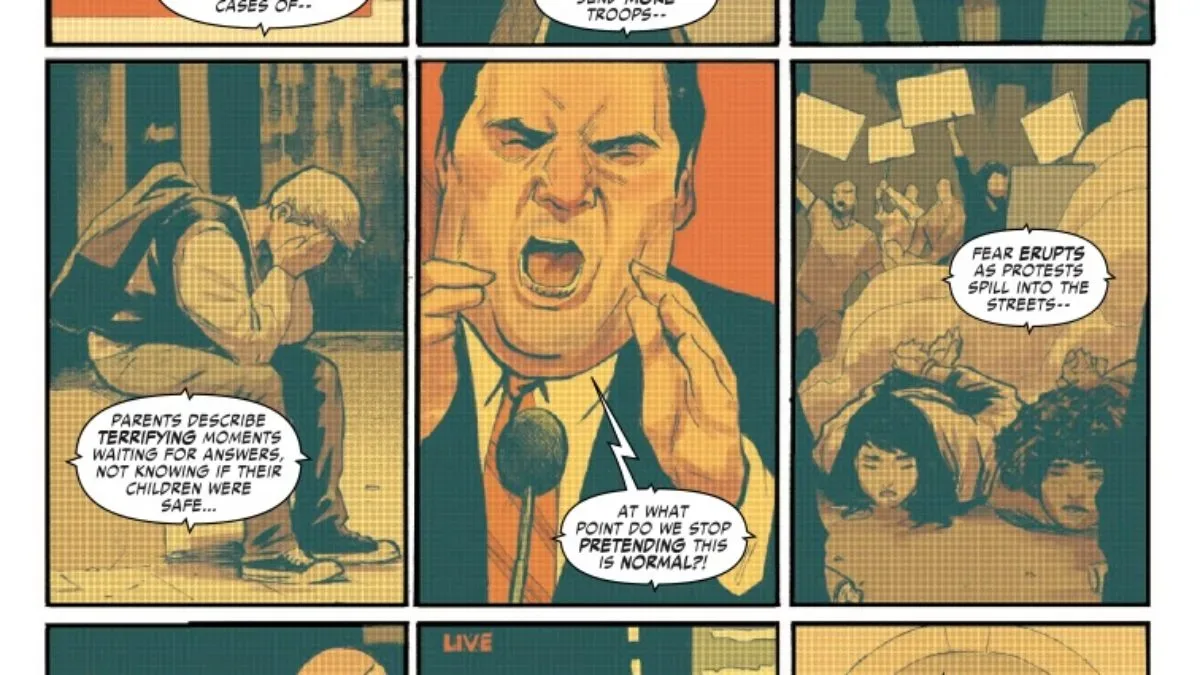
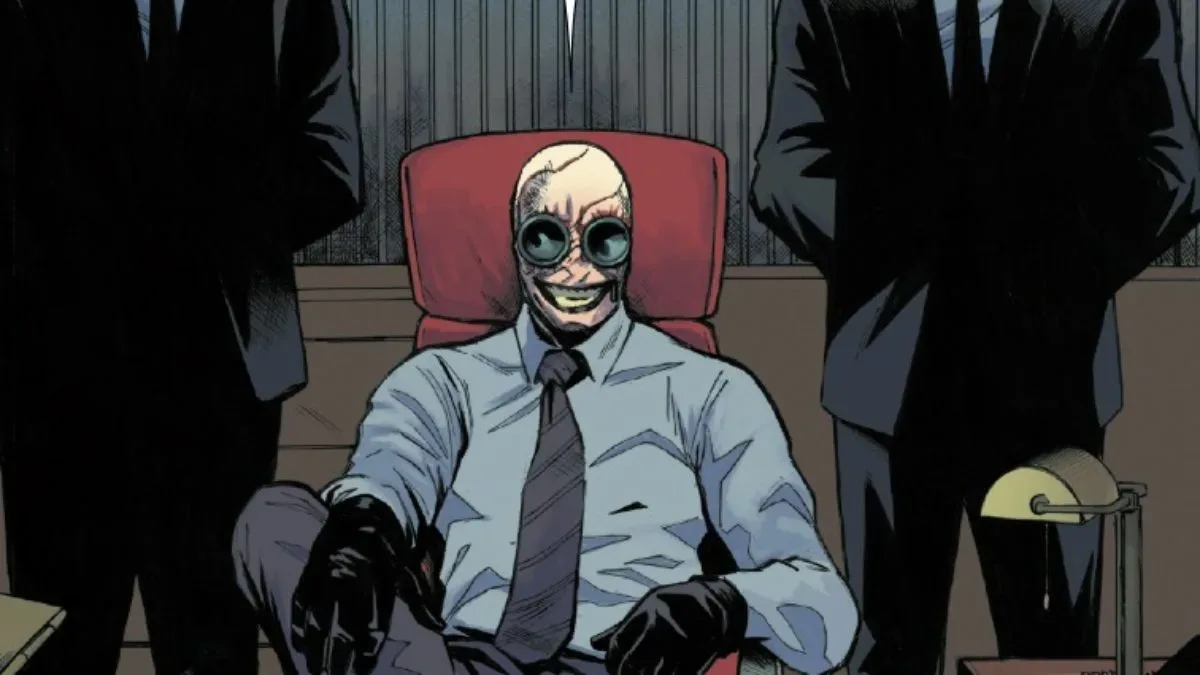
Daredevil #9 is scheduled to go on sale November 11, 2026, and its central idea turns one of the character’s defining descriptions inside out. Matt Murdock has long been framed as the Man Without Fear, but the new issue is billed as “Man With Fear”—while New York itself has become a city without it.
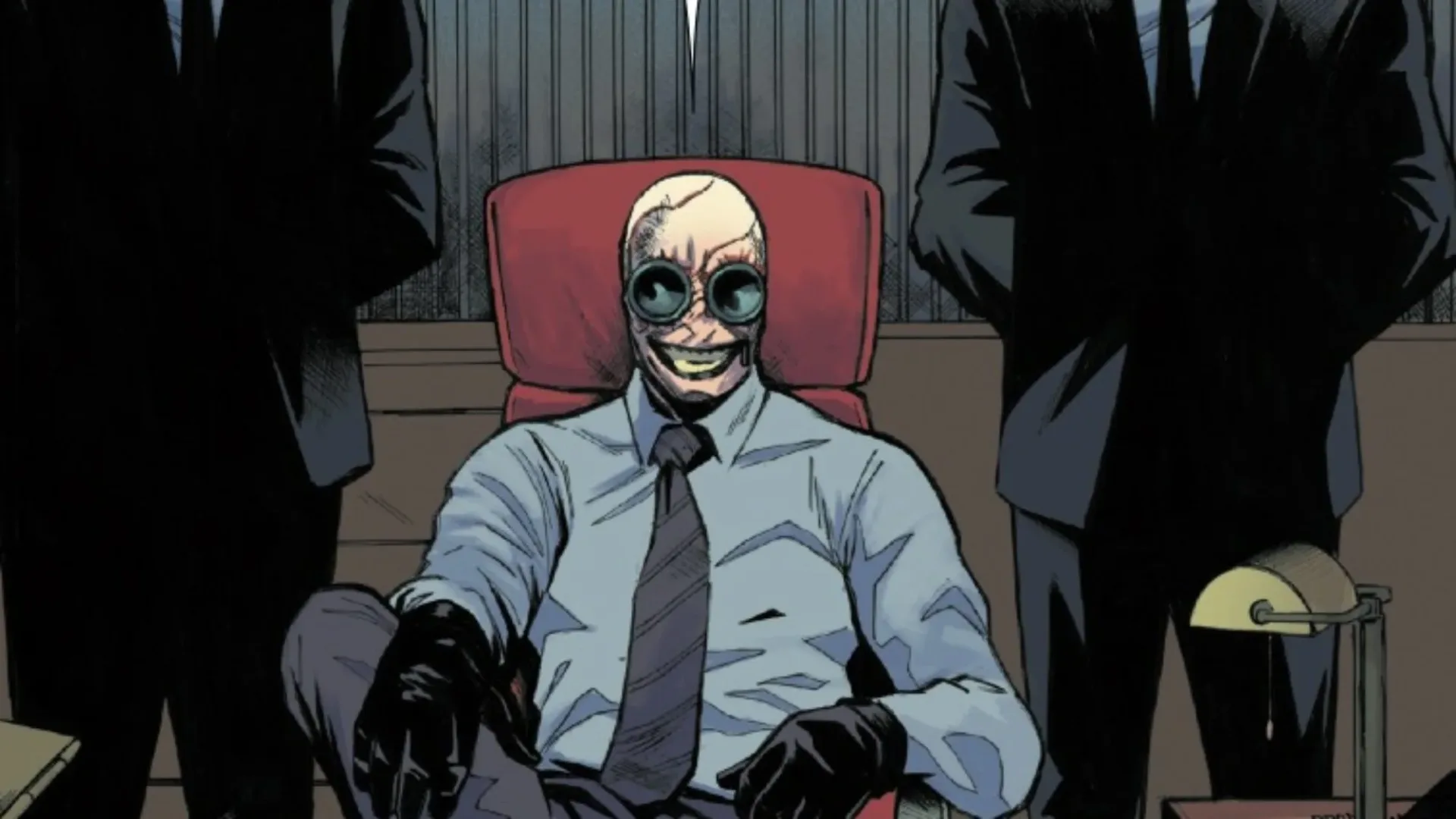
The setup puts two pressures on Matt at once. As Matt Murdock, he must help keep E.S.U. students safe. As Daredevil, he has to contend with Mr. Fear’s scheme, which has apparently affected the city on a broad scale. The solicitation is deliberately spare on the mechanism behind that change, but it is very clear about the result: violence and danger are erupting in a population where fear is no longer functioning as a restraint.
“In a city without fear, violence and danger erupt like never before! Matt Murdock must help ensure the safety of the E.S.U. students, even as Daredevil copes with Mr. Fear’s citywide scheme!”
A premise built on Daredevil’s central contradiction
Fear is not a simple weakness in this premise. It is also a survival response: the instinct that tells someone to pause, reconsider, flee, seek help, or recognize a dangerous situation before it becomes a catastrophe. Remove that response from an entire city and the result, at least as this issue frames it, is not automatic bravery or social harmony. It is danger without the usual hesitation.
That distinction gives Mr. Fear’s plan a grimly appropriate edge. A city “without fear” may sound like a triumph on a slogan or a supernatural cure at first glance. But the issue’s hook suggests a more troubling consequence. If people cannot recognize or properly react to risks, everyday conflict can spiral. Violence can rise because neither victims nor bystanders respond in the ways they ordinarily might. The threat is not merely that people are courageous; it is that a crucial emotional warning system is absent.
For Daredevil, this is especially potent territory. The character’s “Man Without Fear” label has never needed to mean that Matt experiences no fear at all. In practical terms, courage is action taken despite fear, whereas fearlessness can imply a lack of caution. Daredevil #9 draws tension from that difference. Matt is apparently positioned as a man who still has fear in a city that no longer does, leaving him to understand danger that others cannot—or will not—properly register.
The title phrase “Man With Fear” therefore reads less like a dismissal of Daredevil’s identity than a reversal designed to test it. If fear has become the scarce resource in New York, Matt’s capacity to feel it may become an advantage. It could make him better able to anticipate consequences, assess threats, and protect people who believe they have nothing to fear.
Why E.S.U. is at the heart of the issue
The solicitation specifically identifies E.S.U. students as people Matt must protect. That focus gives the issue a human-scale point of entry into what otherwise sounds like a citywide crisis. Rather than keeping the story at the level of broad disorder across New York, the setup ties Matt’s responsibilities to a defined group of people in immediate danger.
That also strengthens the split between Matt Murdock and Daredevil. The description does not present his civilian identity as incidental setup before the vigilante action begins. It explicitly makes Matt’s obligation to the students part of the issue’s conflict, even as Daredevil faces Mr. Fear. The dual identity is doing actual story work: protection, responsibility, and crisis response are not confined to one side of Matt’s life.
The E.S.U. angle may also make the consequences of the citywide premise easier to grasp. A broad emotional effect can be abstract. A community of students trying to function amid mounting violence is more concrete. The stated conflict does not reveal which students are most directly imperiled, how the campus is affected, or what form Matt’s intervention takes. Those details remain unknown. What is confirmed is that their safety is important enough to stand alongside the direct confrontation with Mr. Fear in the issue’s official setup.
Mr. Fear’s scheme is bigger than a single encounter
The phrase “citywide scheme” is important. It signals that Mr. Fear is not simply a threat waiting for Daredevil in one location. His plan has consequences across New York, and those consequences are already in motion by the time this issue’s premise begins. Daredevil is not only trying to win a fight; he is dealing with a situation that has altered the behavior of a huge number of people.
That kind of problem changes the practical shape of superhero action. A straightforward physical confrontation can stop one attacker. A citywide crisis demands choices about where to go first, who needs protection most urgently, and whether defeating the architect of the scheme will immediately reverse the harm already unfolding. The solicitation does not answer those questions, so readers should not assume the issue will resolve the full crisis in one chapter. But it does establish stakes beyond an isolated showdown.
There is an irony built into the villain’s name and the plan’s apparent effect. Mr. Fear is associated here with a city that has been deprived of fear. The story seems primed to explore whether fear itself is the weapon, the absence of fear is the weapon, or both are part of a larger manipulation. That uncertainty is one of the more compelling elements of the preview: the issue provides the outcome of the scheme without yet explaining its exact rules.
What “city without fear” means for the stakes
In superhero fiction, an emotional or psychological threat can sometimes be harder to contain than a visible destructive force. People can see a collapsing building, a fire, or an attacking villain. They may not be able to recognize that their own judgment has been altered. The premise of Daredevil #9 turns that vulnerability into the story’s engine.
Fear, in this context, can be understood as risk recognition rather than cowardice. It is the moment before action when someone understands that a choice could hurt them or somebody else. Without it, people may take risks they would normally avoid, dismiss warnings, or escalate confrontations they might otherwise de-escalate. The solicitation’s language connects that absence directly to “violence and danger,” making clear that the story’s version of fearlessness has a cost.
For Matt, being the “man with fear” may require him to carry the psychological burden of recognizing threats for others. That is a useful reversal for a character often celebrated for persistence. Daredevil’s determination usually means pressing forward even when the situation is overwhelming. Here, the challenge may be persuading or shielding people who lack the instinct to stop themselves.
It also creates a question of perspective. A fearless crowd may see Matt as overreacting, obstructive, or incomprehensibly cautious. Yet the issue’s premise suggests that his caution is justified. The resulting conflict could make every rescue more difficult, because safety depends not just on beating an antagonist but on helping others recognize that they need protection.
Creative team and issue details
Stephanie Phillips writes Daredevil #9, with art by Lee Garbett. Garbett also provides the main cover. The issue is a 32-page Marvel release rated T+ and carries a US cover price of $4.99.
Four additional listed covers are available as variants, each priced at $4.99 in the US and $6.25 in Canada:
- Leo Chiola 1:25 variant
- Peach Momoko Momo-Tone variant
- Federico Vicentini variant
- Alessandro Cappuccio Workout variant
A 1:25 variant is an incentive cover designation. In general comic-shop ordering terms, that means it is tied to a retailer’s order quantity for the standard edition, rather than simply being another regular open-order cover. The solicitation identifies Chiola’s cover with that 1:25 label; it does not provide any further ordering terms.
“Momo-Tone” identifies the Peach Momoko variant by its branded cover treatment. Beyond the listed name, no description of the artwork or story content attached to any of the variants has been provided. The covers should therefore be viewed as alternate editions of the same issue, not separate stories.
What readers can safely expect—and what remains under wraps
The confirmed foundations of Daredevil #9 are strong: Mr. Fear has initiated a scheme affecting New York on a citywide level; the loss of fear is linked to growing violence and danger; Matt has an urgent obligation to protect E.S.U. students; and Daredevil must address the source of the crisis.
Much remains undisclosed. There is no confirmed explanation for how the city has been made fearless, no indication of whether the effect is universal, and no revealed outcome for Matt, the students, or Mr. Fear. There is likewise no reason yet to assume what portion of the larger storyline the issue resolves. Those unknowns are not gaps in the premise so much as the suspense built into it.
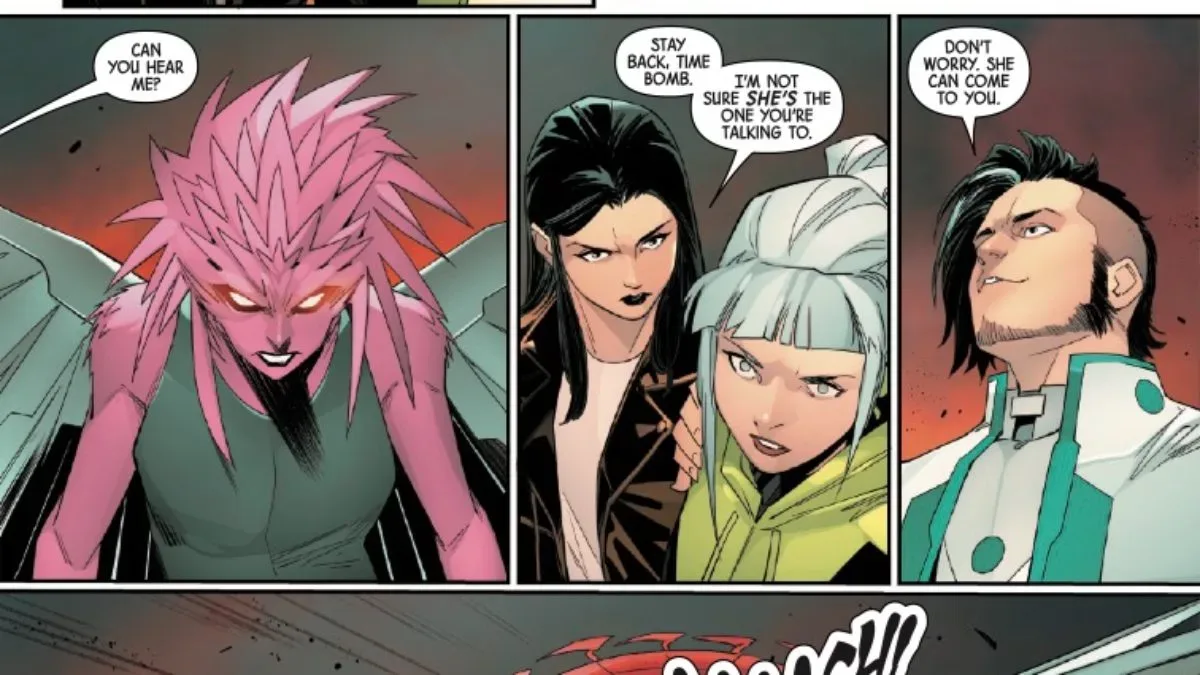
Readers looking for another Marvel comic setup centered on character pressure and a divided community can also find related coverage in Generation X-23 #10’s conflict involving Laura, Gabby, and a divided church.
Daredevil #9 arrives November 11, 2026. Its most intriguing promise is not simply Daredevil versus Mr. Fear, but a reversal of the value normally attached to fearlessness. In this New York, fear is not the enemy. Its disappearance may be exactly what makes the city so dangerous.