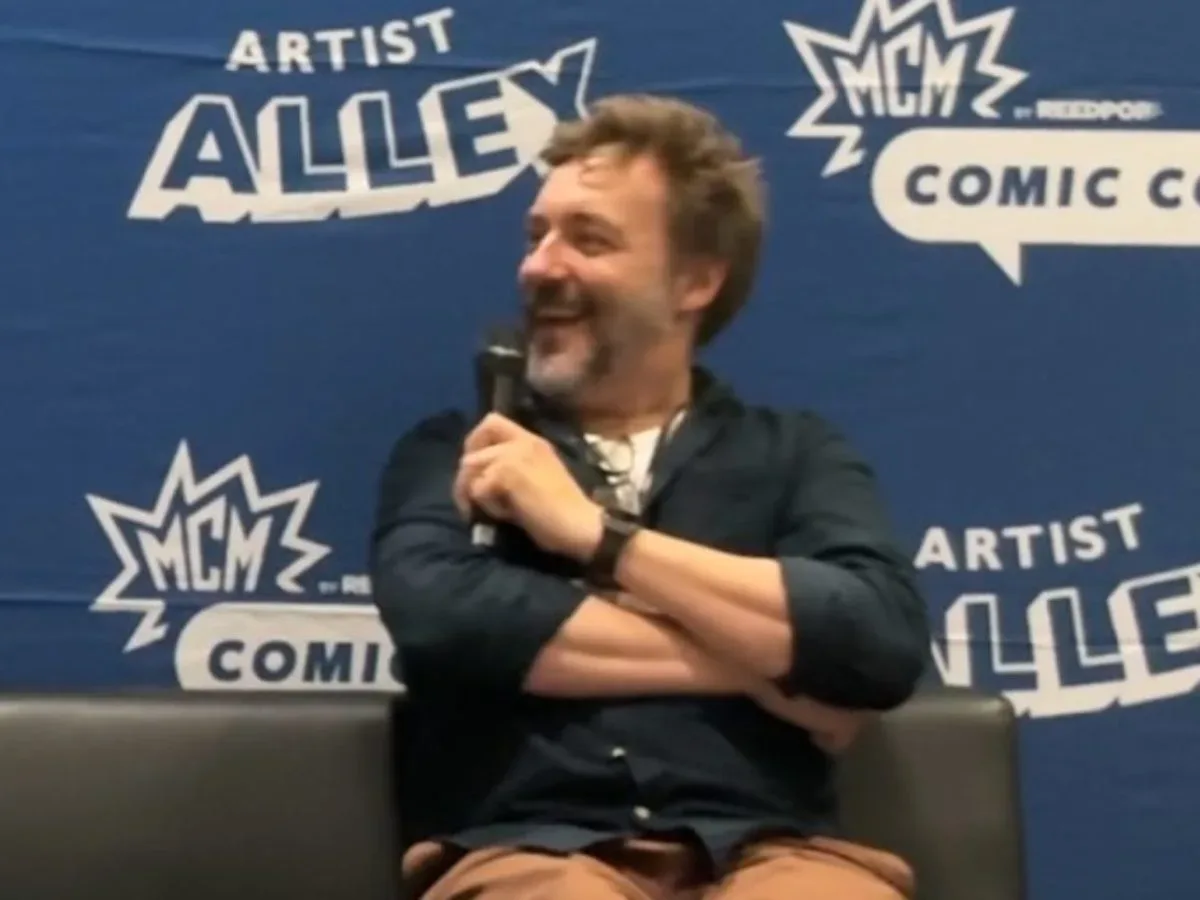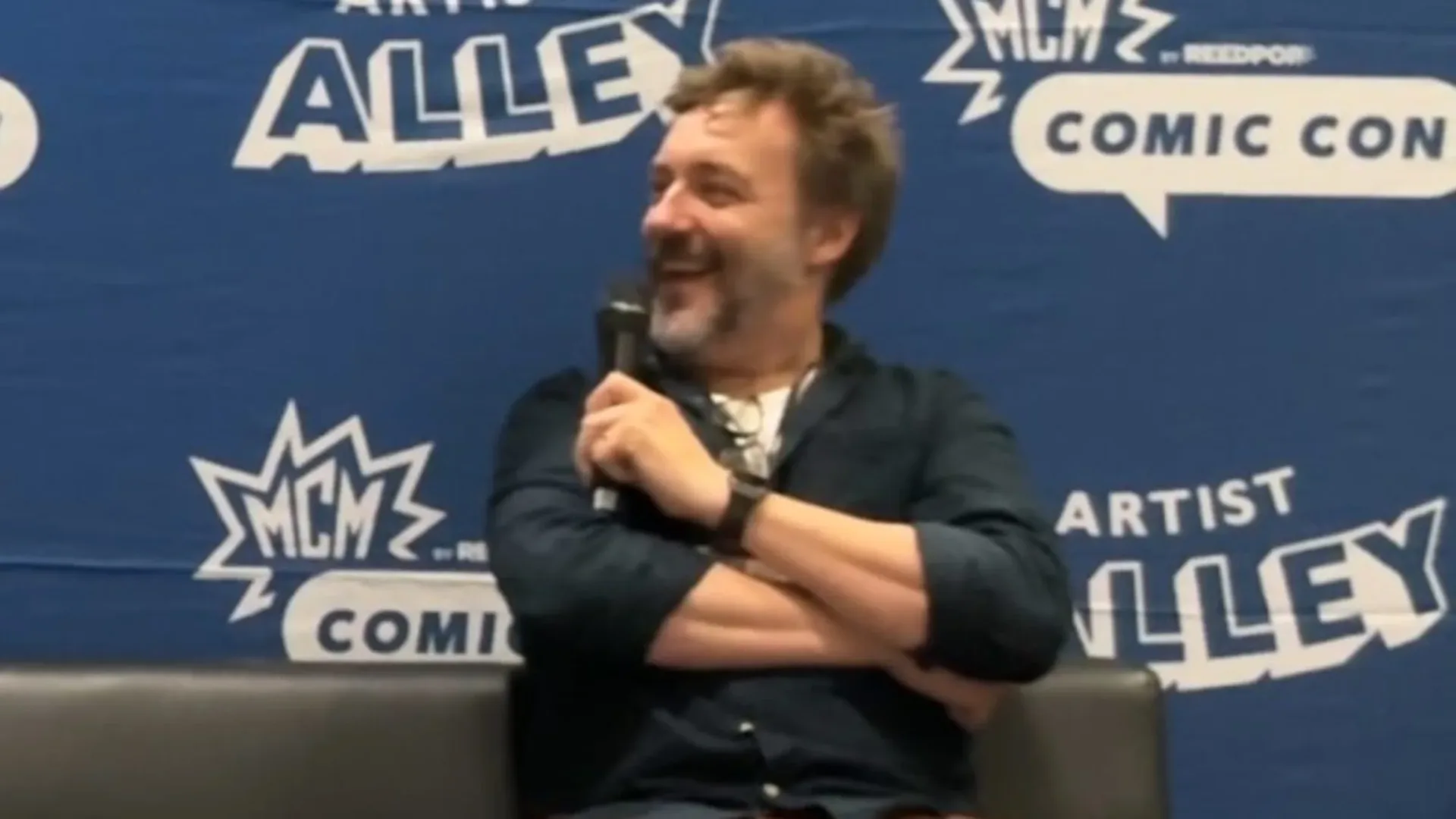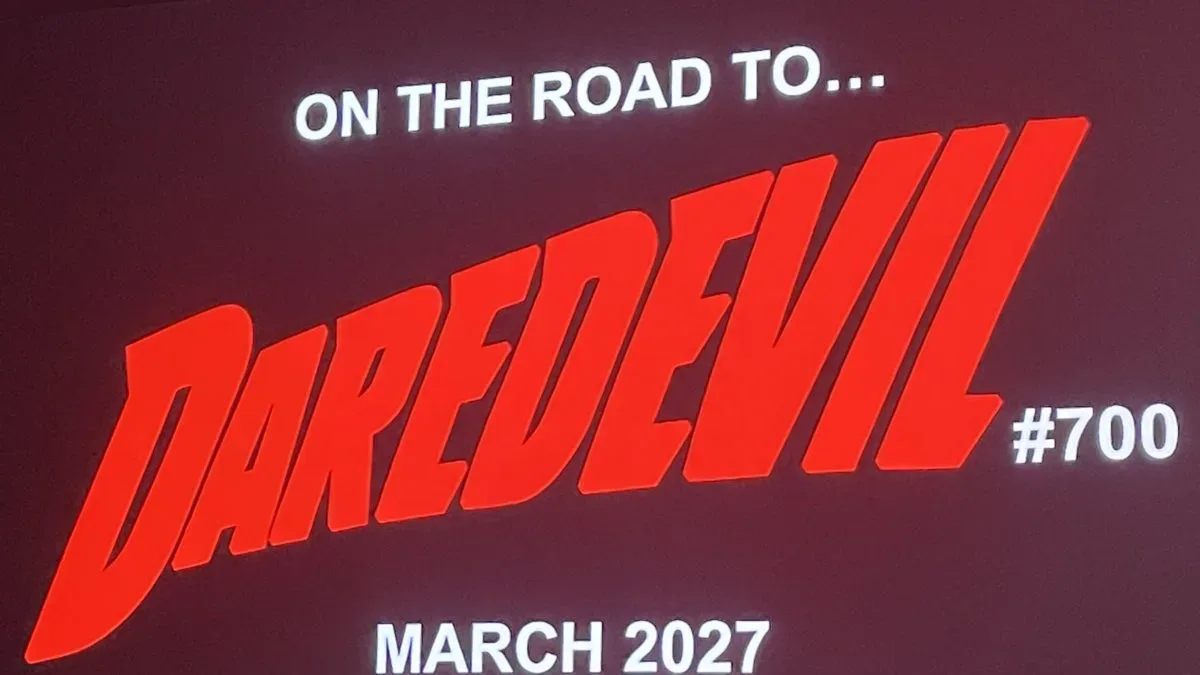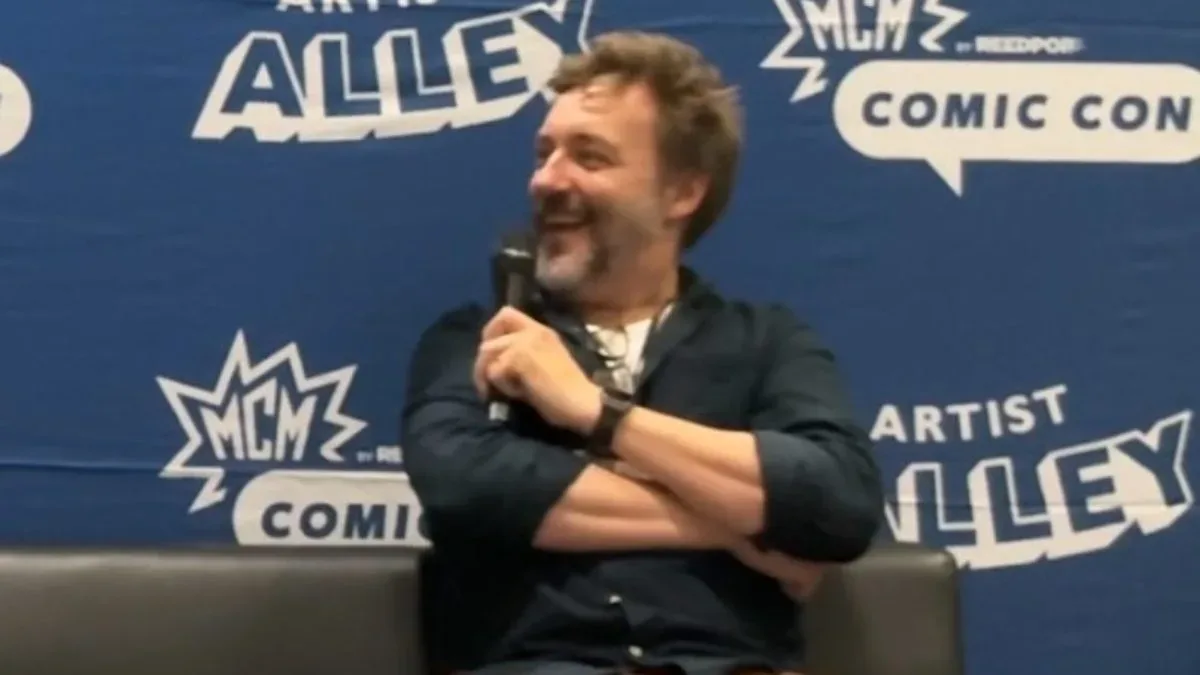
Daredevil’s current comic run is building toward a milestone that is deliberately larger than a normal monthly issue. At MCM London Comic Con 2026, artist Lee Garbett discussed plans for Daredevil #700, also identified as Daredevil #13 in the current numbering, describing a legacy-sized installment that will include several 10-page stories by established creators. Garbett also pointed to the return of Elektra and teased that a planned guest appearance has changed behind the scenes.
The panel paired Garbett, the artist on the current series written by Stephanie Phillips, with Daredevil veteran Cary Nord. Much of the discussion concerned how a familiar superhero can remain recognisable while a new creative team finds a visual language and emotional angle of its own. That process is visible in the book’s revised villain designs, Matt Murdock’s personal life, and the apparent freedom the team has received despite Daredevil appearing in the wider Marvel universe.
For comic readers, the main immediate takeaway is simple: #700 is set up as more than a commemorative cover number. It is intended to advance the current run’s relationships while opening the page to short contributions from major Daredevil-associated talent. The guest star remains unconfirmed, so expectations should stay firmly in the speculation column.
What is planned for Daredevil #700?
Garbett said the issue will contain 10-page stories from what he called “some real legends.” In comics publishing, a legacy issue commonly marks a high cumulative issue count across earlier volumes and relaunches, rather than simply the 700th issue of one uninterrupted series. That helps explain why the current title’s #13 can also carry the #700 designation.
Short stories can make that kind of anniversary issue feel like a celebration without forcing the primary creative team to pause its larger narrative entirely. A 10-page format gives a guest creative team enough space for a tightly focused confrontation, character study or complete miniature adventure, but not the room for a sprawling arc. The format also allows the main ongoing story to remain present rather than being replaced by a pure retrospective.
One concrete story development discussed for #700 is Elektra’s return. The issue is also expected to involve Sari Ellison, Matt Murdock’s current romantic interest. Sari is described as Matt’s colleague and fellow lecturer, with professional ethics as her specialty. That establishes an immediate potential point of friction: the book is bringing a major figure from Daredevil’s life into proximity with someone attached to Matt’s current day-to-day world.
The panel positioned that setup as combustible, but did not provide plot specifics. It would be premature to treat a conflict, an alliance or any particular romantic outcome as confirmed. What is clear is that Elektra’s return is not being framed as an isolated cameo; it arrives alongside an existing relationship that gives the appearance narrative stakes.
The guest-star switch is still a mystery
Garbett also discussed an alteration to the planned guest star for #700. Spider-Man was swapped out for another character, though the replacement was not named. The possibility of the Punisher was raised, but it was not confirmed.
That distinction matters. A changed plan is a reported piece of production information; the identity of the substitute is not settled by the discussion. Readers watching solicitations, previews and future promotional material should therefore regard any Punisher assumption as an informed possibility rather than an announced appearance.
Guest stars can be useful in a landmark comic for obvious reasons: they offer a visual event, connect the book to the wider shared setting and can put Daredevil’s particular brand of street-level conflict into contrast with another hero’s methods. But the panel’s wider comments suggest Phillips and Garbett are trying to ensure crossovers serve the solo title, rather than pull it off course.
Garbett said the team has largely been left alone even as Matt appears with the Avengers. He further indicated that Phillips has input into Daredevil’s use elsewhere, helping avoid stories outside the series undercutting what the run is building. For readers who follow multiple Marvel titles, that is a meaningful creative-management point. Continuity is not merely a list of appearances; it is also the work of making sure one book’s developments do not accidentally drain tension from another.
A strong start and a route in for new comic readers
Garbett described the Phillips/Garbett Daredevil #1 as the biggest-selling Daredevil comic to date. He said it had returned to print at least five times, with later issues also going back to press.
A return to print means that additional copies are produced after an initial printing has sold through or demand has exceeded supply. It is a useful indication of demand, but it is not by itself a public, issue-by-issue sales total. The panel did not provide exact circulation figures, so the available claim is about the book’s repeat printings and Garbett’s characterization of its sales performance, not a numerical market ranking readers can independently calculate from this discussion alone.
Garbett credited part of the book’s momentum to Phillips’ TikTok presence and her process-oriented posts. He said many people have identified the issue as their first Daredevil comic, and some as their first comic book altogether. That is notable because creator process material does something traditional superhero marketing often does not: it can make the act of making a comic visible. A prospective reader may encounter character art, scripting discussion or a glimpse of work-in-progress before ever facing the question of decades of fictional history.
That does not erase Daredevil’s long continuity, but it can make the entry point feel less forbidding. A new #1 offers a clear place to begin, while social posts can establish that the people making the book are actively engaged with the audience around it. Garbett said the team has been able to respond to fan feedback, particularly through TikTok.
The practical lesson is not that every comic needs the same platform or personality. It is that clear, sustained creator communication can help a serial story reach readers who might otherwise assume superhero comics require encyclopedic prior knowledge. Retailers and community-focused comic spaces have long helped make those introductions less intimidating; a recent look at comic retail community-building similarly highlights why direct conversation still matters alongside online discovery.
Why The Owl and Mr. Fear look different
Garbett’s comments also shed light on a basic but important aspect of ongoing superhero art: redesigns are often driven by storytelling clarity, not simply by an urge to replace what came before.
The Owl has a different look in the new run. Mr. Fear was redesigned because the preceding five issues had already used a figure with a skull mask and hood. The decision gives the book a more varied visual roster. In a medium that asks readers to parse costumes, silhouettes and faces rapidly from panel to panel, two villains sharing the same dominant shapes can flatten their identities.
A silhouette is the recognisable outer shape of a character. Capes, hoods, masks, broad shoulders and unusual headwear can all make a figure legible even in shadow or at a distance. Varying those shapes is a practical storytelling tool. It helps an artist make sure a new threat feels distinct before a reader even reaches the dialogue.
Garbett connected the room for reinterpretation to the broader enthusiasm for reimagined superhero lines, mentioning DC’s Absolute line as an example of that energy. He suggested Marvel wants to pursue a comparable appetite for new angles in its own fashion. That should not be read as a promise of a directly equivalent publishing project. It does, however, explain the creative confidence behind adjusting established designs and character presentation within the Daredevil title.
Matt Murdock’s vulnerability is part of the presentation
The panel did not only cover anniversary mechanics and villains. Garbett also addressed why Matt Murdock has been shown shirtless more often in the series. He said Daredevil #10 will include a fully nude Matt, staged with a towel and shadow after someone knocks at the door.
It is an unusually specific production detail, but it fits the run’s apparent interest in treating Matt as a person with a life beyond costume iconography. Daredevil is simultaneously a superhero identity, a lawyer’s public life and Matt Murdock’s private life. Scenes that foreground vulnerability or awkwardness can serve the last of those layers, provided they support the character and scene rather than exist only as a stunt.
Garbett’s description suggests the sequence is framed for implication and comedic or dramatic timing, not explicit display. The available information offers no further detail on who is at the door or what follows, so readers should not infer more than that the issue contains the stated scene.
How Phillips and Garbett reached Daredevil
Garbett also described how he came to the job. While he and Phillips were working on Endeavour from Dstlry, Phillips messaged him about pitching another project. Garbett said Daredevil was the one character he truly wanted to draw—only to realize Phillips was already preparing a Daredevil pitch.
It is a small origin story for a major assignment, but it helps explain the sense of shared purpose in the panel discussion. The pair did not arrive through a random pairing after one creator had already mapped out the book; Garbett’s stated preference and Phillips’ pitch were aligned from the beginning.
That alignment now faces its biggest visible test in #700. The issue has to welcome returning Elektra, accommodate Sari Ellison, make space for short-form guest stories and potentially deliver a mystery guest star, all while maintaining the momentum that Garbett says has attracted first-time comic readers. If it succeeds, the legacy number will function as both a celebration of Daredevil’s long publication history and a statement about where this particular run wants to go next.