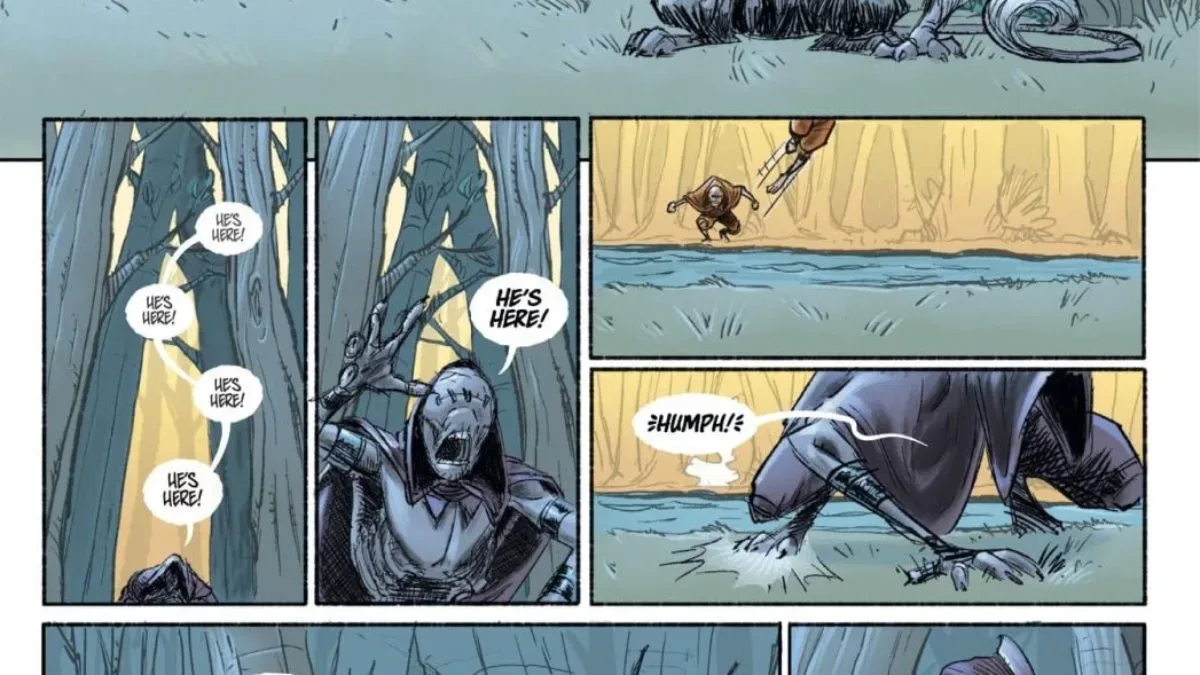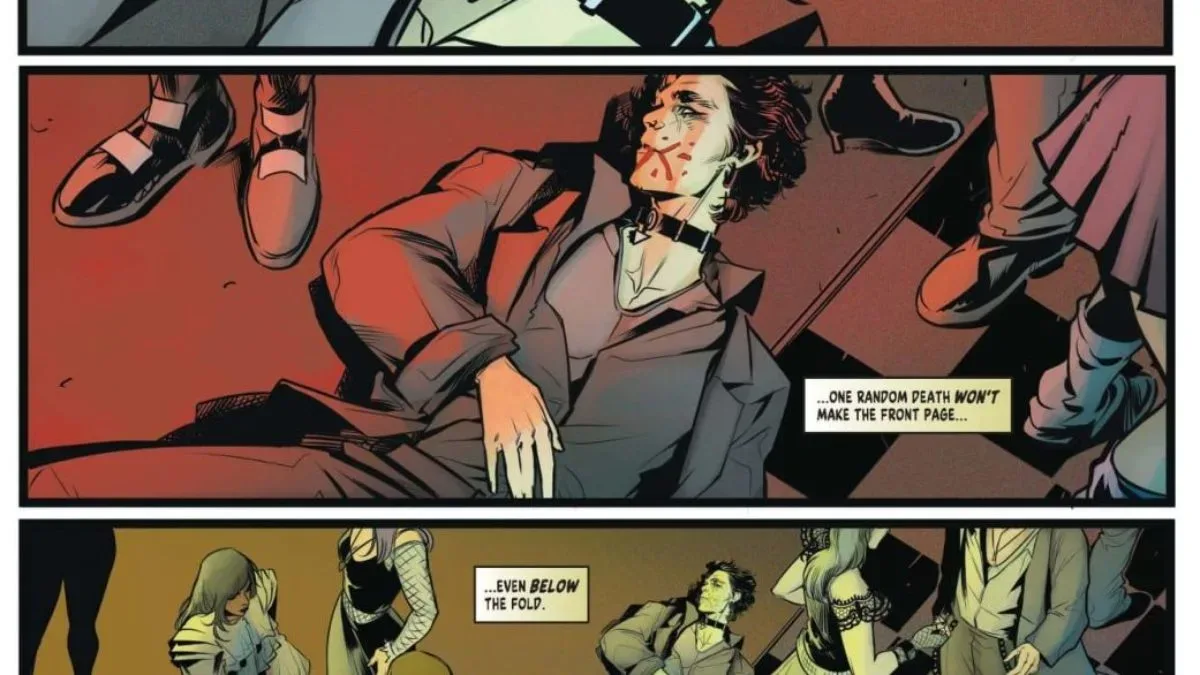
Fire and Ice #5 is scheduled to reach comic shops on September 30, 2026, continuing a fantasy conflict in which Firekeep and its southern allies are steadily losing ground to the Ice Realms. The issue is written by Bill Willingham, illustrated by Leonardo Manco, and features cover art by Joseph Michael Linsner. It carries a $4.99 suggested retail price.
The central war is looking increasingly bleak. Cities are falling one after another to the Ice Realm’s thralls, commanded by Kadav’r, a resurrected prince who possesses what the solicitation calls the dark powers of the pits. The premise establishes a sharp military imbalance: Firekeep’s forces are not merely dealing with a rival kingdom or an isolated monster threat, but an enemy whose leader has returned from death and whose ranks are populated by supernatural forces. The supplied description goes so far as to say that no mortal army can stand against them.
Against that large-scale collapse, the issue makes room for a more personal development. Larn finally reaches his home village after being away long enough that its inhabitants believed he had died. His return becomes a celebration, with the village treating him as a great hero. But the framing of that celebration is deliberately uneasy. The issue’s setup asks whether the welcome is truly a good thing, suggesting that Larn’s new standing at home may bring obligations, scrutiny, or a version of his story that does not fully match what happened.
A homecoming shaped by a disputed legend
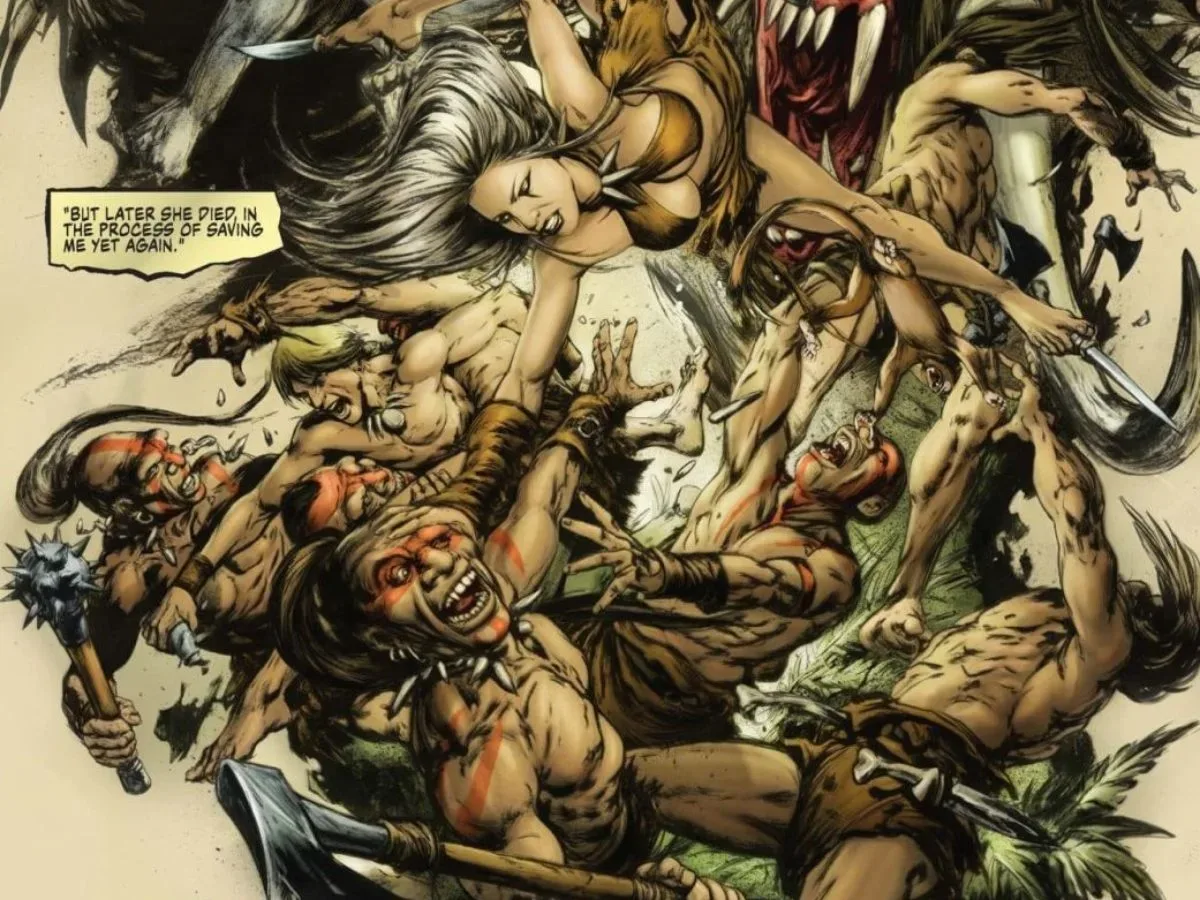
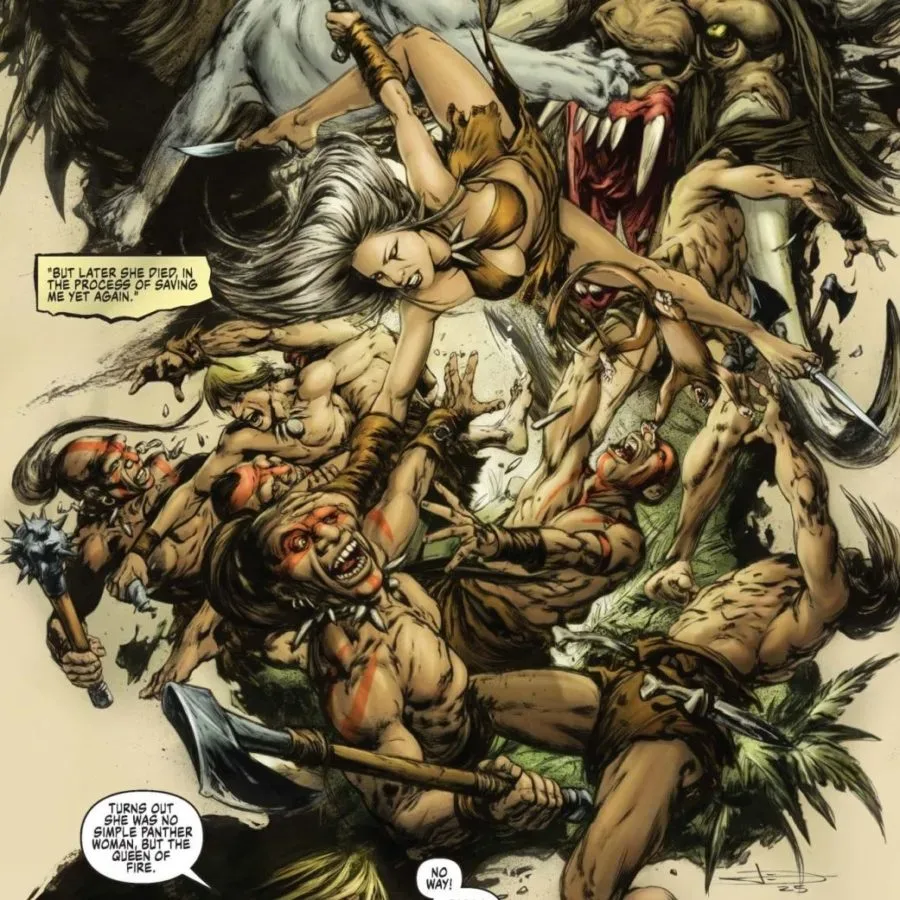
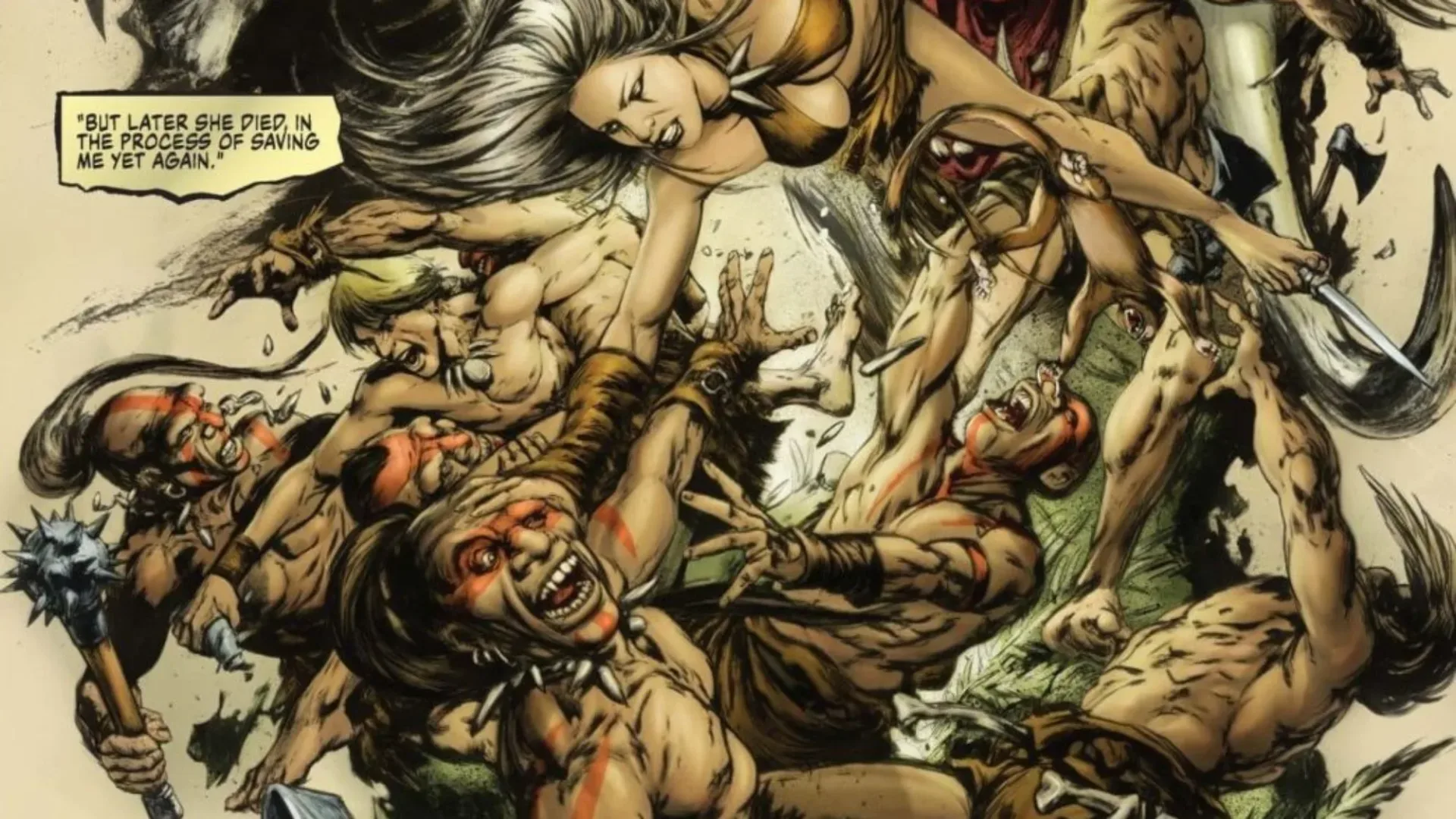
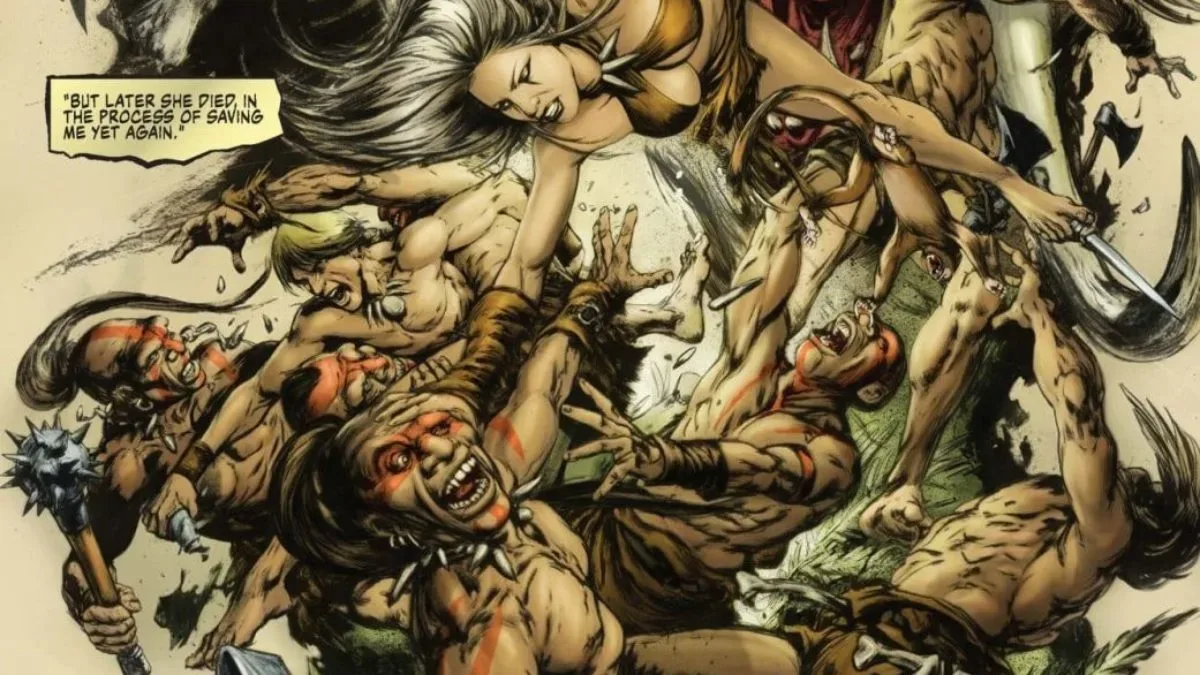
The available preview material points to an important complication behind Larn’s heroic reputation. In battle recollections presented in sepia tones, Larn is overwhelmed by dangerous beasts, while Darah repeatedly comes to his rescue. Darah is identified as “Darah the Brave,” a label that makes the mismatch in public recognition difficult to ignore: she appears to have played a decisive role in keeping Larn alive, yet it is Larn who returns to a village ready to celebrate him.
That does not establish that Larn intentionally misled anyone. The material provided does not explain who told the village what happened, what Larn has said about Darah, or how much the villagers know. Still, it gives the homecoming a useful tension beyond the spectacle of a presumed-dead warrior returning on a mammoth. A hero’s welcome can be comforting, but it can also lock a character into a public identity before the whole story is known.
For Darah, the setup creates a parallel question: will her battlefield bravery receive the recognition it deserves, or will it remain invisible because she is absent from the moment of celebration? The comic’s immediate stakes are therefore both external and interpersonal. Kadav’r’s advance threatens Firekeep on a national scale, while Larn’s village may become the setting for a smaller conflict over memory, credit, and what a community needs its heroes to represent.
What Kadav’r’s campaign means for Firekeep
Kadav’r is positioned as more than a conventional invading ruler. The description identifies him as a resurrected prince, and his command of the pits’ dark powers puts him outside the limits of ordinary warfare. “Thralls” is a fantasy term generally used for beings compelled into service or subjected to another’s will. Here, it describes the hostile forces being unleashed from the Ice Realms, reinforcing the sense that Kadav’r can field troops that do not follow the usual constraints of mortal soldiers.
That distinction matters to the story’s pressure. If conventional armies cannot stop the enemy, the response cannot simply be a larger battle line or a routine counteroffensive. The conflict appears to demand a different kind of answer—whether that comes from individual acts of survival, alliances, knowledge of Kadav’r’s powers, or a shift in the protagonists’ goals remains undisclosed. The solicitation does not promise a victory in this issue, and readers should not assume that Larn’s return home signals safety. In fact, the simultaneous loss of Firekeep’s cities makes the quiet village celebration feel especially fragile.
The title’s elemental opposition is also central to the issue’s setting: Firekeep and its southern allies face the Ice Realms. That creates a clear fantasy contrast without reducing the conflict to a simple visual gimmick. Firekeep is a kingdom under pressure, and the Ice Realm force is advancing through its territory. With cities already falling, the story’s war backdrop has moved beyond a distant threat.
An art lineage with a distinct fantasy identity
Fire and Ice is described as a fantasy series inspired by the work of illustrator Frank Frazetta. That attribution provides useful context for the book’s intended creative territory: muscular adventure, dramatic creatures, elemental danger, and a world where a mammoth-mounted homecoming can sit alongside armies of monstrous adversaries. The available material does not provide further production history or specific details about how the series adapts that inspiration, so the most reliable takeaway is the visual and tonal lineage stated in the solicitation.
Manco’s interior art is part of the appeal suggested by the preview details, particularly the contrast between the present-day arrival in the village and the sepia battle memories. Sepia, a brown-toned visual treatment often used to distinguish recollection from present action, offers a direct storytelling function here. It helps separate the communal myth forming around Larn from scenes that show the more perilous reality of his encounters with beasts and Darah’s interventions.
Linsner provides the listed cover art, while a Ciruelo cover is also listed as an option. Both versions are priced at $4.99 in the supplied release information. Collectors who choose between covers should note only what is confirmed: these are separately listed cover editions for the same issue. No scarcity, print-run, or retailer-exclusive status is specified.
Why this issue’s smaller story may matter
Issue #5 appears to use Larn’s return as a counterweight to the grim campaign against Firekeep. A village’s excitement can create warmth and momentum in a story otherwise dominated by defeat, but its ambiguity is what gives it dramatic value. If Larn is being transformed into a symbol while Darah’s contribution is overlooked, the celebration could expose fault lines in how heroism is assigned. If the village truly believes Larn was dead, its reaction also emphasizes how removed ordinary people may be from the realities of the wider war.
That human-scale perspective can make the broader invasion more tangible. Fallen cities convey the scale of Kadav’r’s advance; one home village confronting the return of a person it mourned conveys the cost of living under that threat. The issue’s premise does not offer a neat separation between victory and defeat. Larn is alive and welcomed, yet the kingdom is losing. Darah has proved brave, yet recognition may not follow. Kadav’r’s troops are advancing, yet the immediate scene is a festival-like reception.
Readers seeking another comic premise where technology and identity are central—but in a very different genre—can also see The Smart Division #2’s AI mystery setup. Fire and Ice #5, by contrast, anchors its questions of public image and hidden truth in sword-and-sorcery stakes.
Release details
- Title: Fire and Ice #5
- Publisher: Dynamite Entertainment
- Release date: September 30, 2026
- Writer: Bill Willingham
- Artist: Leonardo Manco
- Cover artist: Joseph Michael Linsner
- Additional listed cover: Ciruelo cover
- Suggested retail price: $4.99
The issue arrives with Firekeep’s forces in retreat, Kadav’r’s supernatural army on the march, and Larn stepping into a role that may be larger—and less straightforward—than the one he earned. Whether the village’s story about its returned hero can coexist with Darah’s uncelebrated courage is one of the most immediate questions heading into #5.