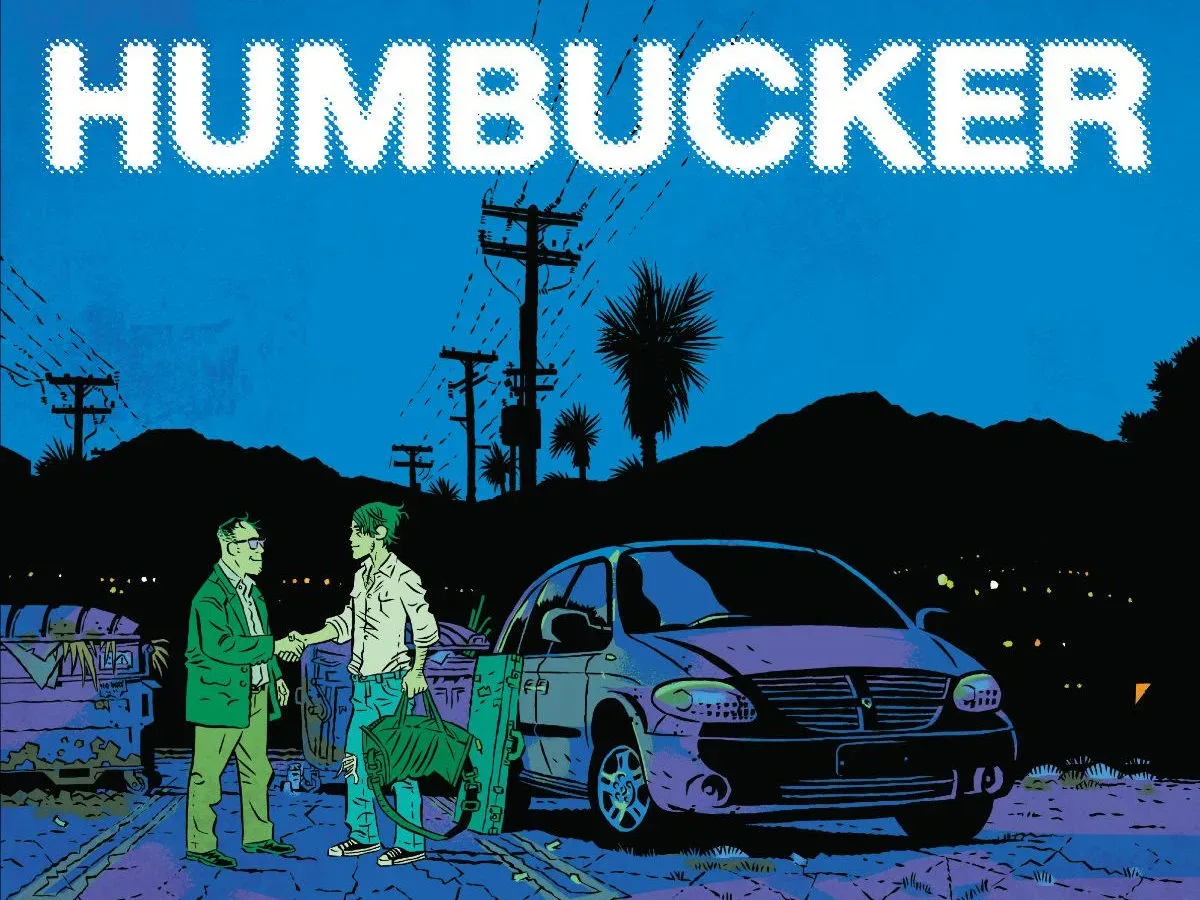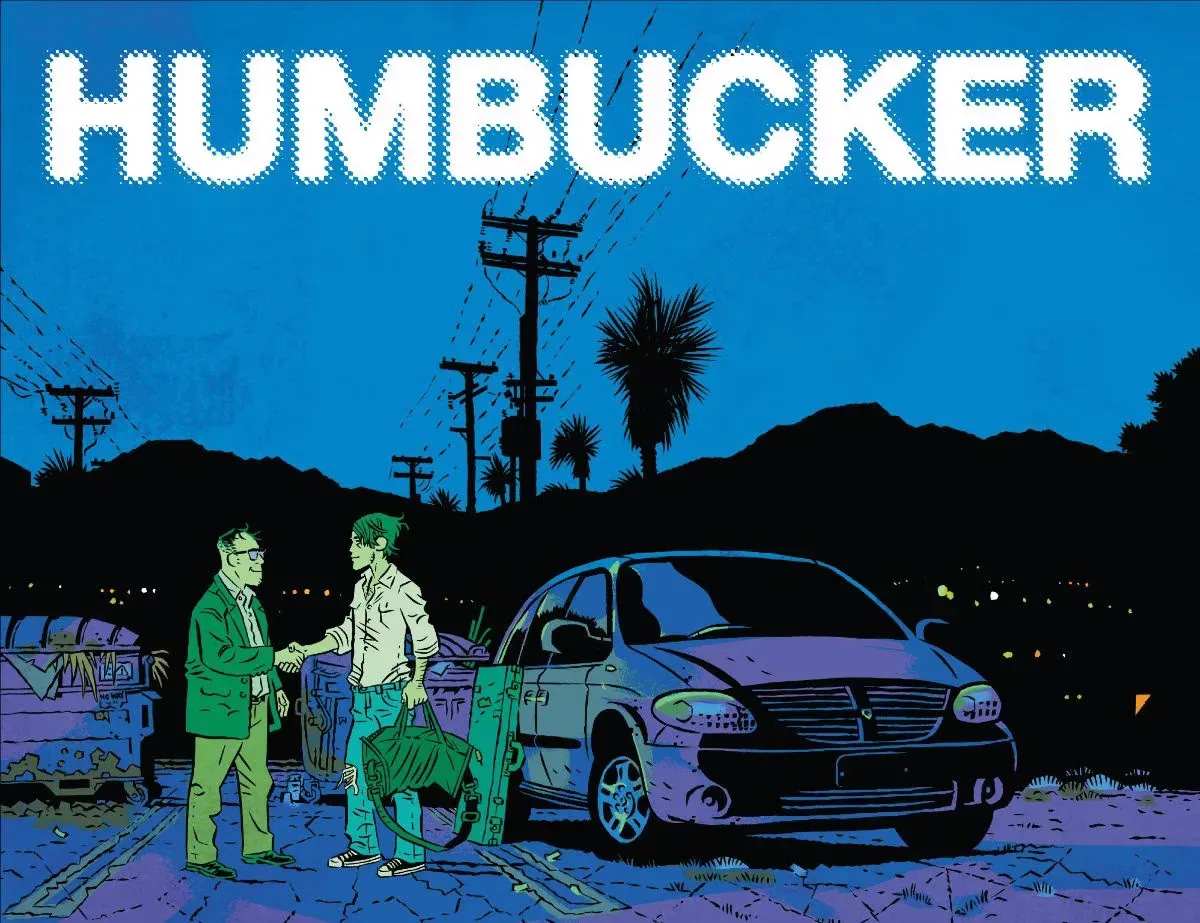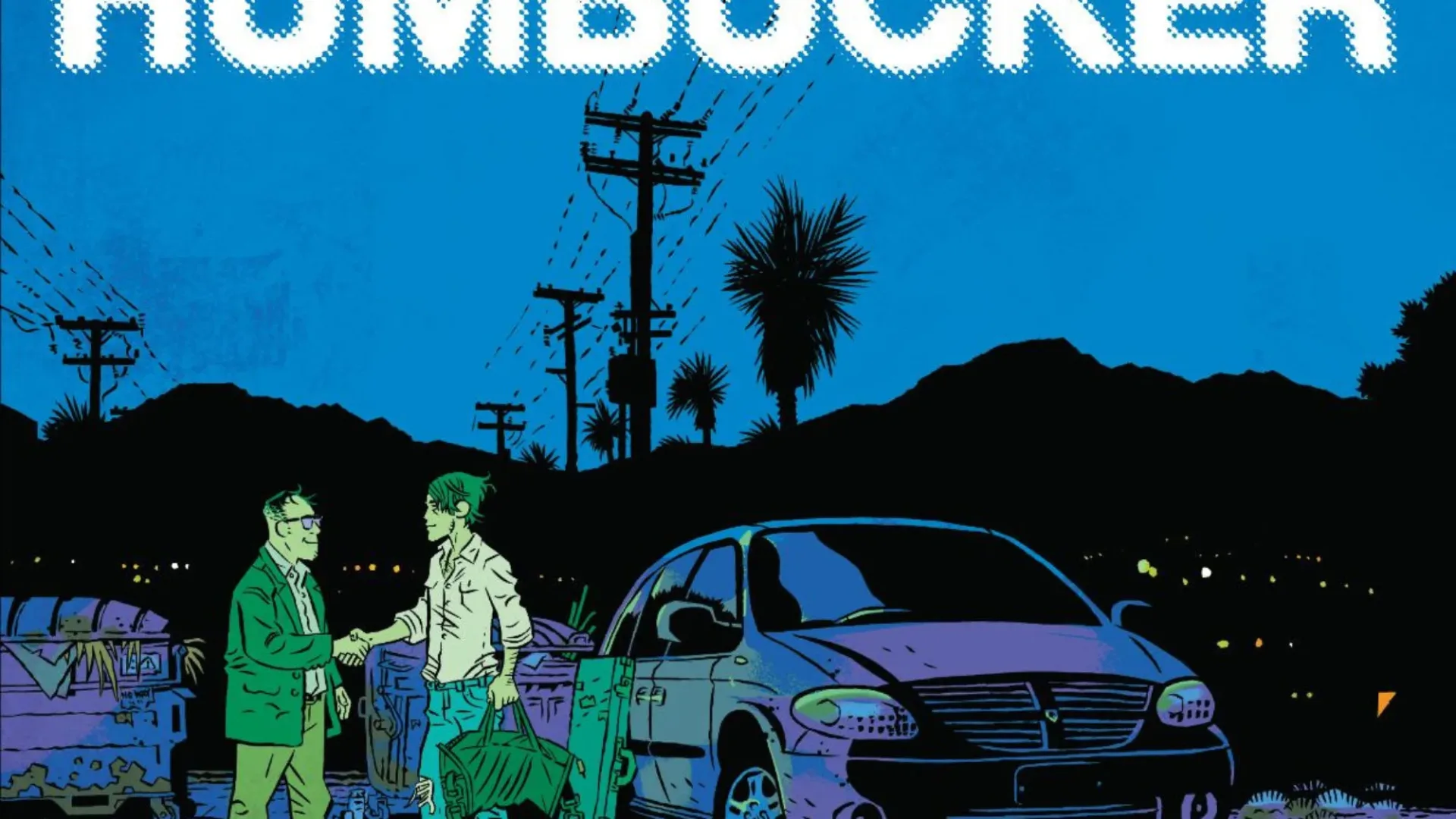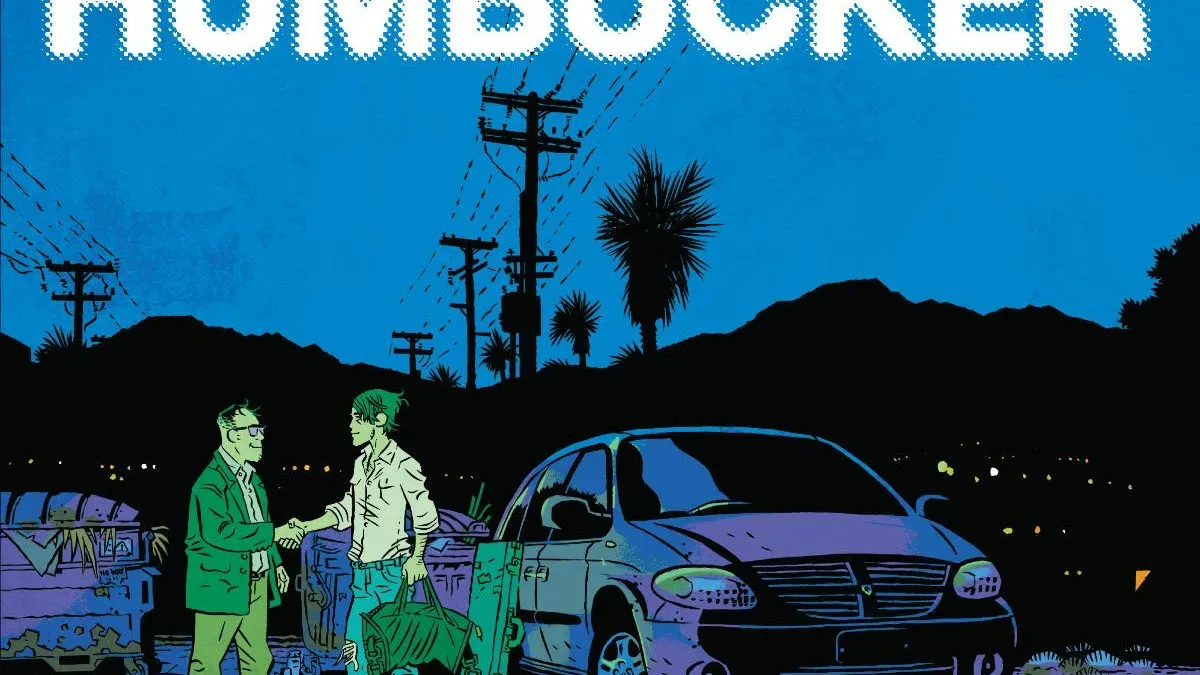
Eric Harburn is stepping into a new role with Humbucker, an original crime-thriller graphic novel from Image Comics and Tiny Onion. After more than 16 years working as a comics editor, Harburn will make his writing debut on a story set amid New York City’s music business, where a struggling label owner makes a perilous bet on a musician who disappeared from public view decades earlier.
The book is scheduled to reach comic shops on April 14, 2027, followed by a bookstore and online release on May 11, 2027. Harburn is joined by artist Simon Gane, colorist Jordie Bellaire and letterer Aditya Bidikar. The assembled creative team places a writer newly credited in the role alongside creators with clearly defined visual and production responsibilities: Gane draws the pages, Bellaire establishes the color work, and Bidikar handles the lettering that carries dialogue, captions and sound effects through the finished comic.
A record session with everything on the line
Humbucker centers on Denny, owner of a new independent record label. His ambition to build a music business has left him deeply in debt, and he pursues what appears to be a last-chance solution: Connor Markes, an influential underground musician whose career slipped into obscurity years before.
Denny’s plan is to record Markes’s long-mythologized debut album. Rather than simply functioning as a music-business comeback story, the setup turns the recording session into a pressure chamber. Denny arranges studio time at a storied New York location associated with recordings by Jimi Hendrix, Blondie and The Rolling Stones. But Markes has difficulty performing, escalating the strain around a project that already carries extraordinary financial and personal weight for Denny.
Denny stakes what he has left on recording Connor Markes’s elusive debut album, only for the session to fracture under performance pressure and the arrival of Denny’s loan shark.
The loan shark’s arrival shifts the central conflict from a risky creative endeavor into an immediate crime scenario. That distinction matters for what Humbucker appears to be building: the album is not merely a cultural artifact to chase or a commercial opportunity to exploit. It is the fragile premise holding together Denny’s survival plan. If the session fails, the repercussions are no longer theoretical.
The premise also gives each lead a different form of vulnerability. Denny is financially exposed because of the label and his debts. Markes is creatively exposed, asked to live up to the legend of an album that has become “mythical” despite apparently never being completed. A vanished cult musician can acquire an aura precisely because listeners fill the gaps in a career; returning to the studio means confronting the much less romantic work of actually making the record.
What the title points to
A humbucker is a type of guitar pickup designed to reduce unwanted electrical hum. That technical music term makes for an especially fitting title for a story about recording, noise and pressure, though the story details supplied so far do not establish whether the term has a specific plot meaning beyond its musical association. It nonetheless signals that the book’s setting is likely to treat the mechanics and mythology of music-making as part of its identity rather than as interchangeable background scenery.
In this case, the studio is more than a recognizable New York landmark. It is a confined workplace where competing needs collide: Denny needs a record that can rescue his label; Markes needs to be able to perform; and the debt collector represents an outside demand that refuses to wait for the artistic process. The resulting structure is naturally suited to a fast-moving crime thriller, because there is limited room for anyone to retreat once the session goes wrong.
The project has been characterized through comparisons to the crime storytelling associated with Martin McDonagh and Elmore Leonard. Those references should be read as a tonal shorthand, not as a promise that Humbucker shares their exact style or plots. What the announced setup does firmly support is a story with criminal stakes, strained personalities and an escalating scenario rooted in a specific professional milieu.
Harburn moves from shaping books to scripting one
Harburn’s debut is notable because his career has largely been spent on the editorial side of comics. An editor’s work can involve helping shape stories and schedules, coordinating creators and guiding a book toward publication, but that role is distinct from receiving the writer credit for the script. Humbucker puts Harburn’s name on the creative work in a new capacity while drawing on experience gained across a lengthy editorial career.
Before joining Tiny Onion, Harburn spent more than a decade at BOOM! Studios. His editorial credits include Something is Killing the Children, The Many Deaths of Laila Starr and Keanu Reeves’ BRZRKR. At Tiny Onion, he was promoted earlier in 2026 to Director of Narrative and Editor-in-Chief, a position tied to the company’s expanding multimedia ambitions. He has also overseen the launch of Exquisite Corpses.
That background does not tell readers exactly how Humbucker will read, and it should not be mistaken for evidence that a first writing credit will mirror any particular past editorial project. It does, however, make this a meaningful professional transition: Harburn arrives at scripting with extensive familiarity with how comic books are assembled, positioned and brought to readers.
For readers following the wider relationship between comics and other media, it is worth keeping announcement language separate from speculation. Humbucker has been identified as a graphic novel, while no adaptation plans or additional formats are established here. That distinction is useful in an era when adaptation talk can remain unconfirmed: a company’s multimedia ambitions do not by themselves confirm that any individual comic has a screen project attached.
The visual team and the graphic-novel format
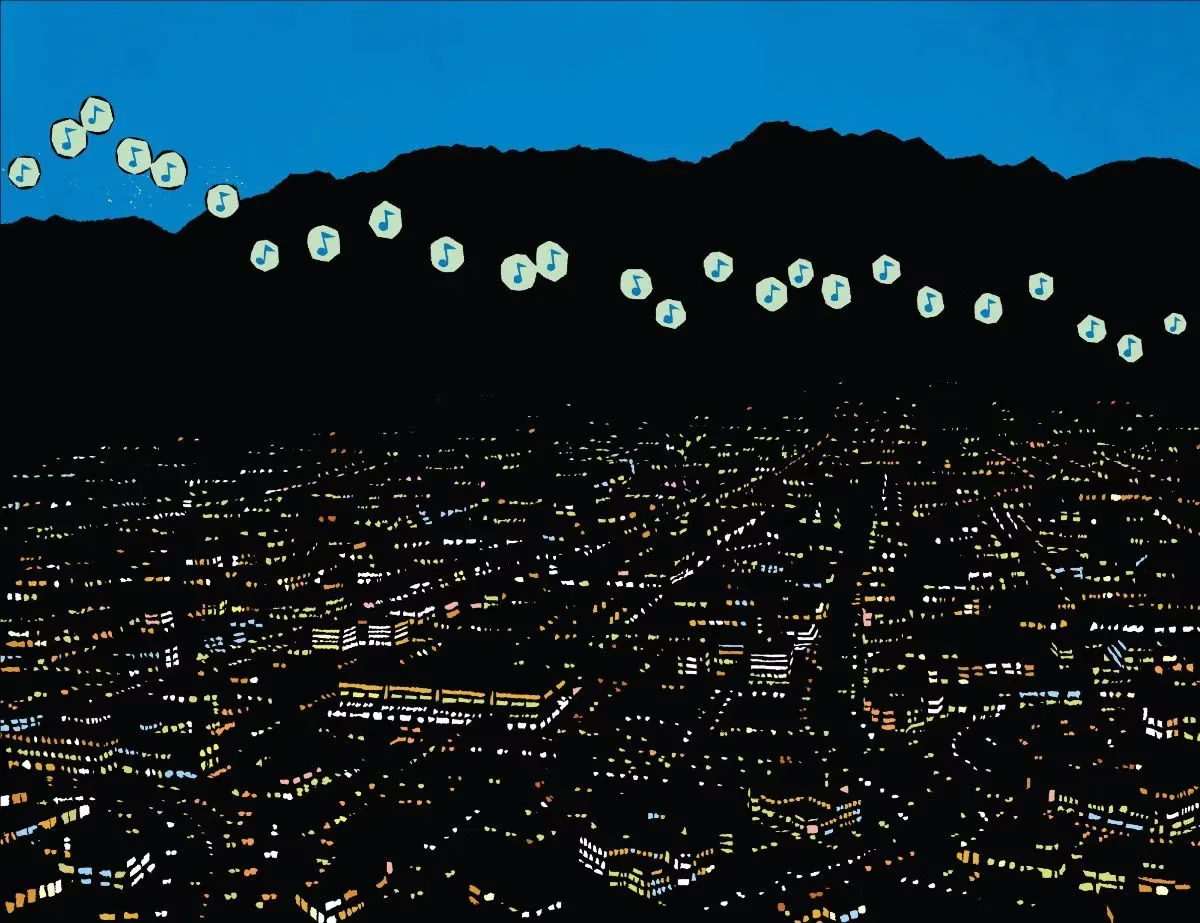
Gane brings prior credits on Ghost Tree and They’re Not Like Us to the art duties. Because the narrative is anchored in a high-pressure studio session, drawing will have to communicate several kinds of information at once: the physical environment, the tension between people in close quarters, the lived-in character of a music space, and the sudden intrusion of criminal danger. Comics can show the contrast between a room designed for careful recording and a situation becoming increasingly impossible to control without needing to leave that central location.
Bellaire’s color work and Bidikar’s lettering are equally part of the storytelling pipeline, not decorative additions after the script and pencils are finished. Color can establish shifts in atmosphere and separate the public mythology of a legendary musician from the harsher present-day circumstances. Lettering governs the pace at which readers encounter speech, silence, interruptions and sonic details. In a story about recording music, performance and an erupting confrontation, those choices can be especially important even though no page samples or specific visual approach have been detailed.
The graphic-novel designation also sets reasonable expectations about the release. It identifies Humbucker as a book-length comics work rather than describing it as an individual serialized issue. The separate comic-shop and bookstore/online dates indicate a staggered retail rollout, with direct-market comic shops receiving the book first and the broader bookstore and online release arriving several weeks later. Nothing in the available details specifies page count, edition formats, price, preorder terms or digital availability, so readers should avoid assuming those particulars.
What is confirmed, and what remains open
- Confirmed: Eric Harburn writes Humbucker; Simon Gane is the artist, Jordie Bellaire the colorist and Aditya Bidikar the letterer.
- Confirmed: The graphic novel is an Image Comics and Tiny Onion project centered on Denny, Connor Markes, an independent label, a legendary-seeming unreleased album and criminal pressure during a New York studio session.
- Confirmed: Comic shops are set to receive it on April 14, 2027; bookstores and online retail are scheduled for May 11, 2027.
- Not established: Its page count, price, cover variants, exact studio identity, additional cast, adaptation status and the ultimate fate of Denny and Markes.
At its core, Humbucker has a compact but potent engine: a man near financial collapse, an artist burdened by his own legend, and a recording session that cannot simply be delayed when the wrong person walks through the door. For Harburn, it is also a public shift from editorial leadership to writing. Readers will be able to see how those threads come together when the graphic novel arrives in 2027.