Spoilers for Detective Comics #1115 follow.
Batman stories regularly sell the fantasy of preparation: the right gadget, the right contingency, the right piece of evidence found moments before disaster. Detective Comics #1115, written by Tom Taylor with art by Mikel Janín, opens its “Clark Kent: Murderer” storyline by making that fantasy feel distinctly uneasy. Clark Kent has been accused of murder and is incarcerated while awaiting trial. Batman steps in to investigate, but the evidence Bruce uncovers does not simply point toward a clean exoneration. Instead, it appears to deepen the case against his friend.
That central reversal supplies the immediate hook. Batman is uniquely positioned to help Clark, not only because of their personal history but because the Dark Knight is framed as the World’s Greatest Detective. Yet the issue’s other striking element is what that detective work seems to require. Batman’s tools include highly invasive forms of observation and identification, creating an uncomfortable question beneath the murder mystery: if a hero has the ability to find anyone, identify anyone, and contact anyone, what limits should exist on that power?
A murder case with Clark at its center
The victim has a connection to Smallville and had become a prominent figure in Gotham. Their last phone call was to Clark Kent before they were shot, and there is an eyewitness to the shooting. Those details give the allegation against Clark a clear investigative foundation, at least on the surface. This is not merely a random accusation designed to put Superman in handcuffs; the opening evidence creates a chain that a detective would have to follow.
The official setup emphasizes the personal stakes. Batman visits Clark in custody intending to clear his name, only to discover evidence that seems more damning than helpful. That is a strong pressure point for a Batman-and-Superman story because their usual roles are being bent out of shape. Clark is normally the person whose extraordinary senses and moral clarity make him difficult to corner. Bruce is normally the person who plans for every eventuality. Here, Clark is constrained by the criminal-justice process while Bruce’s search for certainty may be leading him somewhere neither friend wants to go.
It also gives the title’s detective premise room to matter. A murder mystery works best when the investigator cannot simply declare a suspect innocent because the audience knows them as a hero. The issue’s premise asks Batman to treat Clark as both friend and subject of an inquiry. The more credible the evidence becomes, the harder it is for the relationship between the World’s Finest partners to remain uncomplicated.
The unsettling part of being prepared
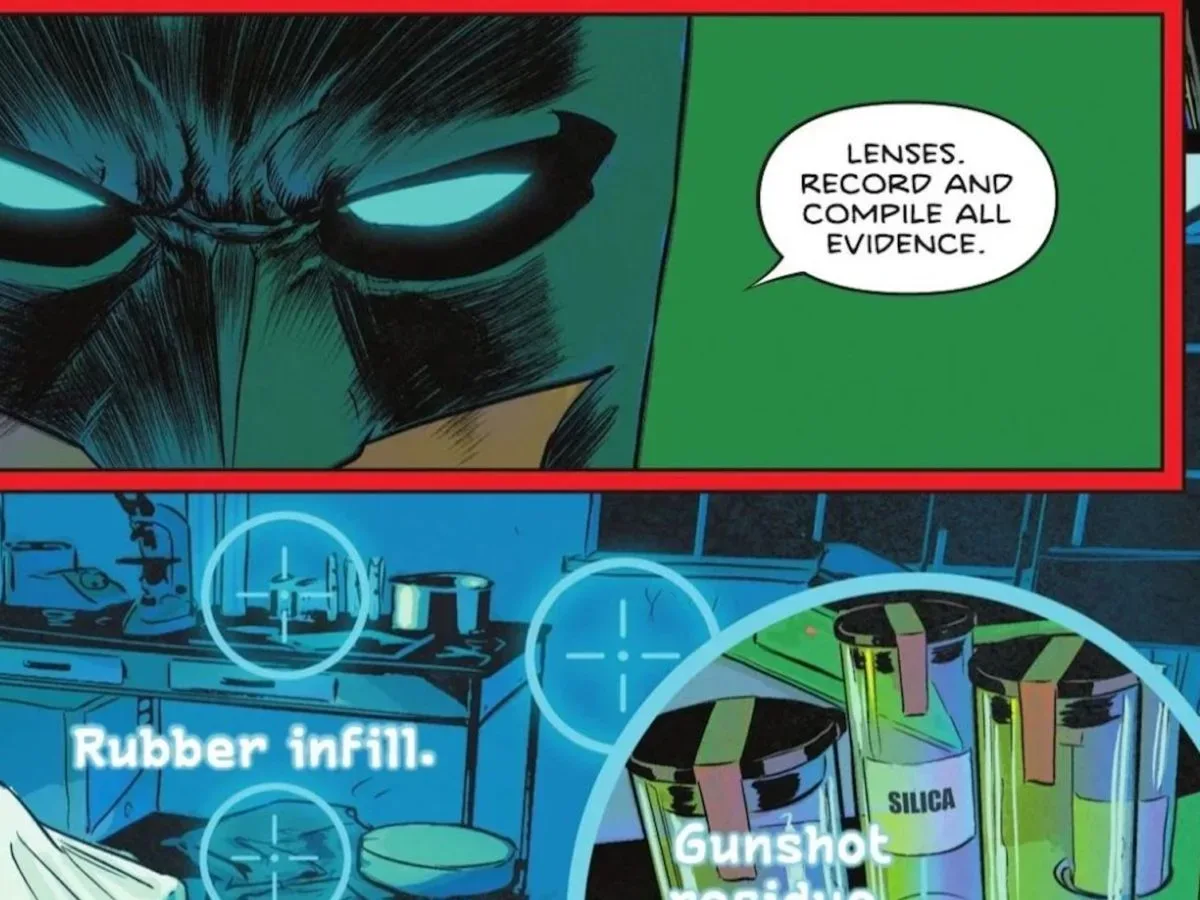
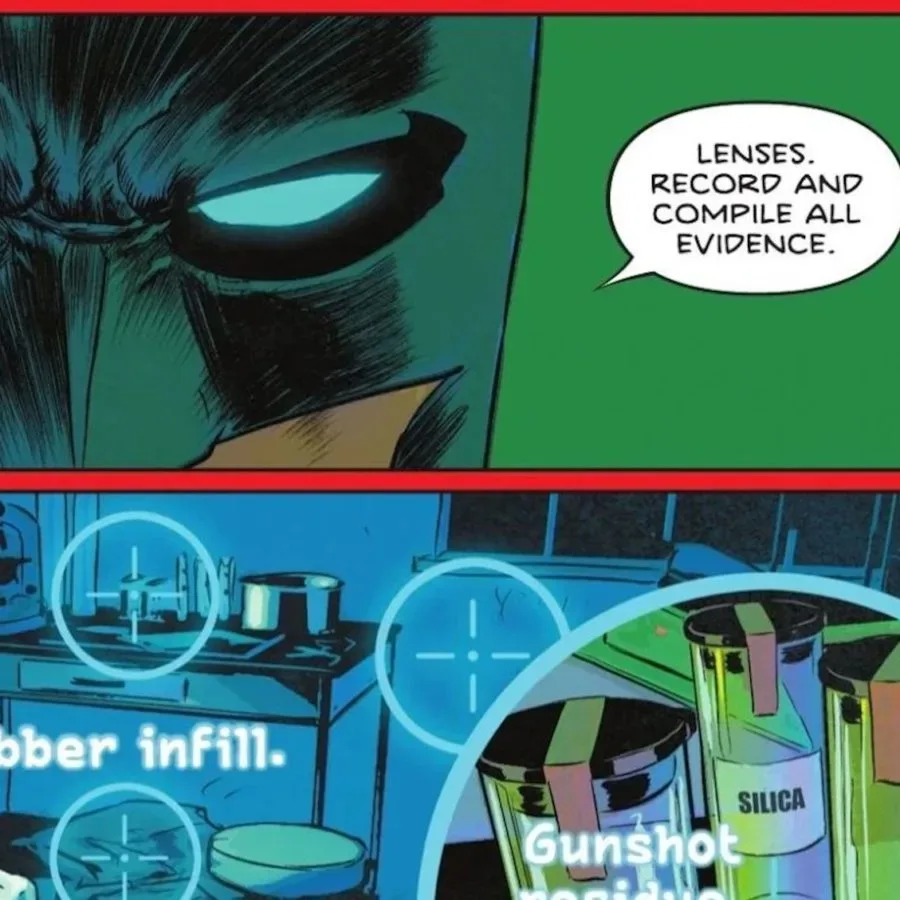
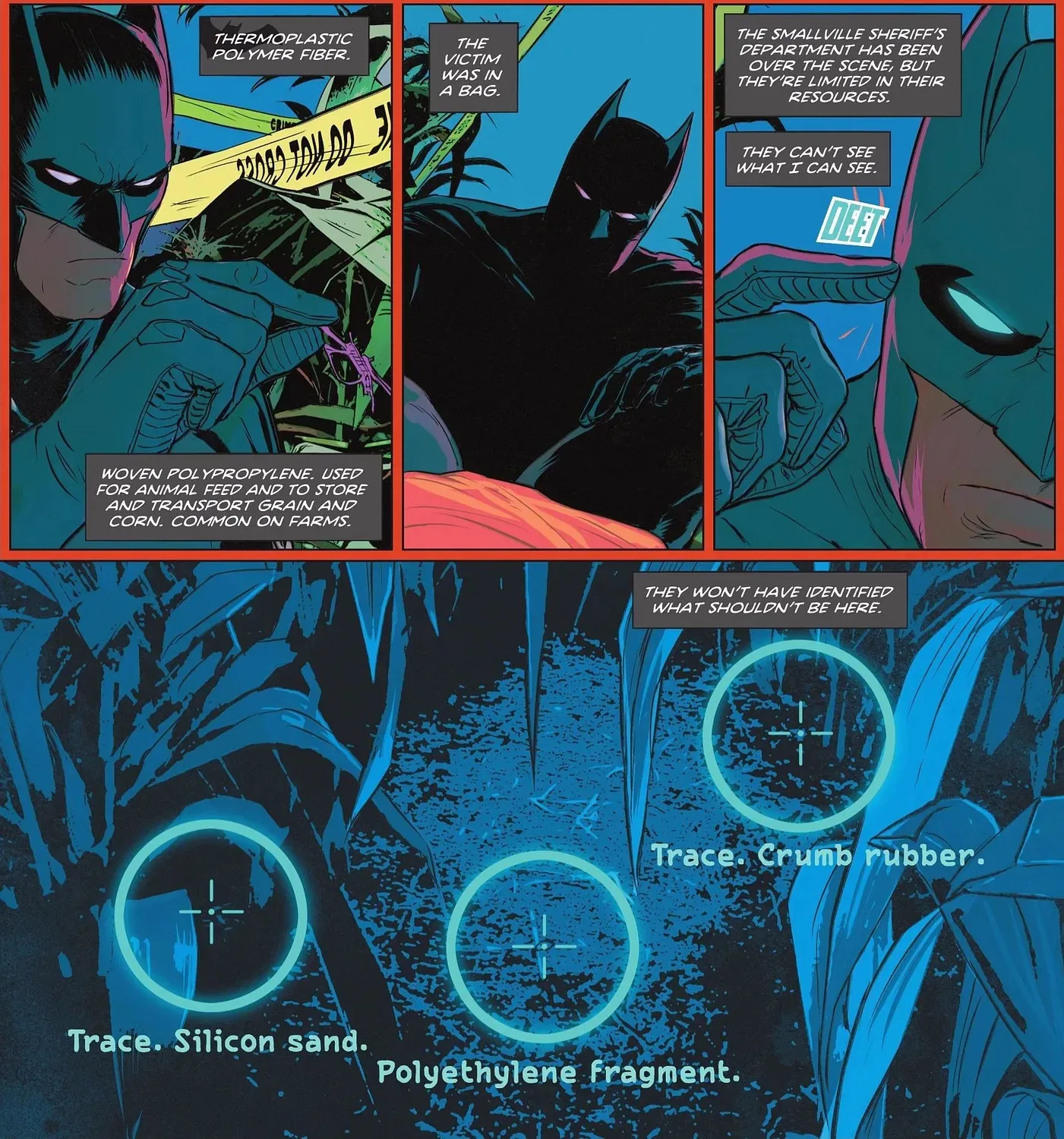
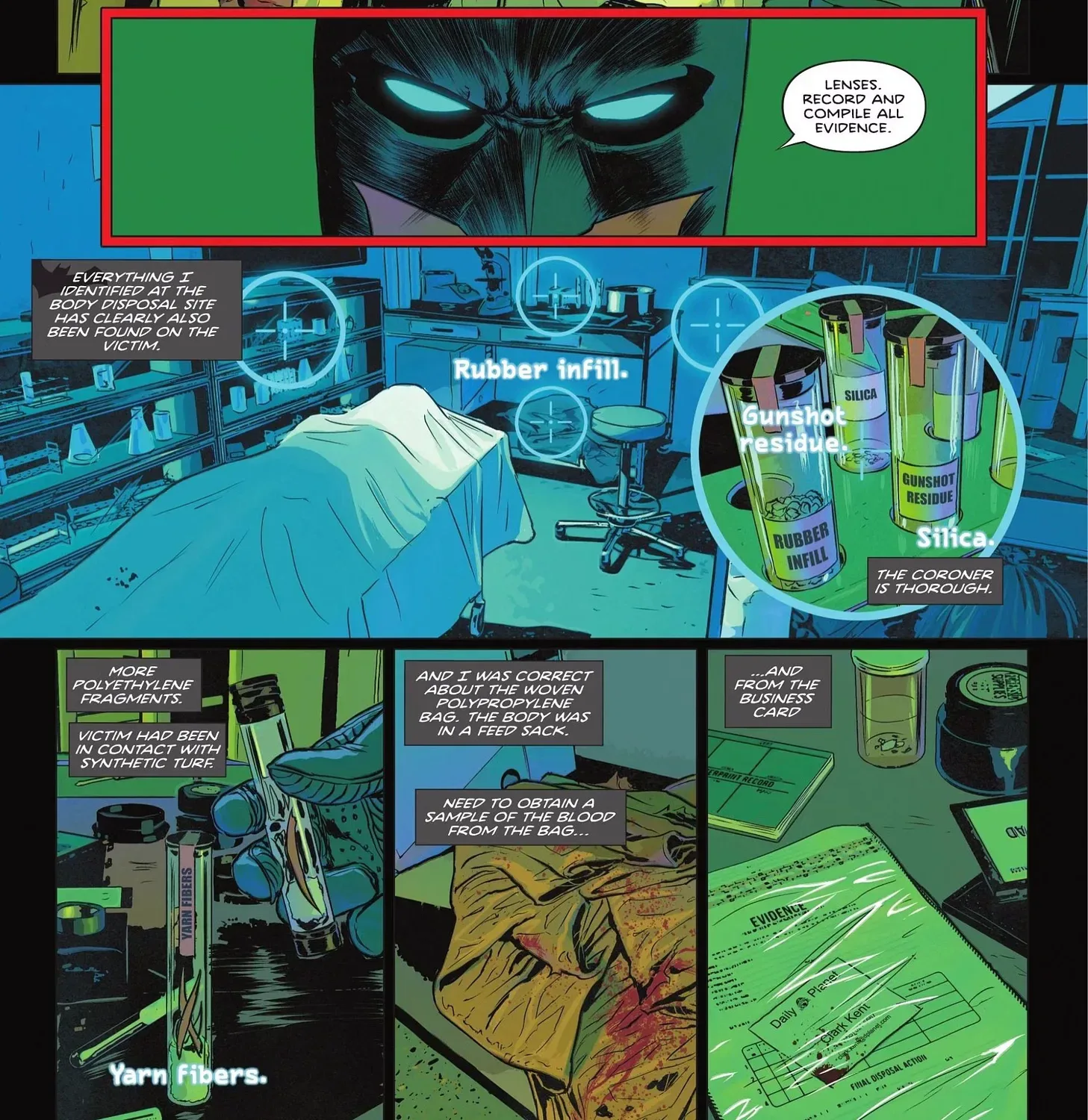
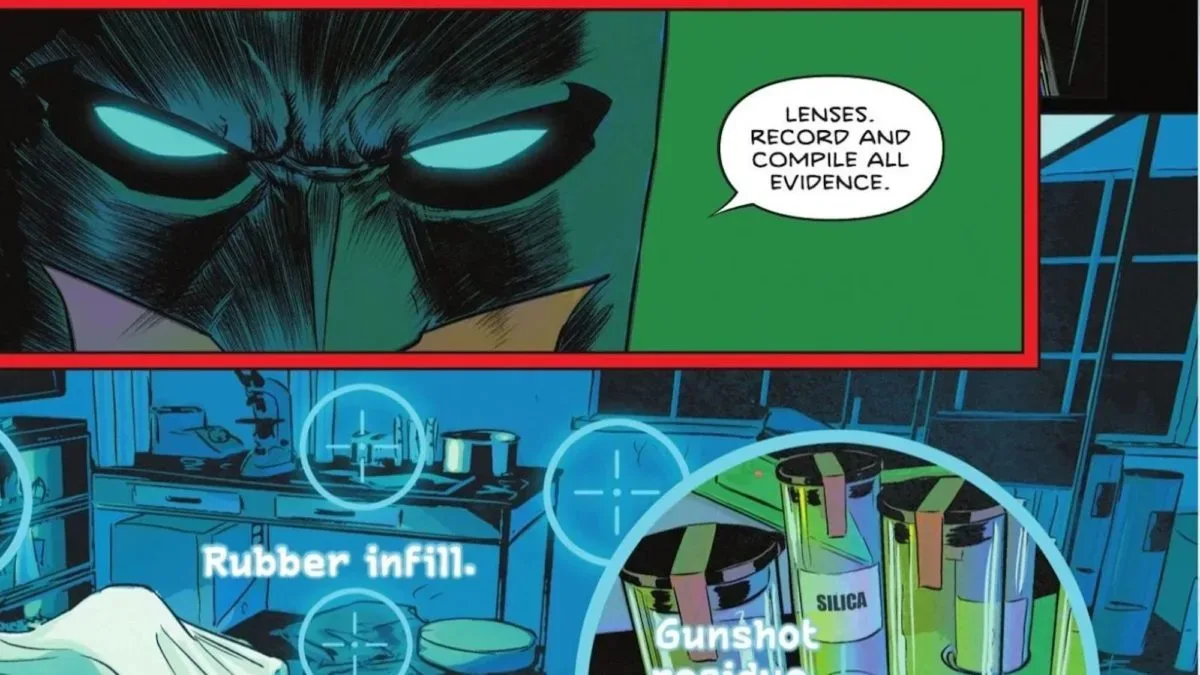
The issue appears especially interested in Bruce’s information-gathering capabilities. Batman’s cowl lenses are depicted as a much more powerful form of personal surveillance than ordinary consumer wearable tech. The distinction matters. A gadget can be narratively exciting when it helps a hero reconstruct a crime; it becomes troubling when it makes privacy feel optional for everyone around that hero.
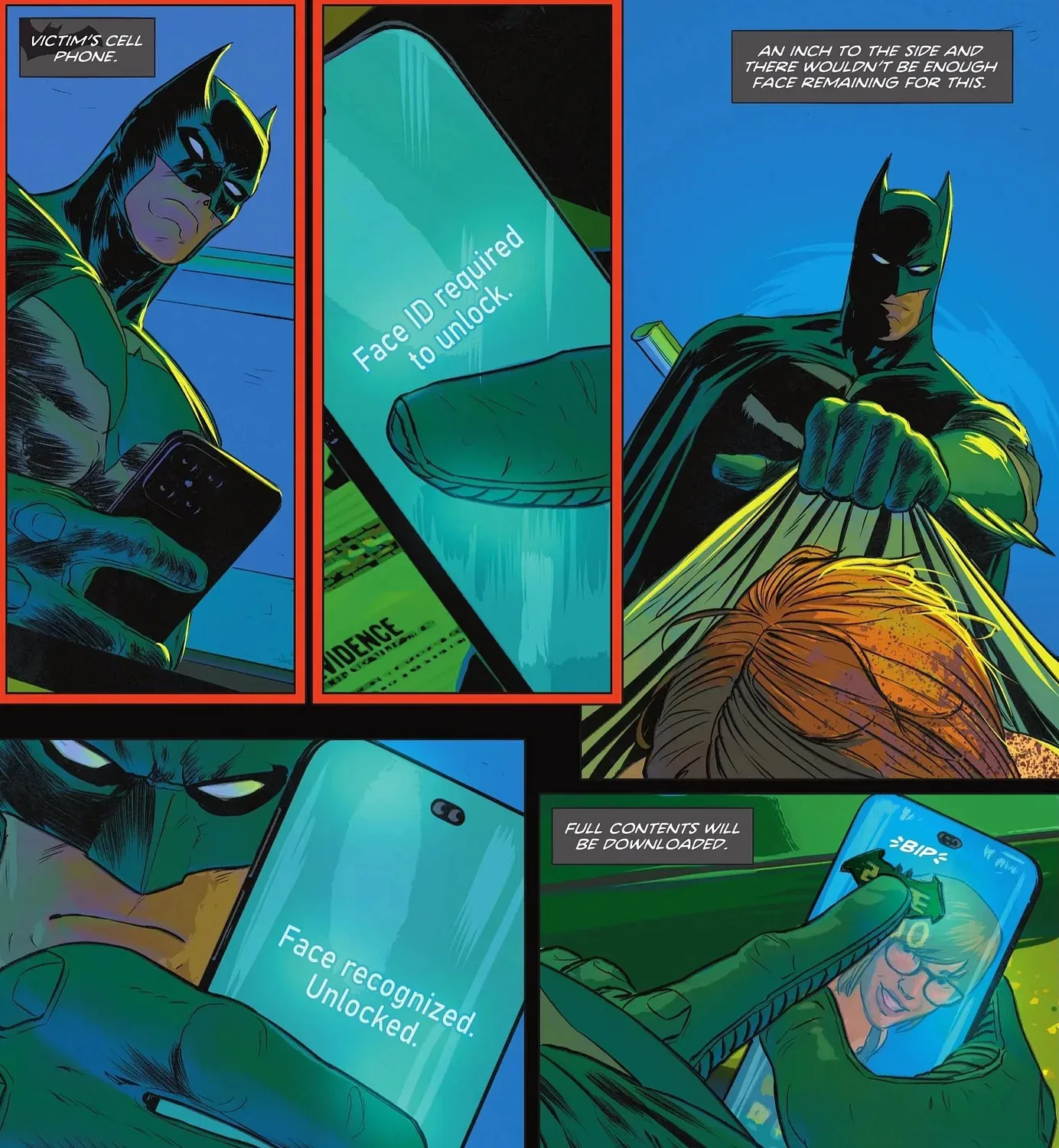
Facial recognition is the key term in this tension. In broad terms, it means using a face as identifying data: comparing visual features against a known image or reference. In a detective story, that can mean turning a fleeting glimpse of a person into a lead. In #1115, however, its presence makes Batman’s methods feel less like a clever magnifying glass and more like an always-available system of scrutiny.
That shift is important because Batman does not answer to a public institution in the way a police department theoretically does. He is Bruce Wayne, operating independently with resources and technology that can be far beyond those available to ordinary investigators. Even if a particular use of the technology serves the admirable goal of helping Clark, the story invites readers to consider the broader imbalance: Bruce can apparently use tools of extraordinary reach, while the local authorities in Smallville do not have equivalent access.
That is not proof, within the facts available here, that Batman is acting maliciously. It is a question of accountability. Who decides when the lenses are used? Whose data is captured? What happens to the information after a case ends? And why does the capability remain concentrated in the possession of one private vigilante rather than being subject to consistent public rules?
Why the technology changes the tone of the case
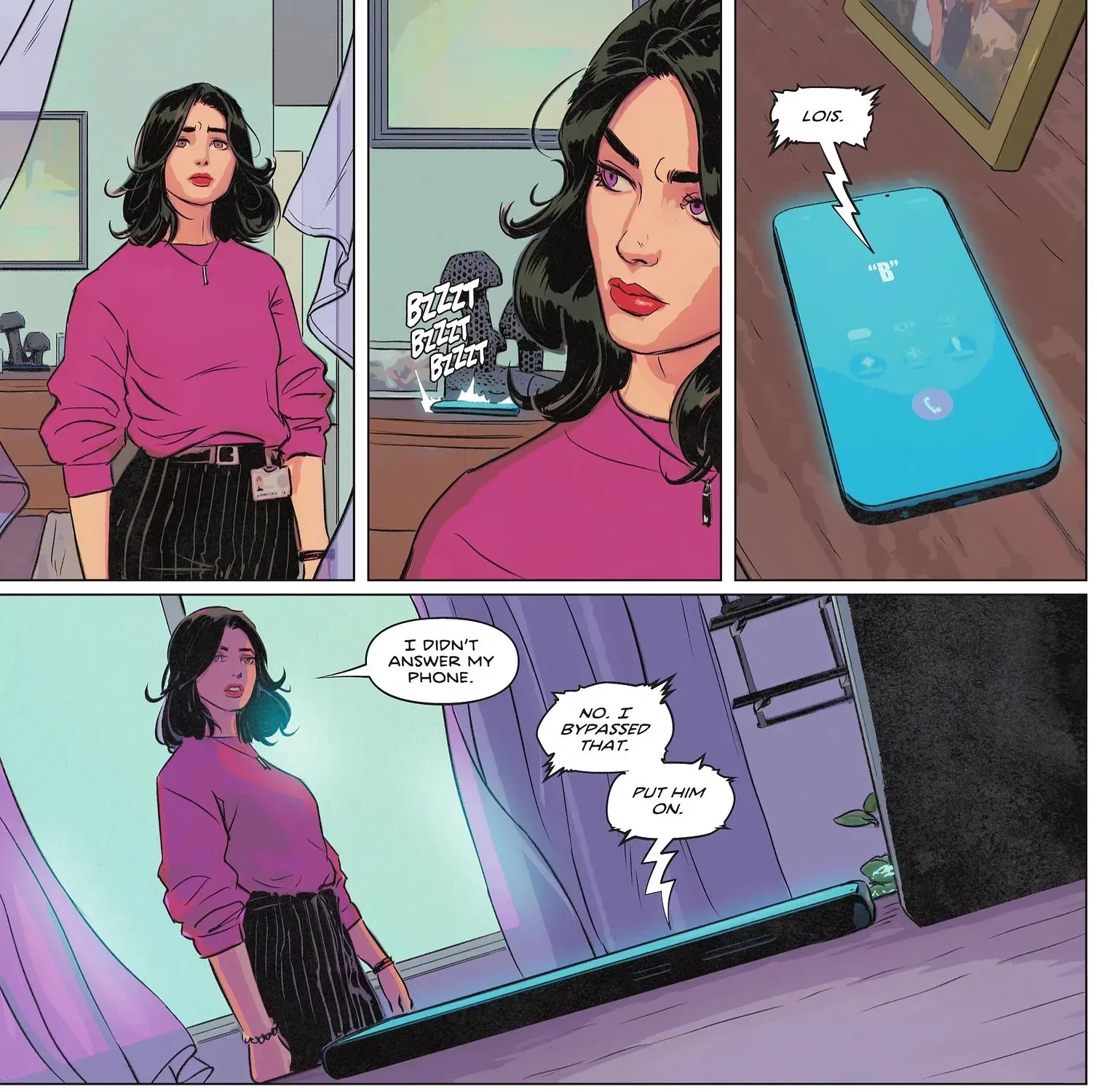
Batman has long used devices that stretch plausibility, and superhero fiction is built to accommodate that. The more revealing choice in #1115 is not simply that Batman owns advanced gear. It is that the gear can make ordinary social space feel penetrable. A phone, a passing face, or a person Batman needs to reach may no longer be private or difficult to locate when he is involved.
That makes the issue’s technology thematically relevant rather than decorative. In a conventional whodunit, clues are scarce. The detective must interpret a footprint, interview witnesses, and expose contradictions. When a protagonist can extract information through pervasive surveillance, the story’s conflict changes. The challenge is no longer only finding evidence; it is deciding whether the means of obtaining it are acceptable and whether the evidence itself can be trusted in a world where observation is so invasive.
The book reportedly also includes a more old-fashioned identification method alongside its advanced surveillance. That contrast is useful. Older detective devices can seem quaint because they imply friction: someone must possess an item, look at it, compare it, and make a judgment. Automated or near-instant identification collapses that friction. It changes a person from someone with a private life into a potentially searchable record.
Readers following wider debates about privacy and encrypted personal technology may recognize why this fictional setup lands sharply. The real-world policy questions are different from superhero plotting, but the core concern is familiar: powerful investigative access is often defended by the urgency of a difficult case. The linked question is what protections remain once access exists. That context makes the continuing public debate around encryption and state access a useful parallel topic, even though Batman’s private arsenal is an entirely different kind of power.
Batman as ally, investigator, and potential threat
The most interesting dramatic consequence is that Batman’s virtues can read like liabilities. His relentless focus is exactly what Clark needs if he is innocent. His willingness to pursue a lead past appearances is exactly what a murder investigation demands. But those same qualities become frightening when Bruce has the capacity to observe and identify people with little apparent restraint.
That does not make Batman the story’s villain in any simple sense. Rather, #1115 appears to use the case to put Batman’s usual heroic image under stress. The notion of the “world’s greatest detective” normally suggests intellect, persistence, and justice. This arc has room to ask whether greatness also requires ethical limits—especially when the investigator’s friend is on trial and the apparent evidence is mounting.
Clark’s predicament gives that question unusual force. If Batman’s tools can help clear Superman, readers may be tempted to accept any intrusion as justified by the outcome. But an innocent Clark is also the best possible test case for the boundaries of Bruce’s methods. A system that can be aimed at anyone can be aimed at a close ally, and a case that begins as rescue can become an investigation driven by suspicion.
What #1115 establishes for the new arc
Detective Comics #1115 is a 32-page issue from DC Comics, on sale November 18, 2026, with Taylor and Janín launching a storyline built around the accusation that Clark Kent is a murderer. The premise promises both a personal rift and a procedural puzzle: Batman must determine what happened while confronting evidence that points toward someone he knows better than almost anyone.
For readers, the immediate question is whether the apparent case against Clark is misleading, incomplete, or genuinely harder to dismiss than expected. The more enduring question may be what the investigation reveals about Bruce. He has the equipment to make connections other people cannot make, but #1115 makes that advantage feel morally complicated rather than purely cool.
That is a productive direction for a Batman mystery. The gadgets are still part of the appeal, and the case still needs solving. But when the hero’s technology can look like a civil-liberties problem from the other side of the cowl, the detective story gains a second mystery: not just who committed the crime, but how much power Batman should have while trying to solve it.