Spoilers for the current DC K.O.-adjacent story material follow.
DC’s big post-tournament question is no longer simply who got a power-up. It is what everyone intends to do with the future they were shown—and whether that future can be avoided at all. The emerging answer is pleasingly inconvenient: heroes, villains and the people in the awkward middle appear to have received visions connected to an approaching “Absolute Crisis” involving Darkseid, and the response is already spilling across multiple books.
That larger thread now touches Aquaman, Black Manta, Cyborg, Guy Gardner, Supergirl and, soon, Dreamer. The Justice League has also reportedly widened its ranks to include some formerly antagonistic figures because that may be necessary to stop what is coming. In other words, the universe has apparently reached the stage of emergency planning where everybody gets a chair at the table, including the person who previously tried to throw the table into the ocean.
The visions are becoming the connective tissue
The DC K.O. event’s aftermath gave characters both new capabilities and glimpses of a looming catastrophe. A vision, in this context, is more than a spooky forecast: it functions as a narrative instruction with incomplete information. Characters know danger is ahead, but may not know which actions cause it, prevent it, or merely reshuffle it into a worse shape.
That ambiguity matters. A warning of a cosmic crisis can inspire cooperation, but it can also make characters act out of fear, self-interest or misplaced certainty. DC’s current setup puts several very different responses on the board:
- Aquaman has become an intergalactic emperor and established warning lighthouses across the galaxy.
- Cyborg has begun constructing his own Heart of Omega.
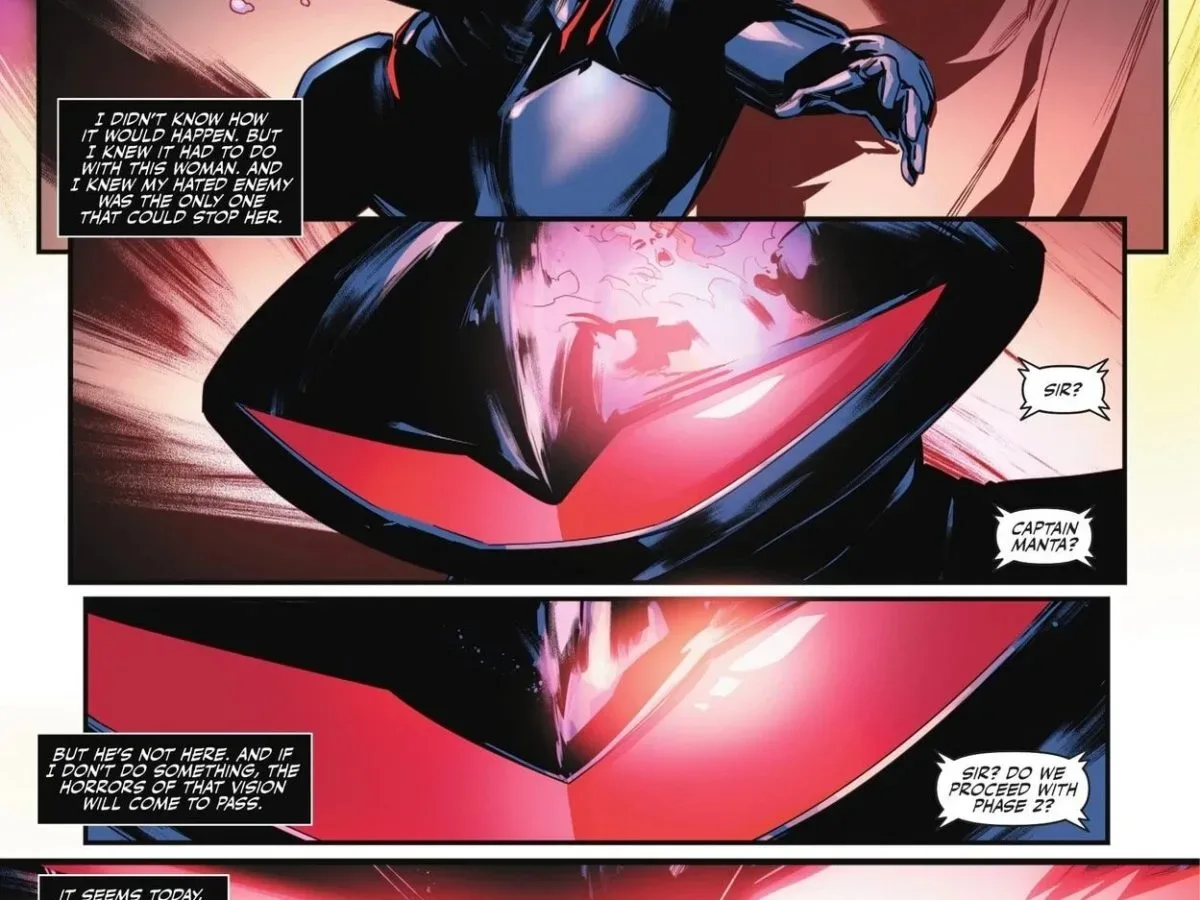
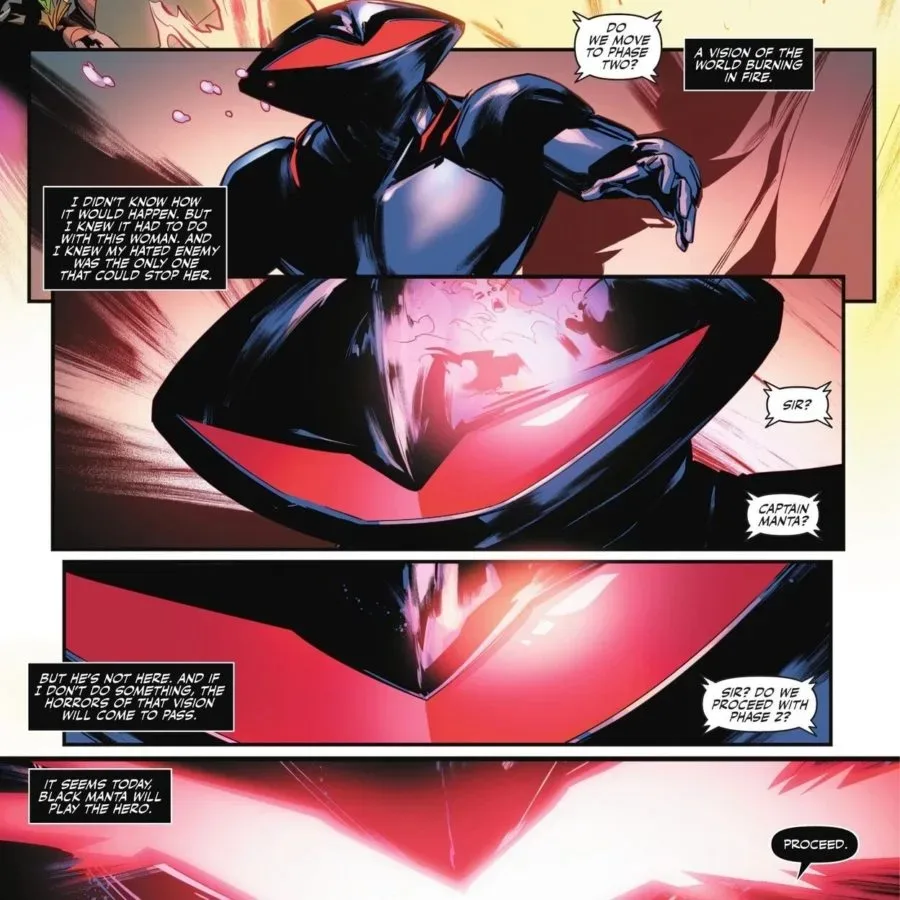
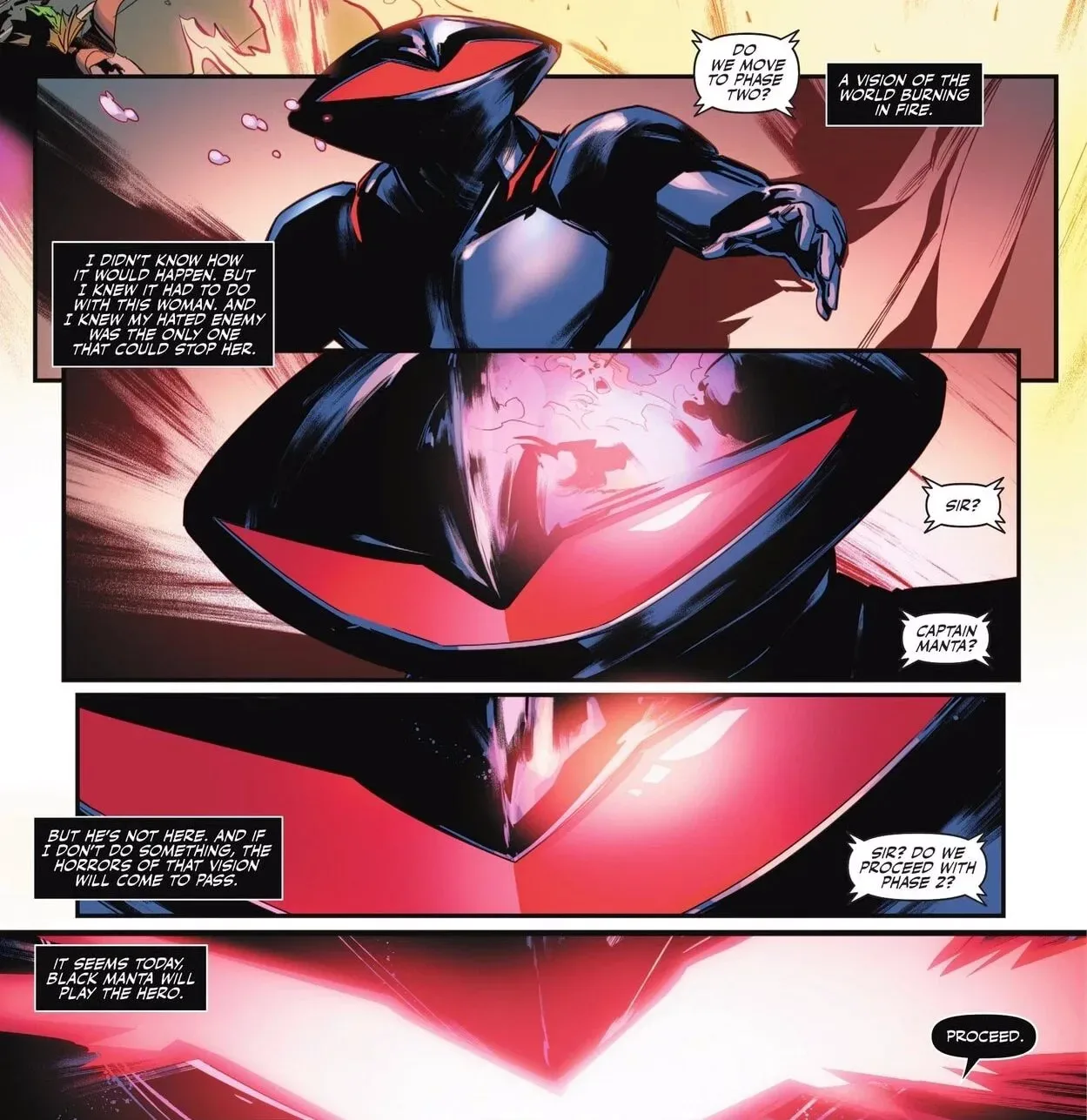
- Black Manta’s shifting allegiance appears tied to a particular mission suggested by his vision.
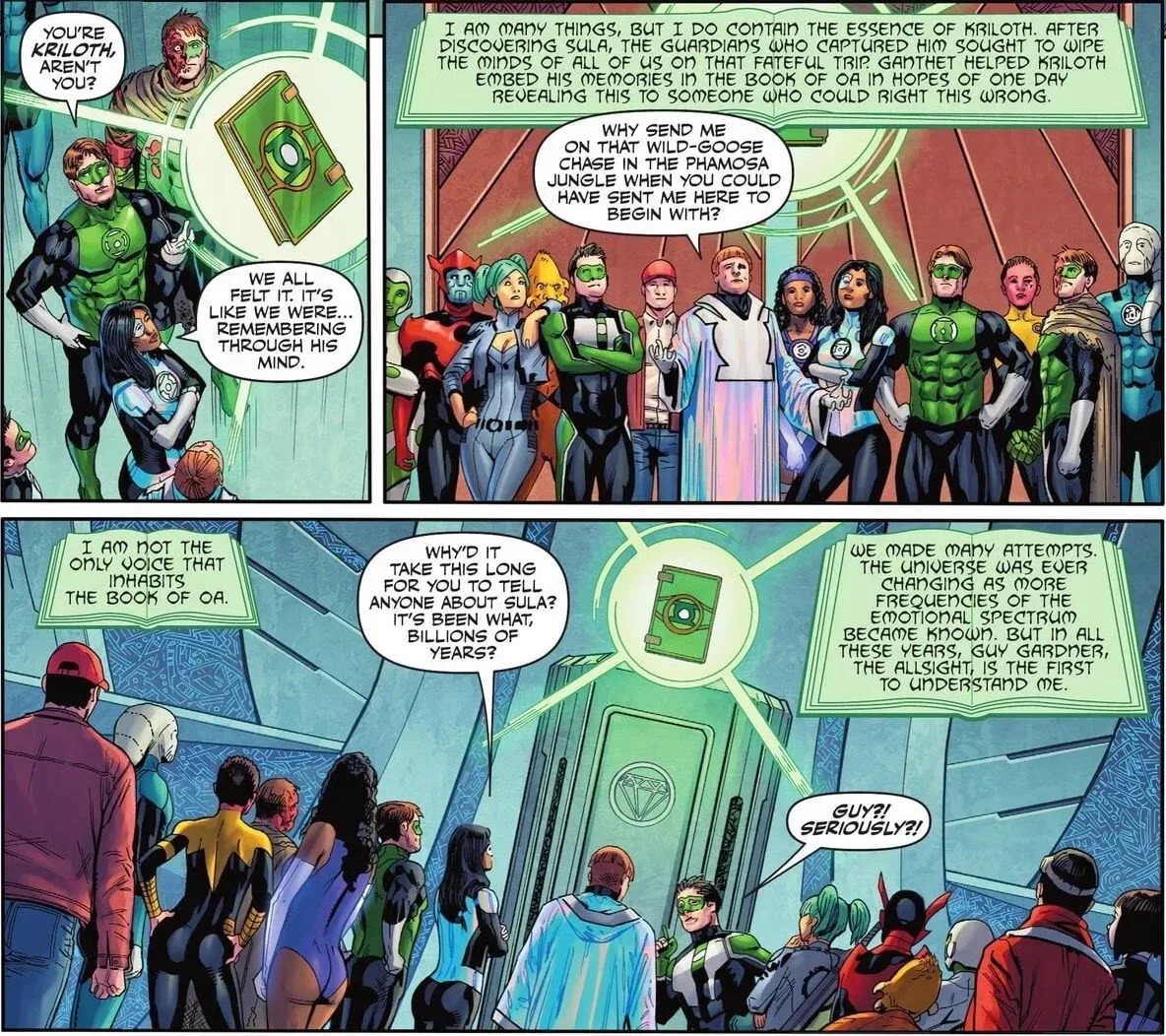
- Guy Gardner’s experience leads through the Book of Oa, Sula, elemental imagery and a startling future identity.
- Dreamer, a precognitive character, is framed as central to coordinating the broader surge of future-facing power.
“Precog” is short for precognitive: someone able to perceive future events or possibilities. That makes Dreamer an especially important figure in a storyline full of visions. The key distinction is that a precognitive perspective may help sort a mass of partial warnings into a coherent picture—but it can also become dangerous if everyone treats a possible future as fixed fact.
Black Manta’s apparent turn may not be a turn after all
Emperor Aquaman #23, from writer Jeremy Adams and artist Paolo Villanelli, positions Aquaman on Korugar while the Crimson Queen uses the ancient Zodiac Crystals to call forth a force old enough to threaten Earth’s surface. The issue description says that an unlikely vision from the DC K.O. tournament may be key to saving humanity.
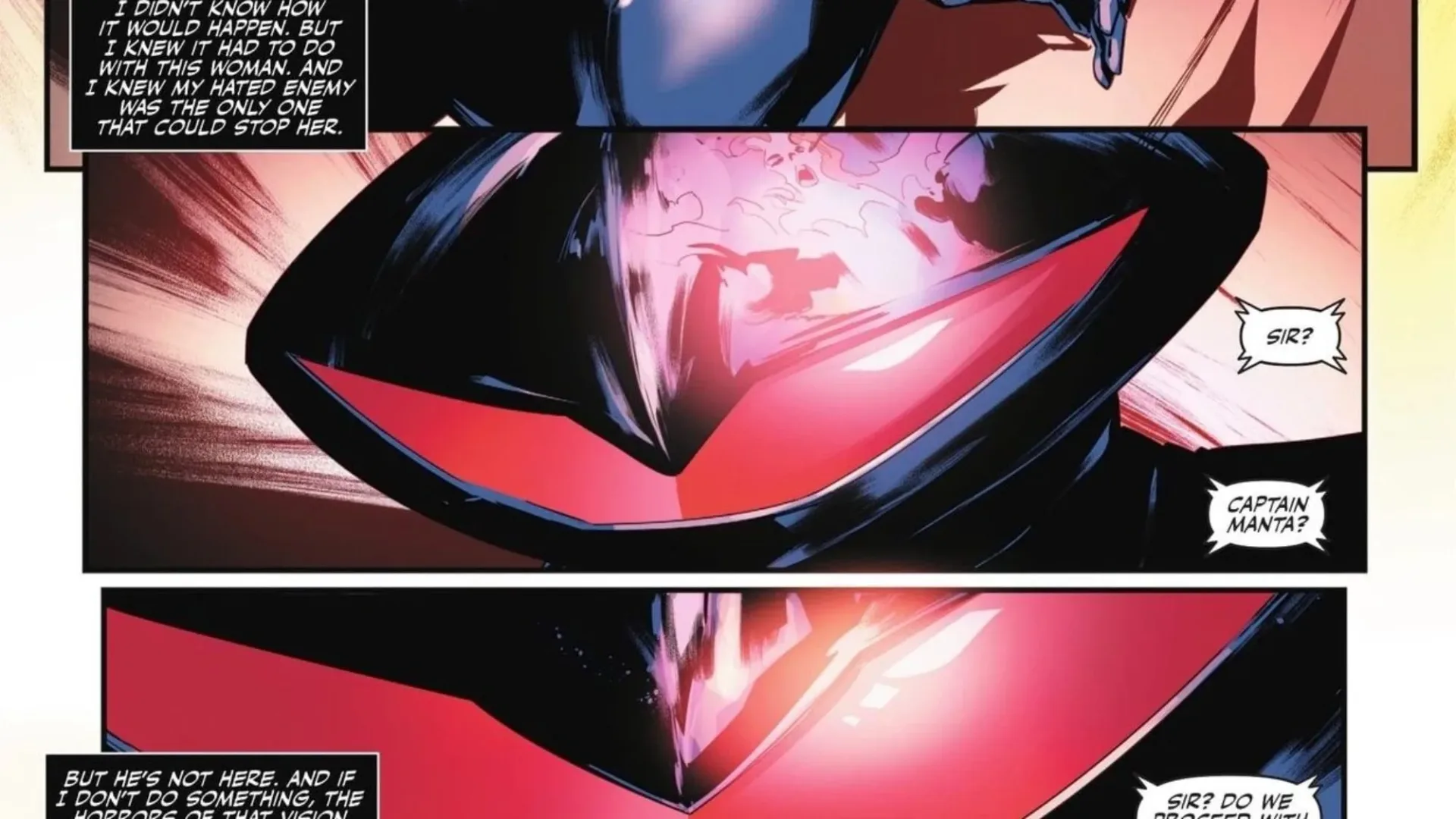
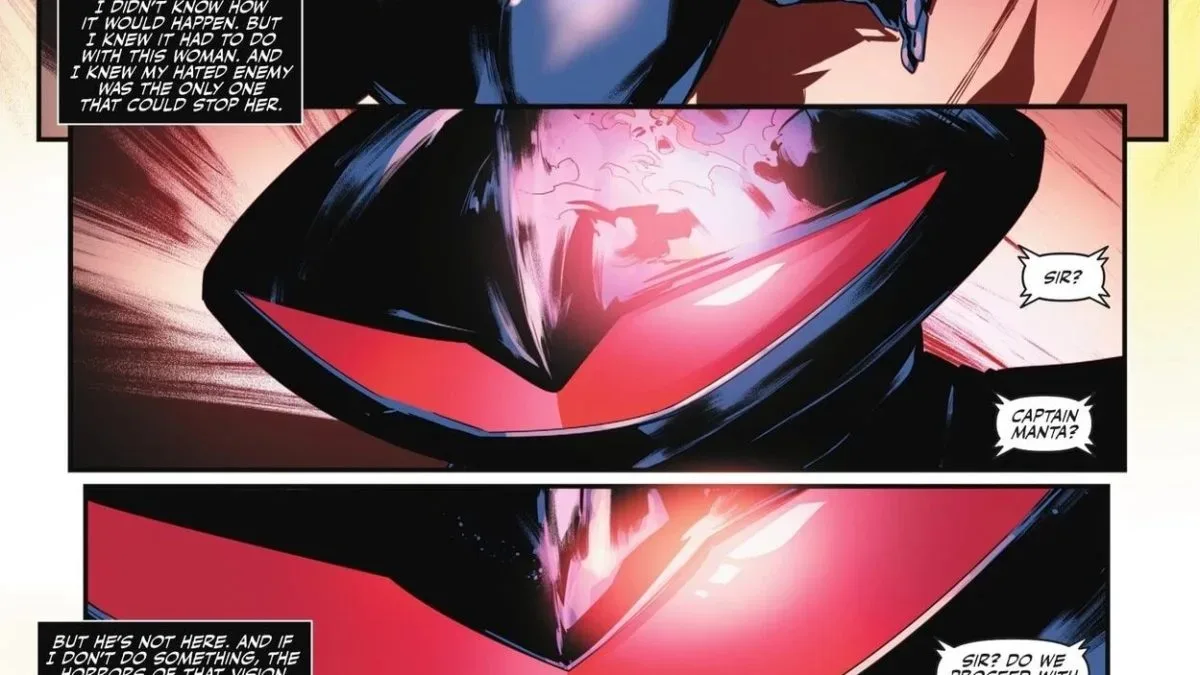
The Black Manta development is where the story’s moral bookkeeping gets deliberately slippery. His seeming reversion to villainy now looks like a feint rather than a clean betrayal. The implication is that he remains aligned with the effort to preserve the universe, even if the particular threat he is targeting is not simply Darkseid.
That does not turn Black Manta into a conventional hero, and it should not. The more interesting possibility is pragmatic alignment: a character with his own agenda recognizes that a larger disaster would erase every agenda along with everyone else. A temporary partnership is not the same as redemption. It is closer to cosmic triage, with a very sharp helmet involved.
For Aquaman’s corner of the line, the stakes are therefore doing double duty. The immediate crisis concerns Korugar, the Crimson Queen and the Zodiac Crystals; the larger crisis is the question of how much trust can exist between figures whose history makes trust exceptionally impractical. The DC K.O. vision may offer a route through the immediate danger, but it also reinforces the event’s core idea: bad futures sometimes demand alliances that would otherwise make no sense.
Guy Gardner’s Book of Oa thread gets stranger
Green Lantern Corps #22, by Morgan Hampton with artists Fernando Pasarin and Juan Jose Ryp, sends Guy Gardner and Kyle Rayner into the Well of the Emotional Entities in search of Hal Jordan. Hal is lost somewhere in the universe after a cryptic clue from the Book of Oa, and the pair must work with new chromatic Alpha Lanterns before confronting surviving Guardians of the Universe and a reborn Krona.
There is plenty in that setup without the DC K.O. material, but Guy’s visions add another layer. He has received images involving elementals, has been linked to Sula through the Book of Oa, and has seen a destiny in which he becomes the “Green Lantern Pope.” That title is peculiar enough to demand attention, though its exact meaning remains unrevealed.
The Book of Oa is presented here as the source of a clue and as the place through which Guy communes with Sula. Functionally, it is operating as a record, a guide and a doorway into larger Lantern mythology. The Well of the Emotional Entities, meanwhile, points the story toward the forces associated with the emotional spectrum. Even readers who are not keeping a filing cabinet for every Lantern term can take the practical point: Guy and Kyle are moving into a deep end of the mythology where the usual rules—and possibly the usual power structures—are unstable.
The presence of the chromatic Alpha Lanterns suggests a need for coordination across powers rather than one chosen hero solving everything alone. That fits the broader post-K.O. direction. Each title has its own threat, but the recurring answer seems to be collaboration among people who are not naturally inclined to agree. For Guy Gardner, this is almost a superpower in its own right, albeit one likely to be delivered at high volume.
Supergirl’s problem is more immediate—and no less important
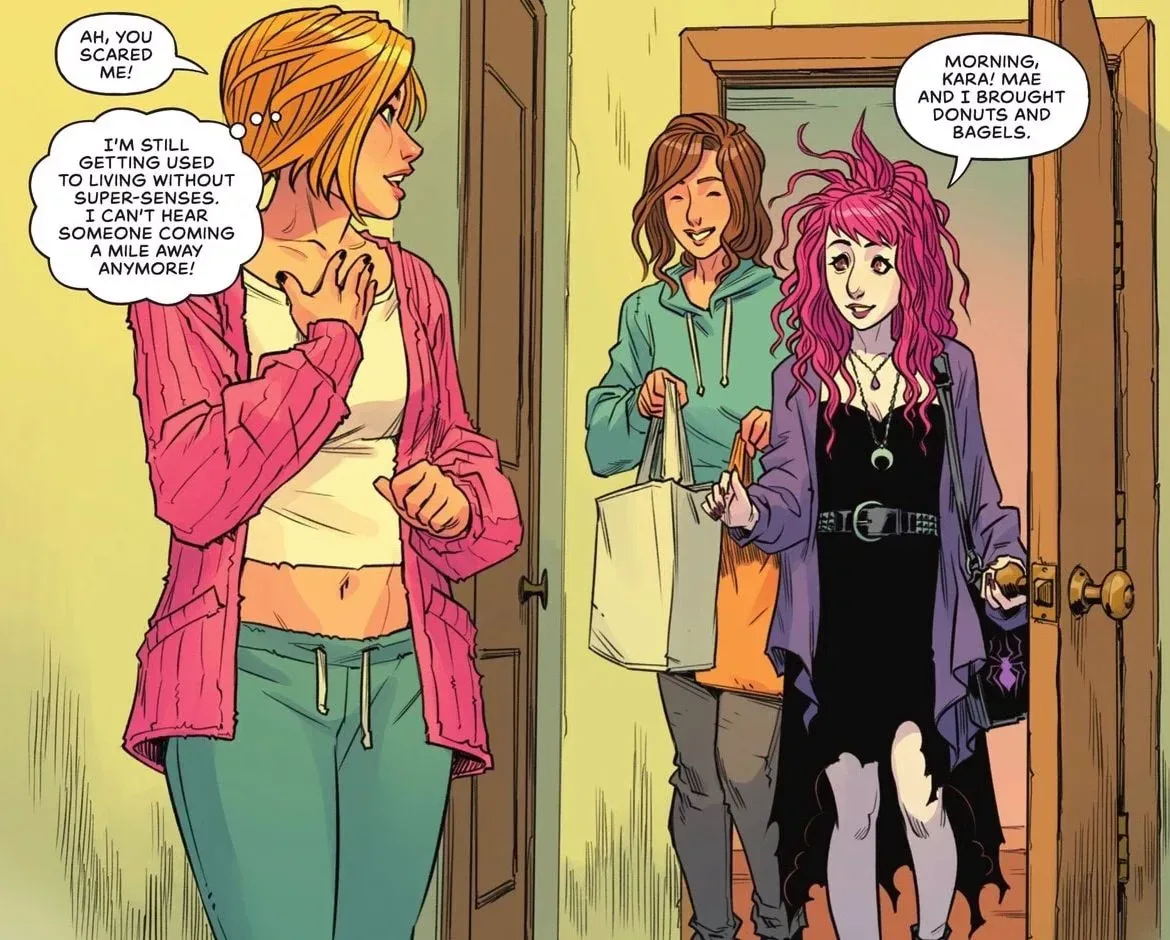
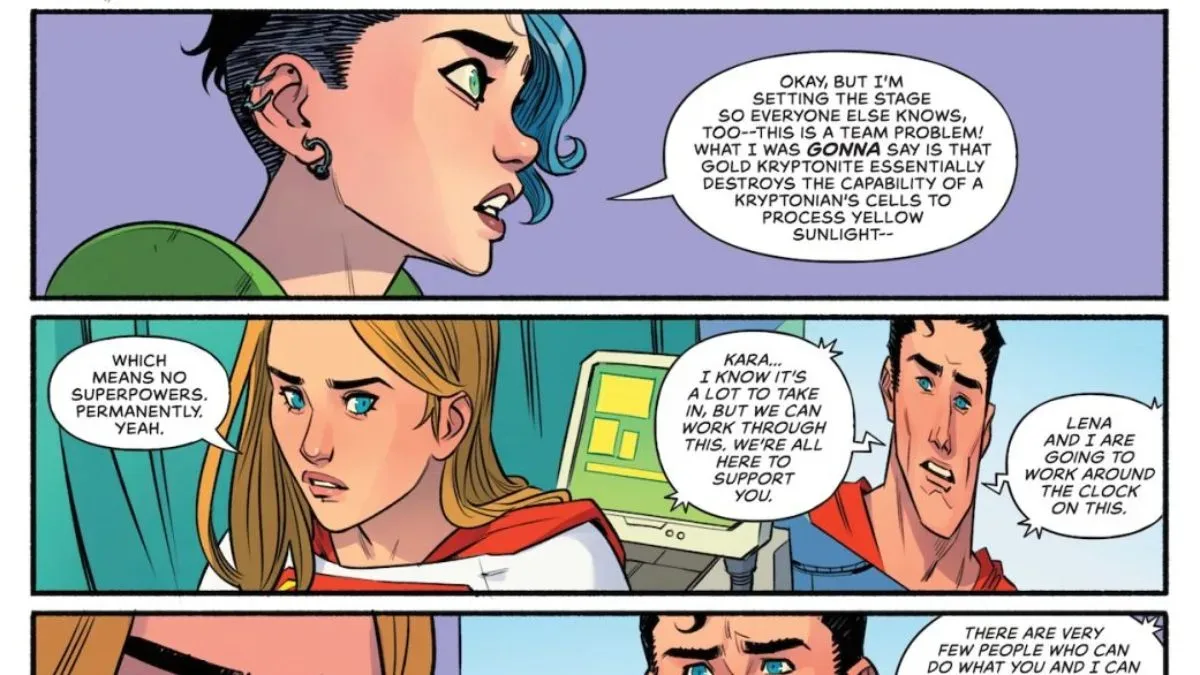
Supergirl #19, written and drawn by Sophie Campbell, takes a more grounded but still high-pressure route. Kara Zor-El has been exposed to gold Kryptonite and no longer has her powers. She does, however, still have allies: the reborn Matrix, Nightflame and another member of Kara’s “Super Force” who may surprise the group.
Gold Kryptonite is important here because it has left Kara without the abilities that normally define her role in a crisis. That is not a small temporary inconvenience when Reactron remains at large. Kara is also reenrolling at Stanhope, turning orientation into the kind of everyday obligation that becomes spectacularly complicated when supervillains are active.
Her reduced connection to the wider vision material is notable. Not every character must receive the same prophetic assignment for the overall event to work. A powerless Supergirl facing a personal and local threat offers a useful counterweight to emperors, galactic alarms and cosmic entities. It tests what remains when a hero cannot rely on the familiar tools of heroism.
It also keeps the expanding DC K.O. aftermath from becoming a spreadsheet of destiny alone. Kara’s story is about friends, identity, responsibility and vulnerability in the present tense. Those things may end up mattering just as much as any elaborate glimpse of the future.
Justice League Unlimited #25 is being positioned as the checkpoint
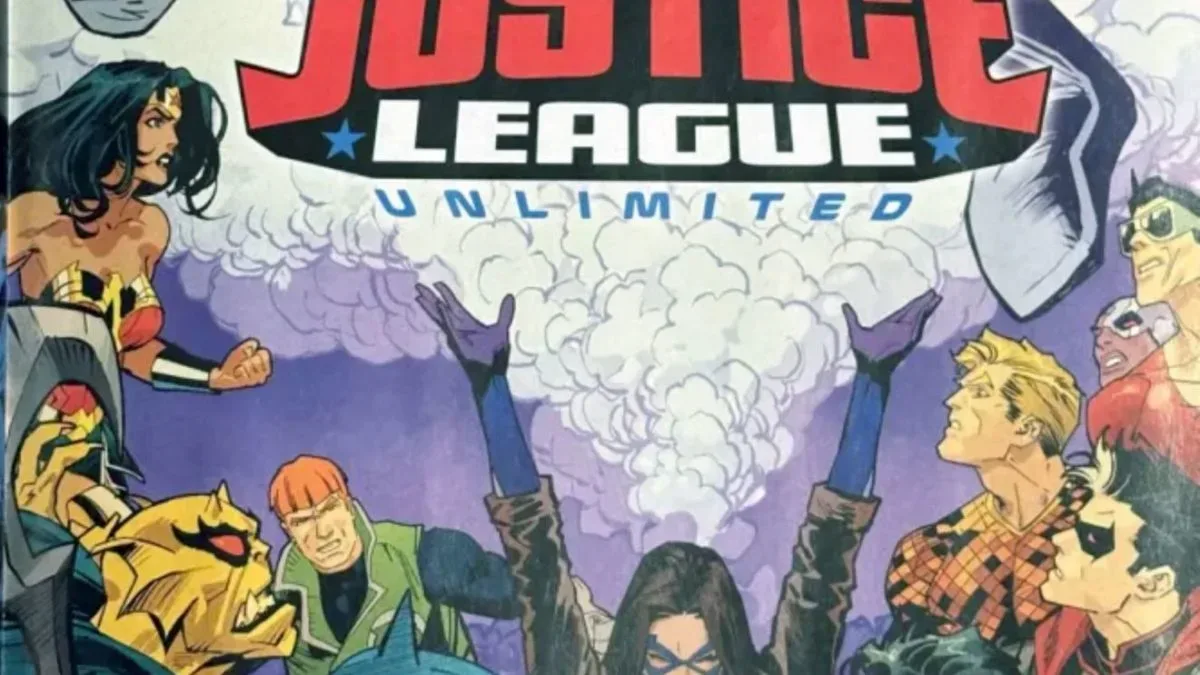
The immediate destination for these threads is Justice League Unlimited #25, an oversized issue credited to Mark Waid, Nicole Maines, Dan Mora and Fico Ossio. The premise is direct: the League must find the fugitive Dreamer, the one precog said to have enough power to unite the current surge of abilities, while a new core team of the DC Universe’s leading minds prepares to face the future.
That makes issue #25 less like a routine anniversary stop and more like a story map being unfolded in public. The outstanding questions are substantial: What exactly did each character see? Are their visions parts of one future, or conflicting possibilities? Why is Dreamer a fugitive? And what does it mean for the League to need “the mightiest minds” rather than simply its most powerful fighters?
The latter is a particularly promising emphasis. Darkseid-level stakes generally invite brute force, but the solicitation’s focus on thinkers and a precog implies that interpretation is as important as combat. The problem may be identifying the correct sequence of choices before the future hardens around everyone.
Readers should also treat the timing details with care. The issue description places Justice League Unlimited #25 on November 25, 2026, while the listed dates attached to Supergirl #19, Green Lantern Corps #22 and Emperor Aquaman #23 are November 11, 2027. The claim that the Justice League issue arrives two weeks after the other installments does not line up with those printed dates. The narrative order is clear enough—these visions are intended to converge—but the scheduling information is internally inconsistent.
What readers should watch for next
The important development is not merely that another DC event is assembling a giant threat. It is the way the aftermath is distributing responsibility. Aquaman’s empire, Cyborg’s construction project, Black Manta’s specific target, Guy’s Lantern mystery, Kara’s powerless struggle and Dreamer’s precognition all look like separate responses to the same pressure wave.
That approach gives the crossover framework room to operate at several scales. A global or cosmic warning can coexist with a search for a missing Lantern, a desperate fight on Korugar and a school orientation complicated by Reactron. Whether the pieces finally form one clean picture remains unanswered, which is precisely the tension these visions are designed to create.
For broader superhero-TV context, Dreamer’s central role also arrives during a period when future-sight stories remain a lively genre tool; another recent look at a vision-driven superhero narrative shows how much suspense can rest on what characters are allowed to know, and when.
For now, the post-K.O. message is clear: everybody has seen something terrible on the horizon, but nobody has the whole answer. DC’s heroes may have to build a coalition capable of surviving Darkseid. The more alarming possibility is that they may first have to survive each other’s interpretation of the warning.