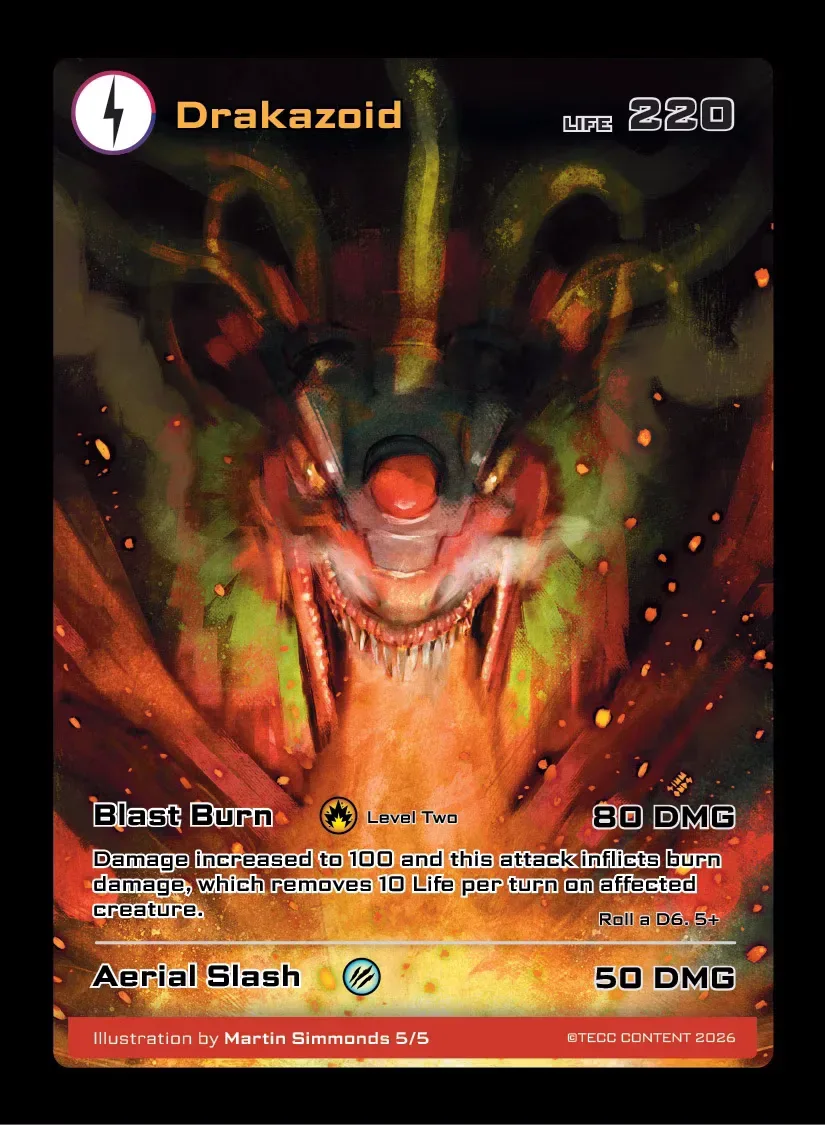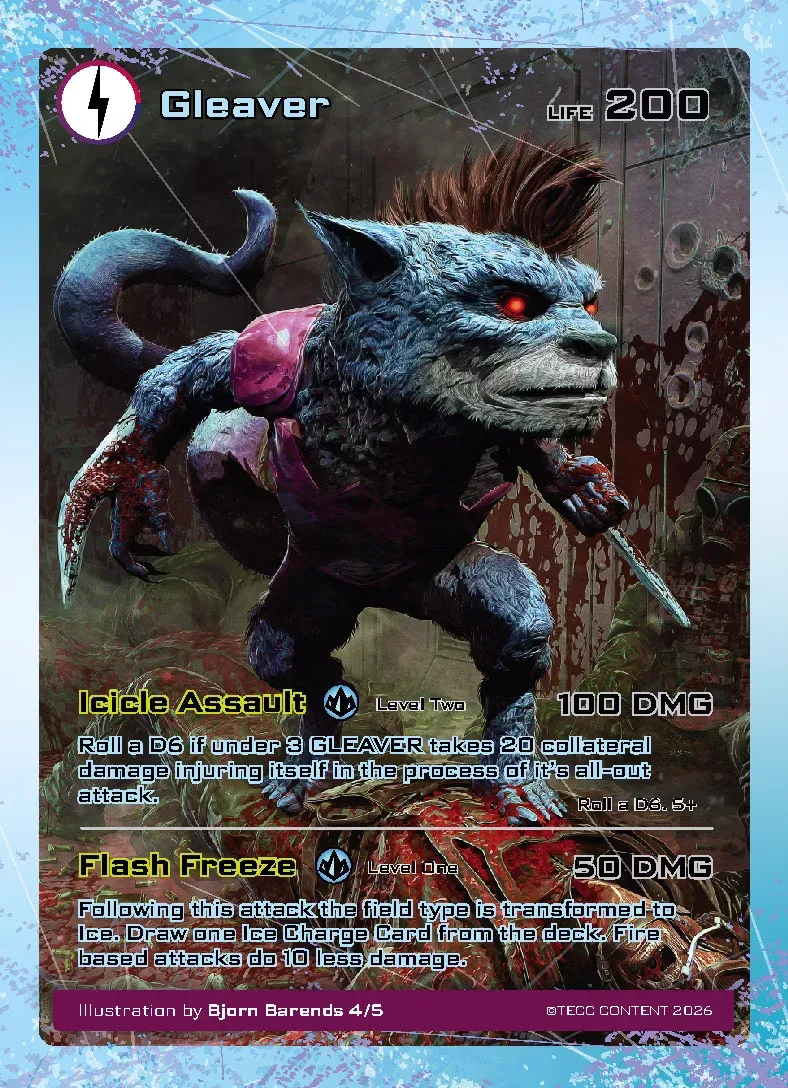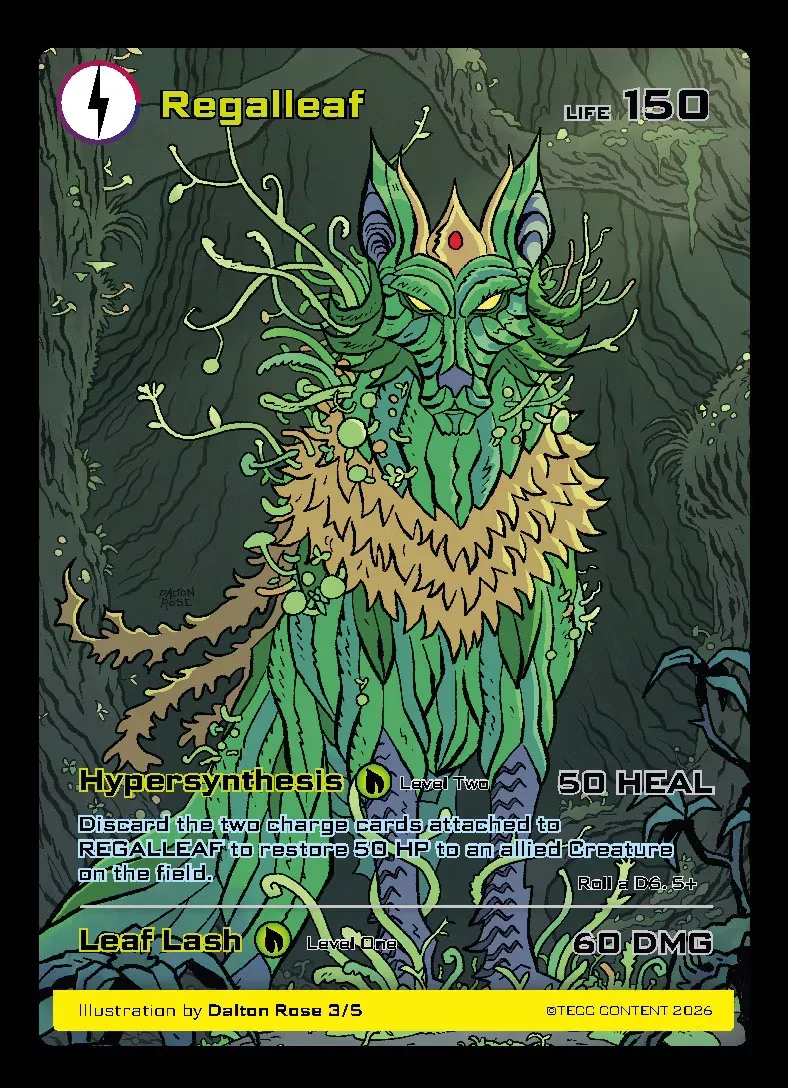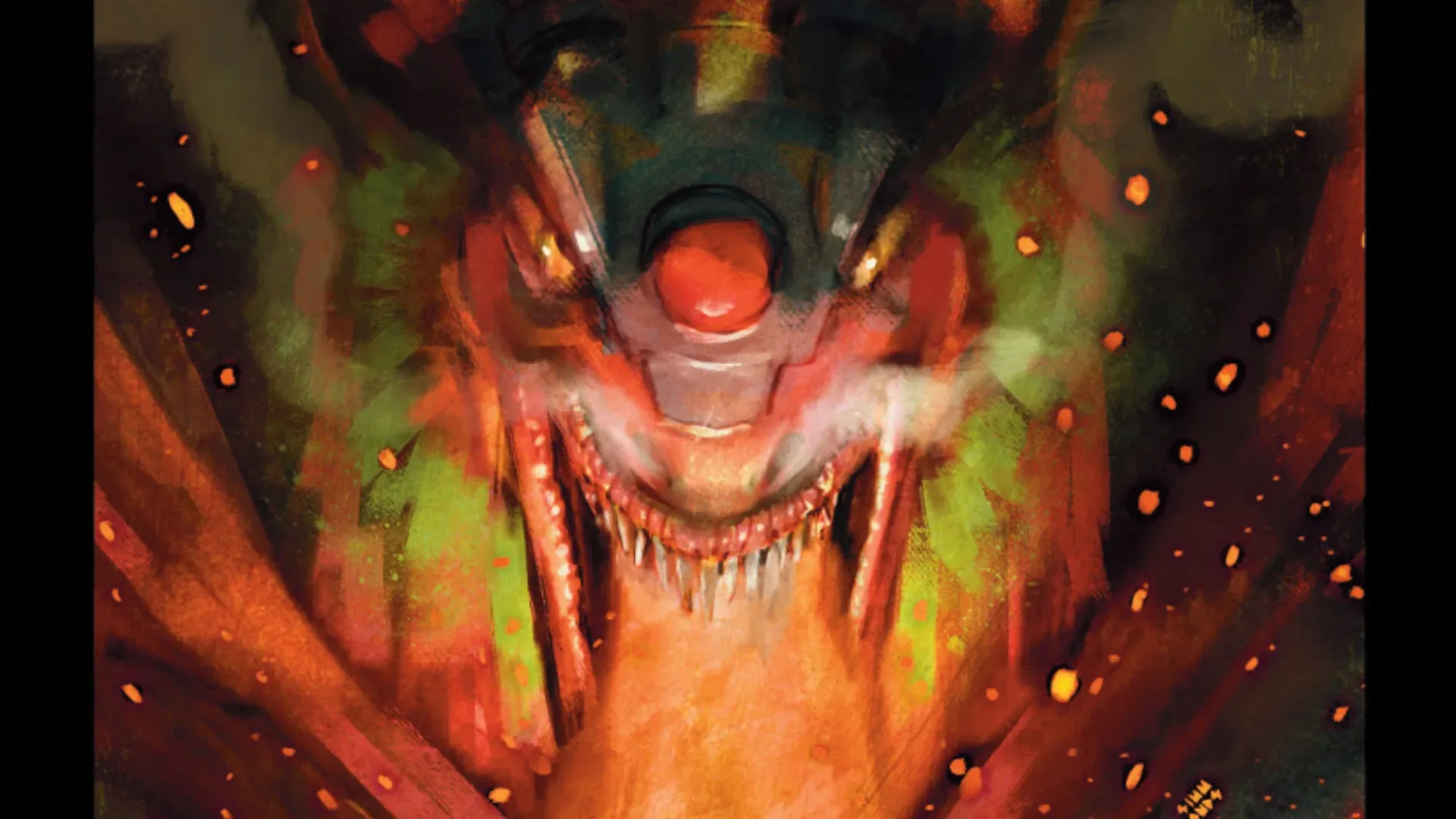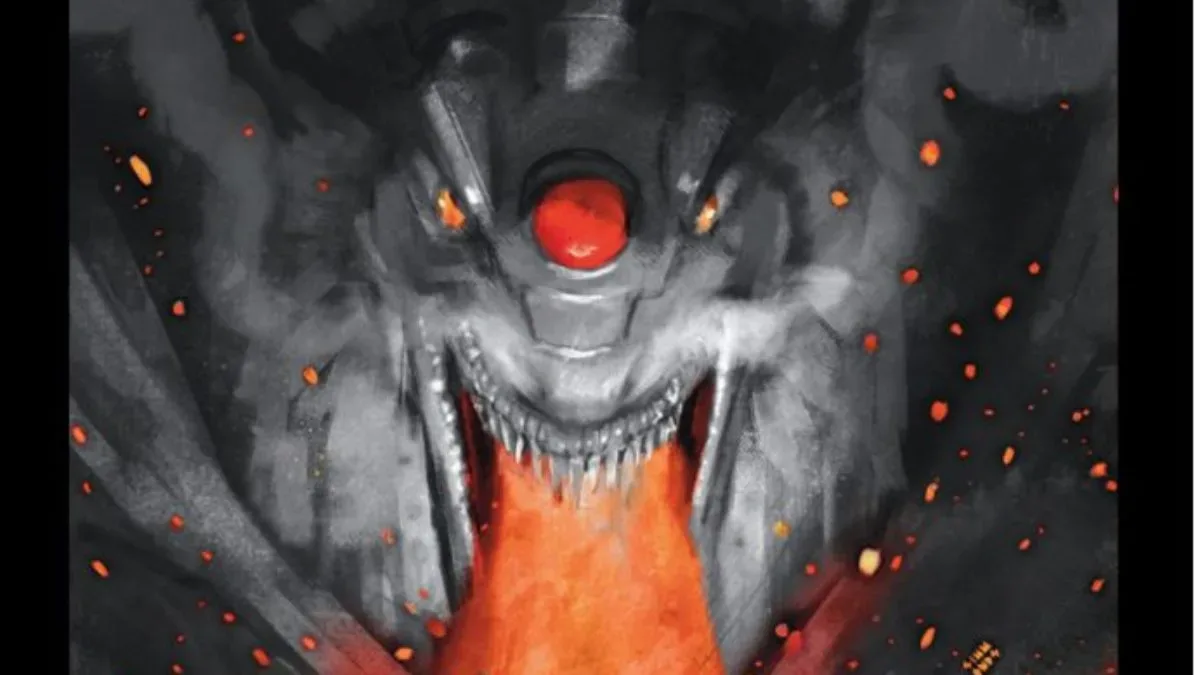
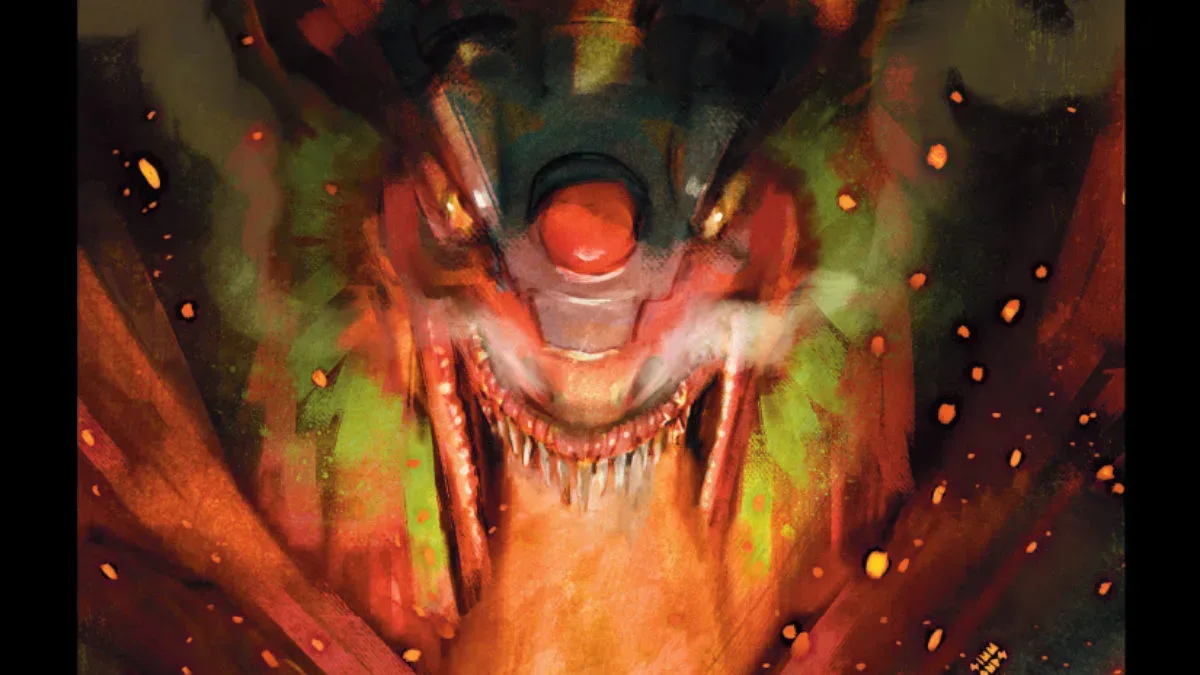
Creature Corps is putting its card-game hook front and centre before its first issue reaches shelves. Three cards from the comic’s in-universe trading card game have now been revealed: Gleaver, illustrated by Bjorn Barands; Regalleaf, illustrated by Dalton Rose; and Drakazoid, illustrated by Martin Simmonds.
The comic, from writer Curt Pires and artist JOK, is scheduled for December 2. Its oversized debut carries a $4.99 price, while a Cover B booster bundle adds a random card from the Creature Corps Trading Card Game. Two possible cards are included in that random-card offering, and there is also a chance to pull a holofoil chase card. Two further cards remain unrevealed until release day.
What the Creature Corps card bundle includes
Creature Corps #1 has multiple cover options, but the card component is tied specifically to the Cover B booster bundle. That bundle includes a polybagged secret cover for issue #2 alongside one random TCG card. In practical terms, that means the comic’s collecting angle is not simply a gallery of card art published separately: the cards are being distributed as part of a particular issue-one package.
A chase card is a harder-to-find version intended to be pursued by collectors, while holofoil describes a reflective finish applied to a card. The supplied details confirm a chance at a holofoil chase card, but do not establish pull rates, print totals, card-game rules, or whether every card will receive a holofoil version. Those gaps matter for anyone trying to understand rarity rather than merely collect the character art.
The random nature of the bundle also means a buyer is not guaranteed a particular revealed creature. Someone interested specifically in Drakazoid, for example, should distinguish between the appearance of that character card in the wider promotion and the card actually contained in any one bundle. No information has been provided on individual card odds or on a separate release route for specific cards.
The first three revealed creatures
- Gleaver — art by Bjorn Barands.
- Regalleaf — art by Dalton Rose.
- Drakazoid — art by Martin Simmonds, who co-created The Department of Truth.
The artist-led reveals give the cards a purpose beyond a checklist of fictional fighters. They also position each card as a showcase for a different creative voice. For comic readers, that is a familiar appeal: variant covers and promotional pieces often provide a compact look at artists who may not be drawing the main interior story. For card collectors, it creates an additional distinction between creatures even before game text, rarity symbols, or mechanics have been detailed.
Creature Corps is therefore launching with two overlapping points of interest. One is the serialized comic itself. The other is the prospect of an expandable physical card line whose early presentation leans on character design, contributor names and randomized packaging. The publisher has not yet disclosed enough to judge how the full TCG will function, but it has clearly made the card insert part of the issue-one proposition rather than an afterthought.
A creature sport with a deliberately harsh premise
The series’ setting begins in 1999, when the Calamity Creatures arrive from a bleak future after time breaks. Humanity turns those arrivals into an enormously profitable sporting enterprise. That premise frames Creature Corps as a dark take on creature-battling culture, with Pires describing the project as an irreverent deconstruction of the childhood craze.
The central character, Dusty Gotem, became a world champion at 14 before leaving the sport. Seventeen years later, a time quake leaves his mother facing medical bills, compelling him to put the team back together and compete again. The setup connects the flashy commercial spectacle of creature competition to pressure that is much more personal: Dusty is not simply returning for a title or nostalgia, but because his family needs help.
That distinction is important for the comic’s tone. “Deconstruction” here does not mean the series has been presented as a dismissal of creature-battling stories. Instead, the supplied premise suggests it is interested in what happens when a kid-friendly-seeming fantasy is filtered through celebrity, profit, bodily consequences and adult financial desperation. The Calamity Creatures are not described as game pieces alone; they are the foundation of an industry that has made competitive spectacle out of a disaster from the future.
Readers who follow comics as wider pop culture can find other recent character-driven comic conversations in this look at Nicolas Cage’s comments on Spider-Noir as a one-season experiment. Creature Corps is a different kind of project, but its launch similarly highlights how comic properties can be framed through more than the standard monthly issue: in this case, cards, booster packaging, variant covers and anthology material all arrive around the core story.
An anthology expands the setting in every issue
Each issue is also planned to include an ongoing backup anthology called The World of Creature Corps. Backup stories are shorter features placed after a comic’s principal installment. They can broaden a setting without requiring the main narrative to pause for every side character, event or corner of the world.
Named contributors to the anthology include Franklin Jonas, Jordan Blum, Timmy Heague, Fred Kennedy, Stefan Tosheff and Juanse Eslava, with additional names still to be announced. That format could make the “world” in the title literal in structural terms: the lead feature follows Dusty’s return, while shorter material has room to examine other perspectives inside the creature-sport ecosystem. Exactly which characters and stories those contributors will handle has not been disclosed.
For an issue-one reader, the backup is worth treating as part of the package rather than bonus material of unknown relevance. An anthology can be an entry point for new creators and separate concepts, but it can also supply texture that makes a fictional competition feel larger than its champion’s storyline. Whether the installments will connect directly to the main plot remains unclear.
Variants make the debut a broad collecting release
JOK provides Cover A. Other listed cover artists include Jarret Hartnell, Tyler Kirkham, Flops and Jae Lee. Retailer-exclusive variants are also planned from Ito, Monkeymouth, Donghee Kim and Vincenzo Riccardi. In addition, incentives at 1:25, 1:50, 1:75 and 1:100 have been identified.
An incentive cover is generally a retailer-ordering variant: the ratio indicates the quantity of standard qualifying copies a retailer must order to access one copy of that variant. A 1:25 cover, for instance, corresponds to one incentive copy per 25 qualifying copies ordered. That is separate from the randomized-card element in the Cover B bundle. One mechanism is tied to retailer ordering; the other is tied to which card is packed into a particular bundle.
The distinction is useful because Creature Corps #1 is using several kinds of scarcity and selection at once. A reader can choose among openly displayed covers. A retailer may obtain ratio variants based on order thresholds. A Cover B bundle buyer receives a random card, with a holofoil chase possibility. None of these should be assumed to guarantee the others, and the available details do not state print runs or future market values.
Pires has called Creature Corps his biggest and wildest book yet, emphasizing its oversized format, the contributor lineup, the cards and the $4.99 price point. The December 2 debut will show how tightly those elements are woven together. What is already clear is that the first issue is designed as both an introduction to Dusty Gotem’s return and a launch point for a larger physical collecting program—beginning with Gleaver, Regalleaf and Drakazoid.