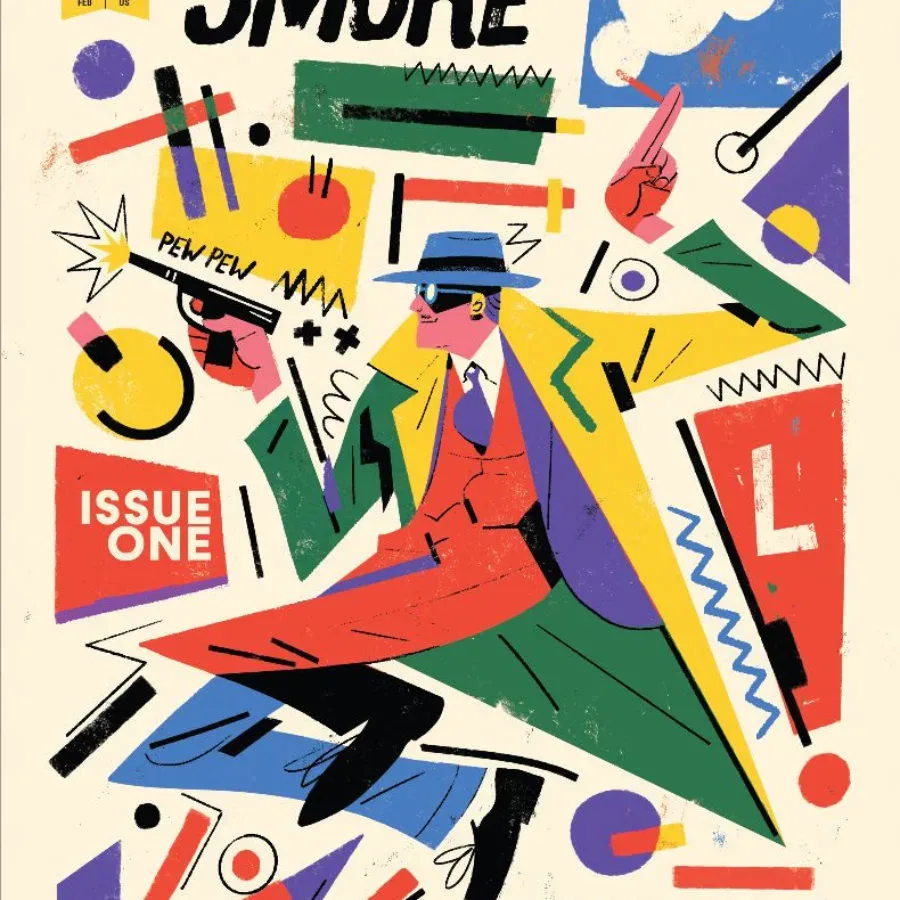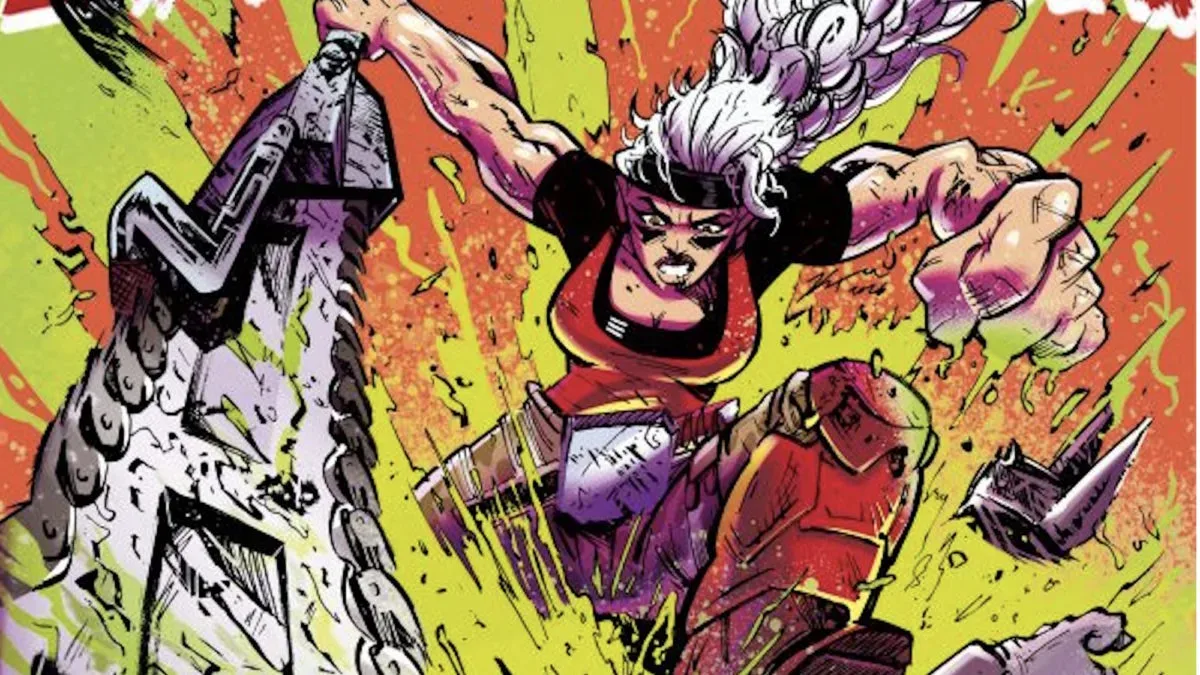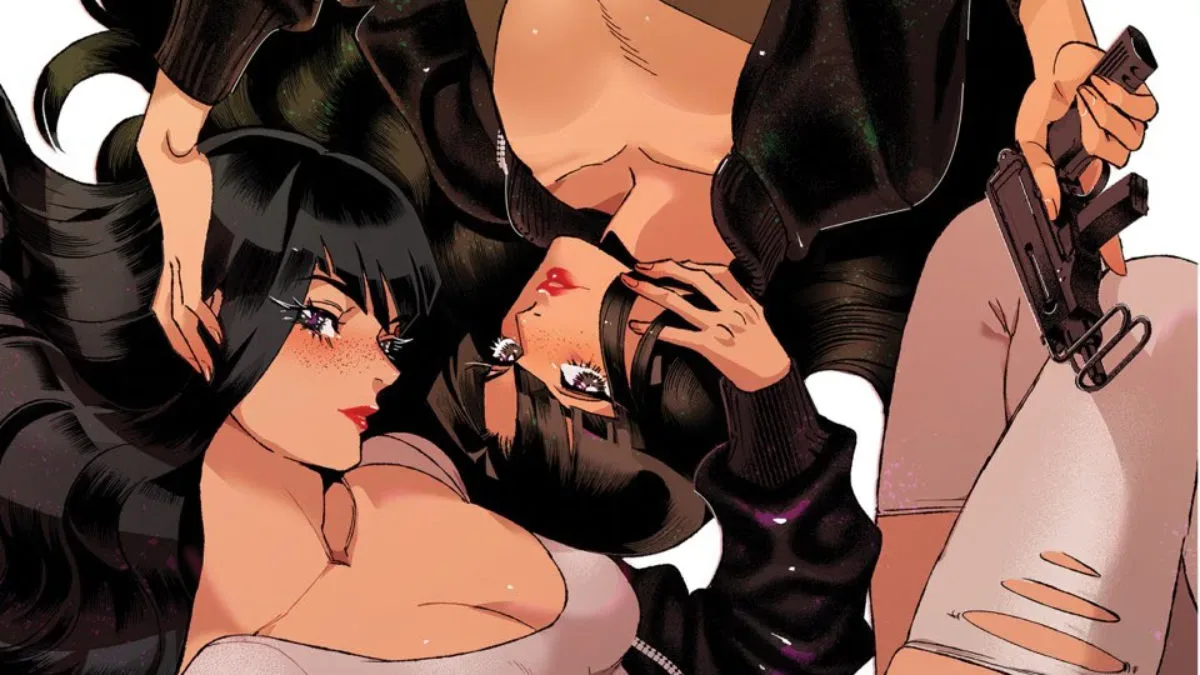

Electric Smoke, a four-issue science-fiction noir murder mystery from Jordan Thomas and Chris Matthews, is scheduled to begin at comic shops on February 10, 2027. Published by Image Comics as part of its 35th Anniversary lineup, the miniseries pairs a 1930s New York detective story with robotics, political tension and a case that becomes much larger than its first assignment suggests.
The premise centers on Detective Foster J. Lockidge after the death of an Austrian robotics expert. A mysterious client hires Foster for what appears to be a routine protection job, only for that client to die before the detective can meet him. Foster nevertheless follows the case through New York, pursuing killers and uncovering a trail involving Nazis, questionable U.S. military figures, dangerous women and potentially world-changing revelations.
That is an intentionally crowded pressure cooker for a four-issue story: a murder investigation provides the immediate objective, while period politics and speculative technology add stakes beyond one victim or one neighborhood. The series is described as hardboiled science-fiction noir, a label that says a great deal about the intended engine of the book without promising details that have not yet been revealed.
What “sci-fi noir” means for Electric Smoke
Noir is a mode of crime storytelling associated with moral uncertainty, compromised institutions, urban menace and investigators who keep moving despite having limited trust in everyone around them. In this case, the framework is especially clear: Foster begins with a hired-protection assignment, loses the client almost immediately, and elects to chase the truth anyway. The decision gives him a personal reason to remain involved while also creating the familiar noir problem of investigating a case without a reliable patron or safe boundary around it.
The “hardboiled” part points to an unsentimental detective tradition. Rather than presenting the mystery as a clean puzzle solved from a comfortable distance, the setup places Foster on the streets of 1930s New York amid murder, shadowy power brokers and threats connected to a Nazi-sympathizing American Bund meeting. The story’s stated antagonistic forces are therefore not simply abstract conspirators; its period setting is tied directly to the case’s escalating danger.
Science fiction enters through the murdered robotics expert and the larger implications of what Foster uncovers. The supplied premise does not specify the nature of the robotics or explain the technology involved, so readers should not assume a particular kind of machine, invention or alternate history. What is established is that the expert’s death is central to a mystery whose consequences could extend well beyond the detective’s original job.
Putting those elements together gives Electric Smoke a useful distinction. It is not described merely as a historical detective comic, nor only as a robotics thriller. Its concept depends on the collision of a stylized period crime story and speculative ideas. The practical question for readers will be how Foster’s investigation links that technology to the political and military interests moving around the city.
A reunion built from a shared visual starting point
Thomas and Matthews have previously worked together on Mugshots, Exorcism Island and The Gods and Monsters of Hedgrave. For Electric Smoke, Thomas said the project began after he saw Matthews’ character designs with a 1930s feel and recognized an opportunity to build a story in that era. He brought his interest in classic noir movies to the concept, alongside the pair’s shared appreciation for Mike Mignola’s work.
“Chris and I are constantly planning what our next projects together will be and when I saw Chris post a set of gorgeous character designs with a 1930s vibe a year or so back I knew we had to do something in that era,” Thomas said. “From there I pulled in my love of classic noir movies and our mutual adoration for all things Mike Mignola and Electric Smoke was born.”
Thomas also characterized the new work as the pair’s best to date, emphasizing Matthews’ art and the story’s twists. Matthews called Thomas’ approach “a really fun, original take on a classic noir detective story” and said he was proud to be involved.
The Mignola comparison should be read as a creative touchstone rather than evidence that Electric Smoke shares a setting, character, continuity or format with any existing Mignola property. The announced series stands as its own four-issue project. Still, the stated influence helps establish what the collaborators are aiming toward: a distinctive stylized world, strong character design and a mystery built for mood as much as plot mechanics.
1930s New York is part of the case, not just decoration
The setting gives the book more than period costumes and city streets. The synopsis explicitly places New York on edge before a meeting of the Nazi-sympathizing American Bund. That tension is woven into Foster’s investigation alongside the death of the robotics expert and the involvement of shady U.S. military figures. It suggests that the detective’s route through the city will intersect with organized ideology, political anxiety and institutional power rather than operating in a sealed-off private-crime bubble.
That approach can make noir settings feel consequential. In a straightforward murder mystery, the detective seeks the identity of a killer and the motive for the crime. In a conspiracy-oriented noir, each answer can reveal another group with an interest in suppressing, exploiting or redirecting the truth. Electric Smoke begins with the classic private-investigation trigger—an apparently limited paid job—but the announced outline makes clear that the scale is intended to widen.
Readers should also note what has not been announced. There is no indication yet of issue-by-issue story beats, a collected-edition schedule, pricing, interior-page count or whether the four parts will arrive on a monthly cadence. The concrete launch information is for the debut issue: Electric Smoke #1 is due Wednesday, February 10, 2027.
Electric Smoke #1 covers and retailer implications
The first issue will have multiple announced covers. Chris Matthews provides Cover A, while Jacob Phillips supplies Cover B and Warwick Johnson-Cadwell supplies Cover C. Matthews also has a 1:25 copy-incentive cover and a D’orc Team-Up cover. Phillips has a 1:50 virgin copy-incentive cover.
For readers unfamiliar with the terminology, a copy-incentive cover is a variant retailers can generally order only in relation to the number of standard copies they purchase. A 1:25 incentive is associated with a 25-copy ordering threshold, while a 1:50 incentive corresponds to a higher 50-copy threshold. These ratios do not by themselves establish how many copies will ultimately reach readers, but they do mean availability at an individual shop can depend on that retailer’s order size and ordering strategy.
A virgin cover usually refers to artwork presented without the usual front-cover trade dress, such as the logo and other design elements. Here, the term applies to the announced Jacob Phillips 1:50 variant. The D’orc Team-Up designation is listed for the Matthews Cover F, though no additional details about that label have been provided.
The cover lineup gives collectors and readers several entry points, but the story itself remains a compact four-issue commitment. Anyone primarily interested in reading rather than variants may want to check with a local retailer about the standard Matthews Cover A. Those following a particular artist can ask about the relevant Phillips or Johnson-Cadwell editions, while recognizing that incentive variants may be harder for some shops to obtain. For broader context on the changing conditions facing comic retailers, see how comic-shop openings, closures and expansions can affect fans.
Why the four-issue format fits the announced premise
A four-issue miniseries is a finite format: the creative team has a defined number of installments to introduce the victim, establish Foster’s investigation, uncover the conspiracy and resolve the central case. That does not guarantee every question in the setting will be answered, but it does indicate that Electric Smoke is being positioned as a complete, limited crime story rather than an open-ended ongoing series.
For a noir premise, that economy can be an advantage. The initial hook is easy to state—a detective is hired, the client dies, and the detective refuses to walk away—but the narrative has room to turn outward through the expert’s death, the city’s political climate and the promised wider-world revelations. The announced creative intent also places visual atmosphere at the center: Thomas traces the project back to Matthews’ 1930s designs, while Matthews frames the work as a new angle on the classic noir detective story.
Ultimately, Electric Smoke is most clearly defined by its blend. Foster J. Lockidge’s case begins in a recognizable hardboiled mode, then runs into robotics, Nazis, military interests and a city bracing for an extremist gathering. With Thomas writing and Matthews drawing, the miniseries will test how effectively that combination can make its period mystery feel both classic and strange when the first issue reaches comic shops in February 2027.