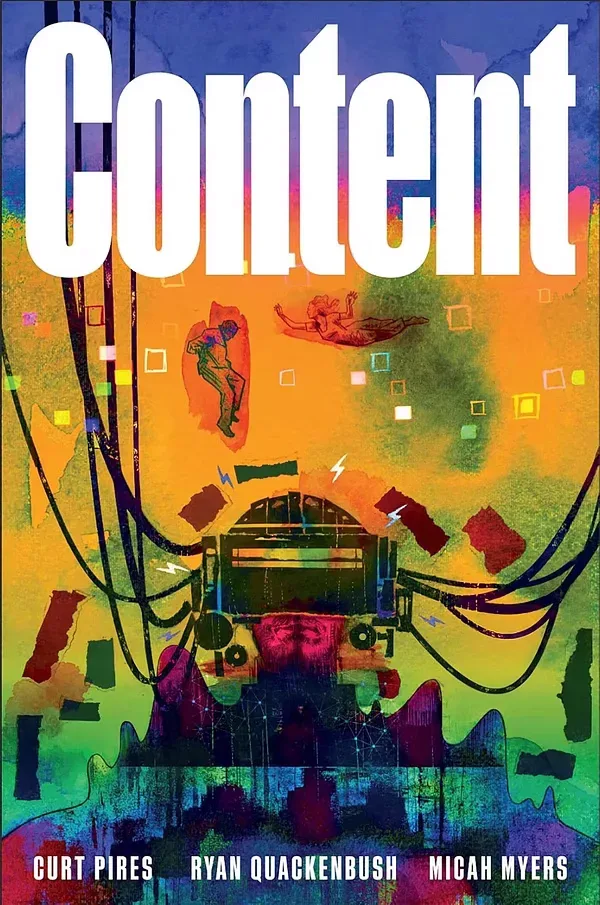
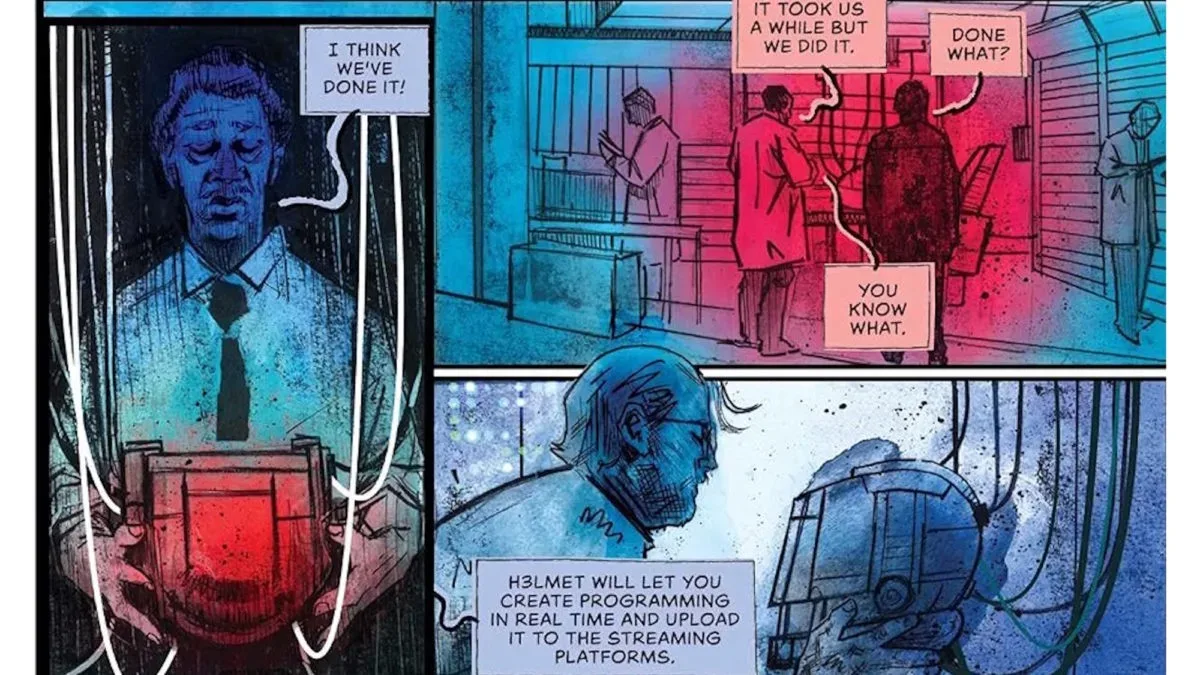
Image Comics is set to publish Content, an original graphic novel from writer Curt Pires and artist Ryan Quackenbush, in early 2027. The science-fiction thriller centers on a near future where the streaming industry has become powerful enough to turn a person’s thoughts into a product—and potentially into a prison.
The book is scheduled to reach comic shops on Wednesday, February 17, 2027. A bookstore and Amazon release is planned for Tuesday, March 16, 2027, with a listed price of $16.99. It will be published in trade paperback format.
A platform built from one man’s imagination
Content follows Trip Cruise, described as entertainment’s most valuable mind and the creative architect behind CONTENT, the world’s largest platform. That wording is doing substantial thematic work: Trip is not merely a celebrity executive or a successful filmmaker. His imagination appears to be a central resource in a media system built to package, process and endlessly distribute stories.
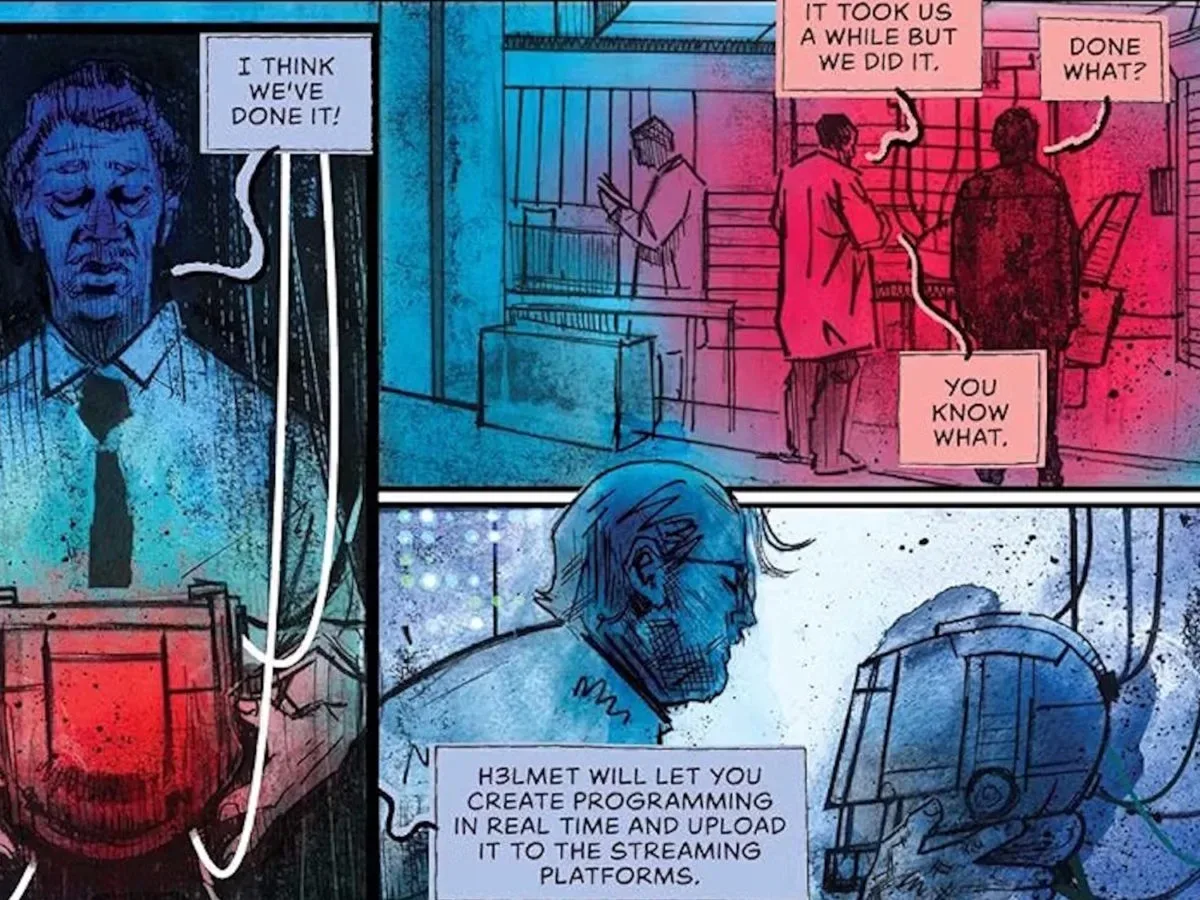
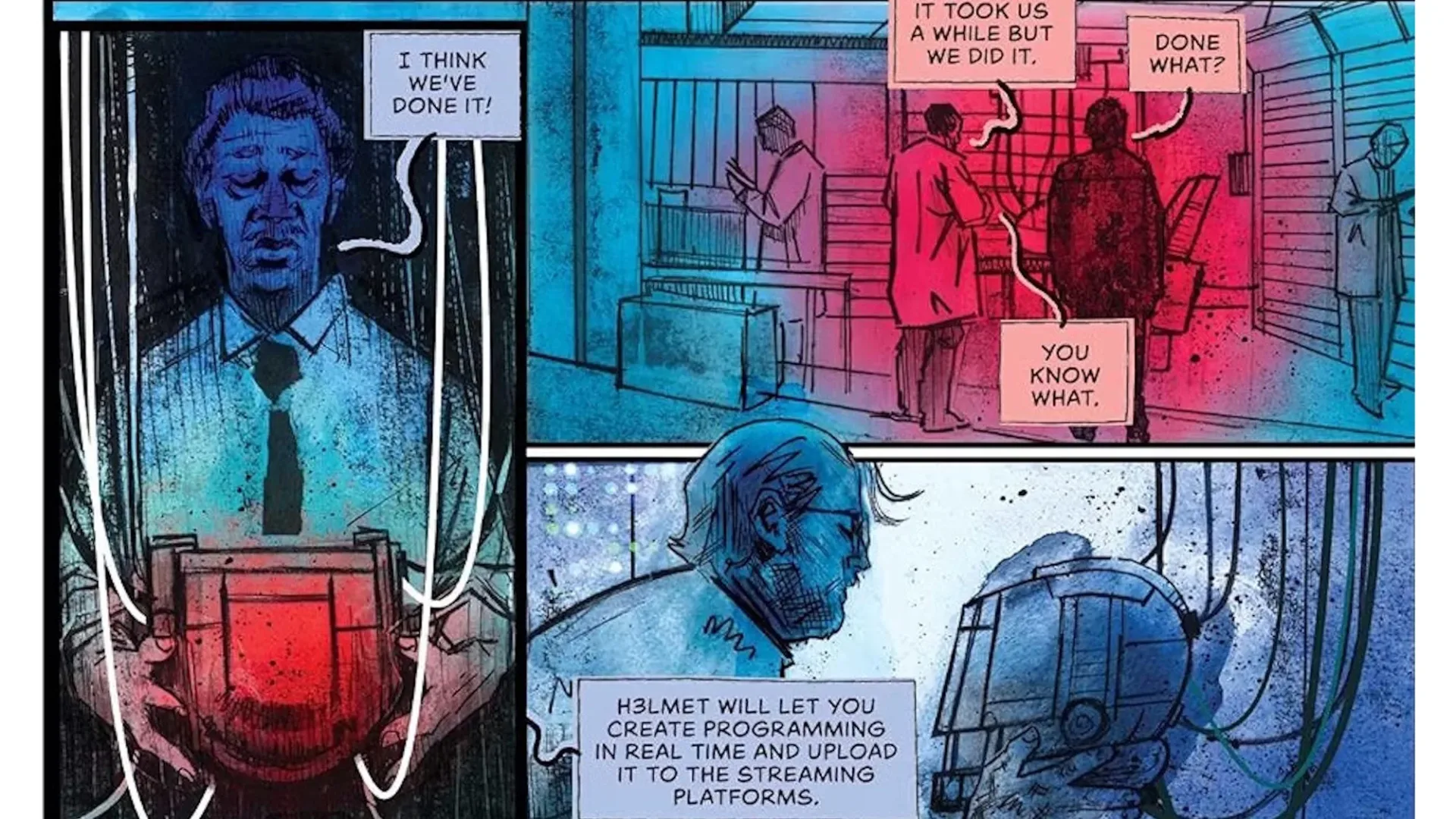
The plot turns when an experimental AI helmet is used to pull stories directly from Trip’s brain. The technology is rushed, it malfunctions, and Trip winds up trapped inside CONTENT itself. Rather than simply being a device for recording ideas, the helmet seemingly creates—or opens a route into—a digital environment constructed from programming, media, memory and the algorithms that shape what viewers see.
That leaves Trip navigating an apparently endless internal world of shows, recollections and hostile automated systems. The premise makes the title deliberately double-edged. “Content” is the catch-all industry term for material designed to fill a platform, satisfy an audience or feed a recommendation engine. Here, it also becomes a place capable of absorbing the person whose mind helped create it.
Margot is the human link into the system
Trip’s path out depends on Margot, a junior programmer who is struggling financially and has a sufficiently meaningful human connection to him to enter the platform after him. The available story details do not explain the mechanics of how that connection lets her reach him, but the contrast is clear: a malfunctioning machine has converted Trip’s creativity into a technological maze, while a real relationship offers the possibility of getting him back.
It is a useful emotional counterweight to a premise that could otherwise remain entirely abstract. Streaming platforms, AI systems and recommendation algorithms are immense structures. Margot’s role gives the story a more personal axis: two people must confront a system that was designed to operate without needing either of them.
The pair’s stated goal is to outsmart the machine built to replace them. That frames Content less as a simple escape story than as a thriller about creative labor, technological dependency and who retains agency when a company can extract ideas at the source. The book’s world is near-future science fiction, but its core anxieties are recognizable now: what happens to artists, programmers and audiences when the systems mediating entertainment are treated as more valuable than the people who make it?
What “weaponized algorithms” means in this story
An algorithm is, broadly, a set of rules or computational steps used to produce a result. On a media platform, algorithms can be used to organize material, predict preferences, recommend the next program or decide what is most visible to a user. Content turns that familiar infrastructure into an overt threat. Its description refers to “weaponized algorithms,” suggesting the platform’s logic is no longer a passive background system but an active obstacle inside Trip’s confinement.
The phrase should not be read as a detailed claim about a particular real-world service; no specific platform or technical process has been identified. In the fiction, though, it establishes the shape of the danger. The enemy is not solely an individual antagonist. It is a system optimized to process stories, memories and attention at overwhelming scale.
That choice fits the book’s “infinite scroll” framing. Infinite scroll is a design approach in which more material loads as a person continues moving through a feed, removing a natural stopping point. Used as the basis for a thriller setting, it becomes a sharp image for a place that is always offering something else, always generating another layer, and never necessarily letting its visitor reach an exit.
For readers interested in other digital dystopias, the premise has a natural thematic overlap with games that turn intrusive systems into story pressure. Beholder 4’s announced return to a surveillance-heavy series, for example, points toward a similarly uneasy space where institutions and technology shape personal choices. Content approaches that broad territory through comics and the machinery of entertainment rather than a game’s decision-driven structure.
A personal project for Pires and Quackenbush
Pires has said the book draws inspiration from his own time in Hollywood. That background matters because the story’s streaming-industry critique is not presented merely as distant speculative fiction. The setup takes a recognizable entertainment-world tension—the demand for a constant supply of material—and pushes it toward an extreme where the creator’s brain itself becomes production infrastructure.
He has described Content as his first original graphic novel and characterized it as a project developed over years. Pires said he initially discussed the idea with Eric Stephenson at San Diego Comic-Con in 2024. He also called the writing among his most experimental and personal work in some time.
For readers familiar with Pires’ bibliography, the announcement identifies him with Creature Corps, Lost Universe and Fireborn. Those credits establish that Content arrives from a creator with previous comics work, while the “first original graphic novel” description signals a different format and a particularly creator-driven undertaking rather than a new serialized issue run.
Quackenbush, identified with Junior Baker the Righteous Faker, has likewise emphasized the project’s personal stakes. He described the story as sharp and wild but also personal, and said the work came from a significant place for both collaborators. The comments from each creator converge on the same point: this is intended as a sustained, self-contained work built around an idea they have been carrying for a long time.
Painted art for a fractured media nightmare
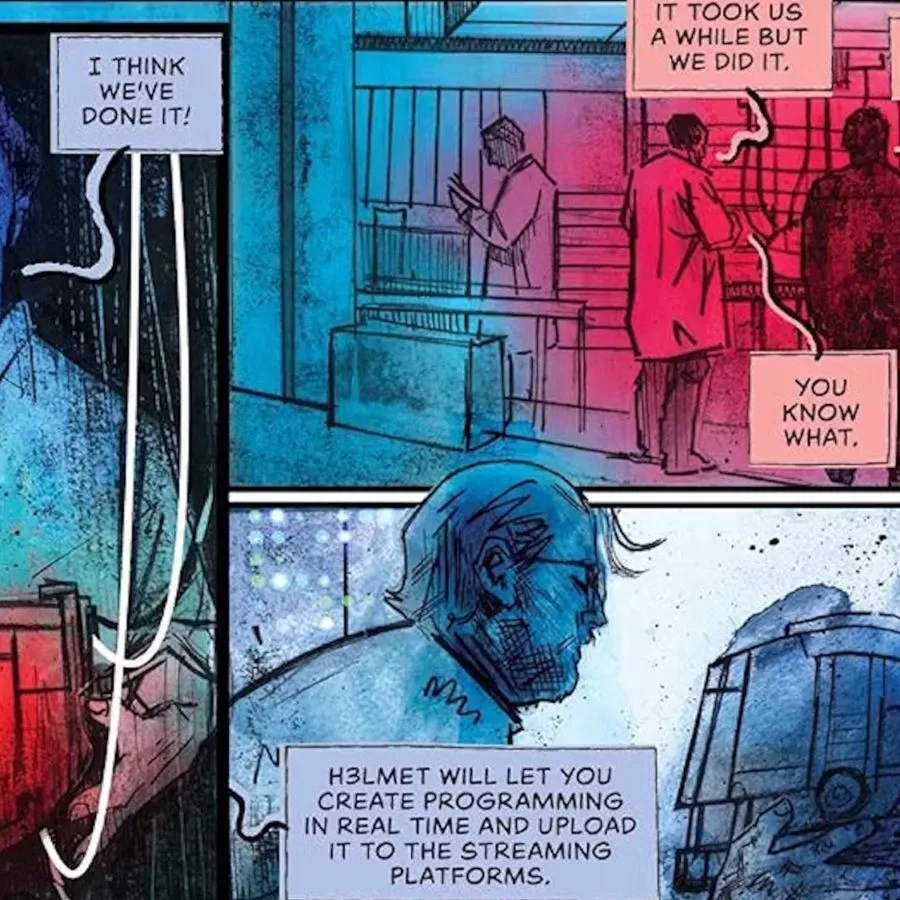
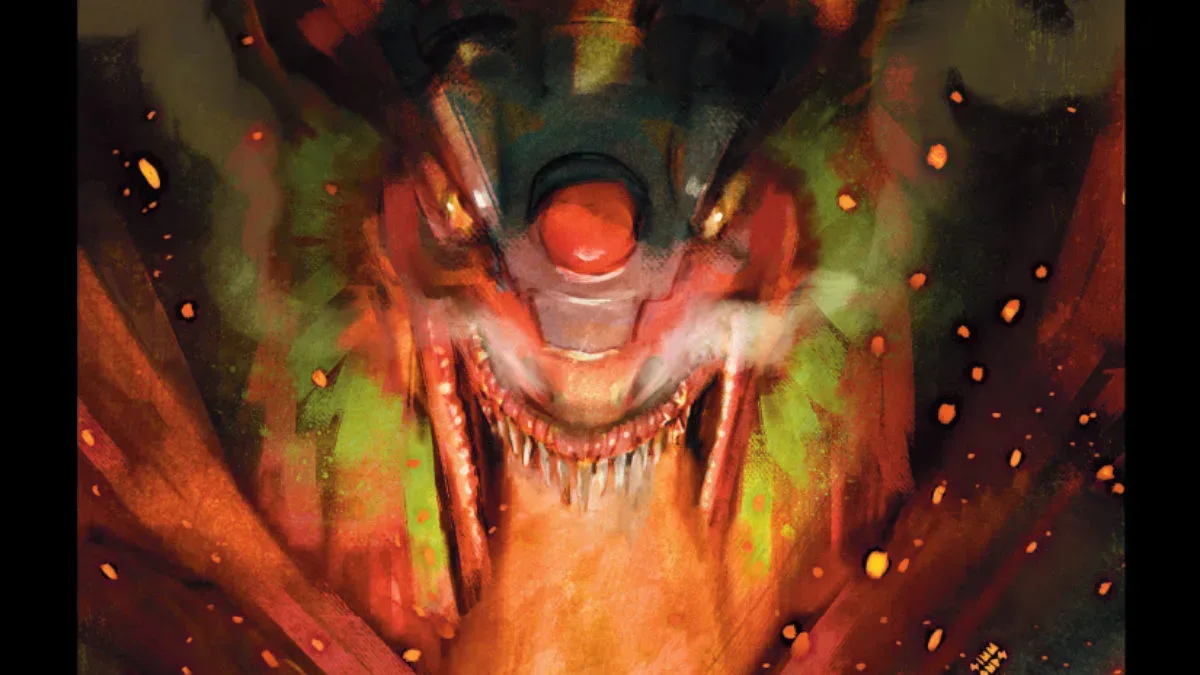
The visual approach may be especially important to how Content lands. Pires has highlighted Quackenbush’s painted artwork and invoked Dave McKean and Bill Sienkiewicz as artistic touchstones. That is a statement of intended mood and visual ambition, not a promise that the new book will reproduce either artist’s style.
Still, it gives readers a useful expectation. A story set within a corrupted entertainment platform has room for unstable shifts in setting, identity and form: shows can collide with memories, interfaces can become architecture, and a person’s interior life can be rendered as a space to traverse. Painted art can support a less mechanical, more tactile sense of unreality, particularly in a narrative concerned with the divide between lived experience and content engineered for consumption.
It also distinguishes the project from an interpretation of “AI thriller” that might lean only on clean screens, corporate offices and generic digital effects. The announced creative direction suggests an expressive visual world where the subjective and the technological are intertwined. Whether it is showing Trip’s memories, the platform’s programming or the boundaries between the two, the art will have a major role in clarifying what kind of reality the characters are occupying.
Release details and what is still unknown
At present, the confirmed details are focused on the central premise, creators, format, price and release window. Comic-shop readers will have the earlier release date, February 17, followed by the March 16 bookstore and Amazon date. Anyone planning to buy from a local comic shop should note that the book is a trade paperback and that its comic-shop arrival precedes the broader bookstore release by roughly four weeks.
Many particulars have not been outlined. There is no stated page count, no preview material described here, and no further breakdown of the supporting cast or the rules governing the AI helmet and CONTENT’s internal world. There is also no reason yet to treat the comparisons used to convey its tone as evidence of a direct connection to any other film, series or comic.
What is clear is the premise: a streaming architect is imprisoned in the all-consuming platform tied to his own mind, and a programmer with a genuine connection to him attempts a rescue. With Pires writing and Quackenbush providing painted art, Content is positioned as a science-fiction graphic novel about entertainment’s appetite for material—and the human cost when the system decides the creator is material, too.