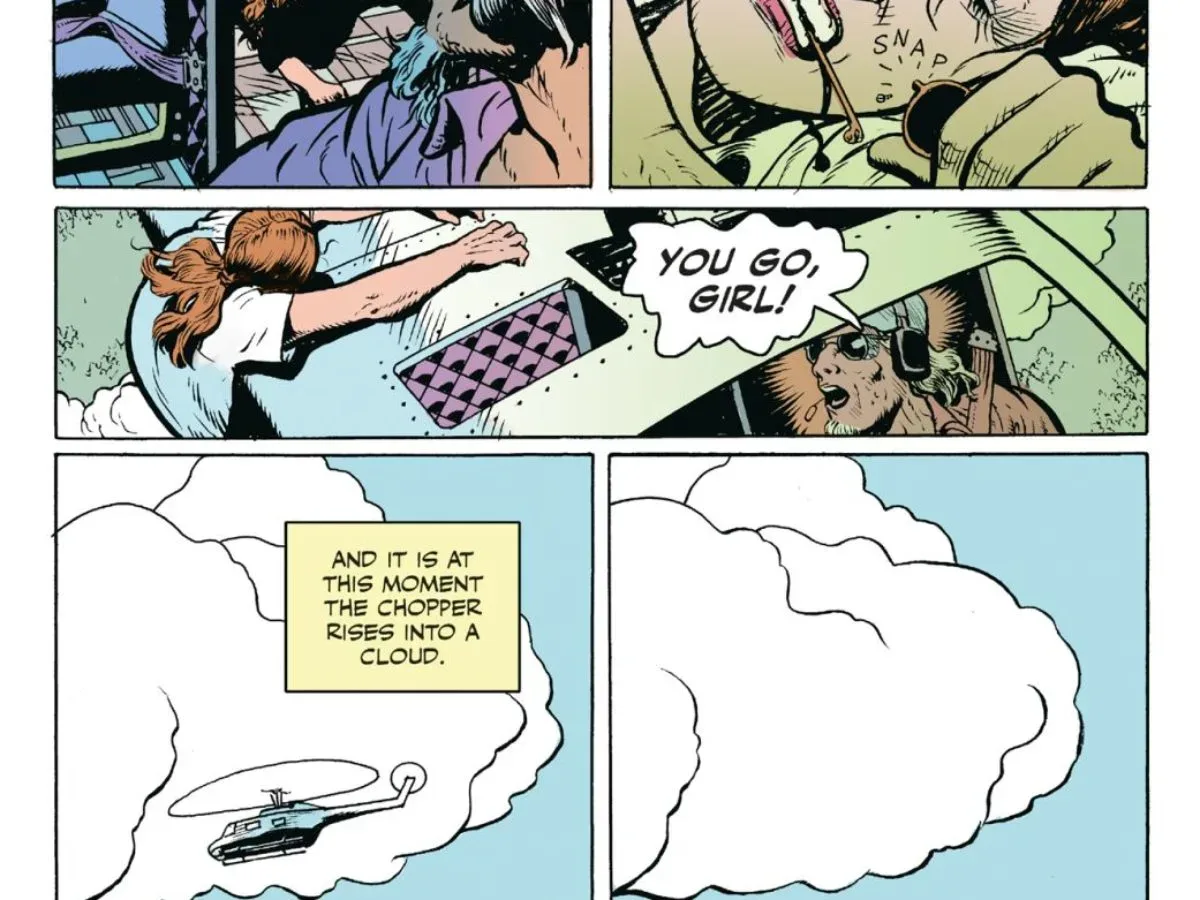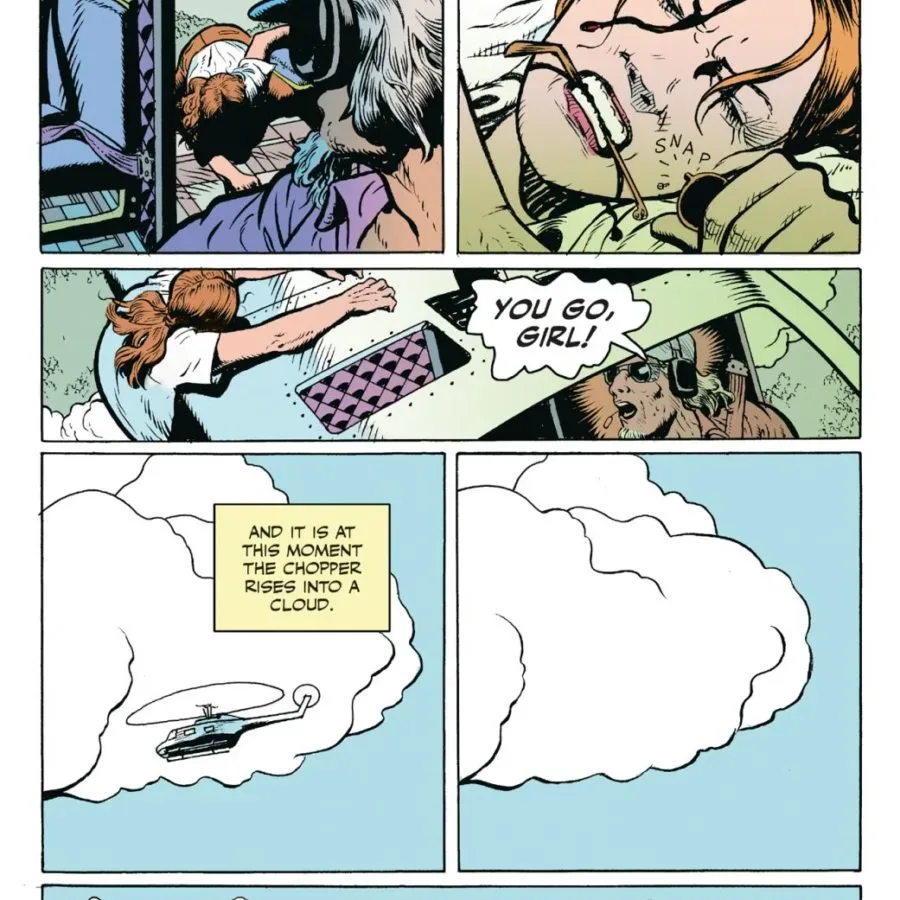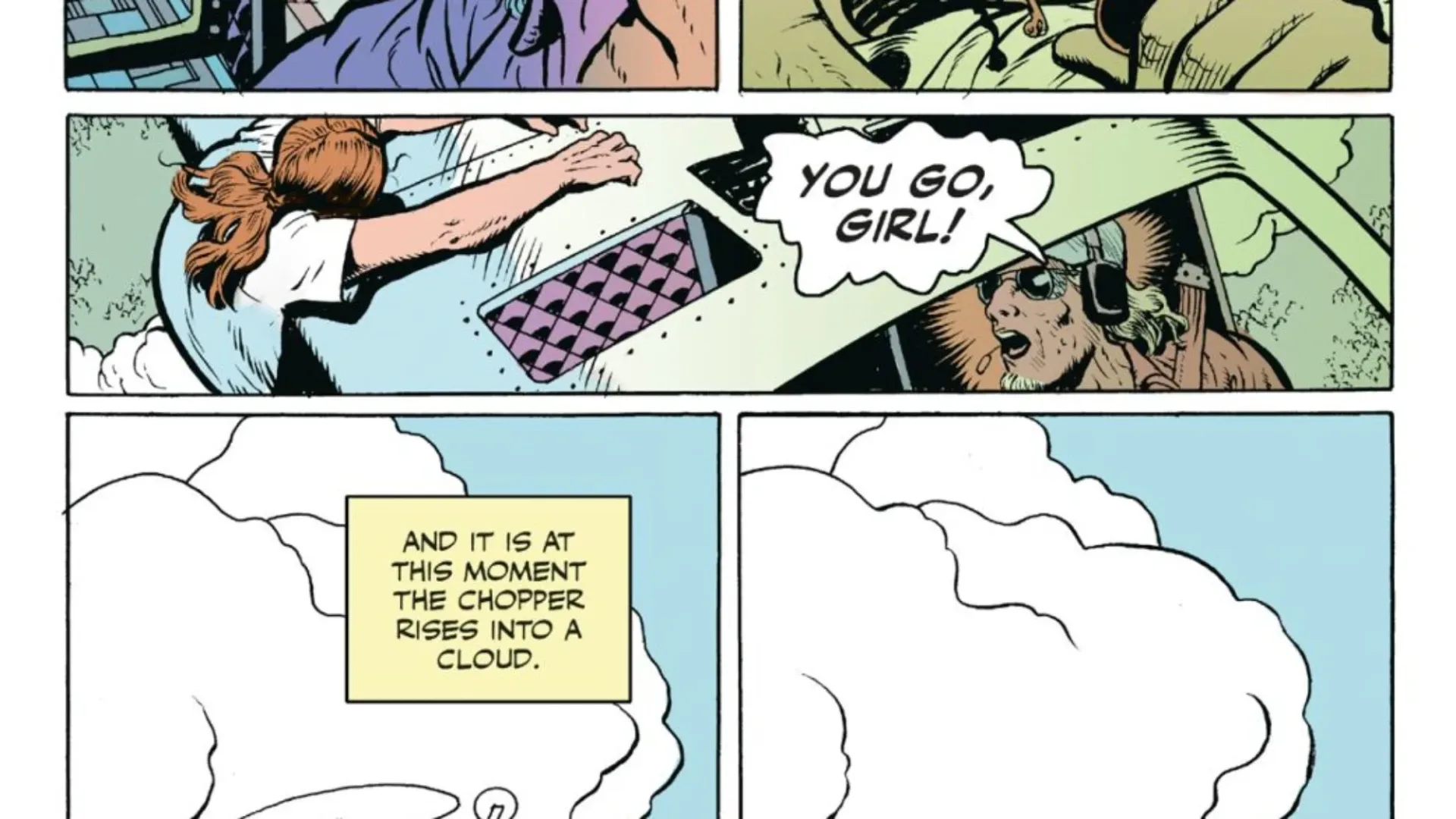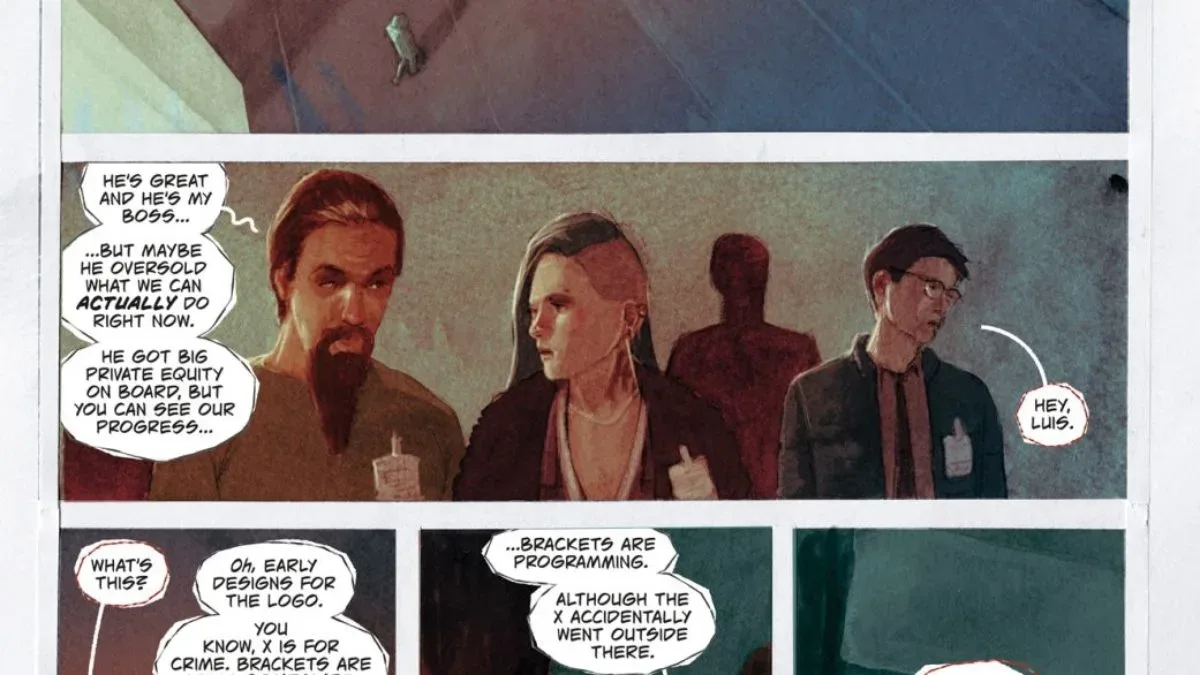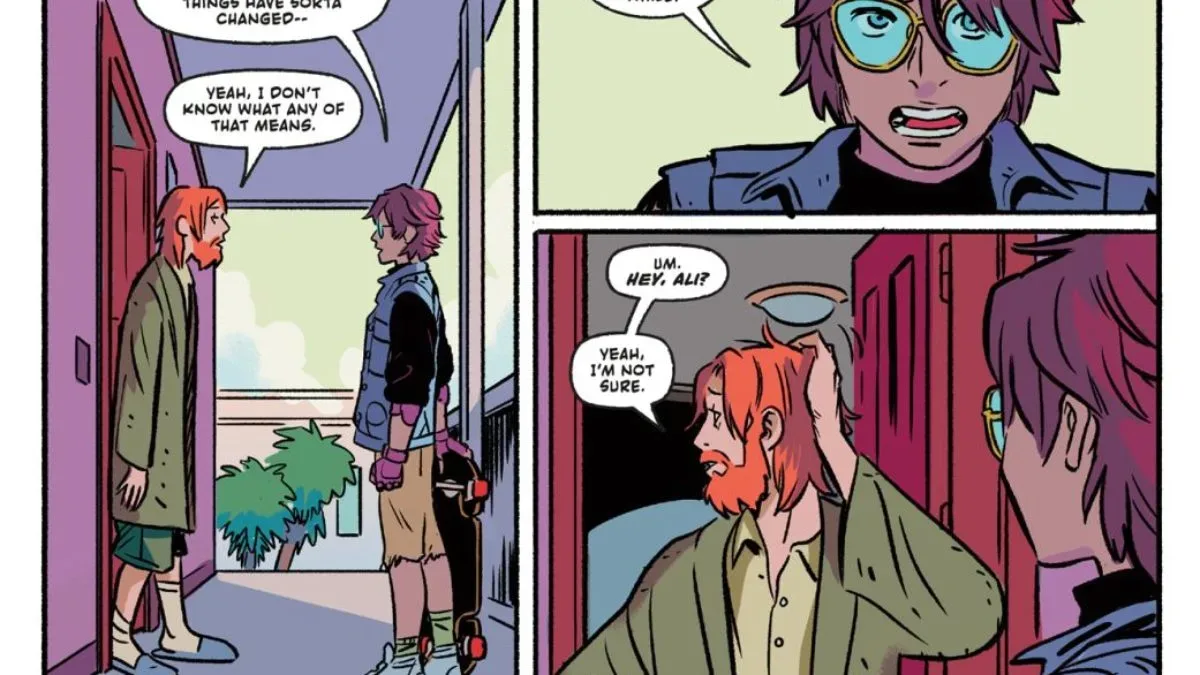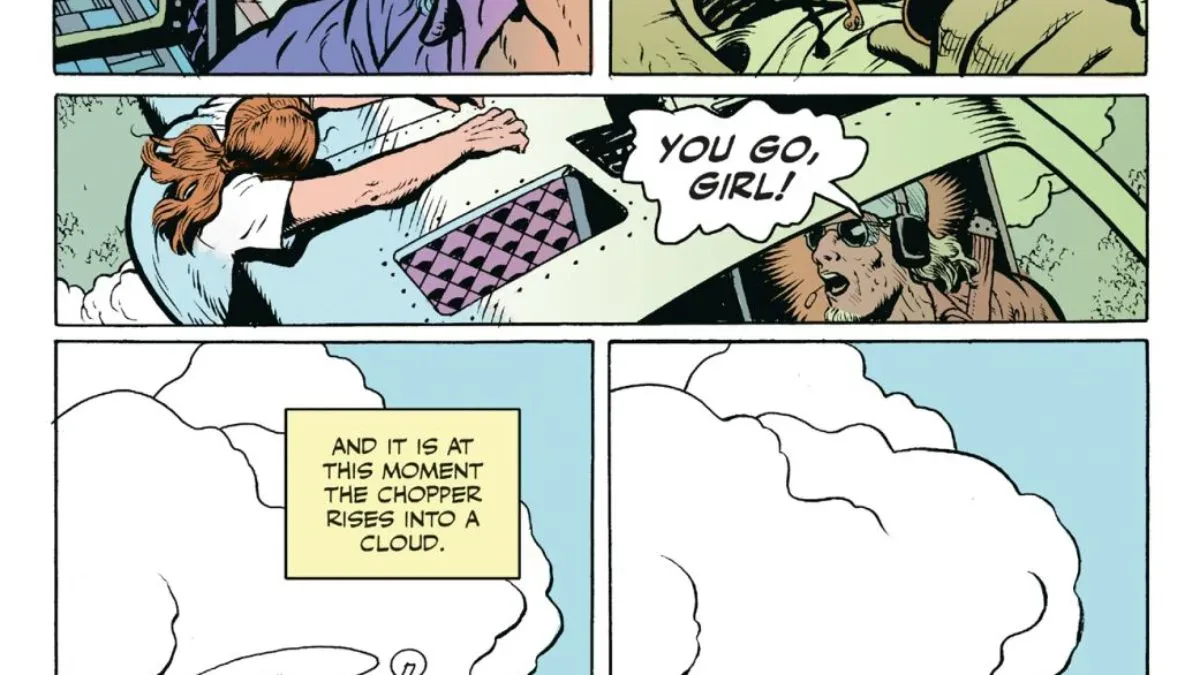
Concrete: Stars Over Sand #4 is scheduled to go on sale from Dark Horse Comics on October 7, 2026. The 32-page, Rated T issue continues a five-part series and brings its immediate danger into sharp focus: Maureen is stranded on the exterior of a malfunctioning helicopter during what is described as the most frightening and physically punishing ordeal of her life.
That crisis is only one part of the issue’s setup. In the mountains, Larry is moving toward Concrete after hikers identify Concrete as murderous. A separate killer is also closing in on the group. The result is a premise built around conflicting threats, uncertain information, and an environment where distance does not necessarily mean safety.
Aerial danger takes center stage
The helicopter sequence gives issue #4 a particularly severe hook. Being outside an aircraft in mechanical trouble is an inherently exposed predicament: Maureen has neither the protection of the cabin nor any assurance that the craft will remain controllable. The solicitation emphasizes the brutality of her experience, suggesting that the scene is meant to test endurance as much as it delivers spectacle.
A malfunctioning helicopter is not simply a fast-moving setting. It concentrates several kinds of risk in one moment: height, wind, unstable machinery, limited options for movement, and the urgency of everyone involved. Even before readers know how the situation began or how it may end, the premise establishes that Maureen’s problem cannot be approached casually.
For a series story, that kind of sequence also carries a useful narrative function. It places a character under pressure that is immediate and physical, while the mountain plot advances a different form of danger nearby. One thread is about surviving a present-tense catastrophe. The other is shaped by pursuit, suspicion, and an approaching threat.
Larry heads toward Concrete after a serious allegation
Elsewhere, Larry approaches Concrete after hikers report that Concrete is murderous. The wording matters because it identifies the claim as a report from hikers rather than a settled fact. Readers are presented with an accusation and a pursuit, not a complete explanation of either.
That distinction is important in a premise where another killer is said to be closing in at the same time. The issue’s setup leaves room for uncertainty over who poses the danger, what the hikers witnessed, and how Larry’s approach will intersect with the larger threat. In other words, the mountain storyline is not framed as a simple trip toward a known enemy. It is a collision course driven by alarming but incomplete information.
Concrete, the central figure, is a man made of stone. That basic concept naturally raises the stakes around the accusation: a character with an unusual physical nature may be perceived very differently by people encountering him under frightening circumstances. The available details do not resolve the hikers’ account, so the tension rests in the gap between what has been reported and what will be revealed on the page.
What the issue’s structure suggests
The synopsis for issue #4 places three pressures side by side:
- Maureen’s fight to survive outside the damaged helicopter.
- Larry’s approach toward Concrete in mountainous terrain.
- An unidentified killer moving closer to them both.
These elements create a multi-front suspense structure. A multi-front story does not rely on one obstacle alone; it asks readers to follow several active dangers whose outcomes may affect one another. Here, Maureen’s emergency has a distinctly physical urgency, while Larry’s route toward Concrete introduces a question of judgment and intent. The killer’s advance adds a third variable that can change the meaning of both situations.
Concrete is also set to read an unfamiliar speech. That detail is brief, but it creates an intriguing counterpoint to the action. Amid a helicopter failure, reports of murder, and a looming attacker, an unfamiliar speech implies a moment of communication that may be difficult, consequential, or out of place in the chaos. The synopsis does not explain its content or purpose, so it should be treated as a narrative question rather than a clue with a known answer.
A return after two decades
Stars Over Sand is presented as the first new Concrete comic in 20 years. That makes the five-issue project significant for readers who have followed the character as well as for newcomers encountering the premise through this new series.
A long interval between new installments can make an issue like #4 especially notable. It is deep enough into the five-part run for separate plot threads to be tightening, but it is not the final chapter. The solicitation’s emphasis on converging danger fits that position: Maureen is in immediate peril, Larry is nearing Concrete, and the killer is nearing both. The issue appears designed to increase pressure instead of delivering the series’ final resolution.
For prospective readers, the concrete facts are straightforward. This is not a one-shot or an open-ended ongoing title; it is part four of a five-issue limited series. A limited series is a comic planned for a fixed number of installments, which means its plot is structured toward a defined endpoint. Issue #4 is therefore the penultimate chapter, the installment immediately before the finale.
Release details for Concrete: Stars Over Sand #4
Concrete: Stars Over Sand #4 is written by Paul Chadwick, who also provides the cover. It is published by Dark Horse Comics and carries a $4.99 cover price. The issue is 32 pages and rated T.
- On sale: October 7, 2026
- Publisher: Dark Horse Comics
- Creator and cover artist: Paul Chadwick
- Format: 32 pages
- Series length: Five issues
- Rating: T
- Price: $4.99
Its October 7 sale date also falls on a day when some comic retailers may offer midnight availability for new releases. Readers interested in that release-day wrinkle can find more detail in this overview of midnight comic sales for October 7 releases.
Why the premise stands out
The most striking part of the issue’s announced setup is how it keeps danger from becoming abstract. “Another killer closes in” is a broad threat; placing Maureen on the outside of a malfunctioning helicopter gives that threat a vivid, immediate human scale. Meanwhile, Larry’s journey through the mountains is complicated by an accusation that may shape how he views Concrete before they meet.
That combination can make issue #4 a pivotal chapter without giving away a resolution. The premise offers a clear survival situation, a developing confrontation, and a mystery around the identity and proximity of the killer. It also avoids confirming the most consequential question at the center of Larry’s path: whether the report of Concrete being murderous can be trusted.
With one issue remaining after this installment, Concrete: Stars Over Sand #4 has the job of intensifying the series’ dangers while preserving enough uncertainty for the finale. Maureen’s helicopter ordeal, Larry’s approach, and the killer’s advance give it three direct avenues to do exactly that when it reaches stores on October 7.