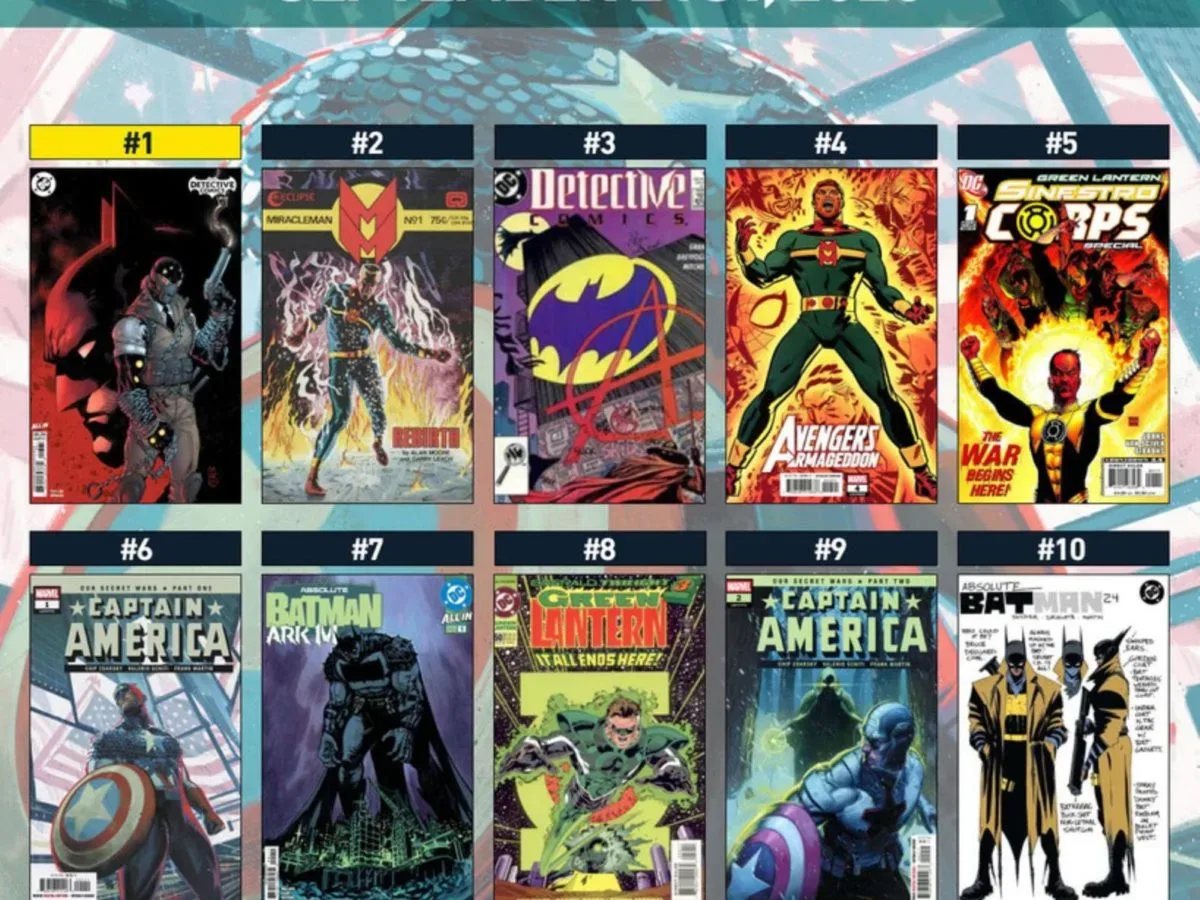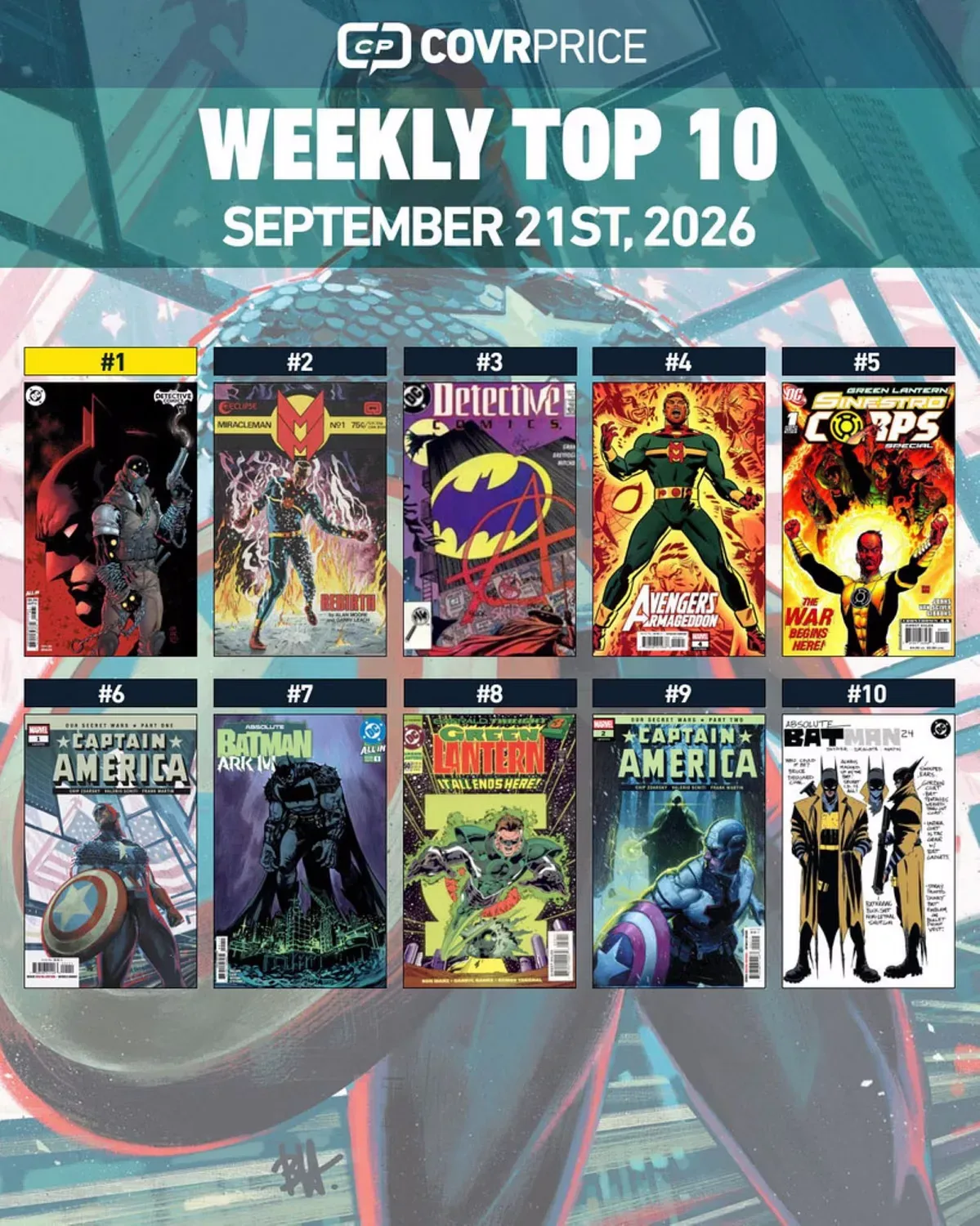
Comic buyers are chasing several very different kinds of heat this week: a newly introduced Batman villain built with a fan, a long-dormant powerhouse finally entering Marvel continuity, screen-driven Green Lantern theories, and a modern limited-cover rush around Absolute Batgirl. The common denominator is not simply age or scarcity. It is attention—especially attention attached to a first appearance, a revealed role, or a possible adaptation connection.
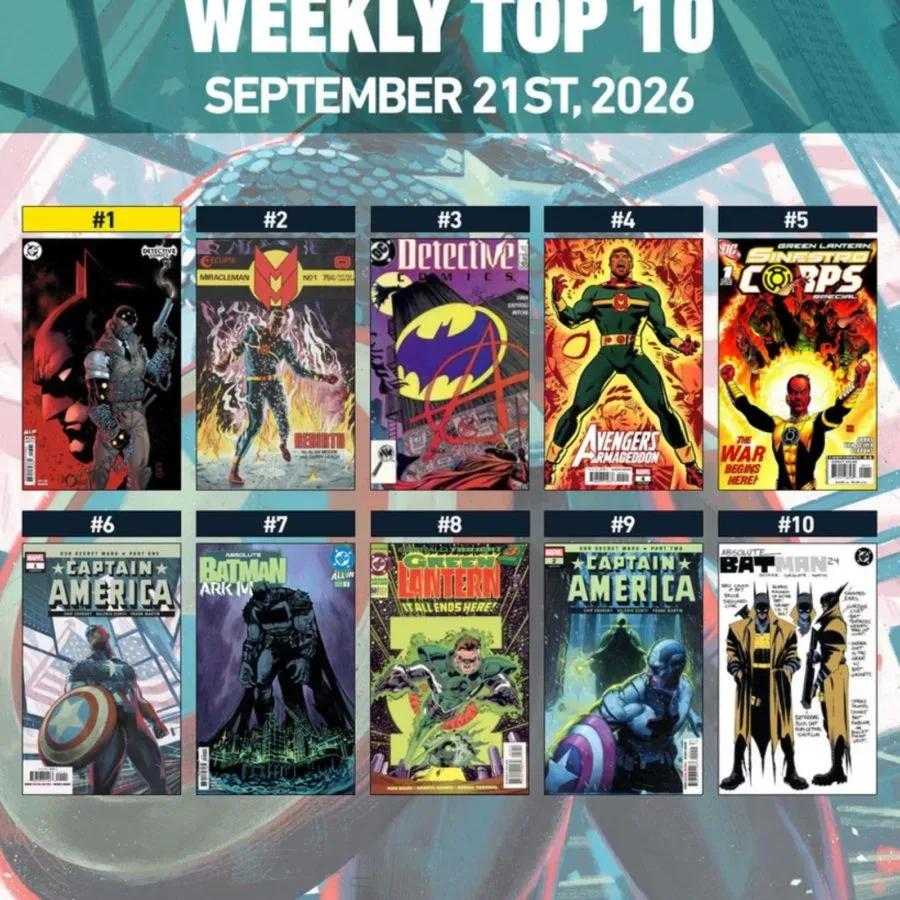
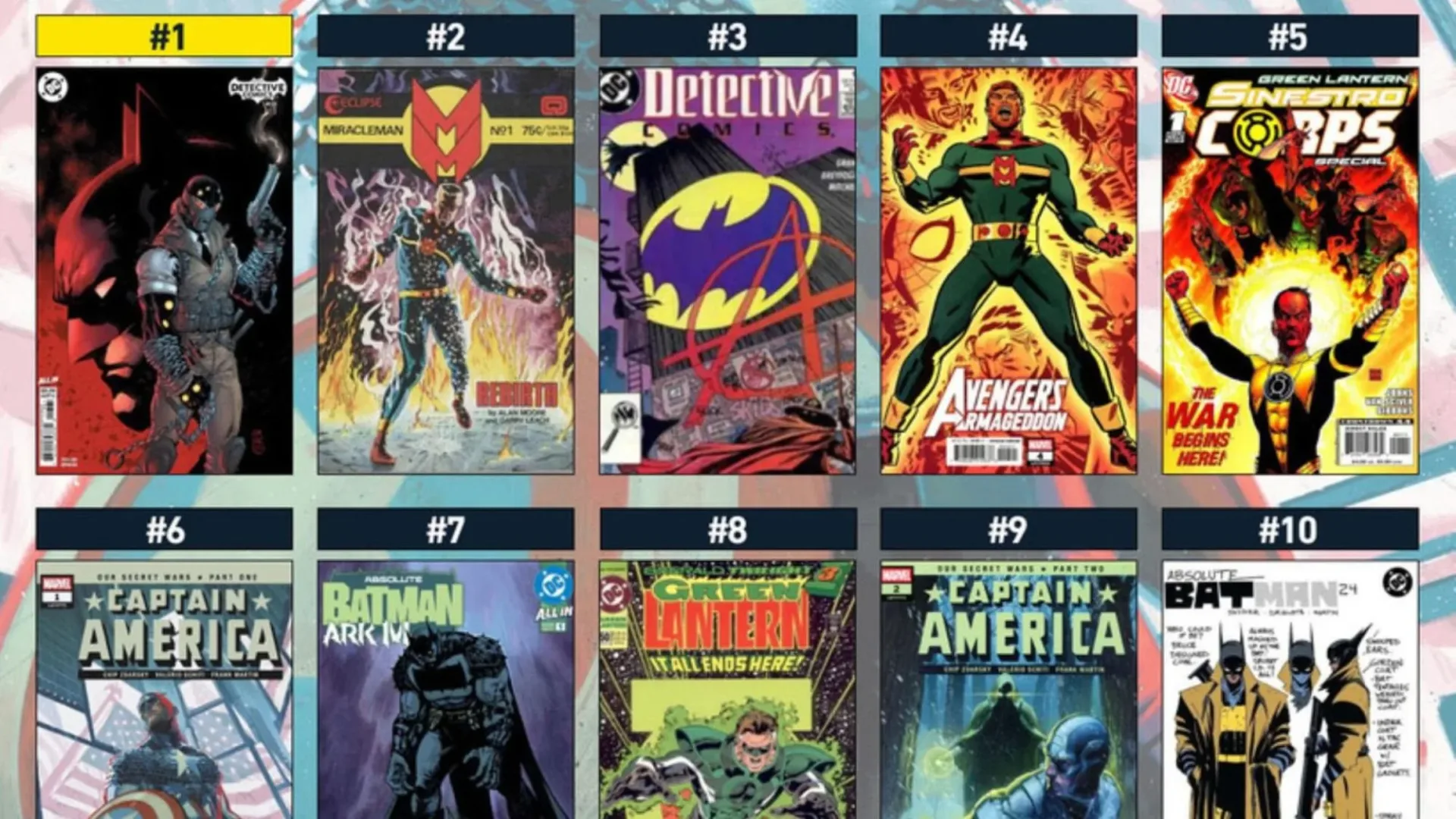
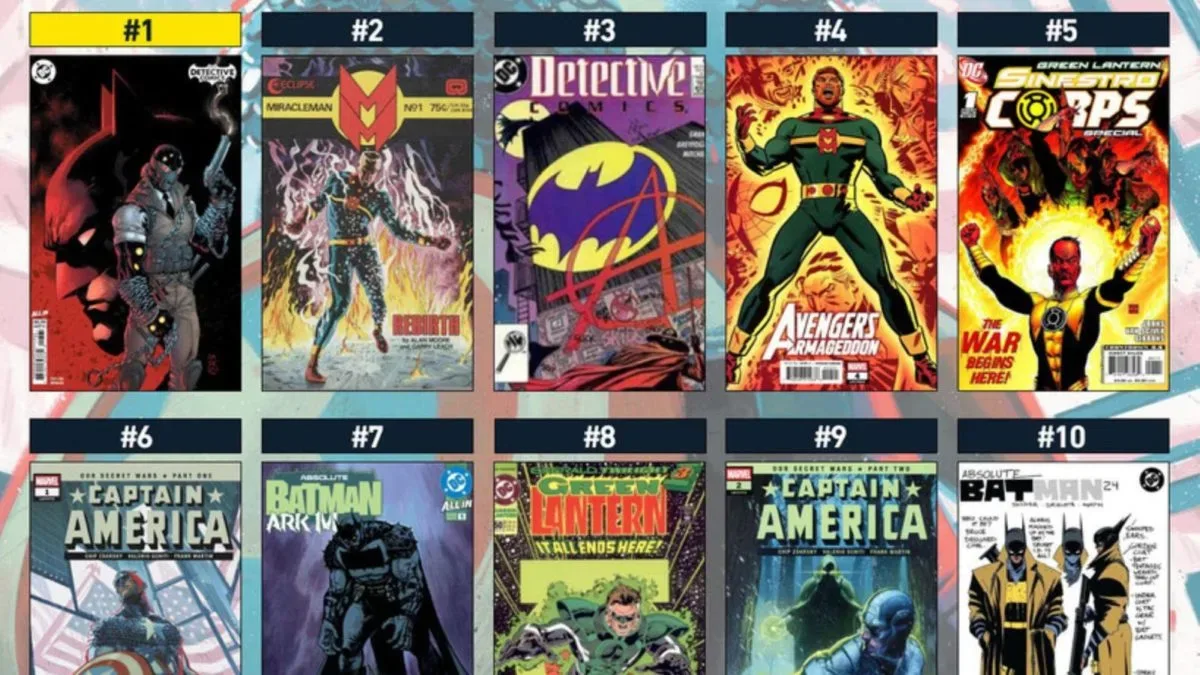
The weekly trending list, based on a weighted combination of online sales volume and price movement for the week ending September 20, 2026, is led by Detective Comics #1113, specifically Jim Lee’s “Building Bad” variant. It is followed closely by both the 1985 Miracleman #1 and the spoiler variant for Avengers: Armageddon #4. Batman, Green Lantern and Captain America books fill out the remaining slots, making this a useful snapshot of how collectors respond when ongoing comic stories, covers and screen speculation collide.
Rhetoric makes Detective Comics #1113 the standout
The highest-profile book is Detective Comics #1113, the Jim Lee “Building Bad” cover featuring Rhetoric. The character is unusual even by superhero-comics standards: Rhetoric was created with DC through the “Building Bad” Sweepstakes by winner Sharif Robbins-Brinson. The new villain is also intended to appear in a DC GO! webcomic and the LEGO Batman: Legacy of the Dark Knight game, in addition to the main comic line.
That cross-format plan gives the debut more than one reason to attract attention. A conventional debut can matter because it introduces a new character. Here, the origin story behind the character is part of the appeal too: a fan was given the opportunity to help create a villain who now has a place across comic, webcomic and game projects. Jim Lee’s cover is reported as the only cover featuring Rhetoric, while the issue’s story is by Dan Watters.
For more context, explore Top 10 Nintendo DS Action Games.
The observed high sale was $20 for a raw Near Mint copy, with a current raw Near Mint fair market value, or FMV, of $10. “Raw” means the comic is not encapsulated and graded by a third-party grading company. Near Mint is a condition descriptor, not a guarantee that every copy will look identical. FMV is also best read as an estimate built from recent market activity rather than a fixed price a seller must receive.
The gap between a single $20 high sale and a $10 FMV is worth noting. It illustrates a basic rule of fast-moving comic markets: one buyer can pay more than the emerging average when a book is new, scarce at the moment of sale, or simply highly visible online. That does not automatically establish a durable value at the high-sale number.
Miracleman’s Marvel move powers three different books
The biggest story driving the list is Miracleman’s renewed role in Marvel comics. Avengers: Armageddon #4 brings the character into the Marvel universe, and Miracleman is set to be the fifth member of a new Avengers team formed after the Armageddon event. That development has put attention on both the current issue and earlier Captain America appearances tied to David Colton, the character positioned as a bridge between Miracleman and Marvel.
At the same time, collectors are revisiting Miracleman #1 from Eclipse, dated August 1985. The issue is the 1980s reintroduction of the character previously known as Marvelman, a name changed for legal reasons. Marvel bought the character in 2009 and reprinted stories in 2010; there was also a tease in 2021’s Timeless #1. The new appearance in Avengers: Armageddon #4, however, is the event that has visibly reactivated interest in the 1985 comic.
Miracleman #1 recorded a high sale of $17 for a raw Very Fine copy and an estimated raw Very Fine FMV of $14. Very Fine is below Near Mint in the familiar collecting-condition hierarchy. That distinction matters when comparing sales: a $17 Very Fine result cannot be cleanly measured against a Near Mint sale of another book without accounting for condition, edition and cover variation.
The modern Avengers: Armageddon #4 Michael Cho spoiler cover reached a high sale of $25 in raw Near Mint, with a raw Near Mint FMV of $12. It is reportedly the only variant cover that visibly reveals Miracleman for this issue. A spoiler cover is exactly what it sounds like: packaging that discloses a story development which may otherwise have been held back for readers. It can be particularly appealing to collectors who want an obvious visual connection to a character’s first major status change.
For readers who care more about the story than cover collecting, the distinction is straightforward. Avengers: Armageddon #4 is the current narrative milestone because it incorporates Miracleman into Marvel’s universe. The Cho variant is a separate collectible object whose appeal is its character-reveal artwork and relative cover specificity. Both can be desirable, but they are not interchangeable.
Why David Colton’s Captain America issues are moving
Captain America #1 and Captain America #2, both Ben Harvey regular covers from 2025, are rising because David Colton’s significance has changed in retrospect. In the first issue, Colton is introduced before undergoing the super-soldier program; his post-serum appearance is brief. The later revelation that he would become host to Miracleman’s atomic power turns those early appearances into sought-after setup issues.
The results are notably stronger than several other books on the list. Captain America #1 had a high sale of $30 for raw Near Mint Plus and an FMV of $26 in raw Near Mint. Captain America #2 reached $40 for raw Near Mint with an FMV of $31. Near Mint Plus is an even tighter condition designation than Near Mint, so buyers should not treat the $30 #1 result as a direct price benchmark for every ungraded copy.
These two issues underline the difference between a first appearance and what collectors often call a key issue. A key issue is a broad collecting term for a comic with an important event, debut, change or revelation. An early appearance can become a key after a later story gives a character far greater narrative weight—as appears to be happening with Colton.
Batman books split between confirmed debuts and adaptation speculation
Batman’s presence comes from two very different market impulses. The Rhetoric cover in Detective Comics #1113 is attached to a confirmed new character and a specific participatory creation story. Detective Comics #608, by contrast, is moving on speculation concerning Anarky.
Photos and a short video from the set of The Batman Part II reportedly showed Robert Pattinson’s Bruce Wayne leaving a government building amid protesters. An individual seen with an Anarky mask and an “A” painted on a hoodie prompted buyers to wonder whether Anarky could have a meaningful role in that Batman setting. The symbol was also reportedly seen in a Clayface trailer.
That is a meaningful reason for collectors to watch the book, but it remains a theory rather than confirmation of Anarky’s role. The listed sale data reflects that uncertainty: a raw Fine copy of Detective Comics #608 reached $15, with a raw Fine FMV of $14. Fine is a noticeably lower condition category than Very Fine or Near Mint. Comparing condition-matched copies is essential, especially for older back issues where wear can vary substantially.
Absolute Batman Ark-M Special #1 represents a third route to demand: interest in an alternate-universe reinterpretation. The issue features Absolute Deathstroke, who entered through the Robins program and has already had an impact within the Absolute Universe. Online speculation about a possible Absolute Teen Titans appearance and an anime series in development has added momentum, though the Teen Titans point remains fan speculation. The book posted a high sale of $15 for raw Near Mint Plus and an FMV of $14 for raw Near Mint.
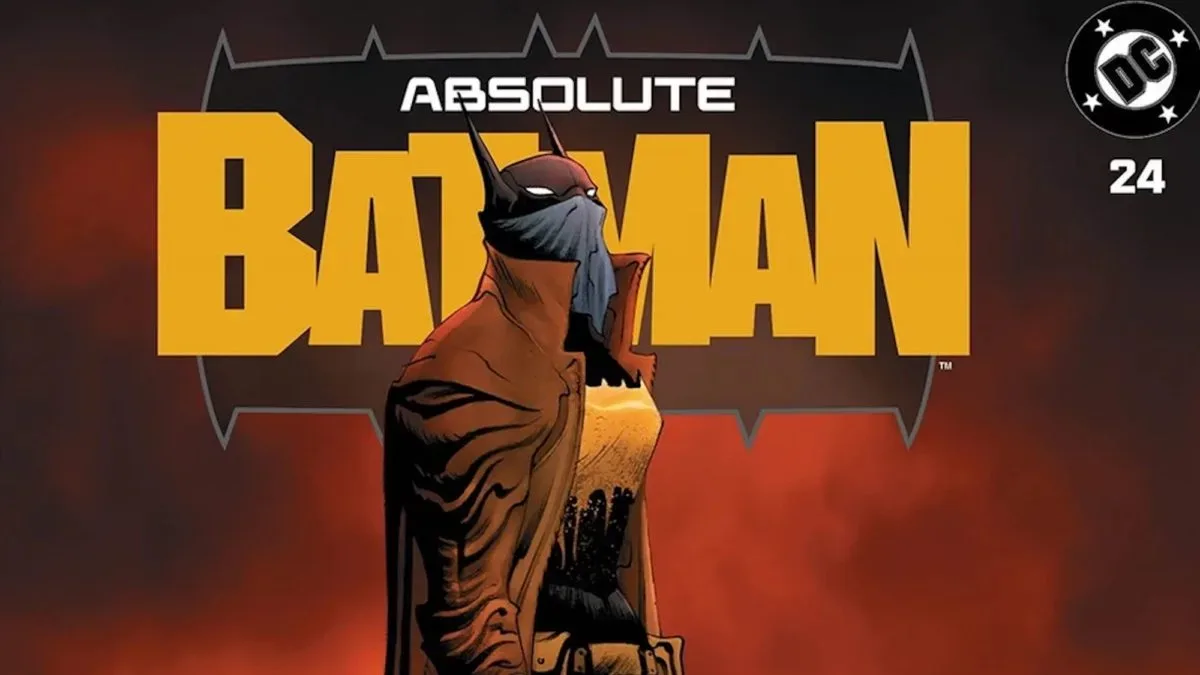
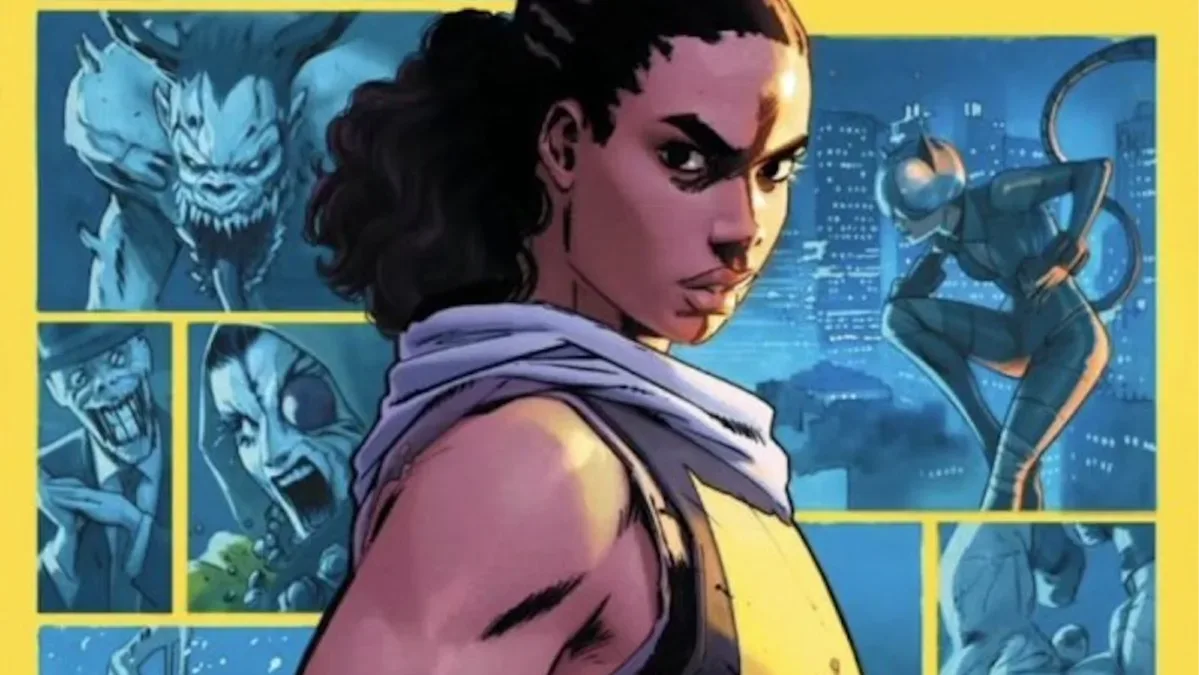
The week’s most dramatic price is attached to Absolute Batman #24, the Nick Dragotta Felix Comic Art design wraparound limited to 3,000 copies. The issue marks Absolute Batgirl’s arrival. The cardstock edition originally sold for $40 and the foil edition for $60; the reported raw Near Mint FMV is now $134, while the high sale is $300 for raw Near Mint Plus.
That is the clearest example on the list of a modern chase cover: a variant collectors pursue more aggressively than standard editions because of its artwork, limited supply, a character debut, or all three. It is also the list’s strongest reminder that sellouts and individual premium results can create enormous short-term spreads. Someone considering a purchase should identify the exact edition, verify whether it is cardstock or foil, and compare like-for-like condition before assuming every #24 has the same market value.
Lanterns theories revive Sinestro Corps and Green Lantern #50
Two Green Lantern books are benefiting from discussion around Lanterns, which has two episodes remaining in its first season. The series recently made a 10-year time jump, linked itself more closely to the wider DC cinematic universe, and left Hal Jordan’s fate an open question. John Stewart is confirmed to return as Green Lantern in 2027’s Man of Tomorrow.
Those plot points have encouraged theories about Sinestro, the Yellow Lanterns and the possibility of a fallen Hal Jordan, but none of those story outcomes has been officially confirmed. That caveat is central. Speculation can direct market interest quickly, yet a book purchased for a predicted screen or television development has a more uncertain foundation than one tied to an already published debut or revelation.
Green Lantern: Sinestro Corps Special #1, dated June 2007, recorded a high sale of $17 for raw Near Mint and an FMV of $11 for raw Very Fine. Green Lantern #50, dated February 1994, posted an $18 raw Near Mint high sale and a raw Near Mint FMV of $16. The different condition labels on the former’s high and FMV figures again show why a market chart is a starting point, not an appraisal for a particular copy.
What this week’s list actually tells collectors
This is not a shopping list or an investment recommendation. It is a record of books buyers actively pursued across the week, and it contains confirmed story developments alongside theories that may or may not pay off. The strongest confirmed catalysts are Rhetoric’s debut in Detective Comics #1113, Miracleman’s arrival in Avengers: Armageddon #4, David Colton’s connection to that development, and Absolute Batgirl’s debut in Absolute Batman #24.
Other entries carry more conditional logic. Anarky interest hinges on interpretations of leaked production imagery; Green Lantern interest hinges on where Lanterns takes Hal Jordan, Sinestro and the Yellow Lanterns; broader Absolute Universe expectations include online theory rather than a confirmed roster reveal. Those books may still be attractive to readers and collectors, but the reason for buying should be accurately understood.
- Match the exact cover: regular, spoiler, exclusive, cardstock, foil and wraparound editions can have radically different sales histories.
- Match the grade or condition: raw Fine, Very Fine, Near Mint and Near Mint Plus are not equivalent.
- Separate high sales from FMV: a top result reflects one completed transaction, while FMV aims to summarize recent activity.
- Label speculation honestly: a set-photo clue or fan theory is not an announced character appearance.
- Buy the story or art you value: market heat is volatile, particularly around spoiler variants and adaptation rumors.
In short, this week belongs to comics that give collectors a crisp reason to focus: a named debut, a newly clarified continuity role, an unmistakable cover reveal, or a screen narrative people are trying to solve before it resolves. The data shows where the attention is. It does not settle where that attention will be next month—or after the next issue, episode or official confirmation arrives.