Spoiler warning: This article discusses character appearances and story details from Absolute Cassandra Cain: The Shadow’s Hand #1.
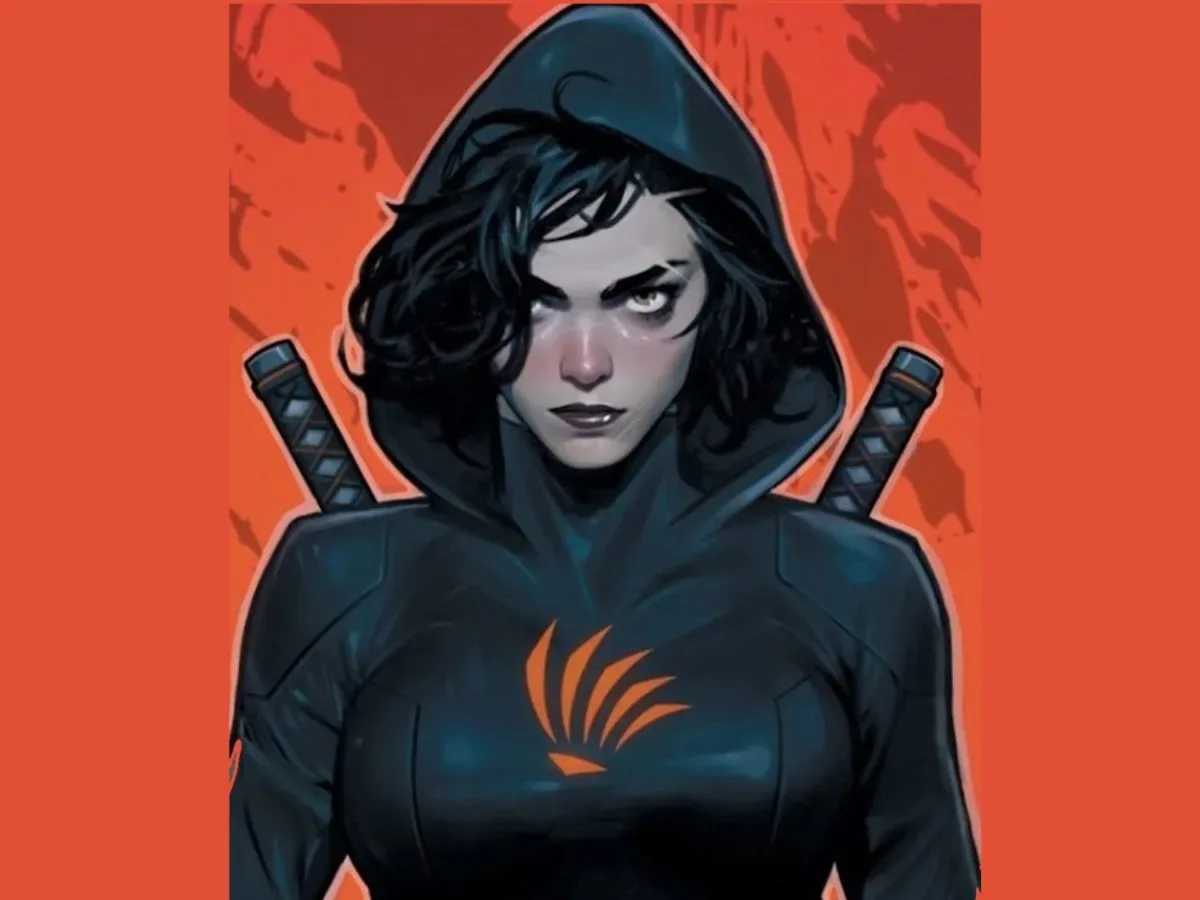
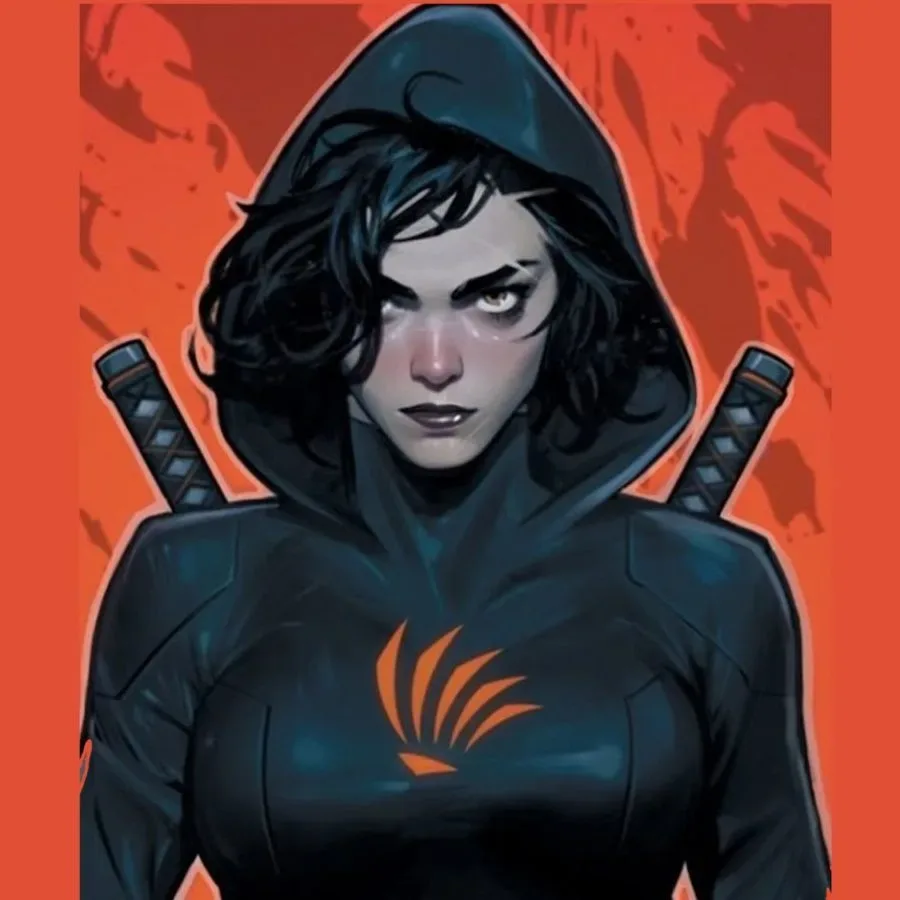
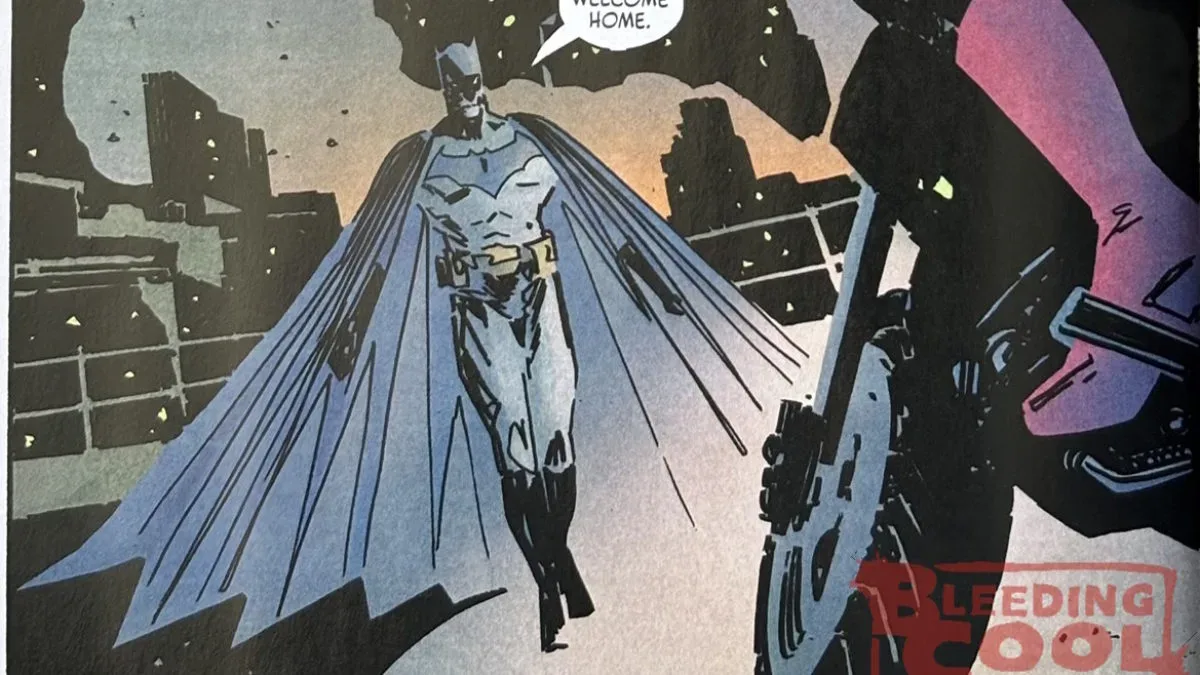
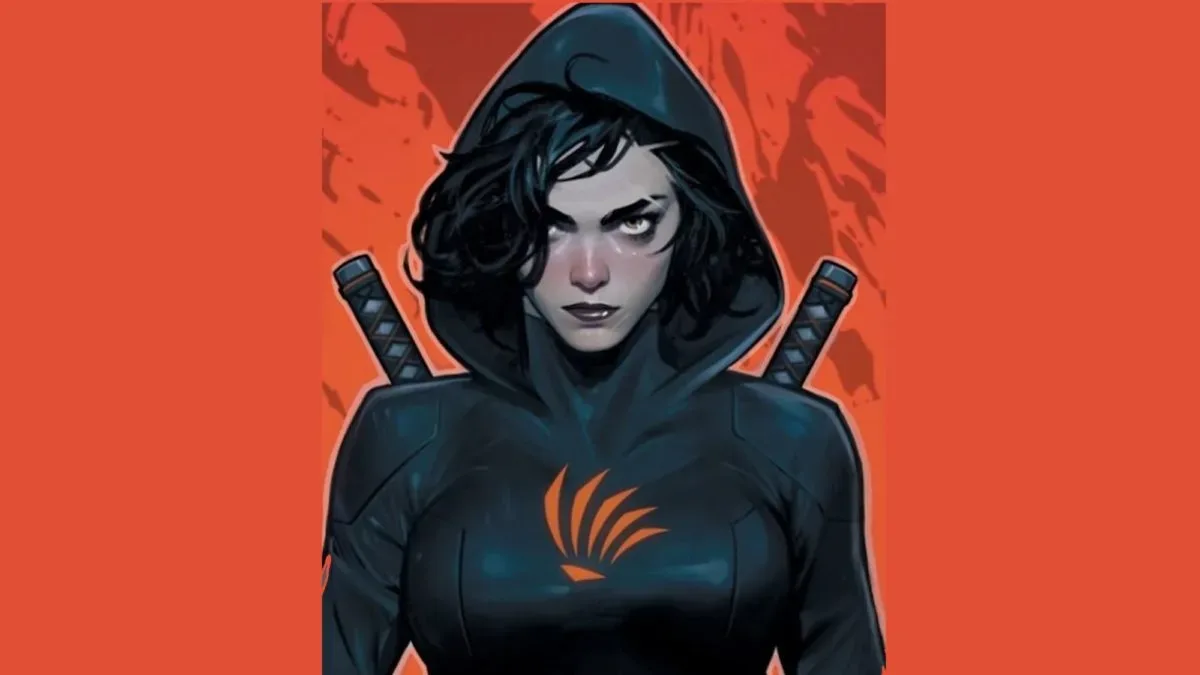
Absolute Cassandra Cain: The Shadow’s Hand #1, by Che Grayson and Matias Bergara, is positioned as an origin-focused chapter for Cassandra Cain in DC’s Absolute Universe. Material from the issue indicates that it is also doing much broader world-building work: introducing several new Absolute versions of established DC characters while tying Cassandra, Selina Kyle, the League of Assassins and Jack Grimm’s Joker into the same grim chain of events.
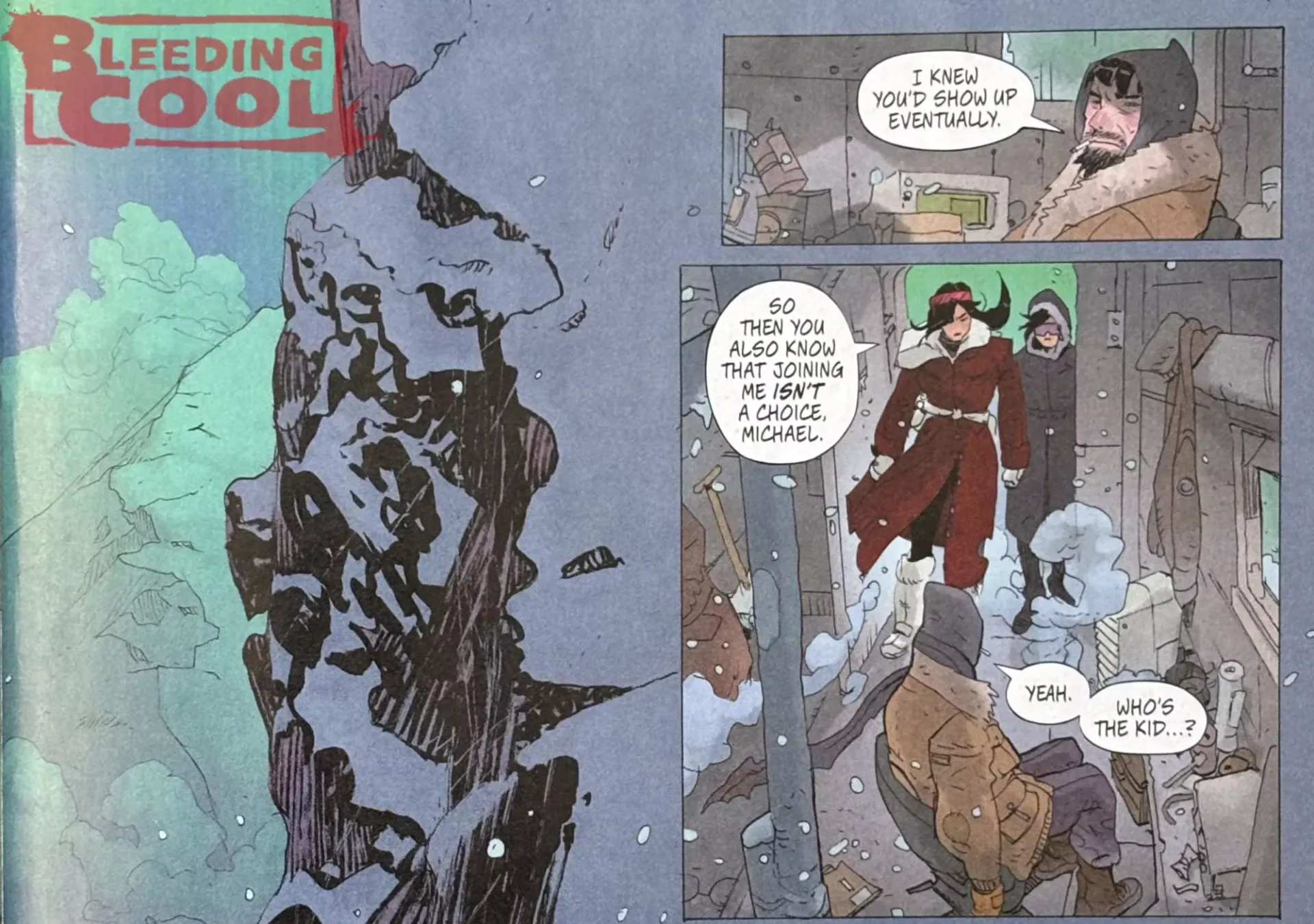
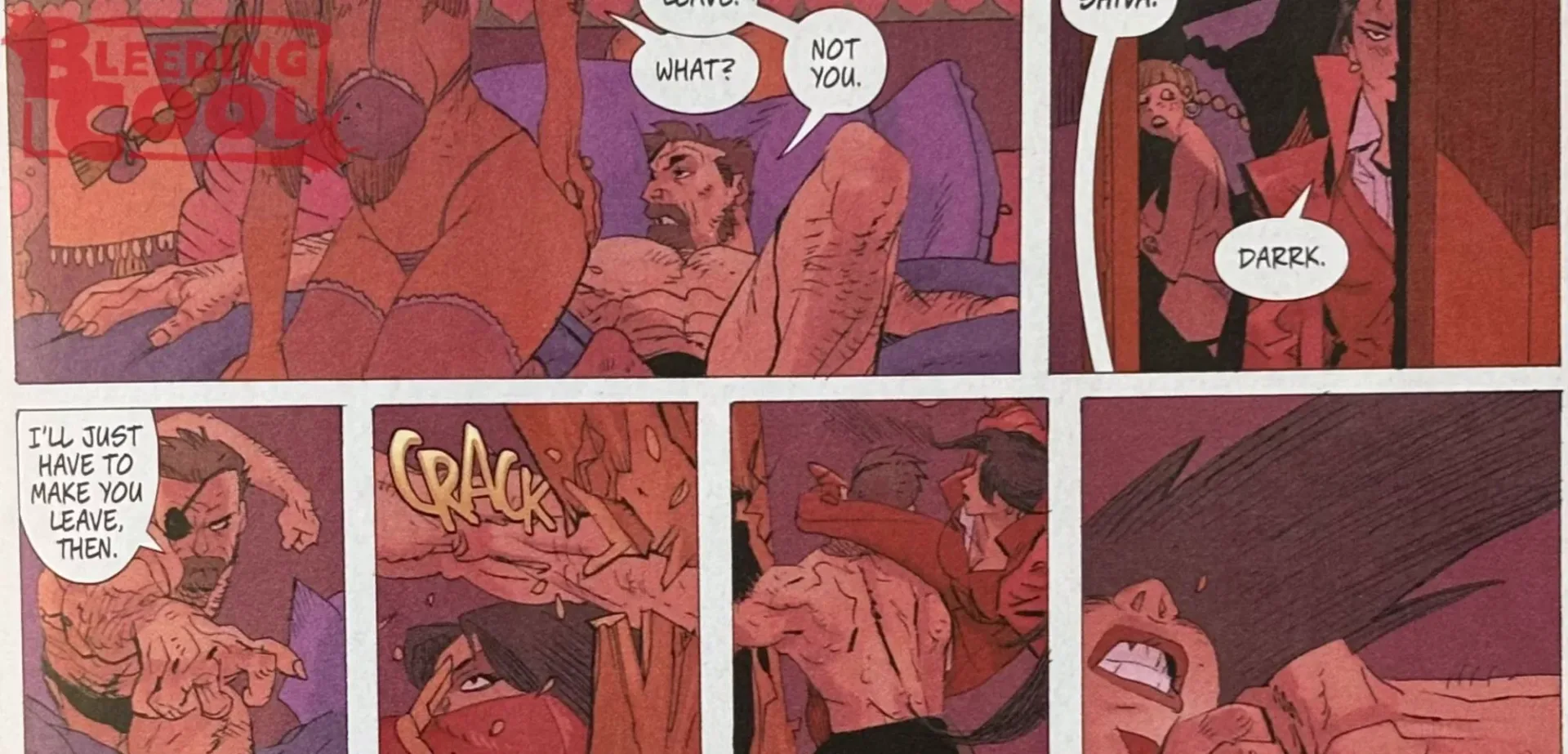
The issue is scheduled for September 16, 2026, with a listed price of $4.99. Its most significant reveal is not simply that Cassandra has a connection to the League of Assassins. It is the scale of the network around her. Benjamin Turner/Bronze Tiger, Michael Sommers/Alpha, Ebenezer Darrk, Scandal Savage and Tatsu Yamashiro/Katana all appear to join previously previewed figures David Cain and Lady Shiva as Absolute Universe counterparts.
A Cassandra Cain story with a much larger cast
“Absolute debut” is a useful term here. It does not mean a character’s first appearance in comics overall. It means a familiar character is appearing in the Absolute Universe for the first time, potentially with a new history, look, allegiance or role. The setting can retain recognizable names while changing the assumptions readers bring from conventional DC continuity.
Lady Shiva had already appeared in Absolute Catwoman #3, while David Cain was included in official preview material for The Shadow’s Hand #1. The new issue adds at least five further faces to the growing board:
- Benjamin Turner, Bronze Tiger: traditionally a highly skilled martial artist and assassin whose comic roles have moved among villainy, anti-heroism and heroism.
- Michael Sommers, Alpha: a character originally associated with David Cain, League of Assassins training and Cassandra’s early history.
- Ebenezer Darrk: an early League of Assassins figure, historically identified as the first person put in charge of the organization by Ra’s al Ghul.
- Scandal Savage: traditionally Vandal Savage’s daughter, with an established DC version described as impossible to kill.
- Tatsu Yamashiro, Katana: the Japanese hero best known for wielding the Soultaker Sword and for her association with the Outsiders.
That is an unusually dense set of introductions for a one-shot or debut issue built around one protagonist. The apparent purpose is clear enough: Cassandra’s origin is being framed less as an isolated assassin narrative and more as a story shaped by an entire damaged organization.
The list at the center of Selina Kyle’s case
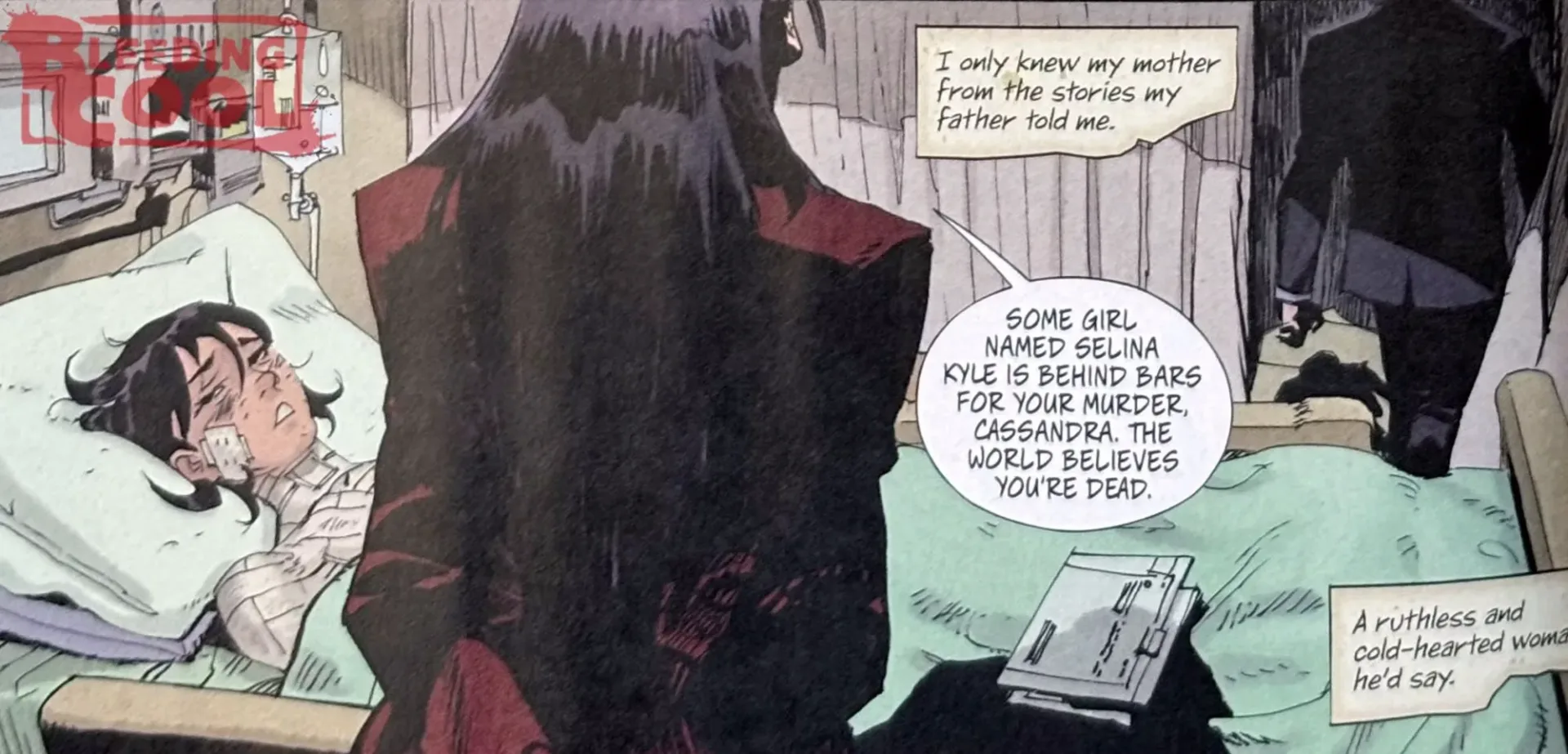
The issue also connects Cassandra directly to Selina Kyle. Selina, the Absolute Universe’s Catwoman, reportedly spent time in jail for Cassandra’s murder after an explosion in David Cain’s apartment. At the time, Selina was stealing a list of names.
That list is now a major piece of context. Rather than serving as a generic spy-movie MacGuffin, it appears to catalog people connected to the Absolute League of Assassins. The emerging names include Bronze Tiger, Alpha, Darrk, Scandal Savage and Katana. The practical narrative effect is to place Selina in the middle of Cassandra’s past before the title has even had much room to establish its present.
It also adds immediate tension to the premise that Cassandra is a survivor. A murder accusation following an apartment explosion suggests that public records, law enforcement assumptions and the actual truth may be badly misaligned. Selina’s theft of the list can be read as a potentially vital act of discovery, but it is still an act that put her at the apparent scene of a devastating event. The issue’s stated setup calls Cassandra and Selina’s stories intertwined, and this is a much thornier link than a chance meeting or a straightforward partnership.
Why the League roster matters
In Batman-adjacent comics, the League of Assassins is typically more than an enemy team. It is an institution: a network that trains, recruits, directs and weaponizes people. The names on this list therefore matter as potential evidence of a hierarchy, a former hierarchy, or a group being rebuilt after catastrophe.
The backgrounds of the selected characters create several distinct pressures around Cassandra. David Cain and Lady Shiva are central to her established mythology. Alpha is particularly notable because his conventional-comics history also intersects with David Cain and Cassandra’s training. Bronze Tiger contributes the image of an elite fighter whose moral position can vary. Darrk adds a historic League leadership connection, and Scandal Savage potentially widens the cast beyond a simple David Cain–Lady Shiva axis.
Katana is the outlier with the most immediate mystery attached. Her appearance is not presented merely as a League roster entry. She is connected to Ark D, a facility associated with Jack Grimm, the Absolute Joker. That detail makes the League’s place in this universe feel less like a closed chapter and more like the site of an ongoing struggle over survivors, knowledge and power.
Ark D and the Joker connection
Jack Grimm’s Joker is said to have trained with the League of Assassins years earlier. After learning what he could, he slaughtered the group. Lady Shiva and Cassandra emerged from what remained. This establishes a brutal foundational event for the title: Cassandra’s origin is inseparable from the destruction of the institution that formed part of the world around her.
Ark D is identified as one of multiple facilities run by Grimm. These Arks are described as places where he experiments on people in search of new ways to increase his power and extend his life. Katana’s presence there is thus more troubling than a routine villain cameo. It potentially places a character usually associated with a powerful supernatural weapon inside an environment built around human experimentation and longevity.
Readers should be careful not to assume that every familiar trait will transfer across continuities. Katana’s classic identity is closely tied to the Soultaker Sword, a blade said to retain the souls of those it kills, including her husband. The available material identifies Tatsu Yamashiro as Absolute Katana, but it does not establish that every aspect of that classic backstory or equipment is unchanged. What is confirmed is her connection to Ark D and a redesigned, notably altered presentation.
That distinction is important to reading any alternate-universe comic. Character names can act as signals, inviting readers to notice echoes of prior stories. They are not guarantees that old relationships, powers or moral alignments remain intact. Creative reinvention often depends on that tension between recognition and uncertainty; in another creative medium, the value of taking risks rather than repeating a familiar formula is the focus of this discussion of creative risk-taking.
What is established, and what remains open
The confirmed picture is substantial. Absolute versions of Bronze Tiger, Alpha, Darrk, Scandal Savage and Katana are part of the issue’s revealed cast. Selina’s incarceration follows the David Cain apartment explosion and an accusation that she murdered Cassandra. The stolen list links a cluster of characters to the League of Assassins. And Ark D connects Katana to the Joker’s network of experimentation facilities.
Several key questions are still unanswered by those details. It is not yet clear how the League is being organized in the present, what order the relevant past events occurred in, or why each listed figure is important to Cassandra’s immediate story. The exact circumstances of Cassandra’s apparent death and Selina’s imprisonment also remain for the comic to explain. Likewise, Ark D’s function in Katana’s story, and what the Joker intends to gain through his experiments, cannot be treated as settled from the reveal alone.
Those unknowns are not minor gaps. They are the central engines of the issue’s setup. Cassandra’s path is being built from identities other people may have assigned to her: assassin, daughter, survivor and alleged murder victim. Selina’s path is entangled with a crime whose visible evidence appears to tell one story, while the list she stole suggests a far larger hidden one.
Classic DC roots behind the newcomers
The lineup also reaches across several eras of DC publishing. Alpha was created by Kelley Puckett and Damion Scott in Batgirl #35 in 2003. Ebenezer Darrk dates back to Dennis O’Neil and Neal Adams’ Detective Comics #406 in 1970. Scandal Savage was created by Gail Simone and Dale Eaglesham for Villains United in 2005. Katana was created by Mike W. Barr and Jim Aparo in The Brave and the Bold #200 in 1983.
Using characters from such different corners of DC history helps the issue do more than populate a familiar assassin organization. It gives the Absolute League a cross-generational texture: old leadership associations, newer Cassandra-linked history, unstable fighters and a figure pulled into the Joker’s Ark system. Whether those pieces become allies, captives, enemies or ghosts from a shattered League is precisely the question The Shadow’s Hand #1 appears ready to pursue.
Shop the products
Check current price, model and availability at the retailer.