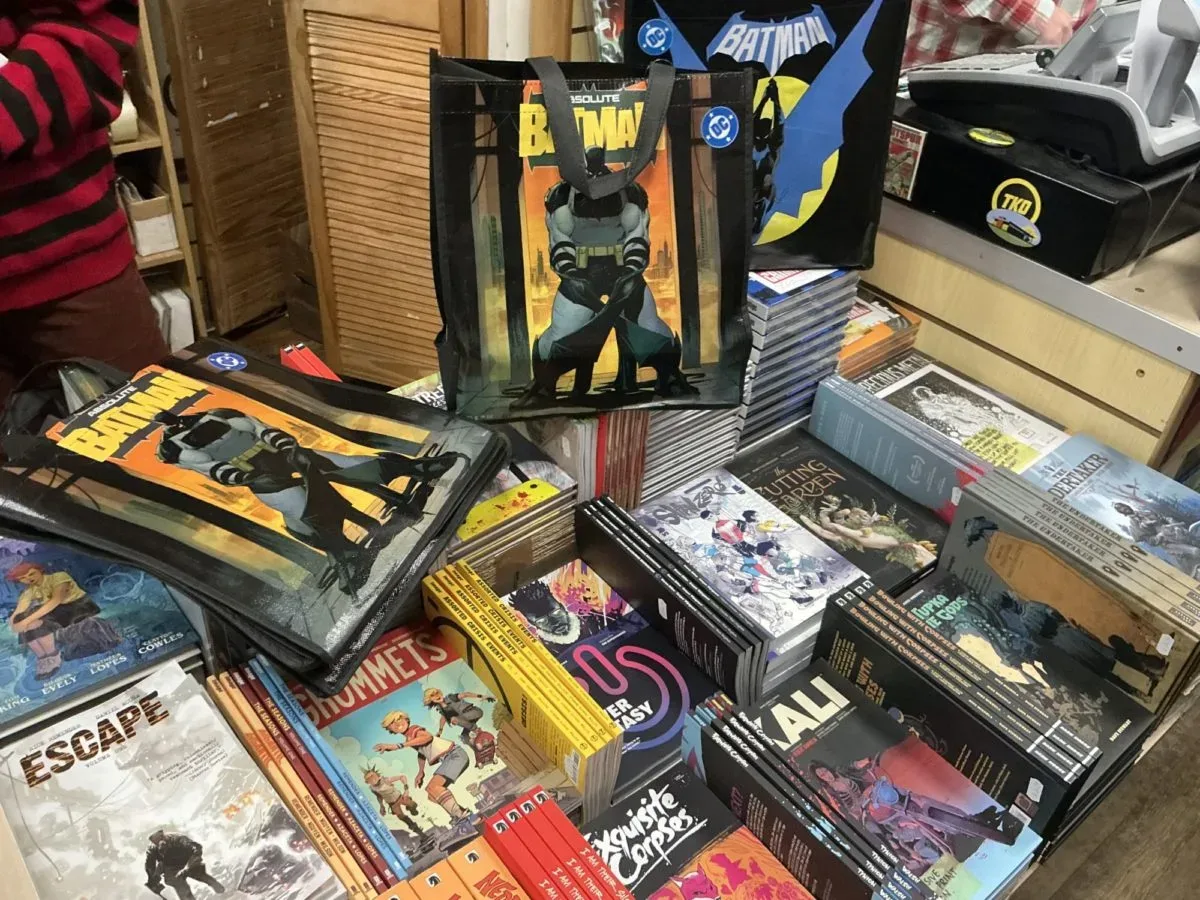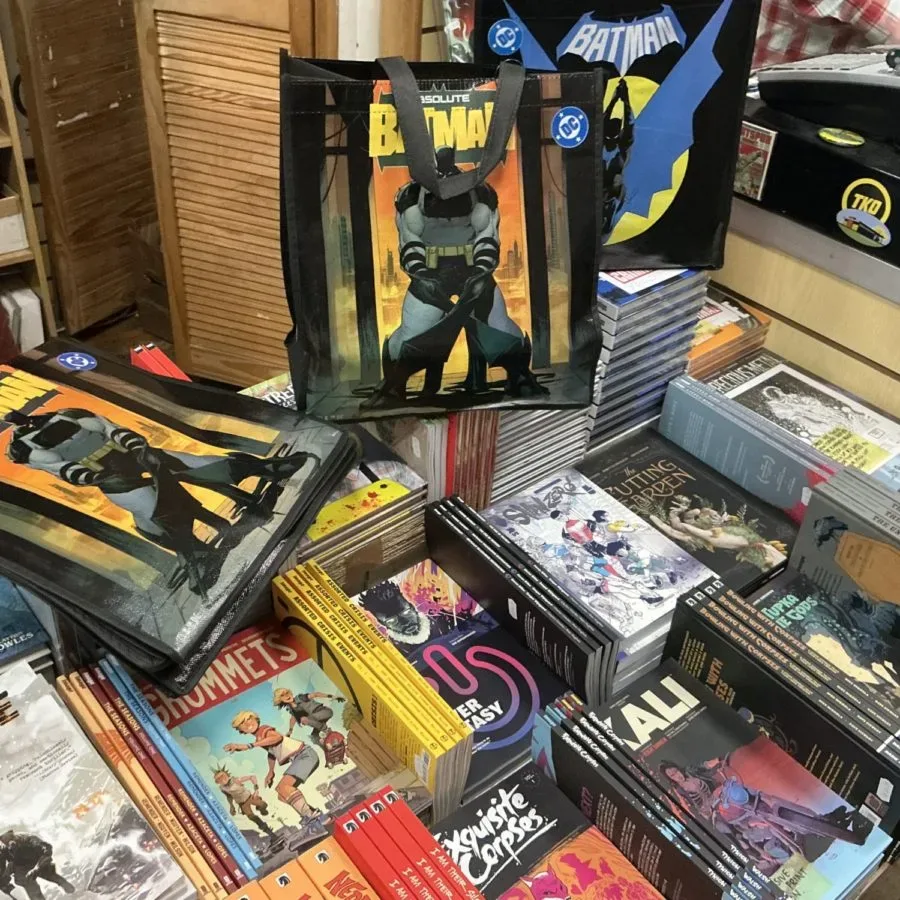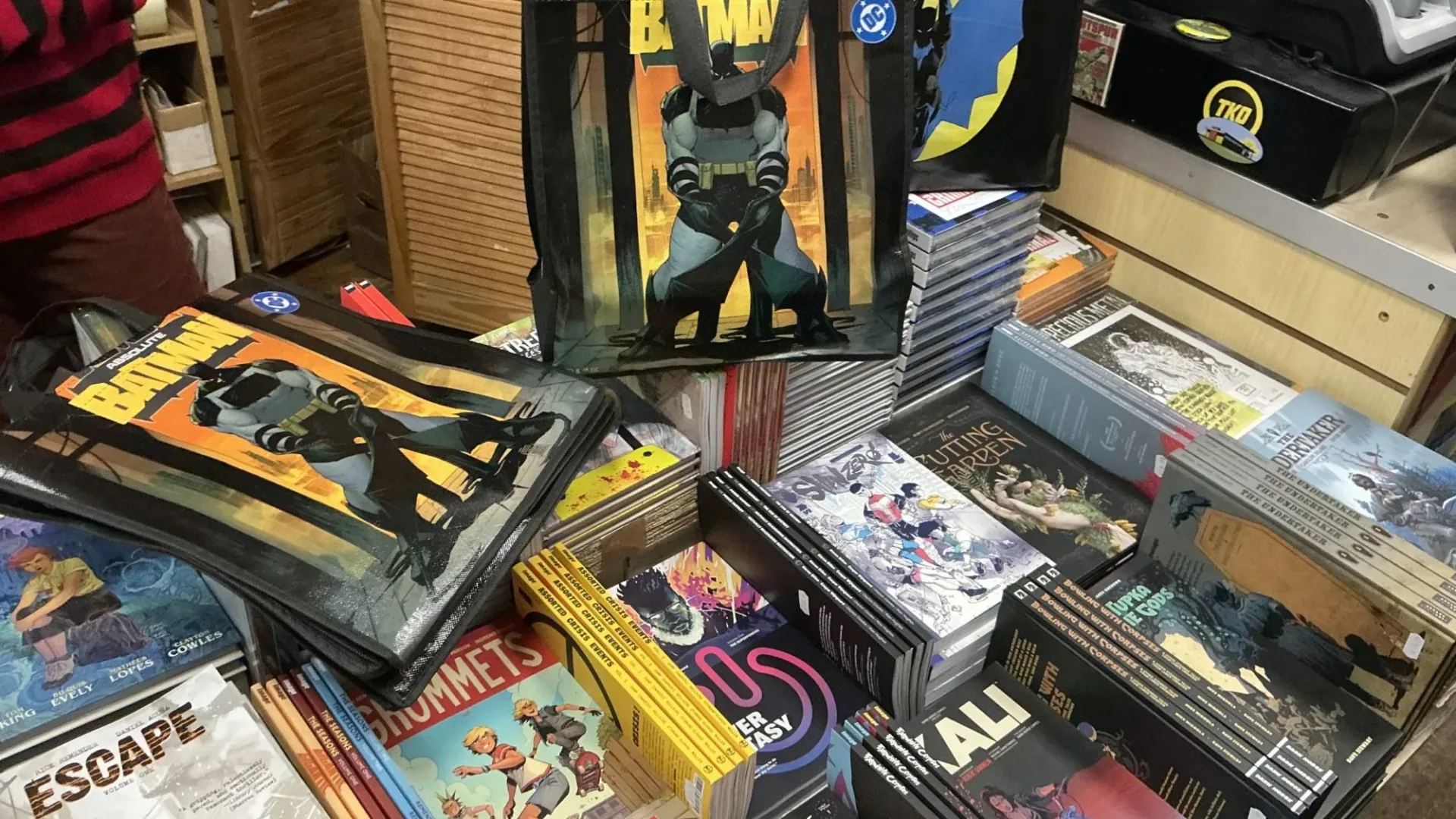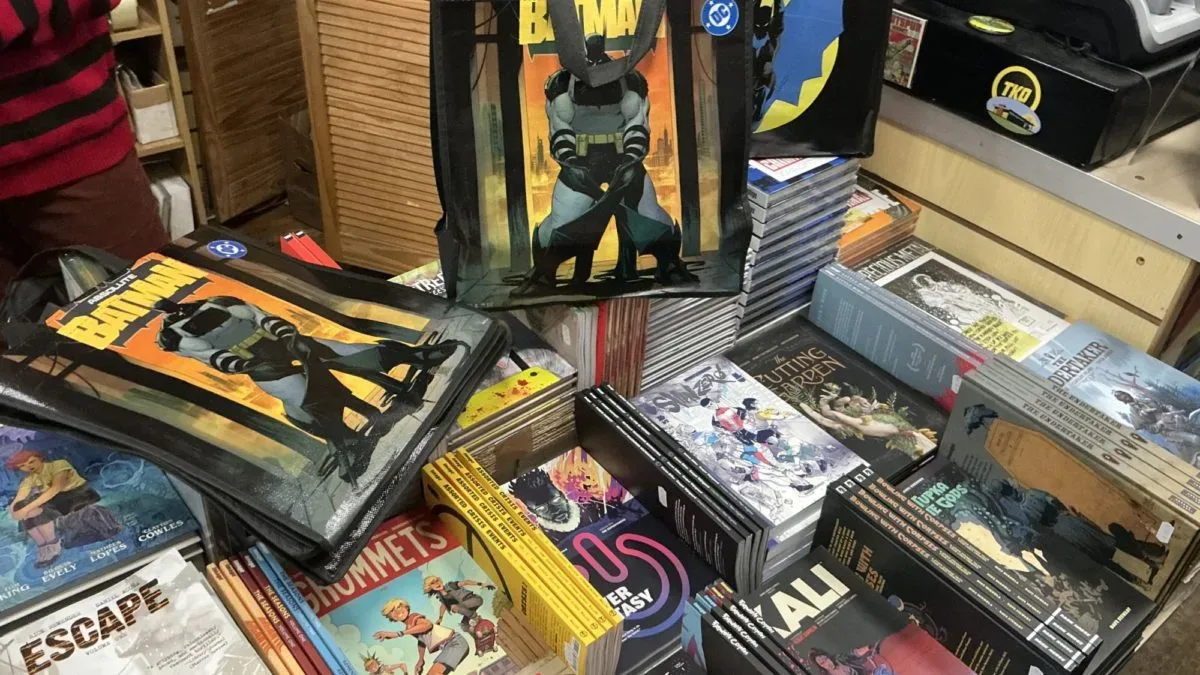
Batman Day provided an appropriately moody setting for a walk around central Leeds: wind, drizzle and a city-centre circuit linking three comic shops with very different ideas about what a comics destination can be. The shared subject is easy enough—each stop carries comics, graphic novels and manga—but the differences matter. One is built around comics discovery and community events, one mixes books with a broad pop-culture retail floor, and one treats comics as part of a wider games-and-hobbies ecosystem.
For readers, collectors and anyone trying to find a regular shop rather than make a one-off purchase, that concentration is the useful part of the story. Leeds has three nearby places where the format, selection and atmosphere can shape the visit as much as the headline release on the shelf. The city’s comic retail history also has a clear thread running through it: Odyssey 7, once off the Headrow, is gone as a standalone name and premises, but its later history continues through the Forbidden Planet Leeds location.
Batman may be the occasion, but the practical lesson is bigger than one character or one publisher. A comic shop can be a place to subscribe to monthly issues, browse a graphic novel, locate manga, attend a signing, pick up a board game, or simply spend time reading and deciding what to try next. Central Leeds offers each of those routes in close proximity.
OK Comics: a comics-first stop in Thornton’s Arcade
OK Comics is the most specialised of the three. Founded more than 20 years ago by Jared Myland, the independent shop is located in Thornton’s Arcade on Briggate and focuses primarily on comics and graphic novels rather than an expansive merchandise offering. That distinction is meaningful for shoppers who want browsing space devoted to books: mainstream superhero material can sit alongside independent, small-press and more literary work without competing for attention with a wall of collectibles.
Its selection is described as particularly strong for independent and literary comics, while still accommodating mainstream readers. In practical terms, that makes it a potentially useful stop for someone whose Batman Day purchase is only the beginning of the trip. A visitor may arrive looking for a familiar DC title and leave with a graphic novel from a publisher or creator they would not otherwise have encountered.
The shop’s subscription service is another important part of that model. A subscription, often called a pull list by comic readers, is an arrangement where a shop holds regular issues for a customer. It removes some of the uncertainty from following serialised comics, where an issue can sell through before a casual buyer visits. OK Comics offers this service for regular titles in-store or through mail order.
There is also a free graphic-novel lending library. A lending library is not the same as browsing a book before buying it: it creates a route to read complete works without making every discovery an immediate purchase decision. For newcomers, that can lower the barrier to trying an unfamiliar creator, genre or format. For established readers, it offers a way to explore beyond the monthly release schedule.
Upstairs, OK Comics has older comics and a reading area, adding a second mode of browsing to its new-release focus. The shop also carries occasional exclusives and signed editions. These are worth separating conceptually. An exclusive edition is a version made for a particular retailer or outlet; a signed edition bears a creator’s signature. Neither label automatically makes an item more important to every reader, but both can appeal to people who value a particular cover, a direct connection to a creator or a more limited retail item.
Events are central here, too. OK Comics hosts launches and signings, particularly around the nearby Thought Bubble convention in Harrogate, and maintains a local small-press section. Small press generally refers to work issued outside the biggest publishers, often in shorter runs and with more direct creator involvement. A dedicated area for it gives local and emerging work a presence that may be harder to find in general entertainment stores.
Forbidden Planet Leeds: comics in a wider pop-culture department store
On the Headrow, Forbidden Planet Leeds takes a different approach. The location began as Odyssey 7 in 1985 before being acquired by the chain, and moved to its present site in 2014. The current store functions as a broader pop-culture destination: comics, graphic novels and manga are downstairs, while the ground floor carries merchandise including Funko figures, Loungefly bags, Gundam products, Pokémon cards and blind boxes.
The layout makes the shopping proposition immediately legible. Readers can head to the basement for the books; shoppers looking for a wider spread of licensed goods can browse upstairs. That may suit mixed groups particularly well. Someone interested in manga can look through the book section while another person checks figures, bags or card products without treating the visit as two separate errands.
It also illustrates how the word collectible can mean different things in a modern comic shop. A comic can be collected because it is part of a long-running series, because it has a particular cover, or because a reader wants a physical library. A vinyl figure, card or blind-box item belongs to a more merchandise-led collecting habit. Forbidden Planet’s range places those categories side by side, which can be convenient but is distinct from a shop whose primary identity is the comic shelves.
For Batman fans, that breadth has obvious appeal. Comics can be the anchor for a visit, while adjacent merchandise provides another way to engage with the character or the wider DC universe. Readers who want to keep their focus on a comic run, a collected edition or manga will find the relevant stock downstairs. Those seeking the broader licensed-culture experience have more of it available on the ground floor.
Odyssey 7’s history gives this stop an added local resonance. The original shop was the first comic shop encountered by at least one Leeds-area reader, and although that original premises has been replaced by a hairdresser, the successor’s presence on the Headrow keeps part of that retail lineage visible. It is a reminder that comic communities often outlive individual storefronts, changing name, ownership or address while continuing to serve successive generations of readers.
Travelling Man: where comics meet tabletop culture
Travelling Man, on Central Road, completes the circuit with an even wider hobby focus. The Leeds location is the flagship of an independent Northern chain and opened in the city in the 1990s. Founded by Nabil Homsi and Simon Campey—also a co-founder of Thought Bubble—the business later expanded to York, Manchester and Newcastle.
Comics, graphic novels and manga remain part of the shop’s offering, but Travelling Man gives particular weight to board games, role-playing games, collectable card games, merchandise and apparel. That mix changes the nature of the browsing experience. Here, a comic reader can cross into other forms of tabletop play, whether that means a boxed board game, a role-playing rulebook or a card game.
Role-playing games, usually abbreviated to RPGs in this tabletop context, are games in which players take on characters and collaboratively navigate scenarios, often with rules, dice and a game master. They are not the same thing as video-game RPGs, even though the two share ideas about characters, worlds and progression. A shop that carries both comics and tabletop RPGs can serve people who enjoy fictional universes across page-based and social-play formats.
Likewise, collectable card games are designed around decks and card pools that players build, trade and refine. Their presence makes Travelling Man a useful complement to the other two stops: it is not only a place to pick up a comic but a shop that recognises comics, games and hobby merchandise as overlapping communities.
The store is often described as especially friendly, a reputation that fits the importance of specialist retail staff in categories with enormous choice. For a first-time visitor, an approachable conversation can be more useful than a generic bestseller list. Comics have decades of continuity, manga has wide-ranging genres and editions, and tabletop games can have very different demands for group size, play time and rules complexity. Helpful guidance is part of what makes a local specialist shop valuable.
Why the three-stop route matters
These stores are close enough to turn browsing into a walk rather than a day of travel, yet they avoid feeling redundant. OK Comics offers a comics-centred environment with subscriptions, lending, reading space and a local small-press presence. Forbidden Planet Leeds makes comics and manga one floor of a larger pop-culture offering, carrying merchandise and cards alongside them. Travelling Man integrates comics into games, RPGs and other social hobbies.
That variety is useful because “comic fan” is not a single shopping category. One reader may be trying to keep up with an ongoing title. Another may want a self-contained graphic novel. Another may be looking for manga, signed editions, a game for a group, or a gift for somebody whose interest is closer to figures and accessories than periodical comics. Leeds’ city-centre shops give those visitors reasons to choose different doors—and good reason to try more than one.
Thornton’s Arcade also adds a small pause point to the route through Kapow Coffee. It does not turn a shop crawl into a formal itinerary, but it does make the arcade stop more than a quick transaction. Browsing comics is often slower than buying a planned item: covers catch the eye, unfamiliar spines invite investigation and a conversation can change the intended purchase. A coffee break suits that rhythm.
Batman Day may supply the cape-and-cowl excuse, but the lasting appeal is the city’s range of specialist spaces. Whether the goal is a pull list, an indie discovery, a manga volume, a board-game session or a piece of licensed merchandise, Leeds offers three distinct ways into the same broad culture. For more Batman-adjacent pop-culture reading, see this look at the shadowy Gotham imagery connected to The Batman Part 2.