The PlayStation 2’s first-person-shooter library was unusually varied. It included console adaptations of major PC games, fast arcade shooters, science-fiction experiments, espionage thrillers and games that used presentation or environmental interaction to distinguish themselves from a standard corridor campaign. That makes a simple popularity ranking less useful than a comparison of what each game is actually trying to do.
This ranking weighs five factors: campaign variety, mechanical identity, encounter and weapon design, offline replay value, and the importance of the PlayStation 2 version. Campaign length matters, but it is not the deciding factor. A game can rank highly by changing its rules, settings or objectives in memorable ways, while a technically impressive shooter may place lower if most of its encounters play the same way. Split-screen, bots, challenge modes, difficulty settings and map tools count when they are documented for the PS2 release.
The list covers exactly ten first-person shooters released for Sony’s console. It does not broaden the category to include third-person military games, rail shooters or games where first-person shooting is only a minor feature. Online modes are discussed as historical features only. The original PS2 servers for several games, including Killzone, have been decommissioned, so the rankings favor replay that remains available offline.
10. Cold Winter
Cold Winter is an appealing choice for players who want a spy-themed first-person shooter rather than another space marine or conventional military campaign. It follows Andrew Sterling, a former MI6 operative, and uses that premise to frame its action around espionage, covert operations and shifting mission circumstances. The result is a more grounded flavor than the science-fiction shooters higher on this list.
Its mechanical range is comparatively modest, but that is also why it works as the ranking’s understated entry. Cold Winter aims for a recognizable console spy-shooter structure, with mission-led progression and a balance between shooting and objective work. It is less interested in extraordinary abilities or elaborate environmental systems than Project: Snowblind or Red Faction.
The original PlayStation 2 release included local multiplayer support and online functionality. Those features are historically useful when explaining the game’s design, but they should not be presented as dependable modern services. Cold Winter ranks tenth because its atmosphere and mission framework are worthwhile, while its weapons, campaign systems and replay tools are less distinctive than those of the games above it. It is best suited to players who value a straightforward espionage setting and the feel of an older console shooter.
Cold Winter is not the PS2’s most ambitious shooter, but it fills a specific niche. It provides a grounded alternative to time travel, comic-book presentation and futuristic powers, and its period-specific spy tone gives it more personality than a generic military campaign.
- Best fit: players who want an espionage setting and objective-led missions.
- Tradeoff: its shooting systems are less unusual than the abilities, terrain systems or time travel found elsewhere on the list.
- Original online features should be treated as historical context, not as a current-access promise.
9. Unreal Tournament
Unreal Tournament is the list’s arena specialist. Its identity comes less from a dramatic story than from changing the rules of combat. Deathmatch, team deathmatch, capture the flag and domination-style objectives ask players to approach the same spaces in different ways. The important question is not simply how many enemies can be defeated, but whether the player should attack, defend, capture, escort or control a position.
The PlayStation 2 version also includes a single-player tournament ladder, giving the game a progression structure rather than leaving it as a menu of disconnected matches. Even so, its long-term value comes from custom matches and bot play. A capture-the-flag arena creates different priorities from a deathmatch map, while domination turns control points into the focus of every movement decision.
Unreal Tournament ranks below the campaign-heavy shooters because its narrative variety is limited. Its replay depth is rule-based rather than story-based. That is a strength for players who enjoy learning maps, managing weapon pickups and adapting to opponents, but a weakness for anyone seeking a campaign that constantly introduces new locations or objectives.
Choose Unreal Tournament when repeatable matches matter more than character development or cinematic pacing. It is the clearest example here of a PS2 shooter built around competitive structure first and traditional campaign storytelling second.
- Best fit: players who prefer arena rules, bots and repeatable matches.
- Tradeoff: its campaign structure is less narrative-driven than the other entries.
- Judge it by map, objective and opponent variety rather than by cinematic mission design.
8. Project: Snowblind
Project: Snowblind builds its identity around a cybernetic combat toolkit. The protagonist is a technologically enhanced soldier, and the campaign gives the player abilities such as cloaking, ballistic shielding and control over robots or vehicles. These powers change how encounters can be approached. Concealment, protection and indirect control create different tactical possibilities from simply selecting a stronger firearm.
The game’s cyberpunk setting supports that design without overwhelming it. Project: Snowblind presents a concentrated action-shooter experience rather than a full immersive simulation. Its abilities are used to make firefights more flexible and to give the player moments of power, but the campaign remains focused on forward movement and combat.
The game was associated during development with the working title Deus Ex: Clan Wars. The released PlayStation 2 title is nevertheless a separate game, so it should not be treated as a Deus Ex sequel or as a console edition of a different series entry. Its appeal comes from its own combination of cybernetic powers, futuristic weapons and direct action.
Project: Snowblind places eighth because its abilities give it a clear mechanical hook, but its campaign does not match the broader setting variety of TimeSplitters or the environmental influence of Red Faction. It is a good choice for players who want a shooter where the protagonist’s body and technology meaningfully expand the combat vocabulary.
- Best fit: players who want powers, gadgets and cybernetic combat options.
- Tradeoff: it is a focused action shooter, not a full role-playing or immersive-simulation experience.
- Its strongest distinction comes from how cloaking, shielding and machine control alter firefights.
7. XIII
XIII stands apart immediately through its cel-shaded comic-book presentation. The visual style is not limited to menus or cutscenes. Comic panels, graphic effects and on-screen sound words make the campaign feel like an interactive graphic novel, while the first-person perspective keeps the action grounded in familiar shooter controls.
Its campaign also earns this position through changing objectives. Missions move between infiltration, escapes, protection assignments, information gathering and direct firefights. The game uses stealth elements, limited resources and tools such as lockpicks and grappling devices to make movement through guarded areas more than a simple exercise in eliminating every enemy.
XIII’s conspiracy story gives those objectives a useful connective thread. The player is not merely traveling between unrelated combat arenas; the locations and tasks support an investigation into the protagonist’s identity and the political events surrounding him. That structure gives the game a stronger sense of personality than many shooters built around interchangeable military levels.
The weapon systems are not as transformative as those in Project: Snowblind, and the game is more linear than its comic-book style may suggest. Still, XIII ranks above the more conventional entries because it combines presentation, stealth, investigation and mission variety into a coherent identity. Choose it when visual style and changing objectives matter as much as gunplay.
- Best fit: players who value comic-book art direction, conspiracy storytelling and mission variety.
- Tradeoff: its visual presentation is more distinctive than its weapon systems.
- Its campaign variety comes from changing objectives and stealth requirements as much as from combat.
6. Killzone
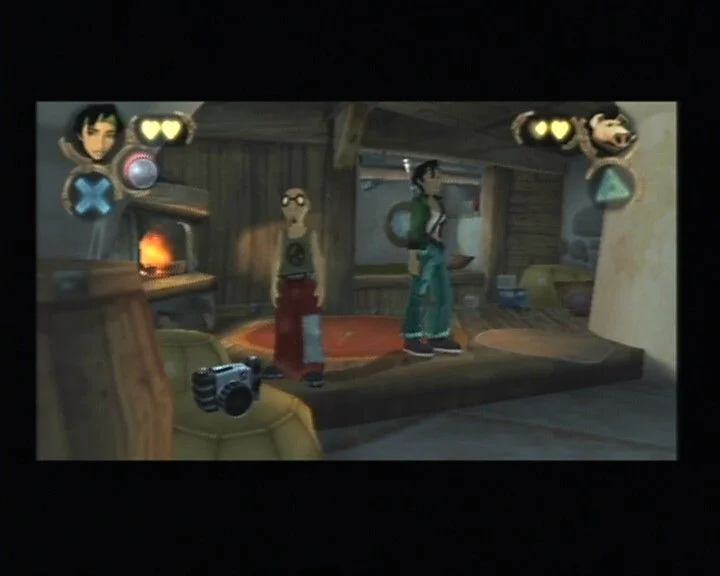
Killzone presents a heavier science-fiction war story and gives its campaign an important structural difference: four playable protagonists with different strengths, equipment and access options. Templar offers a balanced role, Rico emphasizes heavy weapons, Luger specializes in stealth and Hakha can use Helghast equipment and proximity mines. Choosing a character therefore changes more than the appearance of the player character.
That arrangement gives the campaign a squad identity that many PS2 shooters lack. The game remains a military-style first-person shooter, but the different protagonists encourage players to think about how a mission’s tools and routes might change depending on who is selected. Luger’s stealth abilities, Rico’s heavier arsenal and Hakha’s access to enemy technology each create a different emphasis.
Killzone also had major historical multiplayer ambitions. Its PlayStation 2 release included split-screen and online modes, with the original online component supporting large competitive matches. The online servers have since closed, so that feature should be understood as part of the game’s history rather than a modern reason to buy the PS2 version.
Offline, Killzone remains valuable for its science-fiction atmosphere, squad framing and character selection. It ranks sixth because its campaign identity is stronger than its mechanical flexibility. Players who want serious futuristic warfare and multiple protagonist options should choose it over the more playful TimeSplitters games, while players seeking deeper environmental or ability-based systems may prefer the entries above it.
- Best fit: players who want science-fiction warfare and multiple protagonist options.
- Tradeoff: its heavier tone is less playful and less experimental than TimeSplitters or XIII.
- Treat its original online multiplayer as historical documentation unless a current service is independently confirmed.
5. Red Faction
Red Faction earns its place through Geo-Mod, the technology that allows explosives to deform selected walls, floors and ceilings. The important distinction is that this is not unlimited destruction of every surface. Geo-Mod applies to designated environmental elements, but within those limits it can change how the player thinks about cover, obstacles and routes.
That makes the environment part of the tactical vocabulary. A wall can be cover, an obstruction or a target. Blasting through a weak section may expose an enemy position or create a new route, while explosives can make an apparently secure area less reliable. The system is selective, but it remains memorable because it gives the player a direct way to alter certain combat spaces.
The campaign’s Mars mining setting reinforces the idea. Industrial locations, excavation areas and science-fiction facilities create more physical variety than a uniform military corridor. Red Faction also includes drivable vehicles, including sequences that shift the rhythm from confined first-person combat to larger-scale movement.
Red Faction ranks fifth because Geo-Mod is a genuine mechanical identity rather than a decorative feature. It does not offer the same breadth of settings or modes as TimeSplitters, and its destruction system is more limited than the concept may suggest, but it remains the obvious PS2 choice for players who want explosives to affect the shape of a level. The original game should also be kept distinct from Red Faction II, which uses a different campaign and should not be treated as the same entry.
- Best fit: players who want destructible terrain to influence routes and tactics.
- Tradeoff: Geo-Mod applies to selected environmental elements, not every surface.
- Do not treat the original Red Faction and Red Faction II as interchangeable games.
4. TimeSplitters: Future Perfect
TimeSplitters: Future Perfect turns time travel into a campaign design tool. Its thirteen story missions span six time periods, allowing the weapons, environments and situations to change without abandoning the series’ fast first-person shooting. A historical setting can introduce period-specific firearms, while a futuristic chapter can shift the visual language and available equipment again.
The campaign also uses more than one kind of encounter. Alongside direct firefights, Future Perfect includes stealth sections and vehicle-driving sequences. Those transitions give the game a broader range of pacing than a shooter that remains locked into one movement and combat pattern from beginning to end.
Its replay package is equally important. The PlayStation 2 release includes arcade matches, challenges, bots, local multiplayer and a mapmaker. Those systems make Future Perfect useful after the story campaign, especially for players who enjoy constructing or revisiting custom scenarios. The breadth of its features gives it a strong claim even when individual story missions are less surprising than the game’s premise suggests.
Future Perfect ranks below TimeSplitters 2 because its sequel has the cleaner overall balance between campaign imagination and arcade replay. The distinction is not a matter of one game being a simple replacement for the other. Future Perfect is the better choice for players who specifically want vehicle sections, stealth transitions and a more developed mapmaking component in addition to time-hopping action.
- Best fit: players who want time periods, vehicles, stealth and creator tools in one package.
- Tradeoff: its broad menu of ideas can feel less focused than Black’s combat design.
- Keep it distinct from TimeSplitters 2; the two games emphasize different kinds of variety.
3. Black
Black is built around impact. Its weapons are presented as powerful objects, explosive set pieces punctuate firefights and destructible scenery makes combat spaces feel vulnerable rather than completely static. The campaign does not depend on a complicated character system or an elaborate branching story. Its purpose is concentrated firearm spectacle, and it pursues that goal with unusual confidence.
The campaign covers eight areas and uses primary and secondary objectives to give missions more structure than a simple sequence of arenas. Difficulty changes what the player must accomplish. Higher settings require more secondary objectives, and the Black Ops mode unlocked after completing the game on hard asks the player to complete every objective. New weapons are also unlocked after finishing levels.
That progression gives Black stronger replay depth than its short, strictly single-player structure might suggest. The campaign is still more focused than the entries above it, and its objectives do not transform the game into a stealth or role-playing experience. However, its difficulty layers and weapon unlocks create reasons to return, while its environmental destruction adds tactical texture to direct combat.
Black ranks third because it has one of the clearest mechanical identities on the system. It does not offer the setting changes of TimeSplitters or the adaptation and cooperative content of Half-Life, but it knows exactly what it wants to be: a loud, visually forceful first-person shooter built around firearms, explosions and escalating objectives.
- Best fit: players who want loud weapons, explosive encounters and direct action.
- Tradeoff: it offers less stealth, role-playing and mission experimentation than the higher-ranked games.
- Difficulty layers, objectives and weapon unlocks provide more replay structure than a single linear run.
2. Half-Life
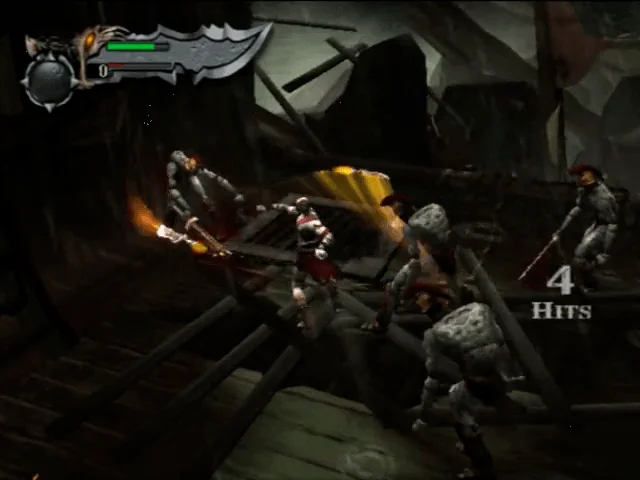
Half-Life is the most substantial console adaptation on this list. The PlayStation 2 release is not identical to the Windows game: it revises weapons, character models, some map geometry and portions of the level structure. It also includes Half-Life: Decay, a cooperative episode designed around two players sharing the screen.
Those differences make the PS2 version worth judging on its own terms. It is not simply the Windows game transferred to a console, and it should not be described as a pixel-perfect substitute for the original PC release. The redesigned elements and added Decay content give the console edition a distinct place in the Half-Life family.
The main campaign remains compelling because it changes the player’s situation repeatedly. Scientific disaster, military pressure, environmental puzzles, scripted events and movement through connected facilities create a sense of progression through unfolding circumstances rather than a sequence of unrelated shooting galleries. The player is regularly asked to observe, move, solve and survive rather than only clear rooms.
Half-Life: Decay adds cooperative missions with a more puzzle-oriented structure and gives the PS2 package an important local multiplayer component. That content does not replace the main campaign, but it improves the game’s replay value and makes the PS2 version unusually substantial. Half-Life ranks second because it combines narrative pacing, adaptation-specific changes and extra cooperative content in a way few console shooters of its period attempted.
- Best fit: players who want a story-led campaign with changing situations and local cooperative content.
- Tradeoff: the PS2 version differs meaningfully from the Windows release.
- Half-Life: Decay is part of the console package and should be included when judging its replay depth.
1. TimeSplitters 2
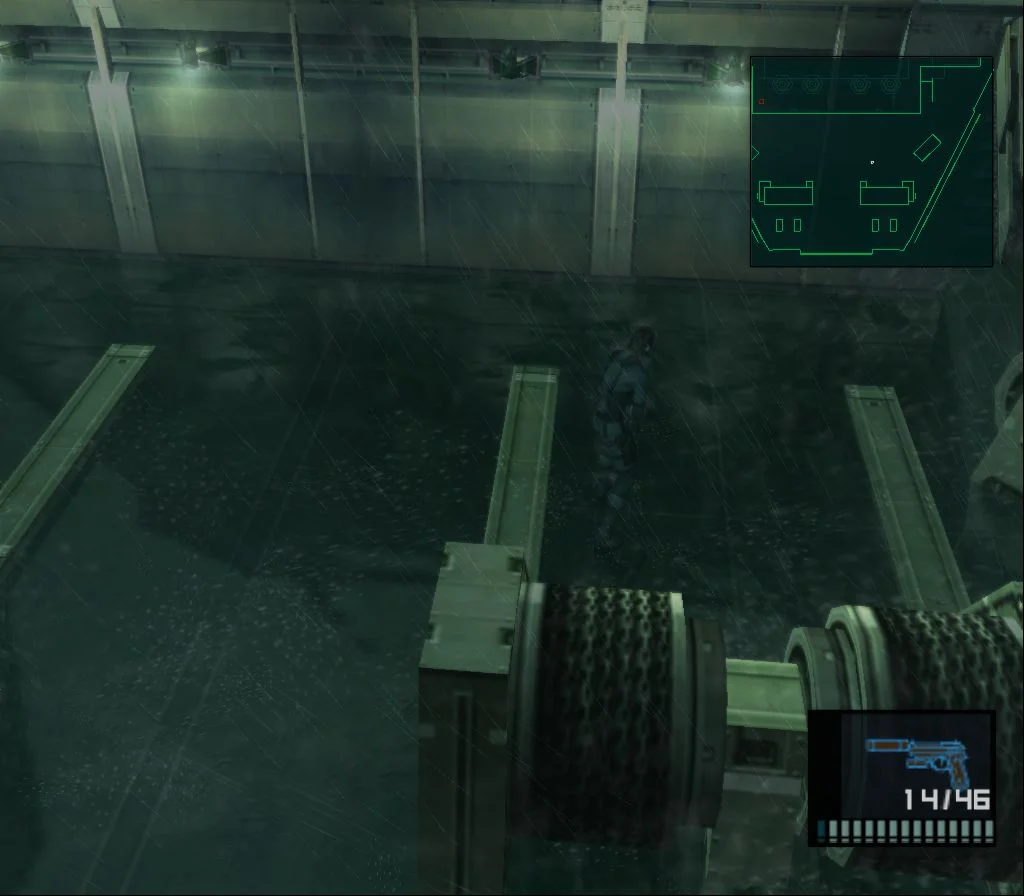
TimeSplitters 2 is the strongest overall PlayStation 2 first-person shooter because variety is built into its central design. The story campaign moves through ten historical and futuristic time periods, from settings such as the Wild West to a futuristic space station. That gives each section a reason to change its weapons, environments and visual language while preserving the fast shooting rhythm that holds the game together.
The campaign also changes its demands across difficulty levels. Higher settings can add more involved objectives and open additional areas, so the game is not merely asking the player to repeat the same route with stronger enemies. Two players can also tackle the Story mode cooperatively, giving the campaign a local replay path beyond solo completion.
TimeSplitters 2’s challenge and arcade modes make its broader package even stronger. Challenge events use time and skill-based objectives, while medals help unlock additional options, levels and playable characters. Arcade modes support customizable matches with bots and multiple disciplines, including deathmatch, team-based formats and unusual rule sets such as Virus, Thief and Monkey Assistant. With a multitap, the PS2 version supports larger local sessions than the standard two-player split-screen setup.
That combination is why TimeSplitters 2 ranks first. It does not rely on one spectacle mechanic, one visual trick or one adaptation bonus. Instead, it repeatedly refreshes the experience through time periods, weapon changes, objective variation, cooperative play, challenges and arcade rules. It represents the PlayStation 2’s playful and experimental side better than any other first-person shooter on this list.
Choose TimeSplitters 2 when you want one PS2 shooter that can support both a memorable campaign and repeated local play. Its comic tone and arcade structure will not suit players seeking military realism, but for campaign variety and offline replay depth, it is the most complete package here.
- Best fit: players who want fast shooting, time-hopping settings and substantial replay options.
- Tradeoff: its comic tone and arcade structure may not suit players seeking military realism.
- Judge its depth through the campaign, cooperative play, challenges and arcade modes together.
The best choice depends on which kind of variety matters most. Half-Life is the pick for a carefully structured campaign and a substantial console adaptation; Red Faction is the one to choose when terrain manipulation sounds more exciting than another locked corridor. Black offers concentrated firearm spectacle, while Project: Snowblind adds cybernetic abilities to the shooter formula. XIII, Killzone and Cold Winter each provide a distinct tone and mission framework rather than simply repeating conventional military design.
TimeSplitters 2 and Future Perfect are the broadest packages, but they emphasize different kinds of replay. TimeSplitters 2 has the stronger overall blend of time-period variety, cooperative play, challenges and arcade energy, while Future Perfect adds a more developed mix of stealth, vehicle sequences and mapmaking. Unreal Tournament is the outlier for players who care more about match rules, bots and arena control than story.
Taken together, these ten games show why the PS2 first-person-shooter library deserves to be judged by mechanical identity rather than by the assumption that every console shooter was the same corridor campaign. Some games change the terrain, some change the rules, some change the setting and some change the way the player approaches an objective. That variety is the reason the genre remains one of the console’s richest underexplored categories.