The Sega Dreamcast’s RPG catalog is compact enough to overlook and strange enough to reward a closer look. Alongside familiar Japanese-style adventures are online role-playing, randomized dungeon experiments, action games with equipment systems and hybrids that barely resemble a traditional party-based RPG. That variety matters more here than popularity alone.
This ranking considers four criteria: how flexible or distinctive each game’s progression feels, how clearly its combat stands apart, how much its world rewards exploration and how strongly it expresses an idea associated with the Dreamcast library. Later ports do not disqualify a game, but the ranking focuses on the Dreamcast release and its place in the system’s software history. Phantasy Star Online Ver. 2 is not counted separately from the original, and regional limitations are identified where they affect a recommendation.
The list also uses RPG in a broad but defensible sense. Every selection has documented role-playing elements, while several combine them with action, simulation, puzzle-solving or dungeon-crawling systems. That makes the final order less about declaring one universal winner and more about showing the different directions Dreamcast developers took when building progression around exploration and combat.
10. Seventh Cross: Evolution
Seventh Cross: Evolution is the list’s most difficult game to classify neatly. It combines role-playing with life simulation, placing the player in control of an organism that changes according to its environment, diet and combat behavior. Instead of simply choosing a job and assigning familiar equipment, the game makes the body itself part of character development. That premise gives it a stronger identity than many conventional dungeon adventures.
Its real-time structure and evolutionary systems make exploration feel like an investigation into what the player can become. The player’s choices about what to eat and how to hunt influence the organism’s development, so progression is tied to behavior rather than only experience points or equipment upgrades. That is an unusually direct expression of the game’s central idea.
The tradeoff is accessibility. Seventh Cross is not the obvious starting point for someone seeking a polished party RPG, and its hybrid design can feel more experimental than generous. It earns the final place because it shows how willing Dreamcast developers were to treat role-playing as a system of transformation rather than a fixed heroic progression.
Edition note: Seventh Cross: Evolution launched in Japan in December 1998 and received a United States release in 1999. It belongs in a broad Dreamcast RPG survey, but readers should approach it as an RPG-simulation hybrid rather than a standard turn-based adventure.
- Best for players who enjoy unusual progression systems and simulation elements.
- Choose it for concept and experimentation, not for a conventional party-building structure.
9. Time Stalkers
Time Stalkers turns role-playing into a sequence of compact dungeon expeditions. Its combat is turn-based, but the appeal comes from the combination of recruitable monsters, equipment decisions and a structure that resets character levels between dungeons. Characters retain items and learned skills, yet return to level one for the next expedition. That reset gives the game a different rhythm from a normal adventure: progress is not simply a march toward increasingly powerful zones, and the player must think about what carries forward and what must be rebuilt.
The game’s combat also asks the player to pay attention to positioning. Rather than treating battles as completely abstract menu exchanges, Time Stalkers ties attacks and monster capture to where characters stand. The result is still a traditional turn-based system, but one with a more spatial character than its presentation initially suggests.
The design is deliberately risky. Players who want a continuous world with carefully staged towns and story locations may find the dungeon-focused format restrictive. Those who enjoy adapting to changing layouts and assembling a useful party from uncertain resources will find a more unusual experience. It is less about delivering a grand fantasy journey than testing whether a small progression loop can stay interesting when the rules keep shifting.
Time Stalkers is also valuable historically because it sits between a traditional console RPG and a randomized dungeon crawler. Its quirks are not side features; they define the game’s identity and explain why it remains difficult to replace with a more conventional Dreamcast recommendation.
- Best for players who like dungeon runs, monster recruitment and unstable progression.
- Expect an experiment in structure rather than a straightforward story-led quest.
8. Evolution 2: Far Off Promise
Evolution 2: Far Off Promise builds on the party and dungeon-centered foundation of its predecessor. It continues the series’ emphasis on turn-based battles, randomly generated dungeons, equipment upgrades and Cy-Frame techniques while expanding the surrounding adventure with new archaeological quests. The result is a more developed version of a compact role-playing formula rather than a complete reinvention.
Its strongest quality is continuity. The same central party returns, and the story takes place after the first game, giving the sequel the feeling of a second chapter rather than an unrelated follow-up. The dungeon structure keeps encounters and routes less predictable than a fully authored corridor, while artifacts and equipment provide reasons to keep exploring.
That balance makes it a useful choice for players who want traditional character development without committing to one of the Dreamcast’s enormous, globe-spanning adventures. The Cy-Frame system also gives progression a mechanical focus: upgrades are not merely larger numbers, since they can improve characters and teach new techniques.
The limitation is scope. Evolution 2 remains centered on dungeon excursions, so it does not offer the same breadth of world discovery as Skies of Arcadia or the same combat specificity as Grandia II. Its position reflects how well it extends a focused design, not an attempt to pretend it is the platform’s largest RPG.
The Dreamcast received Japanese, North American and European releases. The later Windows version should not be treated as interchangeable with the original console edition when discussing the system’s RPG catalog.
- Best for players who want a party RPG built around repeated dungeon exploration.
- The sequel works as a continuation of the first Evolution’s ideas rather than an unrelated new system.
7. Silver
Silver began on Windows, but its Dreamcast version deserves attention because it adapts the adventure to direct character control. That change separates it from the point-and-click tradition associated with the computer release and gives the console edition a more immediate action-oriented feel. Movement, combat and exploration become part of the same navigational experience instead of being divided between cursor commands and scene interaction.
The Dreamcast version also limits the player to controlling one character at a time, unlike the computer version’s more flexible party control. That is an important edition difference because it changes how the game feels in motion. Silver remains an RPG with fantasy progression, equipment and battles, but the console release presents those systems through a more direct adventure-game interface.
The game presents a cinematic fantasy journey with equipment, enemies and character progression, but its most important Dreamcast idea is the control conversion. It demonstrates how a console port can change the relationship between player and world rather than merely reproduce an existing interface. The result is not a traditional Japanese-style RPG, yet its fantasy development systems and adventure structure make it a legitimate part of the system’s broader role-playing history.
Silver ranks below the more mechanically deep entries because its progression is not as flexible and its identity is partly inherited from another platform. It remains an appealing option for players who want a story-driven fantasy game with direct control and a distinctly late-1990s computer-to-console lineage.
- Best for players interested in fantasy RPGs with direct action control.
- Remember that the Dreamcast version is an adaptation, not the original computer design in unchanged form.

6. EGG: Elemental Gimmick Gear
EGG: Elemental Gimmick Gear is one of the Dreamcast’s clearest action-RPG hybrids. Its science-fiction setting, puzzle-solving and exploration are as important as its combat. The player moves through a post-apocalyptic world where progression depends on understanding spaces, overcoming environmental obstacles and improving the protagonist’s abilities. That combination makes it feel closer to an exploratory action adventure than to a menu-driven party RPG.
Combat is immediate, but the game’s lasting distinction comes from how puzzles and movement shape the journey. The player gains attacks and elemental abilities that serve several purposes: they can damage enemies, reach secrets and solve environmental problems. The lack of a conventional experience-level system further separates EGG from standard party RPGs, since improvement comes through capsules, energy upgrades and newly acquired abilities.
The setting gives those systems a memorable context. Ruins and machinery are not merely decorative backdrops but part of the challenge, and the game’s mostly two-dimensional presentation helps it stand apart from the Dreamcast’s more common fully 3D RPGs. Players who want constant battles or a large cast may find the experience narrower than a conventional Dreamcast RPG, while players who enjoy uncovering routes and solving spatial problems get a more distinctive adventure.
EGG earns this position because it expands the definition of what a Dreamcast RPG can be without abandoning role-playing progression. It is a strong choice for someone who has already played the system’s famous turn-based games and wants exploration to carry more of the experience. The game received a Japanese release in 1999 and a North American Dreamcast release in January 2000.
- Best for players who prefer action combat, puzzles and environmental discovery.
- Do not approach it expecting a traditional party, town and battle-menu structure.
5. Evolution: The World of Sacred Device
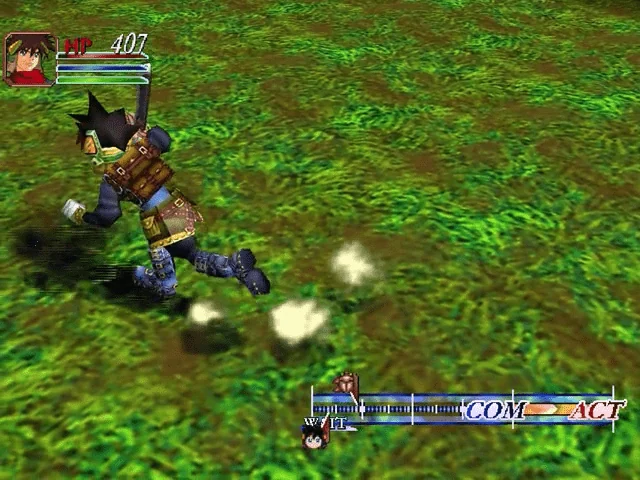
The first Evolution establishes the series’ compact dungeon-RPG identity. Its turn-based battles are tied to equipment and Cy-Frame abilities, giving customization a more specific purpose than simply raising statistics. The party’s tools influence how encounters are approached, while randomly generated dungeons make exploration less predictable than a fully scripted route.
What makes Evolution valuable is its balance between character-driven adventure and system-focused dungeon crawling. It offers a recognizable role-playing framework without trying to compete with the scale of Skies of Arcadia. The player’s attention stays on party composition, equipment choices and the next dangerous section of a dungeon. That concentration gives the game a clear personality, even when its scope feels modest.
The original also benefits from being easy to understand as a single design statement. Its town functions as a staging area, while the dungeons provide the main loop of exploration, combat, treasure and progression. Cy-Frames add a layer of customization that connects the party’s equipment to special attacks, so the system has more texture than a simple sequence of battles and level-ups.
The original ranks above its sequel because it is the sharper introduction to the concept. Its design is easier to read as a focused experiment: a compact character adventure organized around repeated dungeon expeditions and customizable abilities. Players looking for a concentrated RPG loop may prefer it to a longer game that offers more spectacle but less mechanical focus.
- Best for players who enjoy equipment-based abilities and focused dungeon progression.
- Start here if you want to understand the design foundation that Evolution 2 expands.
4. Record of Lodoss War: Advent of Cardice
Record of Lodoss War: Advent of Cardice brings a three-quarter overhead action-RPG structure to the Dreamcast. Instead of waiting through a traditional turn order, the player fights through encounters directly, gathers equipment and improves a character within a dungeon-crawling framework. Its combat identity gives the system’s RPG catalog a useful change of pace, especially beside the many turn-based adventures associated with the platform.
The game’s appeal lies in its focused loop of movement, fighting, collecting and enhancement. Its fantasy setting provides recognizable genre scenery, but the overhead presentation and action emphasis keep it from feeling like another conventional Japanese console RPG. Players who enjoy action-oriented dungeon games will find a more immediate experience; players who prefer carefully planned turns and extensive party tactics may find it comparatively narrow.
Its equipment system gives the progression more depth than a basic hack-and-slash structure. Weapons and armor can be strengthened with inscriptions, and the player must decide how to spend resources on improving gear. That makes exploration valuable for more than experience points: dungeons become places to find materials, equipment and the tools needed to shape the character’s build.
Its position reflects both strengths and limits. Record of Lodoss War is mechanically distinct and historically important to the Dreamcast’s action-RPG range, but it does not offer the world-scale discovery or party complexity of the games above it. It is the right choice when combat immediacy and equipment customization matter more than a sprawling narrative journey.
- Best for players who want overhead action combat and equipment-driven progression.
- Choose it over a turn-based RPG when direct movement and fighting are the priority.
3. Phantasy Star Online
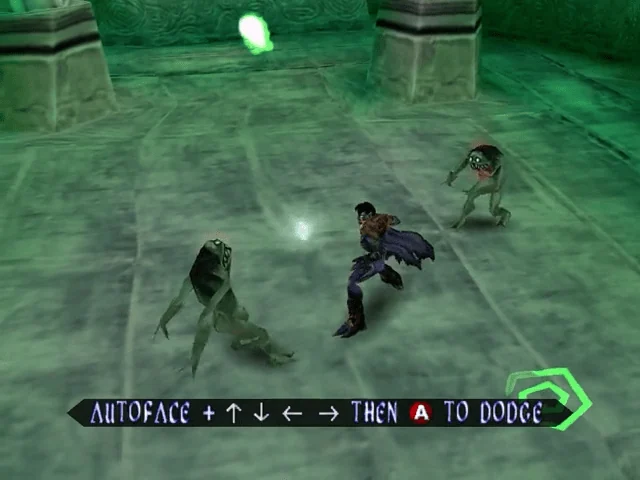
Phantasy Star Online changed the expectations surrounding console role-playing by combining character development with online multiplayer and real-time combat. Character creation, equipment, dungeon runs and cooperative play give it a different social shape from the Dreamcast’s story-heavy RPGs. Even when played offline, its combat is defined by positioning, timing and direct control rather than selecting every action from a traditional battle menu.
Its greatest Dreamcast-specific idea is the way it makes an online RPG feel like a console game. The interface, compact missions and cooperative structure are designed around shared sessions and repeatable expeditions rather than a purely solitary campaign. Character creation also supports that structure by letting players build a role and bring it into different encounters.
The original Dreamcast release includes offline play, so the game’s value does not depend entirely on its historical online service. Its mission-based progression and real-time battles remain central to its identity. At the same time, the online launch is too important to ignore: Phantasy Star Online helped establish a console-friendly model for networked role-playing at a time when online console design was still developing.
Phantasy Star Online ranks below the two traditional standouts because its story and exploration are more mission-based. It ranks above them in one crucial area, however: few Dreamcast RPGs better capture the feeling of a console entering a networked future. Ver. 2 is treated as a separate edition and not as another game in this ranking.
- Best for players who value real-time combat, character creation and cooperative design.
- Treat Phantasy Star Online Ver. 2 as an edition decision, not a separate top-ten choice.
2. Grandia II
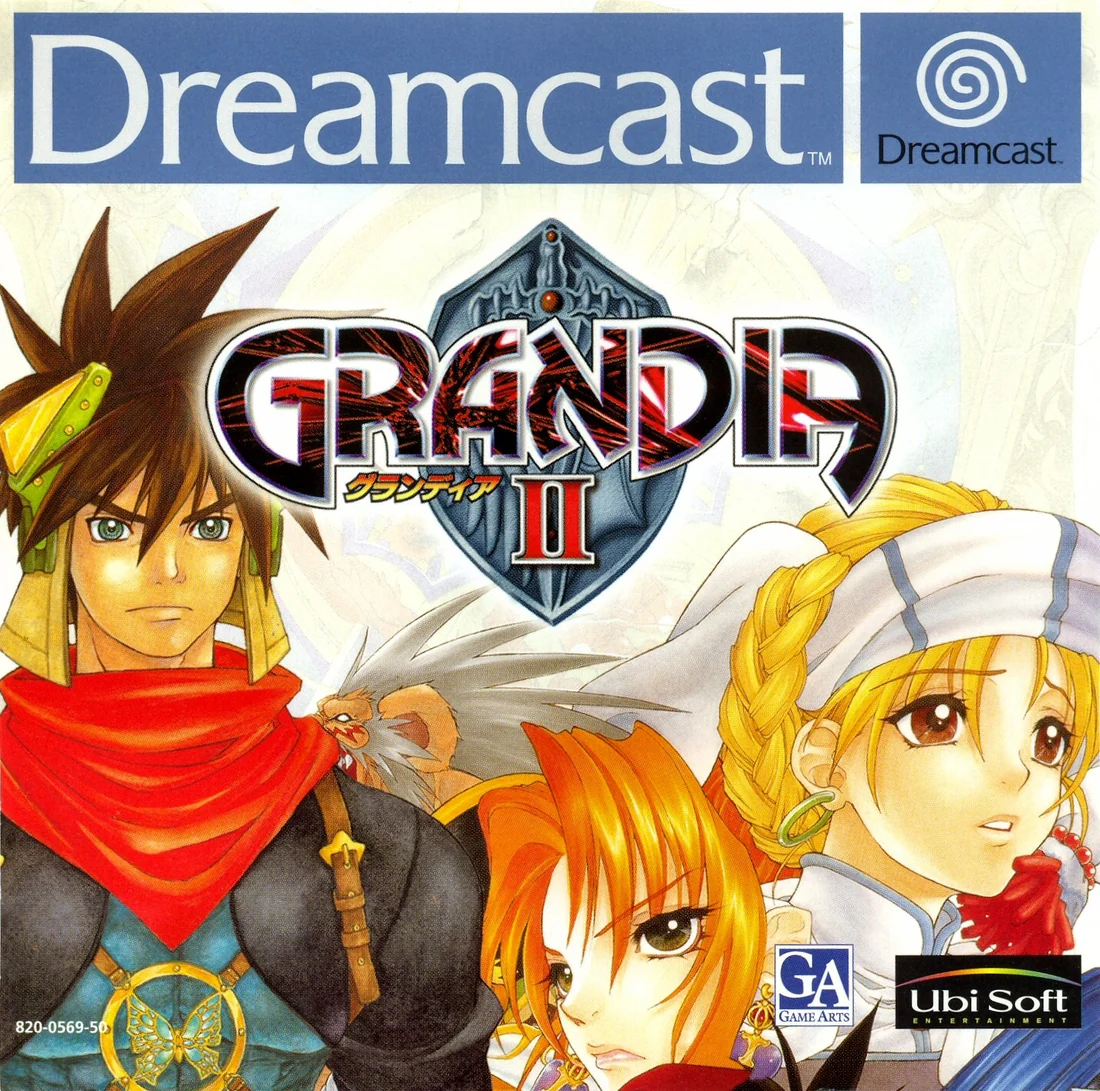
Grandia II is the Dreamcast’s clearest showcase for combat timing and party tactics. Its turn-based system is not simply a list of commands processed in order; actions occupy positions in a visible sequence, allowing attacks, magic and interruptions to shape the flow of battle. That creates decisions about when to act, when to delay and when to disrupt an enemy rather than relying only on level advantages.
The game’s enemies are visible in the field, and approaching them from different positions can affect whether the party gains the initiative or begins at a disadvantage. During battles, critical attacks and certain abilities can interrupt enemy actions. The result is a system that rewards reading the action bar and planning around the timing of several combatants at once.
Exploration is more structured than Skies of Arcadia’s, but its compact routes and party progression support the combat design. Characters feel differentiated by their abilities, and battles encourage the player to understand how those abilities interact. The result is a focused RPG that makes each encounter a tactical problem without becoming a pure strategy game.
Grandia II takes second place because it offers the strongest conventional combat identity in the lineup. It may be the better first Dreamcast RPG for players who care most about party tactics and battle systems. It loses the top spot only because the next game turns exploration itself into a defining fantasy rather than treating it mainly as the space between battles.
The Dreamcast version is the original console release. Later Windows and PlayStation 2 editions exist, but their presence should not blur the distinct role of the Dreamcast version in the system’s RPG history.
- Best for players who want timing-based turn battles and differentiated party roles.
- Pick it before Skies of Arcadia if combat decisions matter more than world-scale travel.
1. Skies of Arcadia
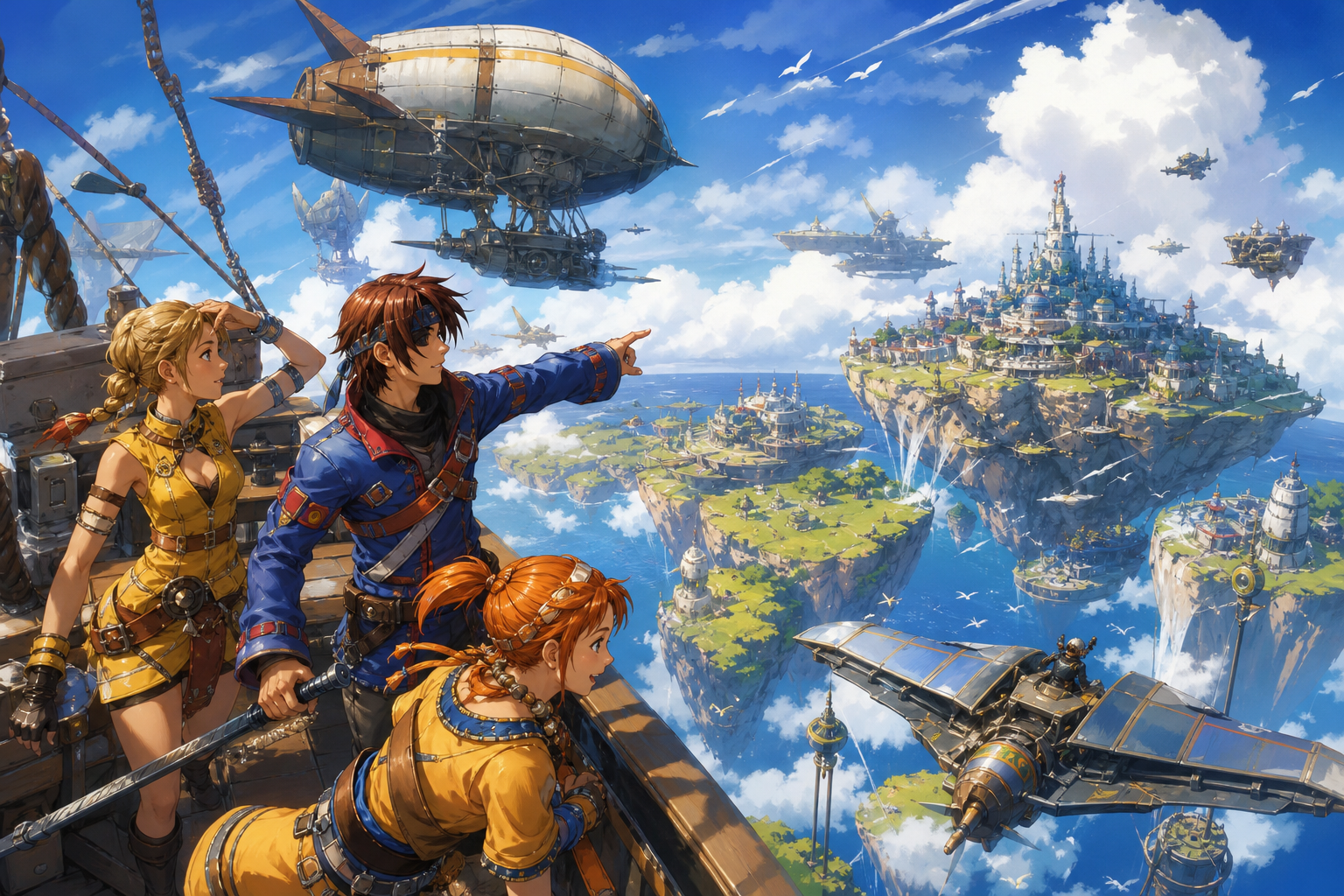
Skies of Arcadia earns the top position by making exploration the emotional center of its RPG design. Its turn-based battles, party development and weapon choices provide a sturdy foundation, but the game’s defining idea is the sense of traveling through a world built for discovery. Airship travel, new locations and the pursuit of places beyond the obvious route give the adventure a broader horizon than most Dreamcast role-playing games.
Arcadia’s geography makes exploration mechanically meaningful. Continents are replaced by floating islands, sky rifts, reefs and other hazards, while airship upgrades open new regions and optional discoveries. The world is not simply a series of story checkpoints. It encourages the player to look away from the critical path and search for landmarks, hidden places and additional rewards.
The combat is varied enough to support that journey. Characters bring different abilities, while weapon elements, spirit points and ship encounters add layers beyond ordinary ground battles. Yet the game does not bury exploration under systems. Progress feels connected to seeing more of the world, meeting new communities and finding reasons to leave the familiar route behind. That balance makes it accessible to traditional RPG players while preserving a strong sense of adventure.
Skies of Arcadia is not the automatic choice for every player. Grandia II offers more immediate combat sophistication, and Phantasy Star Online better represents networked console role-playing. But for the broadest combination of world discovery, party progression, combat variety and Dreamcast identity, Skies of Arcadia is the most complete choice on this list. Its two-disc Dreamcast release also reflects the scale of the journey the hardware was being asked to deliver.
- Best for players who want a traditional RPG built around travel, discovery and party adventure.
- Choose Grandia II instead if combat timing is your primary concern.
The Dreamcast’s RPG strength is not quantity. It is contrast. Skies of Arcadia and Grandia II represent two different versions of the traditional console adventure, while Phantasy Star Online moves role-playing into cooperative real-time space. Record of Lodoss War, EGG, Silver and the Evolution games fill in action, puzzle and dungeon-focused approaches, and Seventh Cross shows how far the category could stretch.
That makes the list useful as a discovery guide rather than a popularity ladder. Start with Skies of Arcadia for the broadest adventure, Grandia II for battle design or Phantasy Star Online for its networked history. Then move outward into the stranger corners, where the Dreamcast’s limited RPG library becomes one of its most revealing software stories.