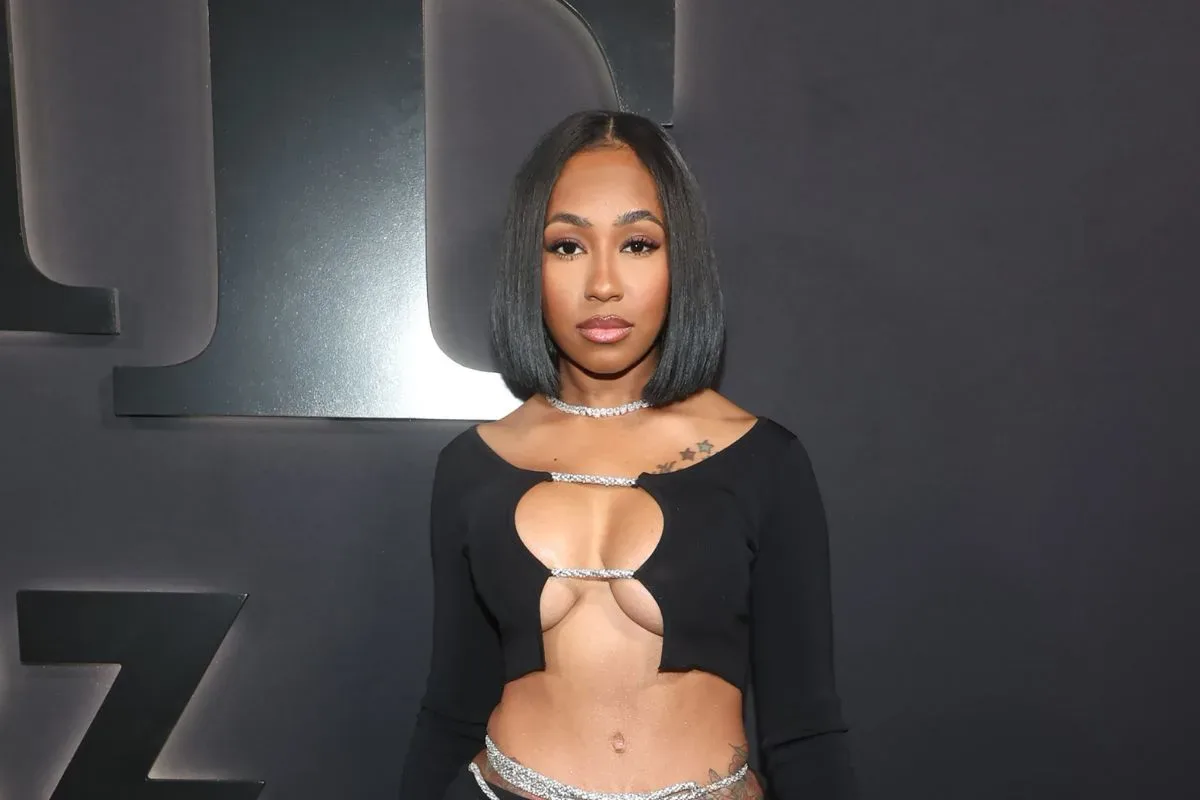

Yung Miami is celebrating a major solo-career milestone after “Spend Dat” landed a nomination for Best Rap Song at the Grammy Awards. The recognition puts the song in a competitive field alongside records associated with Don Toliver, Cardi B, Doechii and SZA, and T.I.
One important distinction: “Spend Dat” has been nominated, not declared the winner. That does not lessen the significance of the achievement. A nomination in the songwriting-focused Best Rap Song category formally recognizes the writers behind a track, and the credited team for “Spend Dat” includes Caresha Romeka Brownlee, Akil King, Maurice Simmonds, and Anthony Germaine White.
For Yung Miami, the news is also a pointed answer to the skepticism that followed her move into solo work. In a social-media video shared after the nominations were revealed, she addressed people who had predicted a much smaller first-week result for her album Watch Dis!. She said some doubters forecast 2,000 copies, while she said the project ultimately sold 10,000 in its opening week.
‘Spend Dat’ becomes a centerpiece of the solo push
“Spend Dat” arrived as the first single from Watch Dis!, Yung Miami’s debut album. She described the record as having gone “crazy” and said it had reached platinum status, while thanking the fanbase that supported it through a period she characterized as a broad “hate train.”
The track’s momentum was visible beyond the artist’s own social posts. It earned an ovation at the BET Awards during the summer and developed the kind of high-profile cultural presence often attached to a breakout seasonal rap record. Now, the Grammy nomination gives that run another layer: not simply visibility, but awards recognition for the people who wrote the song.
The distinction matters because Grammy categories can reward different aspects of a recording. Best Rap Song is centered on composition and songwriting. In practice, the award goes to the songwriters credited on the nominated work, rather than functioning solely as an artist-performance honor. That is why the nomination list names Brownlee and the song’s co-writers.
For fans following the solo arc, that credit is especially meaningful. Yung Miami’s public identity has long included her work with City Girls, but “Spend Dat” represents a separate test: whether a single released under her own name could become a sustained hit and command attention in a crowded rap landscape. The nomination does not settle every debate around an artist’s career, but it is a concrete marker that the song connected on a scale large enough to reach the awards conversation.
A celebratory response with a clear target
Yung Miami did not present the nomination as a quiet industry checkpoint. Her reaction was framed as a rebuttal to critics who, in her view, underestimated both the size of her audience and the strength of her album. “It’s like me and five of my fans — no fanbase,” she said, referring sarcastically to the dismissive narrative surrounding her. She then celebrated “Spend Dat” as a platinum single and called Watch Dis! her first album that is good “bottom to top.”
Related coverage includes Yung Miami Celebrates ‘Spend Dat’ Grammy Nomination After Solo Doubts.
That kind of response is part victory lap and part clarification of the stakes behind a solo debut. Artists moving from a group context to a solo setting are often judged differently: listeners may expect the new work to prove an individual voice, build a distinct audience, and generate commercial results without the familiar group branding. The supplied facts do not show every factor behind Yung Miami’s release strategy or the broader reception to the album, but her own comments make clear that she viewed the criticism as personal and persistent.
Her stated 10,000 first-week figure therefore becomes central to the way she is telling the story. It is not merely a sales number; it is evidence she used to push back against the idea that there was no audience for her standalone work. Likewise, the Best Rap Song nomination gives “Spend Dat” an awards-season credential that can stand apart from online commentary.
That does not mean a nomination predicts the eventual winner. Awards races are decided by voters, and the category contains established names as well as artists with their own strong cases. But a nomination is a meaningful achievement on its own, particularly for a first single from a debut solo album.
The Best Rap Song field
The nominees reflect several distinct corners of contemporary rap. “Spend Dat” is up against “E85” by Don Toliver, “ErrTime” by Cardi B, “Girl, Get Up” by Doechii featuring SZA, and “Let ’Em Know” by T.I.
- “E85” — Don Toliver: credited songwriters are Derek Anderson, Aaron Paryce Cheung, Jaasu Mallory, Jacques Webster, and Caleb Toliver.
- “ErrTime” — Cardi B: credited songwriters are Matthew Allen, Javaan Durrell Anderson, Belcalis Almanzar, Ronnie Jackson, James D. Steed, and Jordan Thorpe.
- “Girl, Get Up” — Doechii featuring SZA: credited songwriters are Darius Scott, Jaylah Hickmon, Jahlil Gunter, Solána Rowe, Anthony “Moosa” Tiffith Jr., and Anthony “Top Dawg” Tiffith.
- “Let ’Em Know” — T.I.: credited songwriters are T.I. and Pharrell Williams.
- “Spend Dat” — Yung Miami: credited songwriters are Caresha Romeka Brownlee, Akil King, Maurice Simmonds, and Anthony Germaine White.
The breadth of those credits is a reminder that a rap song is often the product of a creative team. The performer may be the public face of a record, but songwriters can include artists, producers, and collaborators whose roles are recognized through formal credits. In this case, Yung Miami is not only the recording artist connected to “Spend Dat”; she is also among the songwriters named for the nomination.
Why the nomination carries weight
The story around “Spend Dat” is not just that a popular song earned a major nod. It is that the nod arrived amid public doubts about whether Yung Miami could translate her established profile into a solo breakthrough. Her reaction puts the Grammy recognition in that context: the achievement feels like an answer to a prediction that the project would underperform and that her fan support was limited.
There is also an important difference between a personal claim and the official result that is still to come. Yung Miami can rightly celebrate the nomination, the song’s reported platinum status, and the response she says the album received. The Best Rap Song trophy, however, remains undecided. Keeping those two facts separate is essential: a nomination is a confirmed honor; a win would be a future outcome.
For now, “Spend Dat” has secured a place in a five-song field and added a prominent awards moment to Yung Miami’s solo campaign. Whether it wins or not, the nomination gives a clear, factual counterpoint to the idea that the record failed to find an audience. It also places Yung Miami among the credited writers competing in one of rap’s most visible Grammy categories.
Her story sits within a busy stretch for rap releases and recognition; elsewhere, Lil Baby’s recent chart run shows how quickly commercial momentum and public conversation can shift. Yung Miami’s response, however, is refreshingly direct: she sees “Spend Dat” and Watch Dis! as proof that the doubters got the scale of her solo moment wrong.