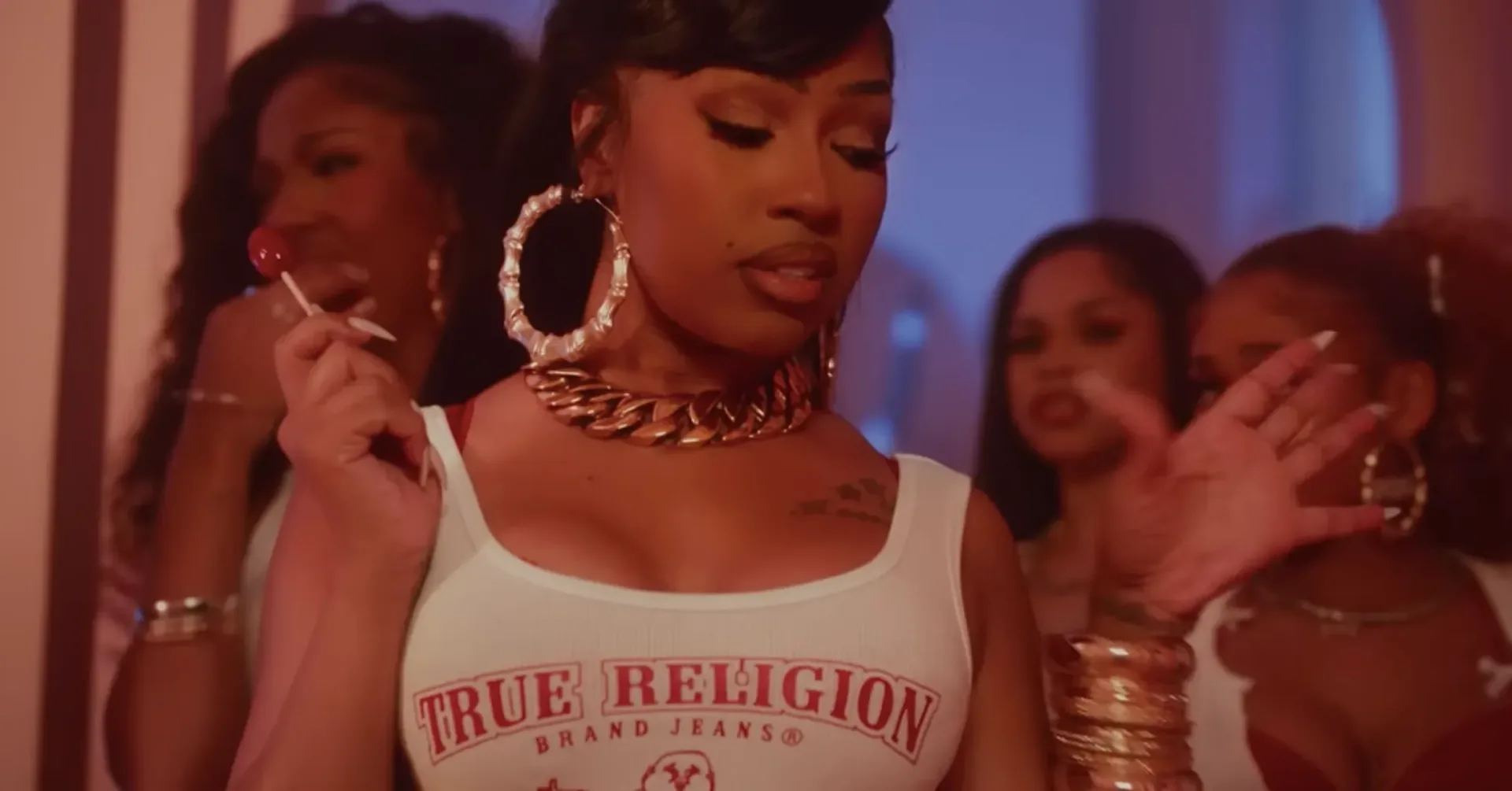
Yung Miami is facing a wave of criticism after a short X post on November 4 that contained two birthday-cake emojis and two white-heart emojis. The message did not name anyone, include a caption, or explain what it was celebrating. But the timing led many users to connect it to Diddy, whose 57th birthday fell on the same date.
That connection is an interpretation rather than a confirmed fact. An emoji-only post can be intentionally vague, can refer to more than one event, or can simply mark a personal moment without providing enough context for outsiders to identify it. Still, the overlap with Diddy’s birthday was enough for commenters to settle on one explanation, and the reply-driven response quickly became more about what the public believed the post meant than what it explicitly said.
The reaction also arrives amid continued public attention on Yung Miami’s past association with Diddy. She has largely kept quiet about the broader situation. In an earlier radio interview, she did not confirm or deny the current status of their relationship, and described their arrangement as not being a conventional relationship: they did their own things and spent time together when it worked for both of them.
A four-emoji post leaves room for competing readings
There are two key details that should not be flattened into one claim. First, November 4 was Diddy’s birthday; he turned 57 while at FCI Allenwood. Second, Yung Miami posted birthday imagery that day. Those facts explain why people made the association. They do not, on their own, prove who the emojis were intended for.
Another plausible reading is tied to Yung Miami’s own career. Her debut solo album Watch Dis! had just reached the Billboard 200, providing a separate reason for a celebratory post. A cake emoji is routinely used online for birthdays, but it can also signal a milestone or a general celebration. White hearts can likewise be read as affection, support, appreciation, or simply part of a chosen visual style. Without text, the symbols do not settle the question.
That uncertainty did not slow down the conversation. Many users in the replies interpreted the post as a birthday greeting for Diddy and objected strongly to that perceived message. Some characterized the possible show of support as insensitive. Others invoked JT, framing their comments around who they believe should receive public support within the City Girls orbit. The visible dispute is therefore not merely about emojis; it is a dispute over association, public signaling, and who is expected to address difficult context directly.
Why the missing name matters
In celebrity discourse, a post’s timing can carry almost as much weight as its text. A message published on a recognizable birthday may be treated as self-explanatory by an audience that already knows the people involved. But timing is still context, not confirmation. The distinction matters most when an audience response assigns a specific intention to an ambiguous message.
Yung Miami’s post gives readers no direct identifier: no name, tag, photograph, lyric, or follow-up explanation. Calling it definitively a message to Diddy would go beyond the available evidence. Conversely, saying that the timing had no obvious role in the reaction would miss the point. The date is precisely why the post became a flashpoint.
That is the practical difficulty of cryptic social posts. Ambiguity can preserve privacy, create intrigue, or allow a creator to speak broadly rather than personally. It can also invite the audience to fill in blanks with the most prominent ongoing story around the poster. Once that happens, replies can become a referendum on an inferred statement rather than the literal content of the post.
What the engagement figures do—and do not—show
The post had roughly 400 likes and more than 500 reposts at the time the reaction was being discussed. That combination was presented as a notably unfavorable ratio for the account’s audience on X, with negative comments helping define the conversation around the message.
Engagement ratios are imperfect signals. A repost does not automatically mean endorsement; users may share a post to criticize it, add commentary, or call attention to it. Likes are also not a full measure of sentiment, especially when replies are contentious. What the figures do indicate is that the post traveled beyond a quiet, routine interaction and became a subject of broader public discussion. They cannot determine the original intent behind the emojis.
This is why the comment section deserves to be described carefully. It documents that a number of people were angry and that a Diddy interpretation became dominant in the immediate reaction. It does not turn that interpretation into proof. Social platforms are highly effective at amplifying consensus within a vocal group, even when the underlying post is too sparse to provide a definitive answer.
The relationship question remains unanswered
The renewed speculation hinges partly on Yung Miami’s earlier comments about her connection with Diddy. Her description suggested an arrangement outside the usual labels audiences may expect when they hear two well-known people discussed as a pair. That matters because public reactions often rely on a simple assumption: if two people were linked before, a birthday-adjacent post must be about that relationship now.
Her previous explanation pushes against that certainty. Saying two people were not truly “together” is not a comprehensive update on every aspect of their relationship, nor does it identify the recipient of a later emoji post. It simply establishes that Yung Miami has not presented the situation in the straightforward terms many online observers apply to it.
There has been no public response from Yung Miami addressing the backlash tied to the November 4 post. Until she adds context, both the birthday interpretation and the album-celebration possibility remain readings of an intentionally minimal message rather than verified explanations.
A career milestone competing with a controversy-driven narrative
The discussion has also risked eclipsing a concrete professional development: Watch Dis!, Yung Miami’s debut solo album, landed on the Billboard 200. Unlike the inferred subject of the emoji post, that chart placement is a clear event in her career. It provides real context for why fans might have expected her social activity to be celebratory around that period.
The contrast illustrates how quickly an ambiguous post can steer attention away from an artist’s work and toward their perceived personal alliances. A chart appearance is measurable and specific. A few emojis, posted without a name, offer almost no comparable clarity. Yet the latter can command more attention when it lands near a newsworthy date and fits an existing public narrative.
For audiences, the useful distinction is between observation and conclusion. The observation is simple: Yung Miami posted cakes and hearts on Diddy’s birthday, and commenters widely connected the two. The conclusion—that she was publicly celebrating him—has not been established by the post itself. Treating those as separate ideas leaves room for the available facts, including the album milestone, rather than presenting online certainty as evidence.
The episode is also a reminder that a short social message can carry consequences far beyond its literal content. Whether Yung Miami meant to mark a birthday, acknowledge a career moment, or say something entirely different, the surrounding context ensured that the post would be read through an already charged lens. For now, the public reaction is clear; the intended meaning is not.
For more music-industry conversation, see Fabolous’s call for a bar-heavy Drake project.