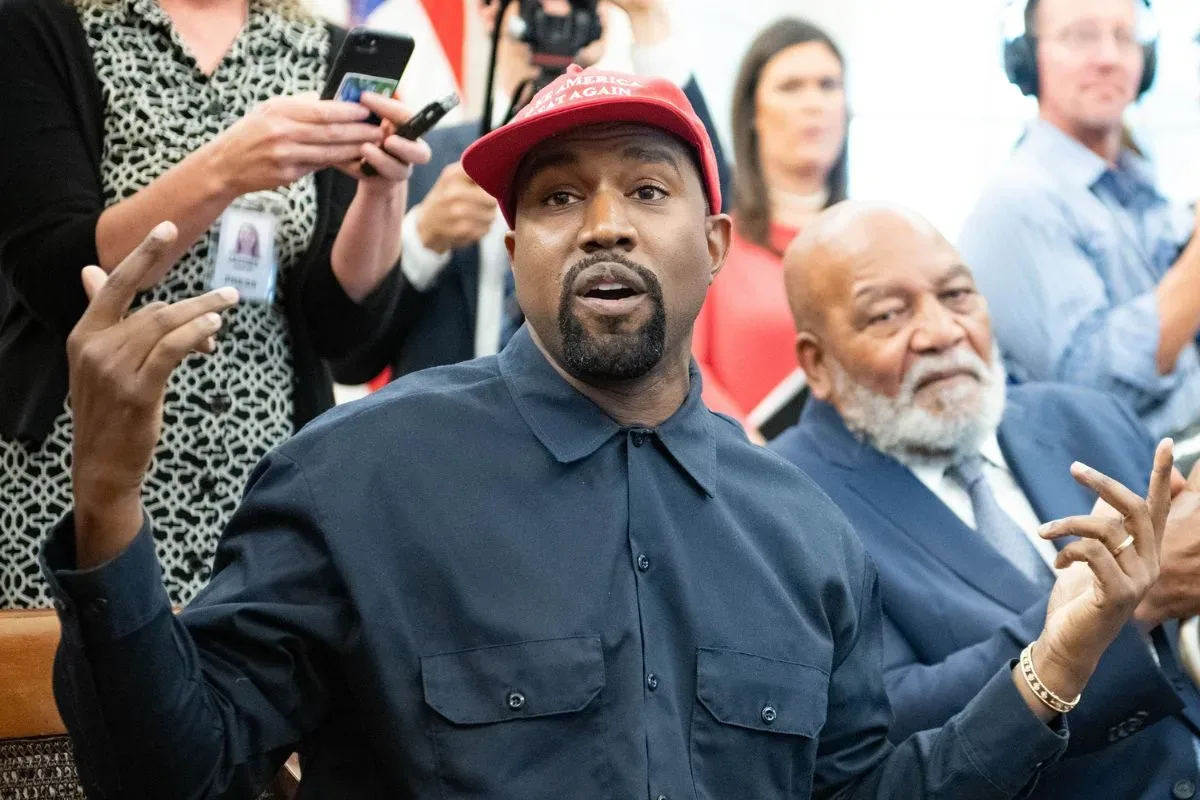
Ye is contesting a legal-fee request that is far larger than the jury award at the center of his dispute with former handyman Tony Saxon. Court papers filed by Ye’s legal team ask Los Angeles Superior Court Judge Brock T. Hammond to reject Saxon’s request for $1.23 million in fees, or, failing that, cut the amount to $59,425.
The fight follows a March 11 jury verdict requiring Ye to pay Saxon $140,000. The jury awarded $100,000 for medical expenses and $40,000 for pain and suffering after Saxon claimed he was undercompensated for work connected to renovations at Ye’s Malibu oceanfront home.
The dispute has now shifted from the damages award itself to the potentially much bigger question of attorney fees. That distinction matters. Damages are the money awarded by a jury for the harm or loss it found compensable. Attorney fees, by contrast, are a separate request seeking payment for the legal work performed in pursuing a case. Saxon’s requested fee total is therefore not a revision of the $140,000 verdict; it is a post-verdict request that still requires a ruling from the judge.
A wide gap between the request and the verdict
The numbers are the clearest point of conflict. Saxon’s $1.23 million fee request is nearly nine times the jury’s $140,000 damages award. Ye’s side says that mismatch is a sign the request is excessive. Its proposed alternative of $59,425 would reduce the request by more than $1.17 million.
Ye’s attorneys are also emphasizing the scope of Saxon’s trial result. Saxon initially sought $1.7 million and prevailed on one of 13 causes of action presented at trial, while the other 12 did not succeed. A cause of action is a distinct legal claim in a lawsuit. The defense position is that winning on only one claim, and recovering a much smaller sum than originally sought, should sharply limit any fee recovery.
That argument frames the dispute around proportionality: how closely should a fee award track the ultimate result? Ye’s filing characterizes the $1.23 million request as unreasonably inflated and argues that it does not reflect what the jury actually decided.
Saxon’s legal team offers a different reading of the same case. The attorneys say the matter was a complex employment-law dispute against a celebrity defendant who denied liability throughout. They say three senior attorneys and a paralegal devoted hundreds of hours to the case, while taking on more than $300,000 in out-of-pocket expenses.
In other words, both sides are focused on outcome, but they measure it differently. Ye’s side points to the number of unsuccessful claims and the size of the verdict. Saxon’s side points to the time, staffing, costs and litigation risk it says were necessary to reach the successful claim.
The underlying claims involving the Malibu renovation
Saxon’s claims stem from his work at Ye’s $57 million Malibu estate in 2021. Saxon said he was hired at $20,000 a week to oversee renovation work and provide security. He alleged that he was paid only once, in addition to $100,000 intended for construction supplies, and that he slept on the mansion’s floor while performing the job.
According to Saxon’s account, the relationship broke down in November 2021 when he declined to perform construction work he considered dangerous without appropriate safety equipment. He alleged that Ye then fired him. Those assertions were part of the broader dispute litigated before the March jury verdict; they should not be mistaken for findings on every allegation Saxon made. The jury ultimately found for him on one claim, not all 13.
That limited result is central to the current fee battle. A verdict can establish that a plaintiff succeeded in a meaningful part of a case while still leaving disagreement over how much legal work should be compensated. Here, Ye’s team argues that Saxon’s partial success does not justify a seven-figure request. Saxon’s lawyers maintain that the work and expenses they describe were warranted by the difficulty and stakes of taking the case through trial.
Why attorney-fee disputes can become the next major battle
A trial verdict can appear to settle a public dispute, but it does not necessarily resolve every financial issue connected to the litigation. The $140,000 award addressed the damages the jury awarded. Saxon’s fee request opens a separate phase focused on litigation costs and legal labor.
That can make the post-verdict numbers look counterintuitive. A damages figure is tied to the injury or loss found by the jury. A fee request concerns the process of litigating the case: lawyer time, support-staff work and, in Saxon’s attorneys’ account, substantial out-of-pocket expenditures. The two figures can be very different because they answer different questions.
But the difference is precisely why Ye’s lawyers are challenging the request so forcefully. Their filing asks for outright denial, with the $59,425 figure offered as the fallback position if the court decides some award is appropriate. The filing does not mean the requested $1.23 million has been granted. Nor does Saxon’s request alter the existing jury award by itself. Judge Hammond must decide the fee issue.
For observers, the case is a reminder to separate a party’s requested amount from an amount ordered by a court. Saxon’s lawyers seek $1.23 million; Ye’s lawyers seek a denial or a much lower figure; neither position describes a final decision on fees.
What each side needs the judge to accept
Ye’s position depends on the judge accepting that the fee request is too disconnected from Saxon’s limited trial success. The defense can point to two straightforward facts: the plaintiff recovered $140,000 rather than the $1.7 million originally sought, and only one of 13 causes of action prevailed.
Saxon’s position depends on the judge crediting the practical demands of the litigation described by his counsel. The attorneys contend that the case required hundreds of hours from a team of three senior lawyers and a paralegal, along with more than $300,000 in expenses. Their argument does not rest simply on the damages number; it rests on the work they say was required to prosecute a complicated employment matter against a defendant with substantial public profile and resources.
Neither account erases the other. A plaintiff can have partial success after significant legal work, and a defendant can argue that a major fee request should be reduced because the plaintiff succeeded on only a narrow slice of the case. The question before the court is where the appropriate figure falls, if any fee award is made.
The practical significance of the ruling
The ruling on fees could dramatically affect the total financial consequence of the case for Ye. If the court were to grant Saxon’s entire $1.23 million request, that would sit on top of the $140,000 jury award. If the judge instead accepted Ye’s proposed $59,425 figure, the fee portion would be substantially smaller than the damages award. The court could also reach another outcome between the two positions.
That range is why the fee dispute has become the current focal point. The original verdict was meaningful, but the unresolved fee request is potentially the larger financial item by a considerable margin.
The matter also illustrates why headlines about lawsuits require careful reading. “Won” and “lost” can simplify a verdict too much. Saxon obtained a $140,000 award and prevailed on one claim. Ye’s defense, however, notes that 12 other claims failed. Now the court must assess a request connected to the cost of litigating the entire dispute, not merely restate the jury’s damages figure.
Until Judge Hammond rules, the $1.23 million remains a request, Ye’s $59,425 remains a proposed reduction, and the March verdict remains the established award described in the court fight. The next decision will determine whether the legal-fee portion becomes a modest add-on, a major additional obligation, or something else entirely.
For more entertainment-law and celebrity news context, see our coverage of a separate custody dispute involving Tyrese Gibson.