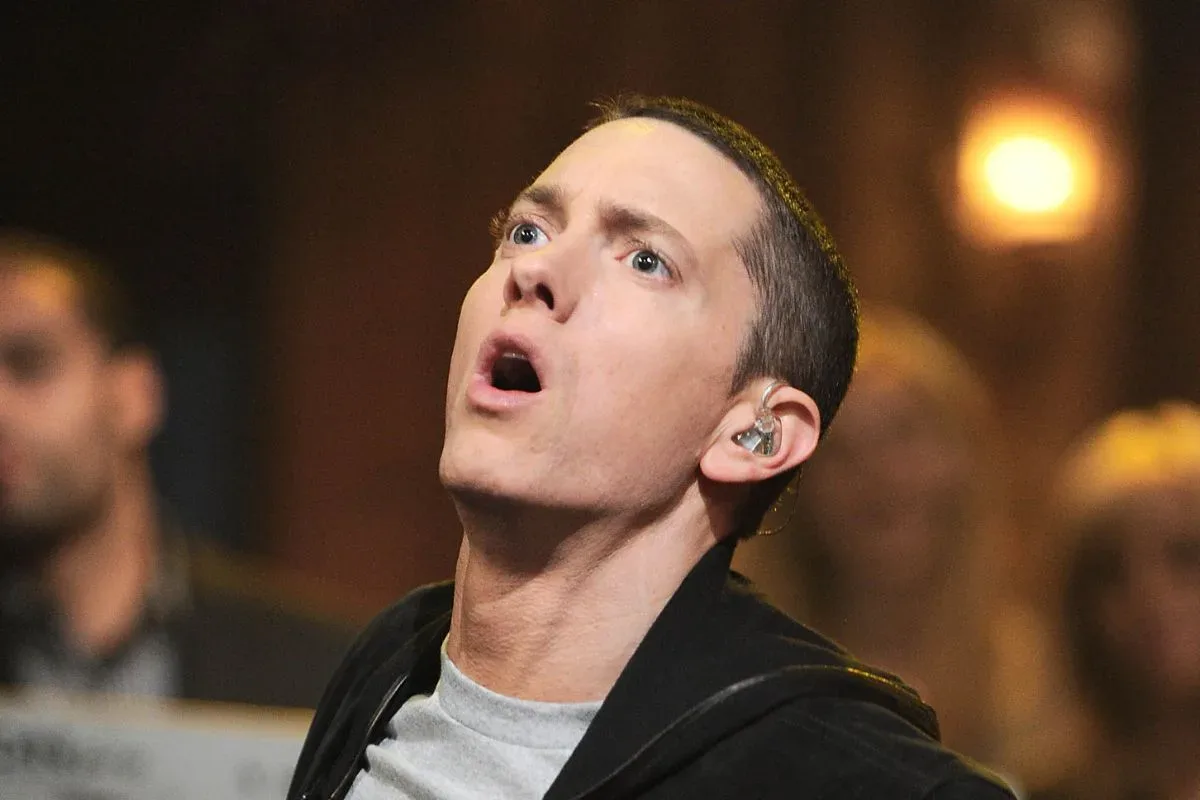

A criminal case involving an alleged attempt to enter Eminem’s home in Clinton Township, Michigan, is now paused for a court-ordered forensic psychiatric evaluation.
Nicole Savage, 46, was arrested on October 27 after authorities alleged that she tried to break into the rapper’s property. She faces charges of aggravated stalking, stalking and misdemeanor trespassing. Those are allegations, not findings of guilt, and the case remains unresolved.
The court ordered Savage to be evaluated at the Michigan Center for Forensic Psychiatry after statements attributed to her during a recent hearing raised questions about her ability to proceed through the criminal process. The reported statements included claims that she was Vladimir Putin’s daughter, Natalia Putin, that Eminem fathered her child, and that she was George Soros.
Judge Sebastian Lucido ordered the evaluation. Savage is expected to return to court in January after it is completed.
What the court order does — and does not — establish
A forensic psychiatric evaluation is not a verdict, a criminal sentence or a public diagnosis. It is a court-directed assessment intended to help address legal questions that may affect how a criminal case can continue. The available information does not state the evaluation’s eventual findings, and it would be inappropriate to draw conclusions about Savage’s mental health from reported courtroom remarks alone.
Nor does the order erase the charges. Prosecutors still have alleged aggravated stalking, stalking and trespassing. The pending assessment introduces an additional procedural step before the court determines what happens next.
That distinction matters in coverage of cases involving public figures. An allegation that someone attempted to enter a celebrity’s home is serious on its own. But a case involving an ordered evaluation also requires precision: the allegations are unproven, the assessment is pending, and the legal outcome has not been determined.
The charges currently on the case
The allegations reported in the case fall into three separate categories:
- Aggravated stalking: the most serious charge listed in the available case summary.
- Stalking: a separate allegation concerning conduct directed at another person.
- Misdemeanor trespassing: an allegation involving unauthorized presence on property.
Because the record provided does not include charging documents, a probable-cause affidavit, bond terms or a detailed account of the alleged incident, it is not possible to reliably describe the specific conduct prosecutors will seek to prove for each count. The important immediate point is that Savage has been charged, while the court has not yet reached a final disposition.
“Aggravated” in a charge name generally signals that the allegation is being treated more seriously than a related basic offense, but the label alone does not establish what occurred. The prosecution would still need to pursue the case through the applicable legal process, subject to the effect of the ordered evaluation and any later court rulings.
Why the January hearing is the next key moment
The upcoming hearing should clarify the procedural direction of the matter, not necessarily resolve it. The court is waiting for the evaluation to be completed, and no result has been publicly described in the information available here.
Potential consequences therefore remain uncertain. The evaluation may shape decisions about how the case moves forward, but the current record does not support a prediction about a plea, trial, dismissal, sentence, treatment or any other final result. It is also not accurate to assume that an evaluation automatically means incarceration will not be considered, or that a treatment setting will automatically replace criminal penalties.
For readers following the case, the most useful things to watch for after the January court appearance are straightforward: whether the evaluation has been completed, whether the judge makes a new finding or order, whether the charges remain unchanged, and whether a future hearing date is set.
A familiar security concern around celebrity homes
The new case comes after another man, Matthew David Hughes, was sentenced to 15 to 30 years in prison in 2025 in a separate matter involving break-ins at homes owned by Eminem. The available account says those incidents occurred over six years and involved multiple properties.
That earlier conviction should not be treated as evidence against Savage; the cases are separate, with different people, allegations and procedural histories. It does, however, provide context for why reports of an alleged attempted entry at the musician’s property draw immediate attention. Residential security is not an abstract concern for a performer whose homes have previously been involved in criminal proceedings.
Stories involving musicians often turn rapidly into spectacle, especially when they include extraordinary alleged statements. The more important element is less sensational: a person is facing charges after an alleged property incident, and a judge has ordered an assessment before the court takes the next steps.
Separating the headline from the unresolved facts
The reported claim that Eminem fathered Savage’s child has received attention because of the artist’s visibility. At this stage, it is simply a claim attributed to Savage in reporting about the arrest and court process. Nothing in the supplied case information establishes it as fact.
The same care applies to every dramatic detail associated with the case. A court-ordered evaluation is a legal development, not proof of a condition. Charges are formal accusations, not convictions. And an expected January appearance is a scheduled next stage, not an indication of how the judge will rule.
That restraint is especially relevant in pop-culture coverage, where public interest can flatten complicated legal circumstances into a single viral detail. Entertainment reporting can acknowledge the cultural significance of major artists while still keeping its focus on the verifiable procedural developments around them. For another example of how music figures remain part of broader civic and cultural conversations, see the report on the proposed Lil’ Kim Day resolution in New York City.
What remains unknown
Several major questions have not been answered publicly in the supplied information. There is no stated result from the forensic evaluation, no final ruling on Savage’s ability to proceed, and no announced outcome for the charges. There is also no basis yet to say whether the case will head toward a trial, a plea arrangement, another hearing or a different court-directed path.
Until the case returns to court, the clearest account is also the narrowest one: Savage has been charged in connection with an alleged attempt to enter Eminem’s Clinton Township home; a judge ordered an evaluation at the Michigan Center for Forensic Psychiatry; and the next reported court date is expected in January. The rest remains to be determined through the legal process.