
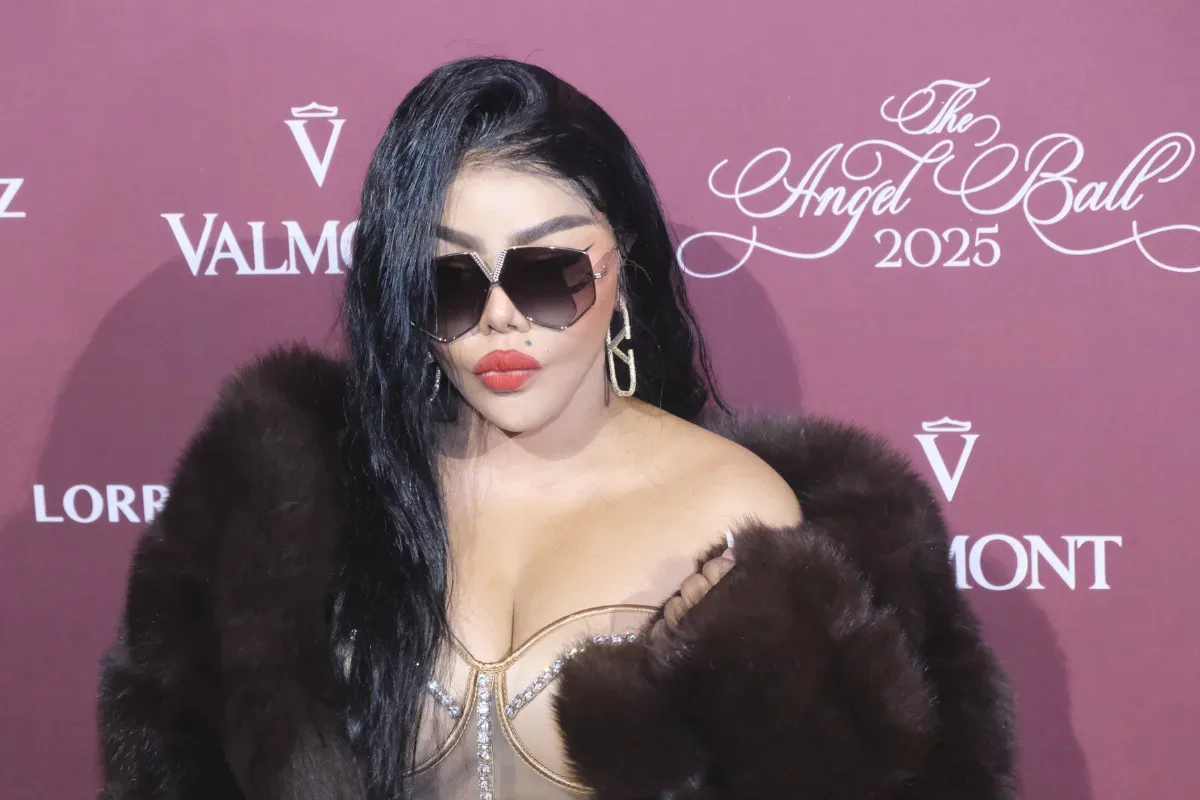
New York City may add an annual observance for one of Brooklyn rap’s defining voices. A resolution introduced by City Council members Crystal Hudson and Chi Ossé proposes designating July 11, Lil’ Kim’s birthday, as Lil’ Kim Day across all five boroughs.
The measure is at an early stage rather than a finished civic honor. It has been referred to the Council’s Committee on Cultural Affairs, Libraries and International Relations, where it is awaiting a hearing. It has not been adopted, so July 11 is not currently an official citywide Lil’ Kim Day.
That distinction matters. A resolution is a formal expression by a legislative body, and in this case it would place an annual recognition on the city calendar. It is not the same thing as a new law, public holiday, school closure, or guaranteed city-run event. The proposal is specifically about an enduring civic acknowledgment of an artist whose career is closely connected to Brooklyn and New York rap.
A Brooklyn proposal with citywide scope
Hudson and Ossé both represent Brooklyn. Ossé’s district includes Bedford-Stuyvesant, where Lil’ Kim was born. The resolution’s geographic roots are therefore highly specific, but its intended reach is not: the observance would apply throughout New York City rather than being limited to Brooklyn.
The text frames Lil’ Kim as both a Brooklyn-born artist and “a pioneer of women in the rap genre.” Its case rests on more than hometown pride. The proposal focuses on her impact as a rapper whose lyrics, public image and stylistic choices challenged expectations placed on women in a genre long dominated by men.
The resolution argues that Lil’ Kim transformed themes common in hard-edged male rap into a form of empowerment for women artists, while using provocative imagery and lyrics to confront gender stereotypes.
That is the central cultural claim behind the measure. It does not merely celebrate a successful recording career; it identifies an artistic approach that the Council believes changed what was possible for women in mainstream rap. The resolution explicitly points to Cardi B and Megan Thee Stallion as later artists who followed in a landscape shaped in part by Lil’ Kim’s barrier-breaking work.
The career history cited in the resolution
The proposal traces Lil’ Kim’s emergence through Junior M.A.F.I.A., the group into which The Notorious B.I.G. brought her. Tracks including “Player’s Anthem” and “Get Money” helped introduce her to a broad audience before her solo career took center stage.
That path led to Hard Core, her debut album, released in November 1996. The Notorious B.I.G. also helped shape the record. The Council’s timing aligns with the album’s 30th anniversary, providing a clear moment to revisit its impact and its place in New York’s musical history.
Hard Core is presented as a milestone in the argument for an annual citywide recognition. Its commercial record is substantial: the album went double Platinum and produced three consecutive No. 1 rap singles, “No Time,” “Crush on You,” and the “Ladies Night” remix of “Not Tonight.” Those accomplishments offer an easily measurable part of the story, while the resolution’s emphasis on gender, style and influence speaks to the harder-to-quantify cultural side.
The measure also references Lil’ Kim’s Grammy-winning work on “Lady Marmalade,” the Moulin Rouge! collaboration with Christina Aguilera, Mýa and Pink. Including that song broadens the portrait beyond her 1990s rap breakthrough: it recognizes a high-profile collaboration that reached well outside a single rap audience.
Why the 30th anniversary is relevant
Anniversaries can be useful public-culture markers because they make room for a city to reassess an artist’s legacy after the immediate promotional cycle has passed. In this case, the 30th anniversary of Hard Core has already brought visible recognition. The Empire State Building marked the occasion with a lighting tribute on November 12, and “Crush on You” received a Platinum certification that same day.
Those milestones and the Council proposal are different kinds of recognition. A building lighting is a one-time tribute; a recording certification measures a release’s commercial threshold; an annual observance would be a recurring municipal acknowledgment. The resolution would turn July 11 into the latter, returning each year rather than being confined to an album anniversary.
For fans, the difference is practical as well as symbolic. The resolution itself does not establish a concert, museum exhibition, street renaming, grant program, or other specific celebration. If adopted, it would create the designation. Any programming or local events connected to it would be separate decisions, not something established by the proposal now before committee.
What the Council is recognizing
The proposal is unusually direct about the relationship between rap, gender and visual identity. It credits Lil’ Kim with redirecting sexual expression associated with hardcore male rap into a voice of power for women rappers. That is an interpretation of artistic influence, but it is not vague praise: the resolution ties it to her rhymes, her provocative style, and the stereotypes she challenged.
In that context, “pioneer” means more than being early. The term signals the Council’s view that Lil’ Kim helped make a new creative position more visible within the genre: a woman artist able to be sexually explicit, confrontational, commercially prominent and stylistically in control on her own terms. The resolution connects that position to later generations without claiming that any single artist’s success has only one source.
It is also a distinctly New York story. Lil’ Kim’s birthplace in Bedford-Stuyvesant, her Junior M.A.F.I.A. beginnings, The Notorious B.I.G.’s role in her early career, and the arrival of Hard Core all inform the Council’s claim that she belongs in the city’s wider cultural history. The citywide framing says that a neighborhood origin can become a civic legacy.
New York has long been a key setting for rap’s development, and the proposal positions Lil’ Kim within that local lineage while stressing an influence that traveled beyond it. In other words, the planned observance is not only about where she came from; it is about what her work represented after it reached a national audience.
Her role in changing pop-culture imagery also sits alongside a current conversation about how music moments are preserved, whether through public tribute, archival recognition, or physical representation. That broader interest is visible in the preservation of Ice Spice’s “Munch” era through a Madame Tussauds figure, another example of a New York rapper’s visual identity becoming part of public memory.
What happens next
The immediate next step is a hearing before the Committee on Cultural Affairs, Libraries and International Relations. Until that process moves forward and the Council adopts the resolution, the proposed designation remains just that: a proposal.
Still, its introduction establishes a public record of what Hudson and Ossé want the city to recognize. Their resolution links Lil’ Kim’s Brooklyn upbringing, her work with Junior M.A.F.I.A., the success of Hard Core, her Grammy-winning collaboration, and the influence of her music and image on women in rap.
Should the Council approve it, July 11 would become an annual citywide occasion to honor that legacy. For now, the strongest takeaway is also the simplest: New York City is considering a permanent place on its civic calendar for a Brooklyn artist whose impact continues to be measured in both sales milestones and cultural influence.