Wiz Khalifa’s nine-month Romanian prison judgment is no longer active after the Bucharest Court of Appeal annulled the ruling and canceled the warrant issued to enforce it. The decision materially changes the rapper’s immediate legal position, including the prospect of detention during travel in Europe, but it is not the end of the Romanian criminal case.
The court has scheduled a new hearing for November 12 at 4 p.m. local time. At that proceeding, judges are due to rehear an appeal brought by Romania’s Directorate for Investigating Organized Crime and Terrorism, commonly known as DIICOT. The court informed Khalifa’s chosen lawyer of the date and ordered steps toward arranging the artist’s appearance by videoconference.
The important distinction is straightforward: the court has erased the prison outcome and its enforcement warrant, but prosecutors’ challenge to the earlier sanction remains live. The rehearing, rather than the now-annulled nine-month judgment, will determine what happens next.
What the Bucharest court canceled
In its short order, translated from Romanian, the Bucharest court stated that it cancels the prison sentence enforcement warrant. It also struck down the December 18, 2025 ruling that had imposed the nine-month custodial term.
An enforcement warrant is the mechanism used to put a sentence into effect. Canceling it means the warrant tied to this prison judgment is no longer operative. That is why the November 3 ruling has consequences beyond a technical court filing: it removes the active basis for enforcing that particular prison sentence.
That does not mean Khalifa has been acquitted. Nor does it mean DIICOT has withdrawn its appeal. The court is instead returning the dispute to the appeal stage connected to the original penalty.
For a case with several decisions across multiple courts, those distinctions matter. A judgment can be annulled without resolving the underlying allegation forever; an enforcement action can be canceled because the judgment behind it has been erased; and an appeal can be reheard even after the result of an earlier appeal is set aside.
How the case reached this point
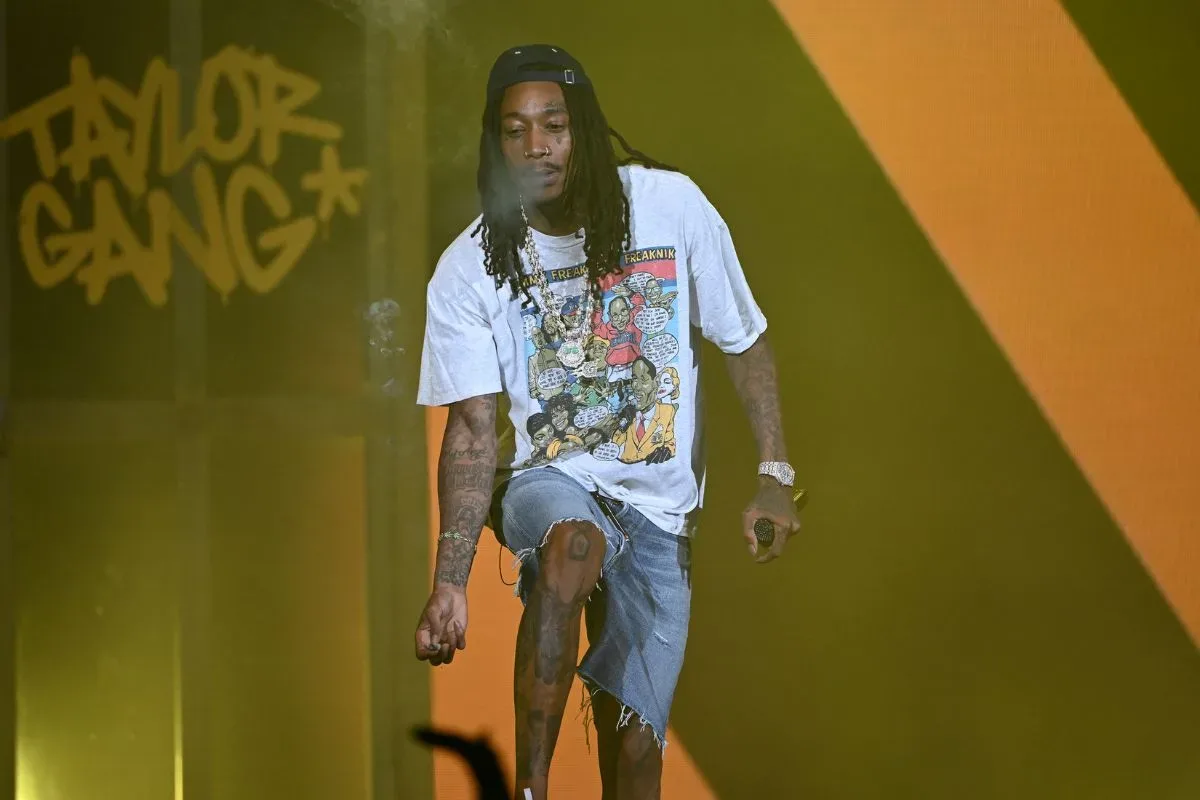
The case stems from Khalifa’s July 13, 2024 appearance at the Beach, Please! festival in Costinesti. Prosecutors alleged that he possessed 18.53 grams of cannabis and a cannabis cigarette for personal use. He smoked onstage during the performance and was subsequently charged with illegal possession of what Romanian law describes as a “risk drug.”
Related coverage includes Wiz Khalifa’s Romanian Prison Ruling Is Annulled Ahead of New Appeal Hearing.
That phrase is a legal classification used in the case, not a conclusion about the facts beyond what prosecutors alleged. It is useful to retain the term because it identifies the charge as described in the court process, while avoiding any suggestion that the November ruling disposed of that allegation.
A trial court initially imposed a 3,600-lei criminal fine. DIICOT appealed that outcome. In December 2025, the Constanta Court of Appeal replaced the fine with a nine-month prison term. An enforcement warrant followed, and Romanian authorities had placed Khalifa on a wanted list by May, creating the possibility of detention if he traveled within Europe.
Khalifa’s legal team continued to contest the outcome. Romania’s highest court transferred the dispute from Constanta to Bucharest in September. The Bucharest Court of Appeal later allowed one component of the annulment challenge to proceed on October 20, although the prison judgment remained in place at that earlier point.
The November 3 decision went further. By annulling the December 2025 prison ruling and canceling its warrant, the court removed the outcome that had replaced the original fine.
What will be decided on November 12
The forthcoming hearing is not a full restart of every stage in the matter. It concerns DIICOT’s appeal of the original 3,600-lei fine—the appeal that had previously led to the prison term now annulled by the Bucharest court.
In practical terms, the hearing restores uncertainty around the appeal’s eventual result. The evidence provided does not establish what penalty, if any, the court will impose after rehearing the appeal. It only establishes that the nine-month sentence and its warrant are no longer in force, while the prosecutor’s appeal has not been dismissed.
That is also why calling the decision a complete victory or a final clearance would overstate its effect. Khalifa has obtained the removal of the active prison judgment, an outcome with immediate significance. At the same time, prosecutors retain a procedural route to contest the original fine, and a new appellate decision is still to come.
Key procedural points
- Original outcome: A trial court imposed a 3,600-lei criminal fine.
- Prosecutors’ appeal: DIICOT challenged that fine.
- Prior appellate result: The Constanta Court of Appeal imposed nine months in prison in December 2025.
- Current change: The Bucharest Court of Appeal annulled that prison ruling and canceled its enforcement warrant on November 3.
- What remains: DIICOT’s appeal of the original fine is set to be reheard on November 12.
Why videoconference arrangements matter
The Bucharest court directed that arrangements be made for Khalifa to participate by videoconference. That instruction does not guarantee that a remote appearance will occur; the available information says it is expected if the necessary arrangements are completed. Still, it signals that the court is preparing to move forward with the hearing while addressing the practical issue of an overseas defendant’s participation.
Remote participation can be especially consequential in a case where international travel had become a concern because an enforcement warrant had previously been active. With the warrant now canceled, the immediate legal landscape is different, but the court’s videoconference plan remains the stated route for the scheduled hearing.
For observers, the cleanest way to read the November 3 ruling is as a major procedural reset rather than a final merits ruling. The punishment that had most sharply escalated the case—nine months in prison—has been annulled. The warrant connected to it has been canceled. Yet the legal argument over the original 3,600-lei fine will return to the Bucharest Court of Appeal.
The November 12 proceeding is therefore the next date to watch. It should clarify the outcome of DIICOT’s appeal after the earlier appellate decision was erased. Until then, the record supports two conclusions at once: Khalifa no longer faces an active nine-month Romanian prison judgment or its enforcement warrant, and the criminal case remains unresolved.
For more entertainment coverage on the site, see Cyberpunk: Edgerunners 2’s “Watson” video and what it adds before Season 2.