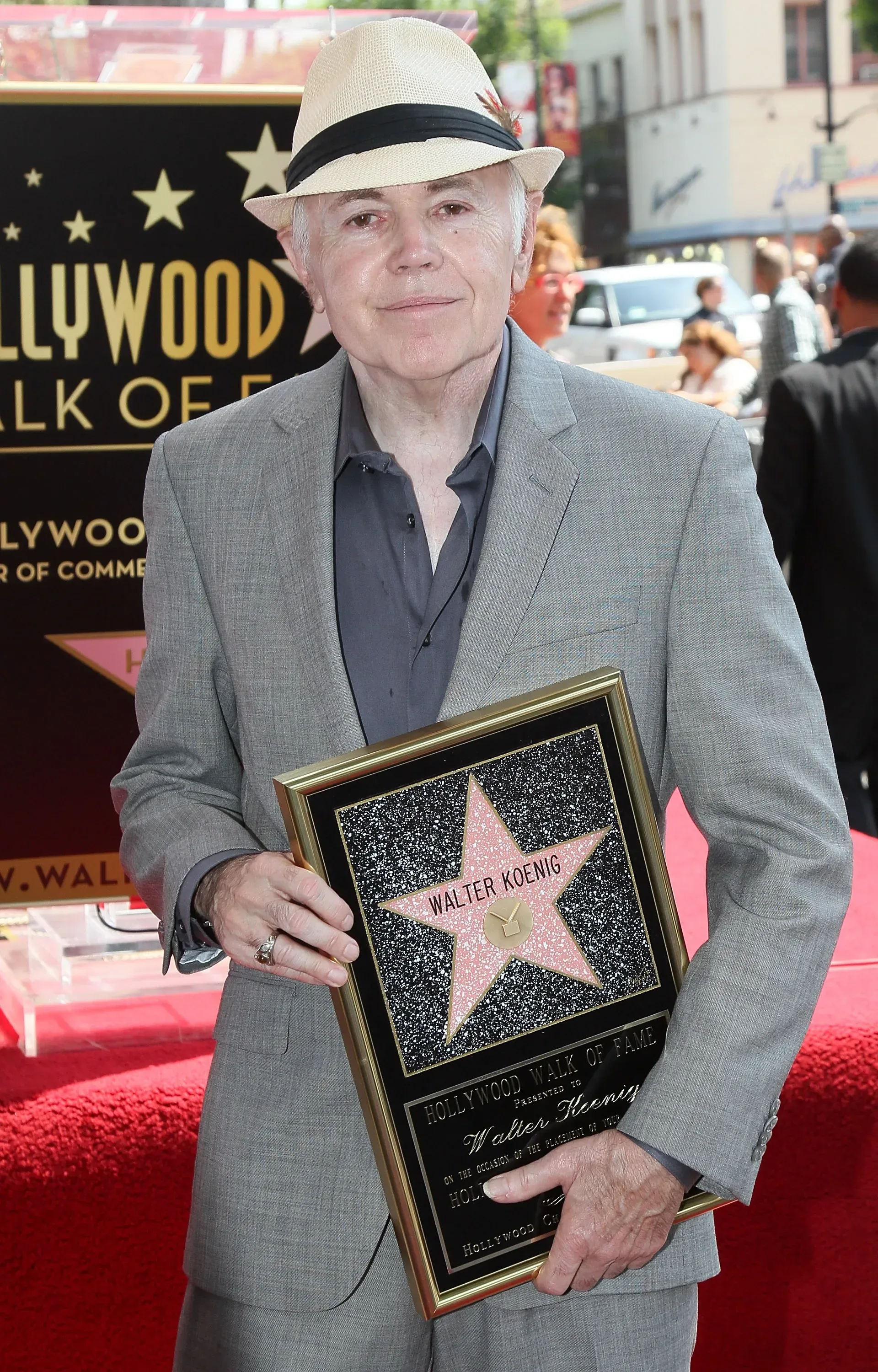
Walter Koenig, the actor whose Pavel Chekov became one of the most recognizable officers aboard the original Star Trek Enterprise, has died at 90. He died of old age at his North Hollywood home, surrounded by his daughter and niece.
For generations of viewers, Chekov was inseparable from the bridge of the Enterprise: the eager young navigator with a combative streak, a pronounced sense of national pride and a place in an ensemble that helped make Star Trek endure far beyond its original television run. Koenig played the character in the original series and seven Star Trek feature films, then continued to return to the role and its wider fan community across later screen projects, convention appearances and video games.
That final category is particularly meaningful for a site interested in games and the people whose performances helped carry fictional worlds between media. Koenig did not merely leave Chekov behind in television reruns and cinema. He voiced the character in several Star Trek games, including 1998’s Starfleet Academy: Chekov’s Lost Missions. It is a small but important piece of a career-long connection to a franchise whose characters have repeatedly been adapted for interactive stories.
Chekov’s place on the Enterprise
Chekov arrived in the original series as a young navigation officer. The character was introduced in part to attract teenage viewers, with a hairstyle that recalled Davy Jones of the Monkees. On screen, Chekov could be arrogant and excitable, and the character’s Russian identity was used for jokes about claiming credit for major human achievements.
Those details made Chekov immediately distinct within an already densely drawn crew. Yet the part’s long-term value came from how Koenig held onto the character’s youthful energy while allowing him to become a credible member of the Enterprise team. In the feature-film era, he was no longer simply a new addition to the bridge. He was a familiar crewman whose response to danger could carry real dramatic weight.
That was especially evident in 1982’s Star Trek II: The Wrath of Khan, where Chekov is central to the plot and Koenig received substantial screen time. The film is widely regarded as one of the strongest entries in the Star Trek movie series, and its attention to Chekov helped preserve the sense that the Enterprise was a crew of individuals rather than a collection of uniforms around the better-known leads.
Koenig later played Chekov again in the 2015 television movie Star Trek: Renegades, set when the character had risen to admiral. The movie was intended as a backdoor pilot, meaning a project designed to introduce a possible future television series within a standalone production. It was financed through crowdsourcing, a model in which many supporters contribute funding rather than a project relying solely on traditional studio or network financing.
From a budget omission to a writer’s credit
Chekov was absent from the early-1970s Star Trek: The Animated Series, not because the character had been discarded creatively, but because the production’s limited budget could not accommodate him. Koenig nevertheless contributed to that show as a writer, penning the episode “The Infinite Vulcan.”
That credit is a useful reminder that his relationship with Star Trek was broader than performance. He also wrote two memoirs: Chekov’s Enterprise: A Personal Journal of the Making of Star Trek — The Motion Picture, published in 1980, and Warped Factors — A Neurotic’s Guide to the Universe, published in 1998. His work as an author extended into other formats, including the satiric fantasy novel Buck Alice and the Actor-Robot, the Malibu Comics title Raver, and the 2013 Bluewater Comics graphic novel Walter Koenig’s Things to Come.
For franchise fans, this kind of participation matters. An actor can be identified with one role while still shaping the surrounding culture as a writer, teacher, stage director and creator. Koenig’s career included each of those paths. He wrote and performed the one-character film You’re Never Alone When You’re a Schizophrenic, which screened at the 1996 New York Film Festival, and wrote as well as appeared in the 2008 science-fiction legal thriller InAlienable.
The games work also sits naturally in that broader picture. Voice acting lets performers preserve a character’s continuity when the setting changes from a filmed production to an interactive one. In a game, a familiar voice can make mission briefings, radio dialogue and story scenes feel connected to the screen version, even when the player rather than a director determines the pace of the experience. Koenig’s return as Chekov gave players a direct link to the original Enterprise crew.
That connection is part of why video-game performances deserve to be considered alongside television and film credits. Hardware and interfaces change—our own look at the history of PlayStation controllers traces just how much—but recognizable performers are often what make a fictional universe feel continuous across those changes.
Beyond Star Trek: Alfred Bester and Babylon 5
Koenig’s other major science-fiction television role was Alfred Bester in Babylon 5. Across 12 episodes from 1994 through 1998, he played the antagonistic Psi Cop. In that series, a Psi Cop is an officer associated with telepaths, people with psychic abilities; Bester was positioned as a threatening force rather than a heroic counterpart to Chekov.
The contrast was significant. Chekov was spirited, often comic and ultimately part of an optimistic crew. Bester was evil, a role that allowed Koenig to work with a darker register. It demonstrated a range that can be easy to overlook when one character becomes a pop-culture institution. For audiences who knew him first as the Enterprise navigator, Babylon 5 offered a markedly different use of his presence.
His screen work also included early guest appearances on Combat!, The Untouchables, General Hospital, The Alfred Hitchcock Hour, Ben Casey, Gidget and I Spy. After the original Star Trek ended in 1969, he appeared on The Virginian, Ironside and Columbo, in an episode featuring William Shatner as its special guest star.
During the 1980s, alongside the Star Trek movies, he played Pompey in a 1983 television adaptation of Antony & Cleopatra that also included Nichelle Nichols and James Avery. He starred in 1989’s Moontrap and appeared in other lower-budget genre films, including Deadly Weapon, Sworn to Justice and Mad Cowgirl. Later television appearances included Almost Perfect, Diagnosis Murder and Son of the Beach.
He also voiced himself in the 2002 Futurama episode “Where No Fan Has Gone Before,” alongside Shatner, Leonard Nimoy and other Star Trek regulars. The appearance underlined the durability of the original cast’s cultural footprint: decades after their first series, they could appear as themselves in an animated comedy built around the affection fans retained for the franchise.
A working life across stage, page and classroom
Born Walter Marvin Koenig in Chicago, he came from a family of Russian Jewish heritage originally named Koenigsberg. He performed on stage while attending Fieldston High School in New York, began college as a pre-med student at Grinnell College in Iowa, then transferred to UCLA, where he graduated with a psychology degree. A professor’s encouragement steered him toward acting, and he studied at New York’s Neighborhood Playhouse.
Among his classmates there were Christopher Lloyd, James Caan and Dabney Coleman. Koenig and Lloyd later shared a Star Trek connection when Lloyd played the Klingon Commander Kruge in Star Trek III: The Search for Spock.
Koenig’s stage career spanned three decades. In the early 1990s, he toured with Mark Lenard in The Boys in Autumn, playing a middle-aged Tom Sawyer reunited with Lenard’s Huckleberry Finn after decades apart. Lenard was another major part of the Star Trek world, known there as Spock’s father, Sarek.
He directed productions including Hotel Parsadiso, Becket, America Hurrah!, Twelve Angry Men, Matrix and Three by Ten. He also taught acting at UCLA, Actors Alley and elsewhere. Taken together, those credits describe an artist whose career was not confined to a single famous uniform, even if that uniform remained the one most audiences remembered.
A legacy shared with fans
Koenig remained closely associated with the convention community, where he was known for meeting and engaging with fans. That work is not incidental to the legacy of classic science fiction. Conventions created spaces where audiences could sustain their relationship with characters and performers between new films, broadcasts, books, comics and games. Koenig embraced that community rather than treating it as an obligation attached to a long-ago job.
His personal history with fellow cast member George Takei also reflected the length of those relationships. The two experienced tension during the era of the original series but became close friends. In September 2008, Koenig was best man when Takei married Brad Altman.
Koenig is survived by his daughter, actor-writer Danielle Koenig. His son, actor and editor Andrew Koenig, died in 2010.
Chekov’s later screen return as an admiral, Koenig’s writing for animation, his work as Bester, and his voice appearances in Star Trek games all speak to an unusually durable creative life. For players, viewers and readers, that life leaves more than one way to revisit his work: on the Enterprise bridge, in an interactive mission, on a convention stage, or through the varied stories he wrote and helped create.