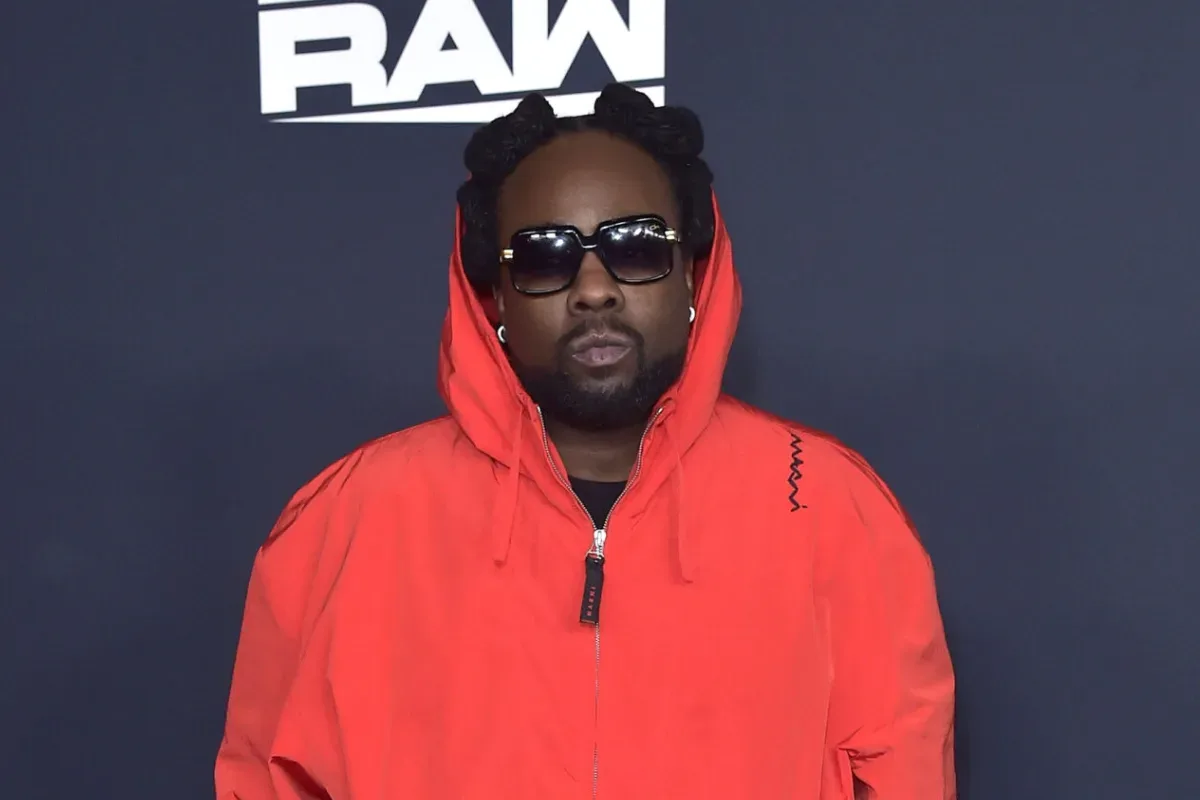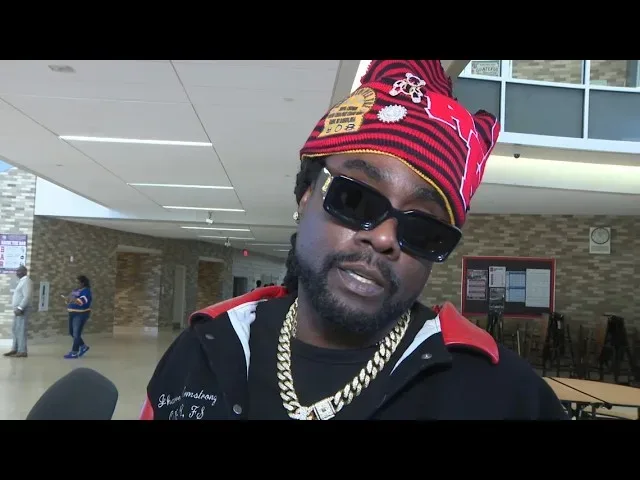
Wale’s Gifted Week closed in Washington, D.C.’s Shaw neighborhood with a straightforward local focus: put go-go music, student performers, Thanksgiving support and community services in the same public gathering. The November 20 block party took place at Giant Food’s O Street store, at 1400 Seventh Street NW, and brought Wale together with DJ Money, go-go band TOB and students from the Duke Ellington School of the Arts.
The event was open to the community from 11 a.m. to 1 p.m. While the music and gathering were public-facing, the Thanksgiving items were designated for families served through participating organizations. Giant Food planned to distribute more than 1,000 turkeys and pies through Big Brothers Big Sisters of the National Capital Area, the Duke Ellington School of the Arts, Ben’s Chili Bowl Foundation and Purity Baptist Church’s food mission.
That distinction matters. A block party can provide a common space for celebration and visibility, but food assistance depends on partners that already know the people they serve. Routing the Thanksgiving goods through established local groups turns a one-day event into support that can reach families through existing community relationships rather than treating attendance at a concert-style gathering as the sole means of access.
A finale built around local institutions
Gifted Week was presented as a four-day program encompassing music, sports, art, culture and community giving. Its 2026 theme was Ambition, marking 15 years since Wale released the album of that name. Before the Shaw finale, the program included a November 18 appearance at Dunbar High School, where Wale served as principal for a day.
The series therefore tied an anniversary of Wale’s catalog to institutions and places within Washington rather than framing the week only as a retrospective. Dunbar High School, the Duke Ellington School of the Arts, Shaw, and the partner organizations all place the activities in a living civic setting. The setup is less about replaying a career milestone than using it as a theme for youth engagement, performance and food support.
“For year three, we’re celebrating homegrown greatness with four days of music, sports, art, culture, and giving back to the community that raised us,” Wale wrote in an Instagram post.
Students from Duke Ellington joining the program was particularly consistent with that language. Their role was not limited to being beneficiaries named in the food-distribution plan; they were on stage. In practical terms, that gives the event two tracks at once: a material-support effort for partner communities and a platform for student artists to be part of the program itself.
Why go-go is central to the setting
Go-go is the District’s official music, a status established in 2020 through a law that also called for city support and preservation of the sound. That civic recognition provides essential context for the Shaw block party. Go-go is not background flavor added to a generic Thanksgiving event. It is a homegrown musical tradition with longstanding links to the city’s neighborhood street life.
For readers outside Washington, “go-go” here refers to the District’s locally rooted musical culture, known for live performance and an emphasis on continuous rhythmic momentum. The available details do not attempt to reduce it to a fixed formula, and they do not need to. What is clear is that booking TOB and DJ Money alongside Wale made the local form part of the event’s actual programming.
The choice also fits Wale’s own performance history. During a Tiny Desk appearance in Washington, he closed with “On Chill,” from Wow… That’s Crazy, in a live go-go arrangement. His Gifted Week finale consequently connected a recurring element of his musical presentation with a community event located in the city identified most closely with the genre.
There is a broader practical point in that pairing. Cultural preservation is often discussed as an abstract promise—something a city says it values or protects. Programming local musicians at a public event gives that idea a concrete form: the music is heard in the neighborhood, local audiences can experience it in a communal setting, and student performers appear in the same ecosystem. It does not by itself fulfill every part of a preservation mandate, but it is an example of culture being treated as active public life rather than a museum piece.
Food distribution, health services and the event’s limits
The Thanksgiving element was substantial in stated scale, with more than 1,000 turkeys and pies planned for distribution. Yet it is important not to overstate how the setup worked. The food was not described as a general giveaway to any person arriving at the block party. It was set aside for families receiving support through the designated partner groups.
That approach has a clear operational logic. Organizations such as a youth mentoring group, a school, a community foundation and a church food mission may have established channels for identifying and serving families. Partner-based distribution can help ensure supplies are allocated through those channels. It also means the public block party and the food-aid component should be understood as connected but not identical parts of the day.
Giant Food also offered free flu shots and health screenings through its pharmacy staff. A health screening is generally an initial check intended to identify potential health concerns or prompt follow-up; it should not be confused with a full diagnosis or ongoing medical care. The event details do not specify which screenings were provided, so no further claims about the services would be warranted.
Still, placing pharmacy services beside food support and performances demonstrates a useful community-event model: multiple needs can be addressed at one accessible location without asking an audience to choose between cultural programming and practical assistance. Music can draw people together, while the surrounding event structure makes room for food support and preventive health outreach.
What the Shaw event says about Gifted Week
Gifted Week’s finale did not separate celebration from service. Its program joined a major Washington rapper, an established local DJ, a go-go band, student performers, a grocery partner and neighborhood-serving organizations. The result was an event shaped by several forms of local infrastructure: musical traditions, schools, food missions, youth support and retail pharmacy services.
That is also why the location is more meaningful than a simple venue line. Shaw is not merely where the event happened to be staged. The neighborhood’s relationship to go-go and Washington street life is part of the story, while the O Street store served as a practical point for a public gathering and partner-led holiday distribution.
For Wale, the Ambition anniversary supplied the organizing theme. For attendees and partner organizations, the more immediate outcomes were a community block party, student performance opportunities, Thanksgiving food intended for families and free health services. Those elements do not need to be treated as competing purposes. The structure of the event suggests that local music culture and local care can reinforce each other when the people and institutions involved are given visible roles.
The approach also sits comfortably beside other recent rap-and-community stories where a performer’s local identity shapes the presentation around an event; J. Cole’s Fayetteville landmark stage concept is another example of a hometown reference being made central rather than incidental. Wale’s Shaw event took a different route, using go-go, schools and service partners to make its Washington connection tangible.
As Gifted Week concluded, the enduring takeaway was not simply that Wale appeared at a Thanksgiving-season block party. It was that the program gave Washington’s official music a place in a public neighborhood gathering while directing planned food assistance through organizations already embedded in the community. The performances provided the energy; the partner network supplied the practical path for the support to reach families.