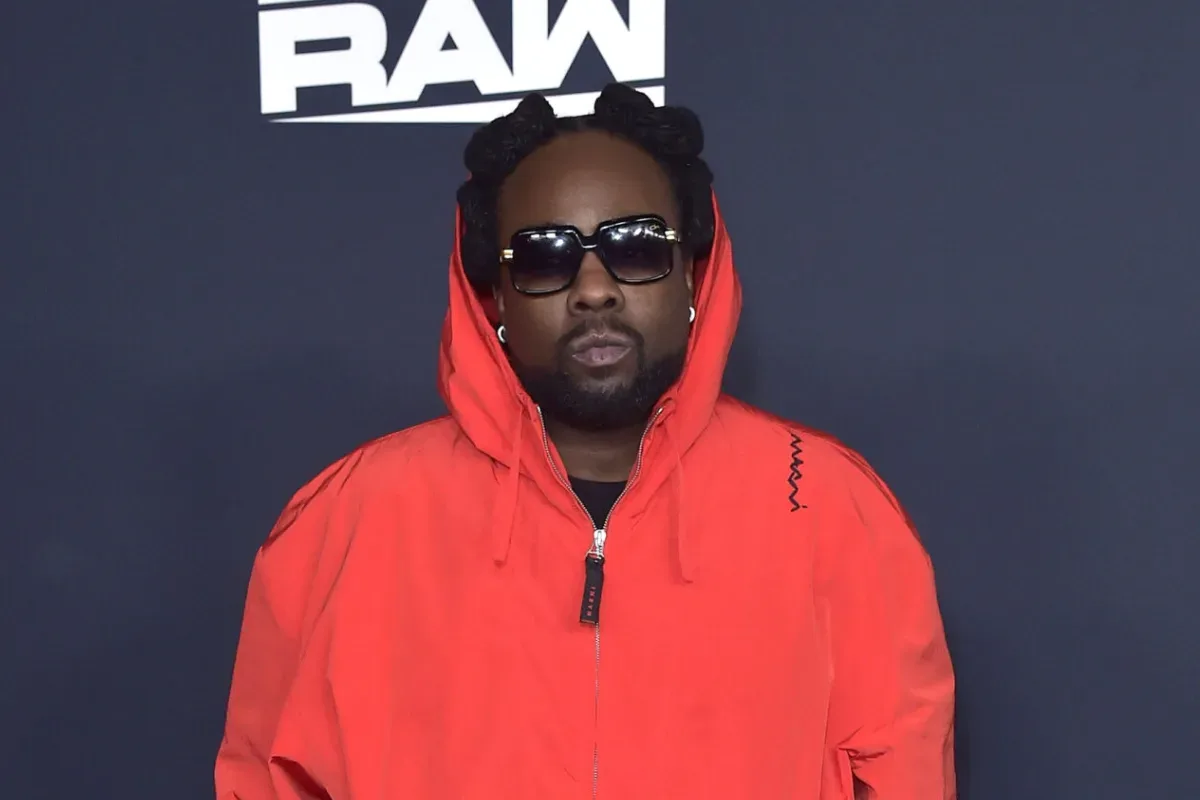
Wale brought Gifted Week into the school day at Paul Laurence Dunbar High School in Washington, D.C., stepping into a principal-for-a-day role that included announcements, conversations with students and time in a classroom studying his own lyrics.
The visit was part of the rapper’s third annual Gifted Week, organized with his management company, EQT. At Dunbar, the day’s focus was the arts: not simply a celebrity appearance, but a setting where a working artist’s writing became material for classroom discussion. Wale encouraged students to focus, reminded them that they were gifted, and offered a simple point about attention and gratitude.
“Don’t get so caught up in what’s next that you forget to appreciate what’s in front of you,” Wale told students.
That message fits the structure of the visit. The school activity linked an artist’s public work with the habits that make arts education meaningful: paying attention to language, considering how ideas are communicated, and recognizing that creative work can be read closely rather than consumed only in passing.
A classroom encounter built around lyrics
A lyric lesson is a useful reminder that songs can be approached as texts. In that context, a teacher and students may examine word choice, perspective, recurring ideas, structure and imagery—the details that shape how a line lands. The supplied information does not identify the specific songs or lesson plan used at Dunbar, so it would be a leap to assign a particular interpretation to the session. But the central fact is significant on its own: Wale sat in on a class engaging directly with his lyrics.
That distinction matters. A visit from an artist can be inspirational in a broad sense; bringing the artist’s work into a lesson makes the connection more concrete. Students are invited to treat rap writing as writing: deliberate language that can be questioned, discussed and placed in a larger conversation about expression.
It also gives an arts-focused school day a practical dimension. The creative industries depend on visible performers, but they also involve writers, producers, filmmakers, designers, managers and media workers. Gifted Week’s programming extended beyond the morning school visit, pointing toward several of those adjacent routes.
Why Dunbar is a meaningful setting
Paul Laurence Dunbar High School is in Northwest Washington, D.C. The district traces the school’s history to 1870 and identifies it as the nation’s first public high school for Black students. That history gives the principal-for-a-day appearance a context larger than a one-off promotional stop: it took place at a longstanding public institution with a distinct place in the city’s educational story.
Related coverage includes Wale Leads Gifted Week at Dunbar as Principal for a Day.
Wale has used the principal role during Gifted Week before. In the prior year, he made a surprise principal-for-a-day appearance at the Duke Ellington School of the Arts. The Dunbar event therefore continues a recognizable part of the program rather than introducing an entirely new format.
The repeat format is notable because it puts the emphasis on a role, however temporary, rather than a quick drop-in. Making announcements and addressing students are ordinary pieces of a school leader’s day. The gesture is symbolic, but it also creates a frame for the artist’s broader message: education, concentration and self-belief are not separate from artistic ambition.
Gifted Week connects arts, sports media and community support
The Dunbar appearance was one portion of a schedule designed around different forms of opportunity. A sports-media workshop was scheduled for that evening at Howard University. It was billed as a film panel with six executives working across sports and music.
“Sports media” is a broad field, covering the work that surrounds sporting events and athletes: video, reporting, production, branding, documentary work and other forms of storytelling. A film panel involving people from sports and music can help make the overlap visible. Both sectors rely on creative decisions made far beyond the spotlight, from how stories are filmed and edited to how audiences encounter them.
Gifted Week’s final day was set to include a Thanksgiving food drive as well as a sneaker-and-jersey design workshop. The two activities point in different directions, but together they outline the program’s wider scope. A food drive addresses immediate community needs, while a design workshop invites participants to engage with visual identity and product concepts through familiar cultural objects.
The sneaker-and-jersey session should not be reduced to a promise of a career pipeline; no such outcome is established. Still, workshops can offer a useful starting point by making a creative discipline tangible. Design involves decisions about colors, materials, typography, symbols and intended audiences. Sports apparel and sneakers are especially accessible canvases because participants may already have strong ideas about what those objects represent.
Ambition at 15 years and a current awards moment
This year’s activities were organized around the 15th anniversary of Ambition. The album reached No. 2 on the Billboard 200 and included “Lotus Flower Bomb,” Wale’s collaboration with Miguel. The song earned a Grammy nomination.
An anniversary can serve as more than a backward look. Here, it places a body of work that had a major chart moment alongside programming for students and the community. The connection is straightforward: a 15-year marker offers a reason to revisit an artistic chapter, while Gifted Week directs attention toward people still developing their interests and possibilities.
Wale arrived at Dunbar with two new Grammy nominations as well. everything is a lot. was nominated for Best Rap Album, while “Watching Us,” his collaboration with Leon Thomas, received a nomination for Best Melodic Rap Performance.
Those are separate Grammy categories, and their names clarify the awards’ different focus. Best Rap Album recognizes an album-length project. Best Melodic Rap Performance, by contrast, is a performance category for a song that combines rap with melodic elements. The nominations provide a current-career backdrop to an event also reflecting on Ambition, joining an older milestone to present-day recognition.
For a related look at how another artist’s landmark music video continues to register in the broader culture, see Childish Gambino’s “This Is America” reaching 1 billion YouTube views.
What the visit actually demonstrates
It is easy to flatten an event like this into a headline about a musician playing principal. The more durable detail is that the visit placed multiple forms of engagement in one morning: schoolwide communication, direct encouragement and a classroom lesson. Each has a different purpose. Announcements address a student body. Conversation provides a more immediate personal connection. A lyric-based lesson turns the artist’s work into an object of study.
That approach also avoids treating students solely as an audience. The classroom component positions them as readers and interpreters. The workshop schedule, meanwhile, recognizes that interest in culture can lead toward several kinds of work, including roles in media and design. And the food drive grounds the final day in community support rather than professional aspiration alone.
The available details do not claim that a single event can solve the practical barriers facing students pursuing creative or media careers. Nor do they establish what students took away from the lesson. What they do show is a program deliberately using access, visibility and creative discussion to bring students into contact with an artist and with professionals in related fields.
At Dunbar, that idea was condensed into a distinctive image: Wale, a rapper with a milestone album in his catalog and fresh Grammy nominations, occupying the principal’s role long enough to tell students to remain focused on what is in front of them. The day then moved outward—from lyrics in a classroom to a sports-media discussion, community food support and design work—making Gifted Week a series of connected opportunities rather than a single appearance.