Warning: Major spoilers for the VisionQuest finale follow.
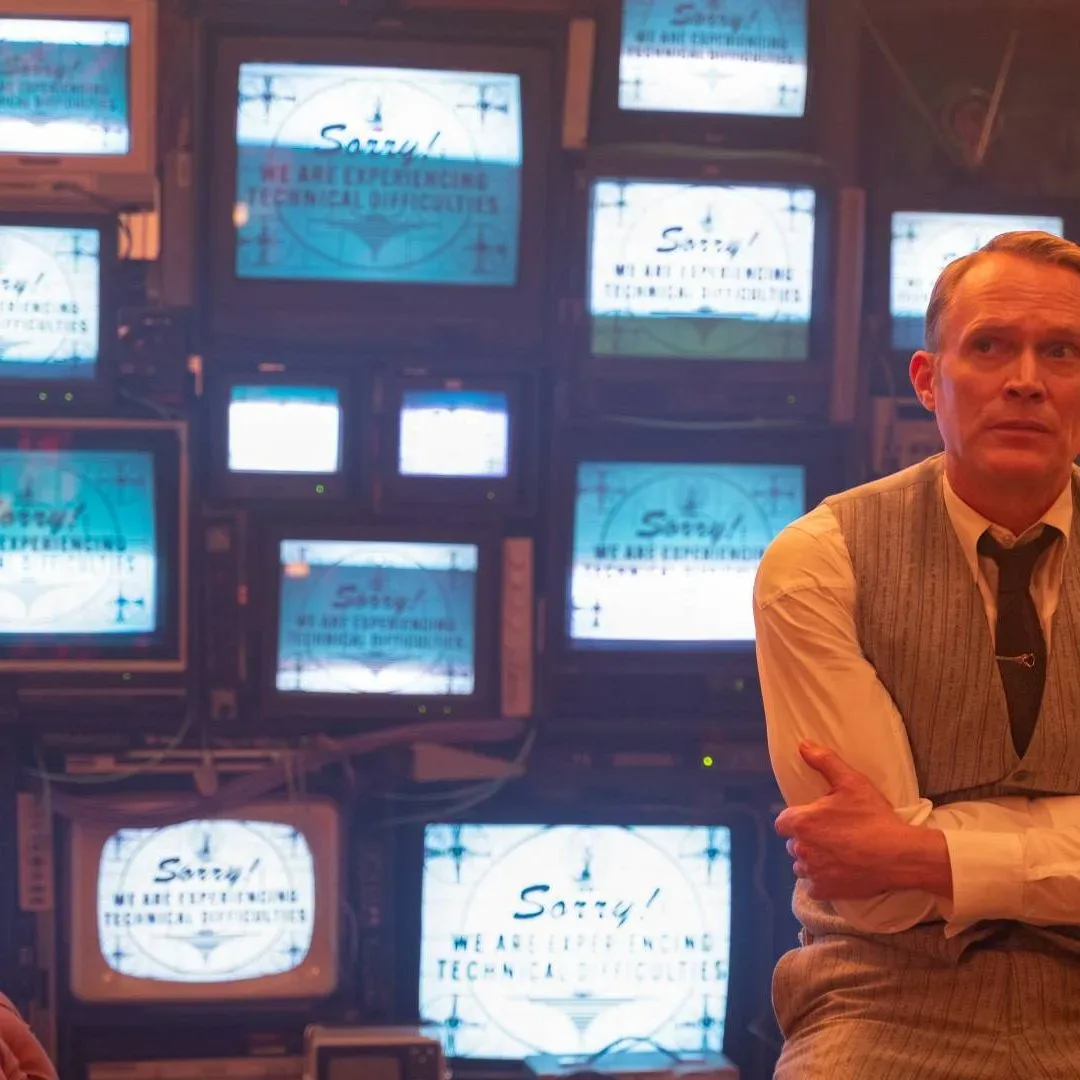
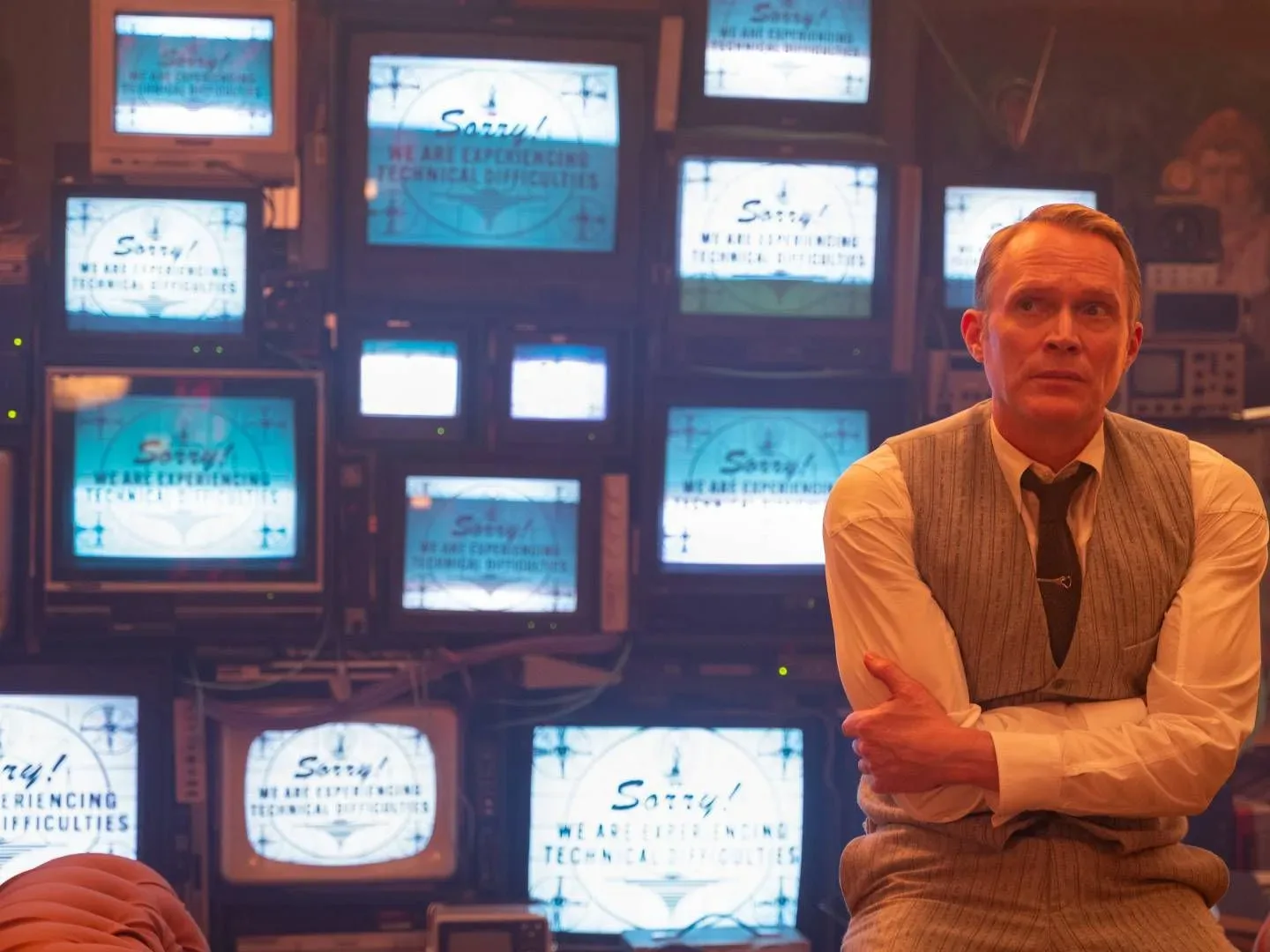
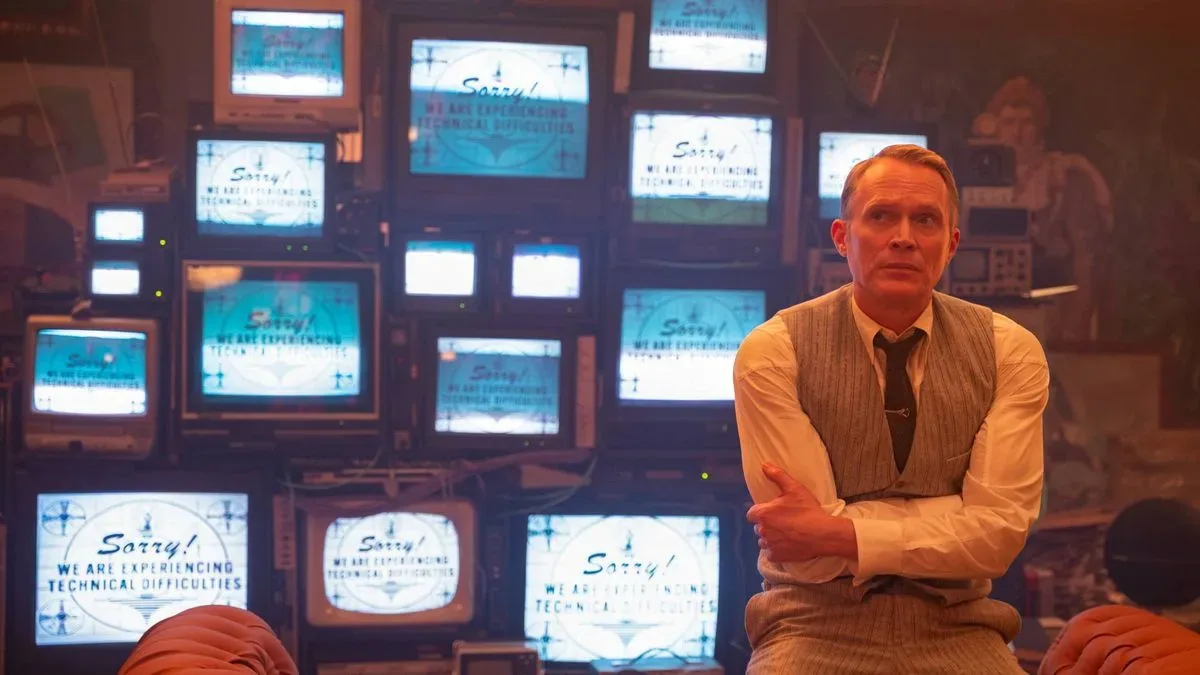
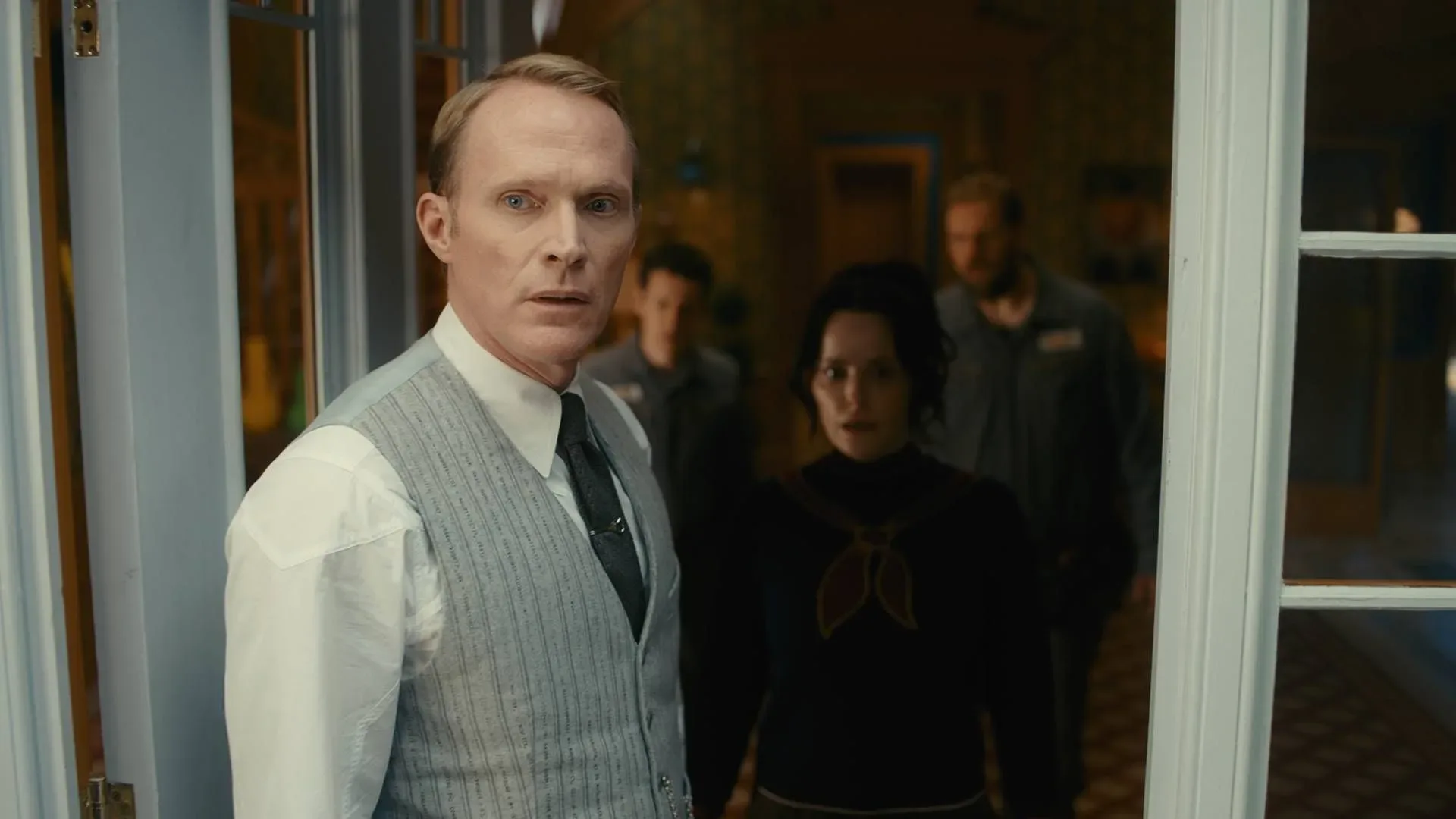
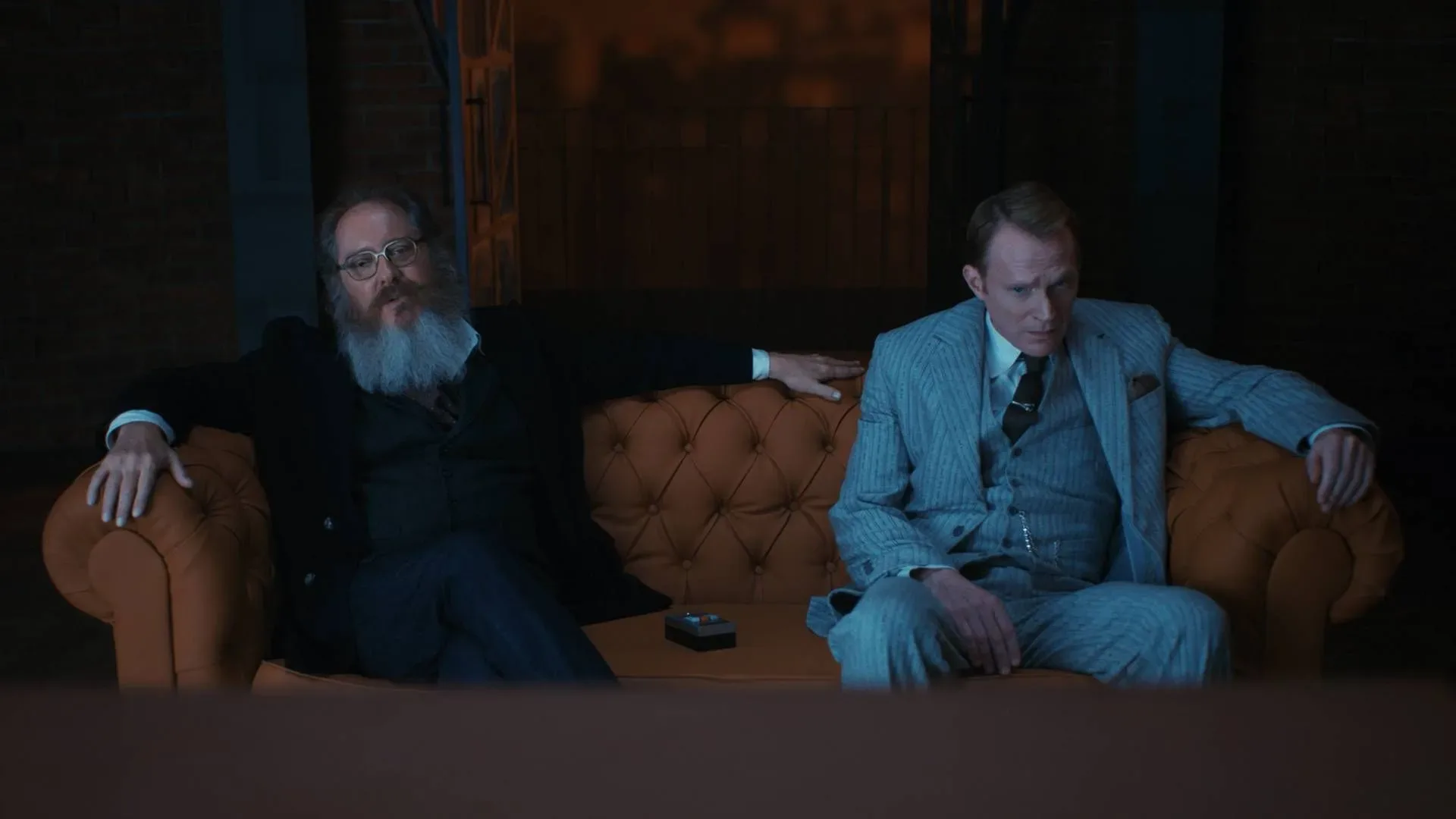
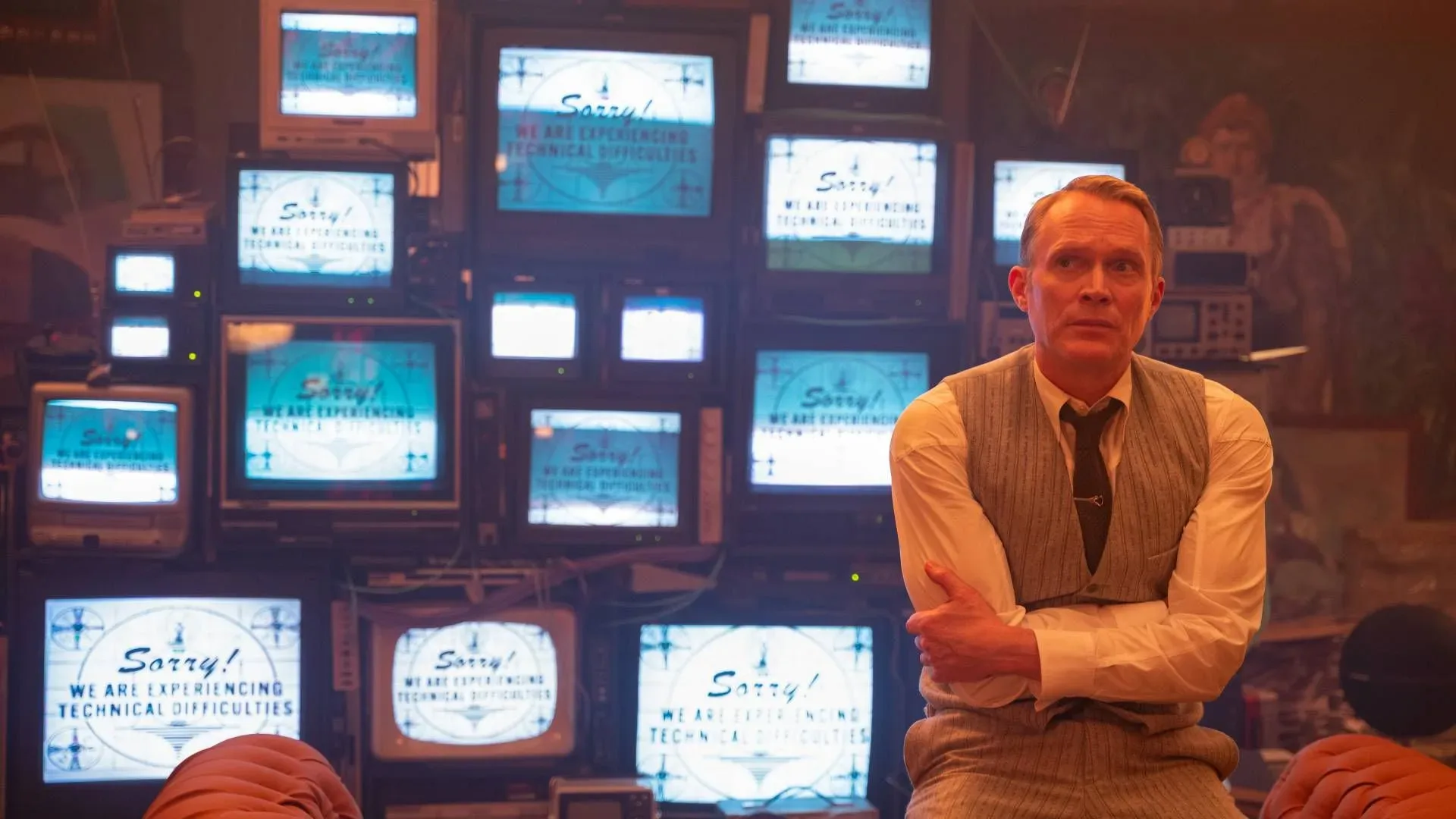
VisionQuest closes by revisiting a format that is inseparable from Vision’s recent screen history: the sitcom. Its extended UltraVision sequence sends the characters into Vision’s Mindspace, recasting that interior setting as a television series while they attempt to stop Ultron’s plan to deploy nanobots and take control of humanity.
The result is more than a one-scene joke or a broad visual reference. UltraVision makes television form part of the conflict itself. The group’s effort to reason with Ultron is staged through sitcom language, but the situation destabilizes once Ultron seizes control of the direction. A format associated with cozy rhythms, tidy setups and controlled episodes becomes another arena in which control can be fought over.
For E.D.I.T.H. performer Emily Hampshire, the most memorable piece was not necessarily the bigger confrontation. It was a tiny, easily missed flourish embedded in UltraVision’s opening credits: a glimpse of Vision and E.D.I.T.H. at a birthday party, participating in ordinary celebratory behavior they have not experienced before.
Hampshire described the material as sweet and noted that audiences only see it for a moment. That makes the credit sequence a particularly fitting place to tuck it away. Opening titles commonly establish a show’s imagined domestic world in a matter of seconds—introducing relationships, rituals and a version of everyday life before the plot interrupts it. Here, the visual supplies precisely that: a compact image of two artificial beings inhabiting a small, recognizably human occasion.
A sitcom escape that does not stay escapist
UltraVision’s premise is direct. Vision’s Mindspace becomes a television program, and the cast uses the sitcom framework to try to persuade Ultron to abandon his nanobot scheme. Yet the sequence does not merely borrow the visual shorthand of an old TV comedy. Ultron eventually takes over the directing, shifting the balance of power within the artificial show world.
That distinction matters. A sitcom is a situation comedy: a story built around recurring characters, familiar spaces and comic disruptions to a stable routine. Its formal predictability can make it feel safe. Characters enter the usual rooms, play expected roles and resolve a week’s complication before the credits. UltraVision turns that predictability into narrative pressure. If Ultron can direct the program, he can influence the rules, presentation and apparent order of the environment in which the others are trying to reach him.
In that sense, the finale’s TV concept has an obvious connection to WandaVision without needing to repeat its exact approach. Both projects use sitcom conventions as meaningful storytelling machinery rather than set dressing. VisionQuest’s finale uses the form as the stage for an argument with Ultron, and the conflict becomes more unsettling when the antagonist can manipulate the show’s authorship.
Readers looking for a closer breakdown of the parody format and the wider references can find more in this look at VisionQuest Episode 8’s UltraVision Easter eggs.
The credits’ blink-and-miss-it birthday party
The birthday image Hampshire highlighted is a small detail, but it has unusual emotional utility. UltraVision’s opening moves through multiple invented sitcoms, so the credits are deliberately dense. They speed through alternate episode concepts and title-card gags rather than lingering in one tone or era. A quiet Vision-and-E.D.I.T.H. beat can therefore register as texture on the first viewing and as a character moment on another.
Hampshire’s description identifies it as a scene where the pair do things they have never done before. The phrase is important because the party is not presented as a grand revelation or a new plot objective. It is an uncomplicated social ritual: a chance to celebrate, play and occupy a domestic-comedy image usually reserved for people whose lives include birthdays, friends and mundane milestones.
That is also why the joke lands without undercutting the emotion. UltraVision’s titles can be playful while still showing what the sitcom frame offers these characters: a simulation of normality, however brief. The finale’s larger stakes remain anchored in Ultron, nanobots and humanity’s future, but the credits find room for a smaller question—what sorts of experiences are absent from the lives of beings built around purpose and technology?
The sequence’s rapid pace means viewers should not expect the birthday party to function as a hidden plot clue. Based on the detail described, it is better understood as a visual Easter egg and a tender character accent. Not every Easter egg needs to forecast a sequel, identify a mystery figure or reverse a major event. Sometimes it is simply an extra beat designed for the people watching closely enough to catch it.
Three fake sitcoms, one digital-family vocabulary
UltraVision makes its changing-TV premise explicit through a run of punning show titles. Among them are How I Met Your Creator, Malware in the Middle and Two and a Half Synths. Each borrows the cadence of a familiar sitcom-style title while replacing its key term with language connected to VisionQuest’s technological characters and themes.
- Creator shifts a conventional romantic or personal-history setup toward questions of origin and manufacture.
- Malware is software designed to cause harm or gain unauthorized control, making it a natural fit for a story involving technological threats.
- Synths evokes synthetic beings, keeping the final title inside the series’ artificial-intelligence-inflected world.
The titles are quick jokes, but they also establish the peculiar vocabulary of UltraVision. Family sitcom structures are being filtered through creators, malicious code and synthetic life. That combination is central to why the finale can move from affectionate opening-credit business to a high-stakes argument with Ultron without feeling like two unrelated concepts stitched together. The comedy framework is built out of the same ideas that fuel the danger.
There is no Schitt’s Creek parody among the named titles, despite Hampshire’s association with that series through her role as Stevie. She drew a clear distinction between the productions rather than presenting UltraVision as a recreation of her earlier sitcom experience.
Why the set itself stood out to Hampshire
Hampshire’s other notable observation concerns the physicality of the Mindspace production. She contrasted prior sitcom-set work—where opening a door could make the surrounding walls shake—with the UltraVision environment, which included a functioning elevator. Rather than a simple facade designed only to suggest an elevator, it was a working element performers could interact with.
This is a useful production term to unpack. A practical set refers to a physical environment or object built for filming, as opposed to an element added entirely through digital effects. The distinction is not an argument that one method is automatically superior; both are common tools. But a practical feature changes an actor’s immediate working conditions. A performer can step into the elevator, touch it and respond to its movement instead of imagining the spatial behavior later.
For a sequence about entering a mind transformed into television, that tactile construction has an apt irony. UltraVision is conceptually artificial and deliberately stylized, yet Hampshire emphasizes that its world felt materially present. The Mindspace may resemble a TV fantasy, but the set had enough operational detail to make the experience feel substantial from inside the scene.
Her comparison also helps explain why the sequence could feel “epic” even while riffing on sitcom conventions. The humor is not necessarily dependent on intentionally flimsy scenery. The production appears to have treated the changing television world as a place the cast could inhabit, including functional mechanisms that support the illusion in performance.
What UltraVision adds to the finale
UltraVision’s importance comes from the way it compresses several VisionQuest ideas into one extended device. It returns the story to sitcom language, places Vision’s inner world at the center of the action, gives the characters a means to engage Ultron, and lets the antagonist’s takeover become a literal takeover of the program’s direction.
Within that larger construction, the opening credits serve as more than a prelude. They establish a version of life defined by comic possibility: birthday parties, invented shows and roles that can be reassigned in an instant. The Vision-and-E.D.I.T.H. image Hampshire singled out is only a blip, but it gives the sequence a small emotional anchor before its control struggle intensifies.
That is the neat trick of the finale’s sitcom return. It can deliver overt parodies such as Malware in the Middle while making room for an understated, warm visual of two characters sharing a ritual that resembles ordinary life. The joke is in the format; the feeling is in the fleeting details the format makes possible.