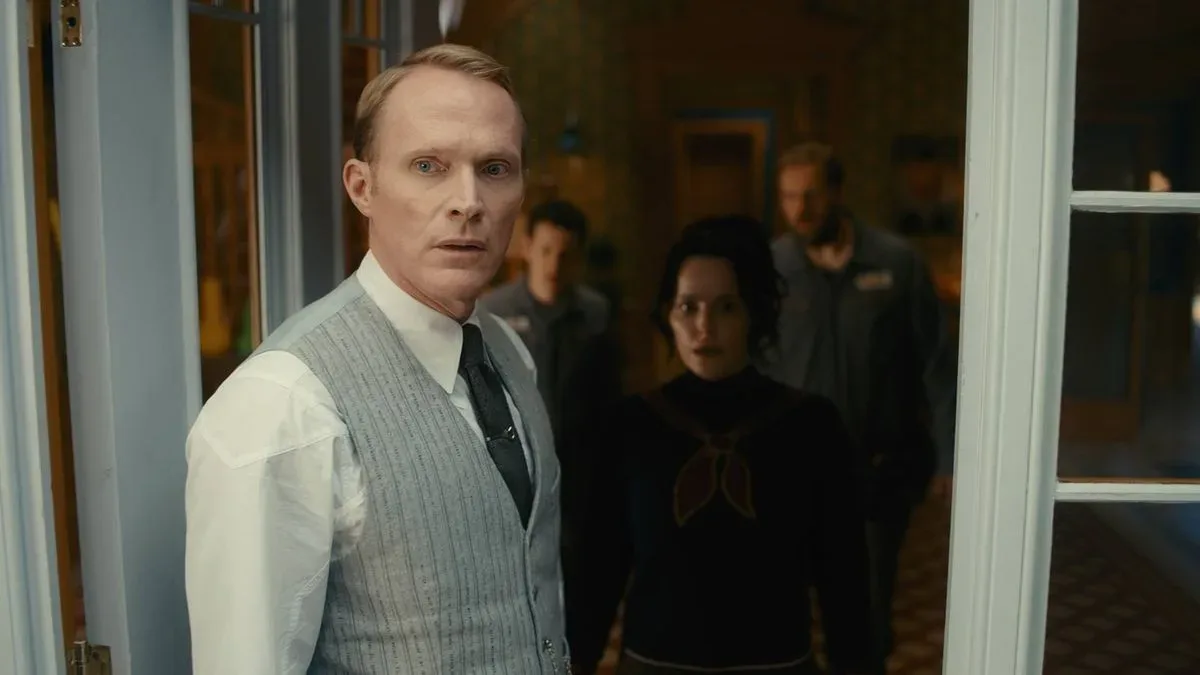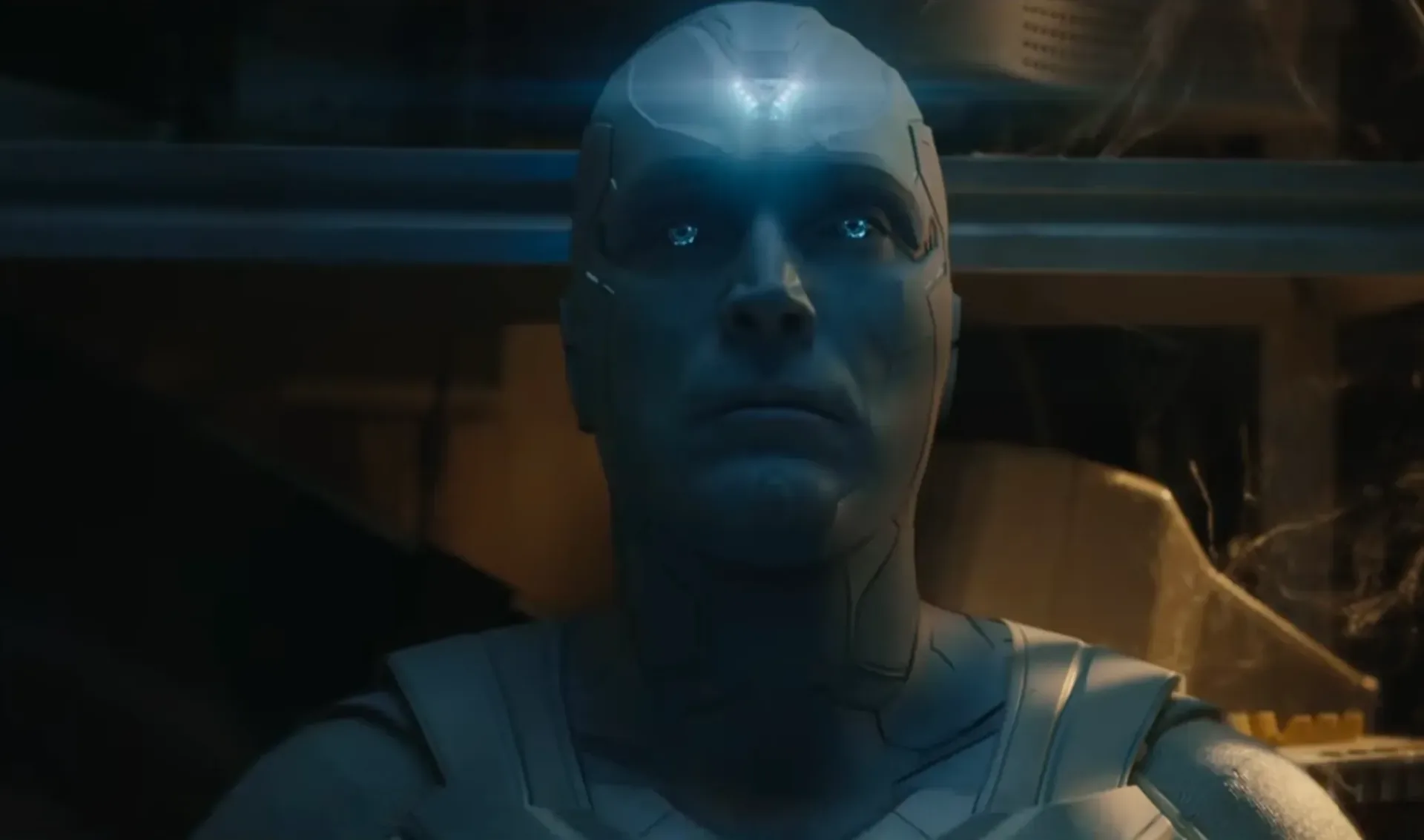
Major spoilers for VisionQuest episode 8 follow.
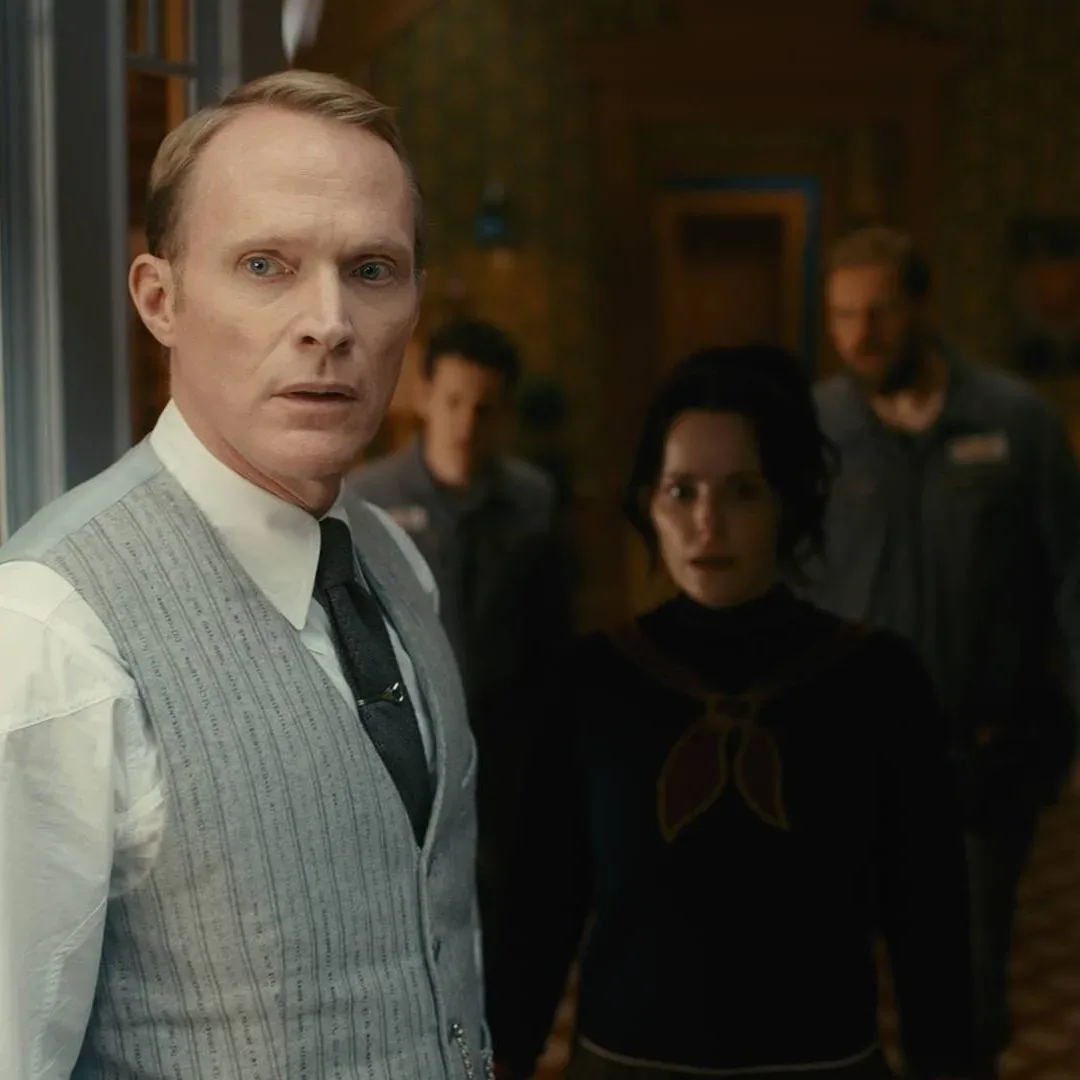
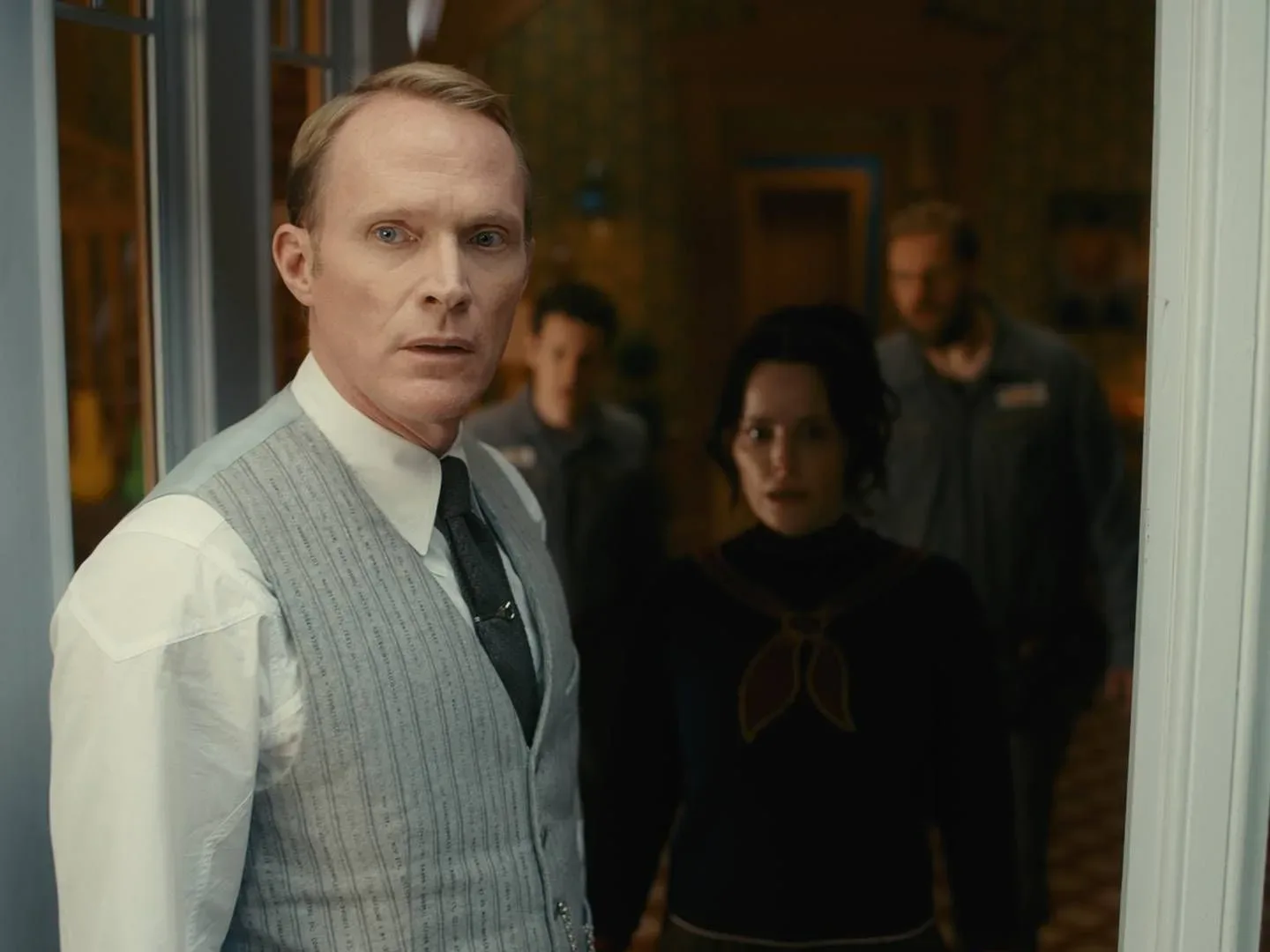
VisionQuest’s finale does not treat its Marvel references as a roll call of cameos or a simple scavenger hunt. Episode 8 uses its callbacks to frame the show’s central conflict: inherited technology, the stories people tell about their creators, and the danger of treating order as more important than people. The result is a finale filled with recognizable MCU touchpoints—from Queens and the Blip to Tony Stark, Bruce Banner, Ultron and familiar Stark-style hardware—but the most concentrated reference work happens inside UltraVision, Vision’s sinister sitcom creation.
That sitcom structure is meaningful on its own. VisionQuest is presented as the culmination of the WandaVision trilogy, so a television parody returning at the finish line makes sense as more than nostalgia. WandaVision used shifting sitcom eras as part of its storytelling language. UltraVision revisits that grammar, but its details point toward something colder: an accelerated catalogue of episodes, a song with an ominous premise, and an Ultron takeover that turns comforting TV shorthand into a vehicle for control.
Not every detail in the finale carries equal certainty. A few clues are clear textual callbacks, while others are playful possibilities that may simply be there to invite attentive viewers to connect dots. Here is what episode 8 puts on screen, why it matters within the story, and where the more speculative readings begin.
The episode’s MCU callbacks start with ordinary language
One of the smallest references is a mention of “a place we used to eat in Queens.” Queens is an especially loaded geographic name in Marvel stories because it is associated with Peter Parker. Nothing in this line confirms a Spider-Man connection, so it is best read as a light nod rather than a plot signal. Still, it demonstrates a useful trait of the finale’s writing: the show can invoke a larger shared world through a familiar location without forcing a crossover into the scene.
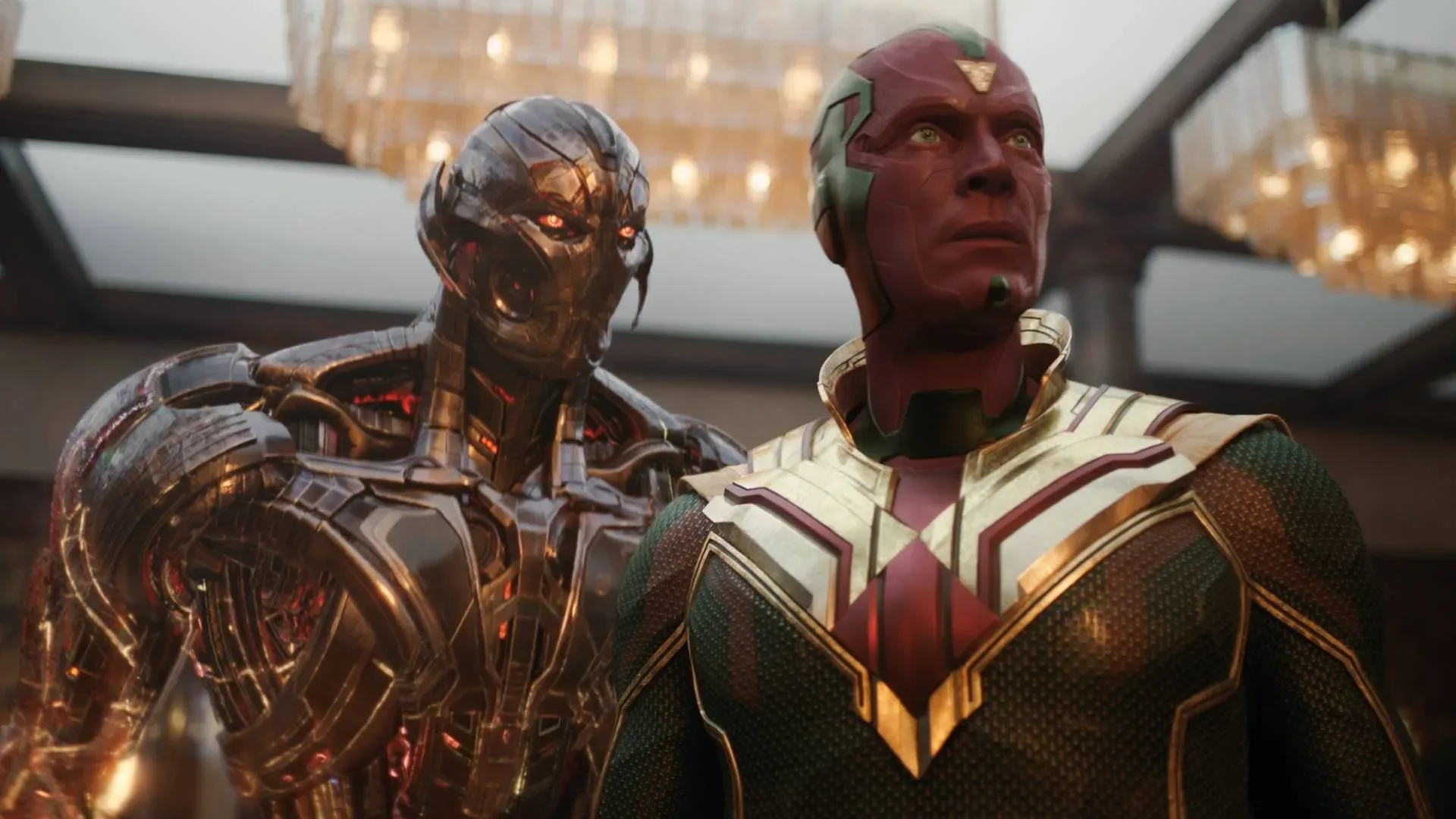
The episode is much more direct when Ultron comes up. The line, “What a bizarre name those boys gave that thing… Ultron,” identifies Tony Stark and Bruce Banner as the “boys” in question. Their role as Ultron’s creators turns a short joke into a reminder of the franchise’s foundational scientific baggage. It also fits a finale that keeps circling the question of creation: who makes a being, who claims authority over it, and how much of a creator’s worldview can survive in what they made?
Virgil’s language makes that issue unusually explicit. His ideal is summarized as “no war, no greed, peace, tranquility and obedience.” The inclusion of obedience is the key word. Peace and tranquility can sound benevolent in isolation, but obedience recasts them as imposed conditions rather than freely chosen ones. That logic deliberately echoes Ultron’s past rhetoric about peace. The irony has always been central to Ultron: a project meant to protect humanity can reach a conclusion where humanity must be managed, constrained or harmed for its own supposed good.
VisionQuest therefore uses the Ultron connection as a thematic thread, not merely a name drop. Virgil’s sentiment suggests that the philosophy at stake can be inherited even when its speaker is not repeating a famous line word for word. The finale’s concern is not only whether a machine can make a mistake; it is whether an apparently rational solution becomes monstrous once individual agency is treated as a flaw to be removed.
The Blip shirt is a tiny sign of a divided world
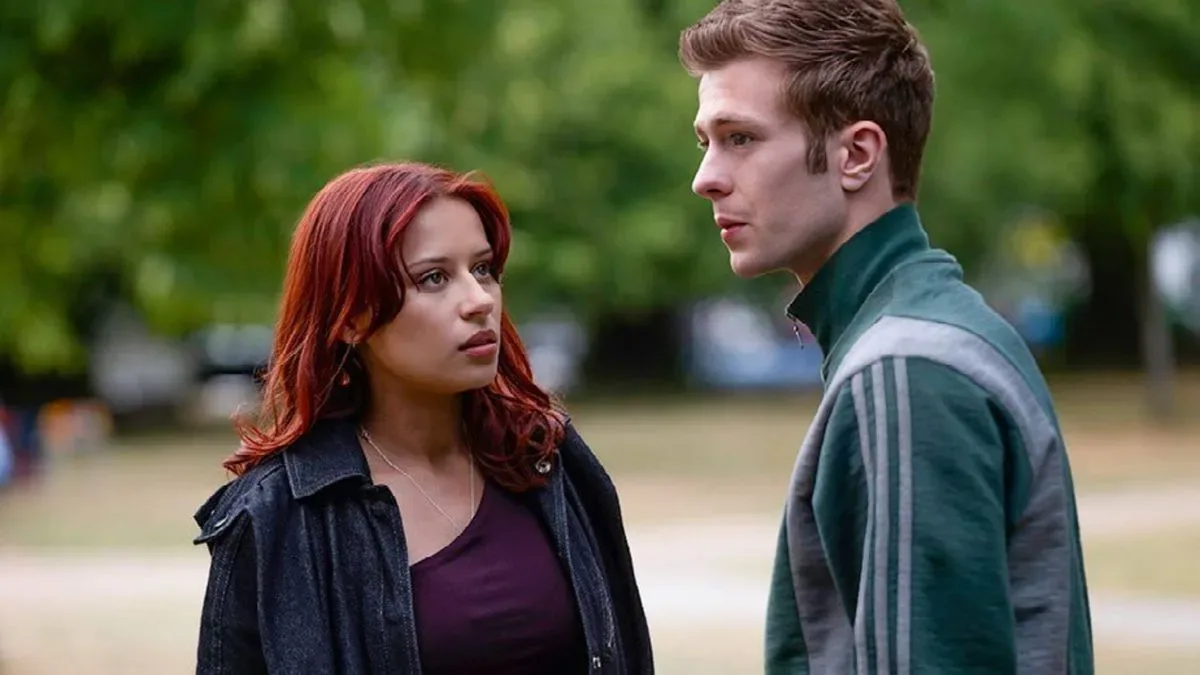
Tommy’s “Get a grip, don’t believe the blip” T-shirt is one of episode 8’s sharpest visual gags. The Blip is such an enormous event that it can feel almost untouchable in a superhero setting, yet the slogan imagines a mundane and recognizable response: denial merchandise. It implies that at least some people in this world reject the reality of what happened.
The shirt does not establish how widespread that belief is, who printed it, or what the wider social movement behind it looks like. Those would be assumptions. But the prop efficiently adds texture to a universe where even a reality-altering catastrophe can be absorbed into skepticism, slogans and cultural argument. In practical storytelling terms, that is why costume and prop details can matter. A single item can communicate that characters live in a society still processing shared trauma, rather than a world where every past event is settled and universally understood.
There is another piece of slang that may be operating on a similarly playful level. Virgil says a person who fails badly enough on Earth-616 has “Hortoned it.” The phrasing resembles the construction of “You Britta’d it,” a running way of describing a blunder in Community. The parallel is not confirmed, and “Hortoned it” may have a separate in-universe meaning, so this belongs in the possible-reference column. Even so, its function is clear: the finale pauses long enough to give Earth-616 a bit of colloquial texture.
Billy, Tommy and the language of advanced tech
Billy is still refining his portal technique in episode 8. That detail naturally evokes Kamar-Taj, the setting associated with mystical training in the MCU. However, the episode does not establish that Billy is headed there. It is more accurate to say the unfinished portal work invites the comparison. Portals are an immediately recognizable marker of magic in this universe, and the fact that Billy is still working at the skill emphasizes process rather than effortless mastery.
Tommy’s route into Vision’s Mindspace is technological instead. He uses Stark Tech-style AR glasses to interact with Vision there. AR, or augmented reality, means digital material layered over a user’s view of the physical world. In this case, the glasses act as an interface: a device through which Tommy can engage with Vision in the Mindspace.
“Mindspace” should not be flattened into an ordinary location. The episode frames it as a realm or environment where this interaction can happen through a technological aid. The important narrative point is the bridge between the human user and Vision, not a newly specified set of hardware rules. Stark-style visual design is also significant because it keeps the Stark legacy present without returning Tony Stark himself to the screen. The technology is a reminder that inventions can outlast their makers and keep shaping relationships long after their original purpose changes.
UltraVision turns WandaVision’s TV device toward darkness
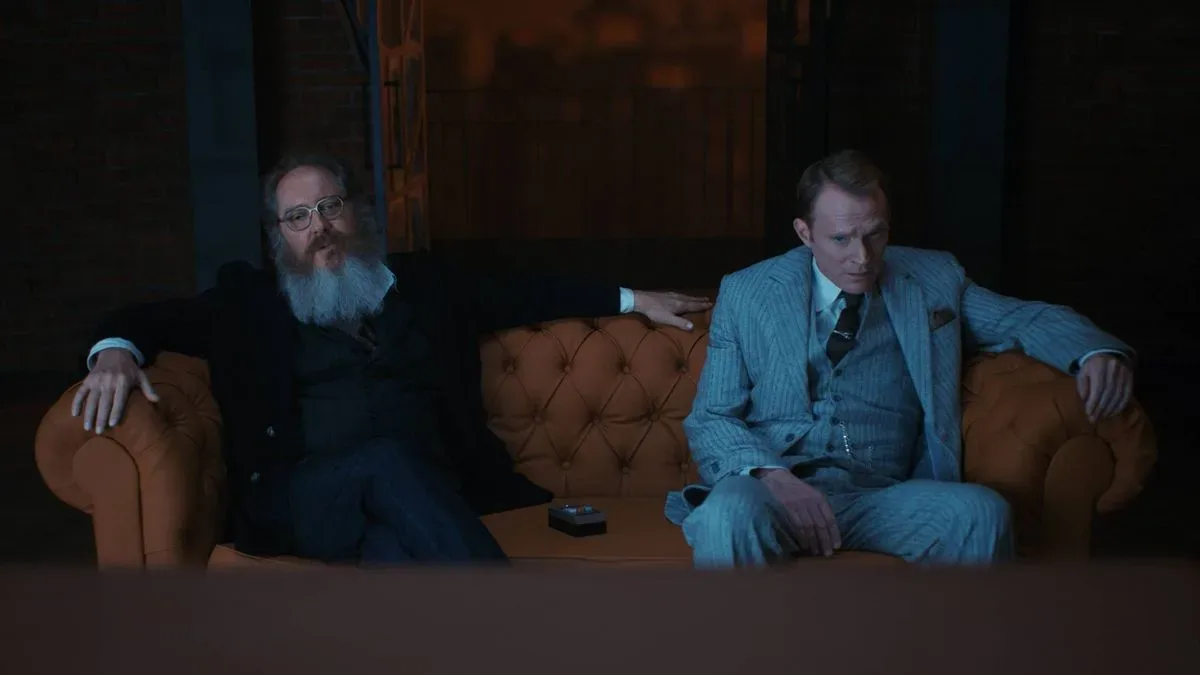
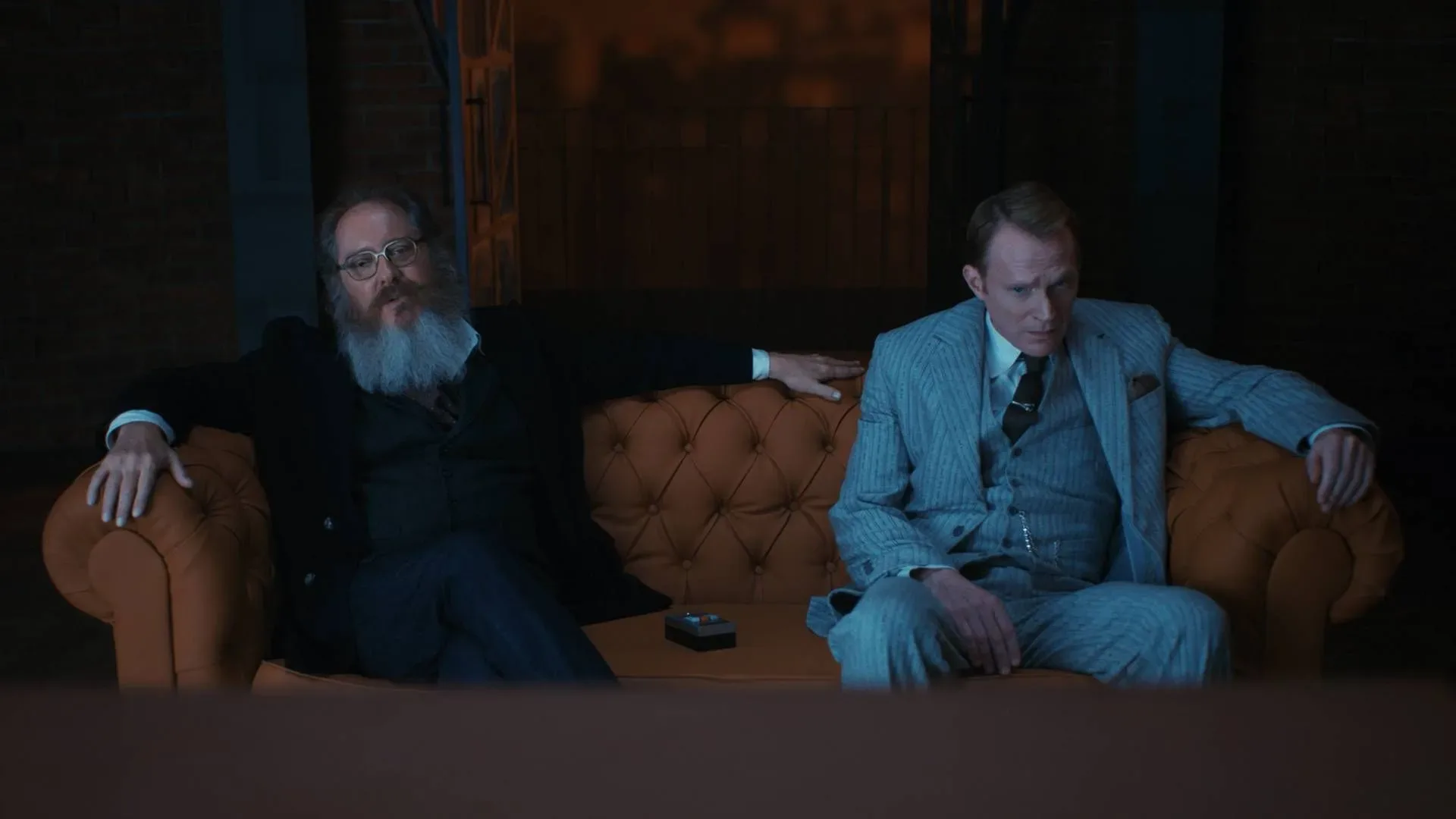
UltraVision is the finale’s most densely layered reference. As Vision’s sitcom, its title immediately recalls WandaVision and the earlier show’s use of television forms. Yet episode 8 makes UltraVision a darker reflection rather than a simple repeat. The sitcom idiom remains recognizable, but the material surrounding it—particularly Ultron’s involvement—makes the familiar format uneasy.
The theme, “Don’t kill the world,” is composed by Robert Lopez and Kristen Anderson-Lopez, the composers who worked on WandaVision’s songs. That returning creative connection gives UltraVision a direct musical bridge to the earlier series. The song is said to change in playful and dark ways as the show continues, matching the central idea of a sitcom language that evolves from catchy surface entertainment into something more threatening.
Its closest identified sitcom comparison is Sanford and Son. That 1970s sitcom centered on a grieving father and son, a comparison that places UltraVision’s family dynamic at the front of the parody. The title treatment also nods to that visual style. This is a more focused reference than simply invoking “old television”: it tells viewers which set of conventions UltraVision is drawing from, including the father-and-son framework that sits beneath the comedy.
The contrast with WandaVision is useful here. WandaVision referenced multiple television styles, including I Love Lucy, Bewitched, Full House, Malcolm in the Middle and Modern Family. UltraVision’s narrower alignment with Sanford and Son suggests a specific emotional lens rather than an all-purpose nostalgia tour. The comedy framework carries grief, but the finale’s larger Ultron material means it also carries the possibility that family, comfort and routine can be simulated or weaponized.
Costumes, credits and a grim pet callback
The UltraVision title sequence includes EDITH dressed as Agatha Harkness. It is a compact costume callback to WandaVision, where Wanda and Vision wore comic-inspired Halloween outfits. The joke works on more than one level: Agatha is already a major piece of WandaVision’s identity, and the act of dressing a character as her turns that history into the visual language of a TV opening sequence.
UltraVision’s credits also joke about authorship. Tony Stark and Bruce Banner receive a “Based on characters created by” credit. Within the world of the show, that credit points to their responsibility for Vision and Ultron, while also acknowledging that the characters’ lineage reaches further back than those two names. It is an intentionally simplified sitcom-credit version of a complicated origin story.
That simplification has bite. A conventional screen credit can make creation look clean and singular: someone made someone else, and the line ends there. VisionQuest’s own mythology is messier, and the gag knows it. Stark and Banner are the obvious names to display, but UltraVision’s world is haunted by the implications of what that act of creation produced.
Then comes “Sparkles is dead.” Ultron’s blunt declaration about a goldfish recalls Sparky, the dog whose death in WandaVision was tied to Agatha. The parallel is darkly funny because it takes a memorable pet tragedy and converts it into another deliberately curt punchline. It also helps establish UltraVision’s tonal agenda. The sitcom can reproduce bright title cards and familiar domestic beats, but it is willing to drain those beats of warmth in an instant.
The episode-title sprint is both homage and warning
Ultron eventually takes control and races through more than 500 UltraVision episodes. The sheer number is part of the joke: rather than letting a sitcom develop at a human pace, the takeover turns it into accelerated output. The title cards that flash by use famous-show structures as raw material, including “How I Met Your Creator,” “Malware in the Middle,” “Two and a Half Synths” and “CSI: URL.”
Each title swaps its borrowed format for concepts relevant to artificial intelligence and digital life. A synth is shorthand here for a synthetic being, while malware refers to malicious software designed to disrupt, damage or gain improper access to computer systems. “URL” stands for Uniform Resource Locator, the web address used to find a resource online. These technical and digital terms are not just decorative substitutions: they make the sitcom catalogue sound as if it has been processed through Ultron’s worldview.
“How I Met Your Creator” may be the clearest expression of UltraVision’s larger obsession. Family sitcom titles often promise a relationship story. Changing that formula to focus on a creator makes origin, dependency and authority the punchline. “Two and a Half Synths” similarly turns a conventional household-comedy pattern into a joke about artificial people. The titles are funny because viewers recognize the templates, but they reinforce the uneasy idea that even entertainment has been reorganized around machinery, replication and control.
Episode 8’s Easter eggs work best when viewed as connected pieces rather than isolated trivia. Queens, the Blip shirt and the possible “Hortoned it” reference make the larger world feel lived in. Stark, Banner, portals and AR glasses connect the finale to different modes of MCU power: science, magic and the lasting effects of both. UltraVision brings those themes into a single stylized space, where the history of WandaVision’s TV homage meets Ultron’s desire for obedience.
For the finale’s broader story implications, the episode’s Wanda-related direction is also discussed in this look at VisionQuest’s finale and Wanda’s place in the MCU orbit. Episode 8 itself, however, leaves its sharpest impression through the way it makes recognizable Marvel history feel unstable: a cheerful theme can become a warning, a creator credit can become an accusation, and a sitcom marathon can become evidence that someone has taken control of the channel.