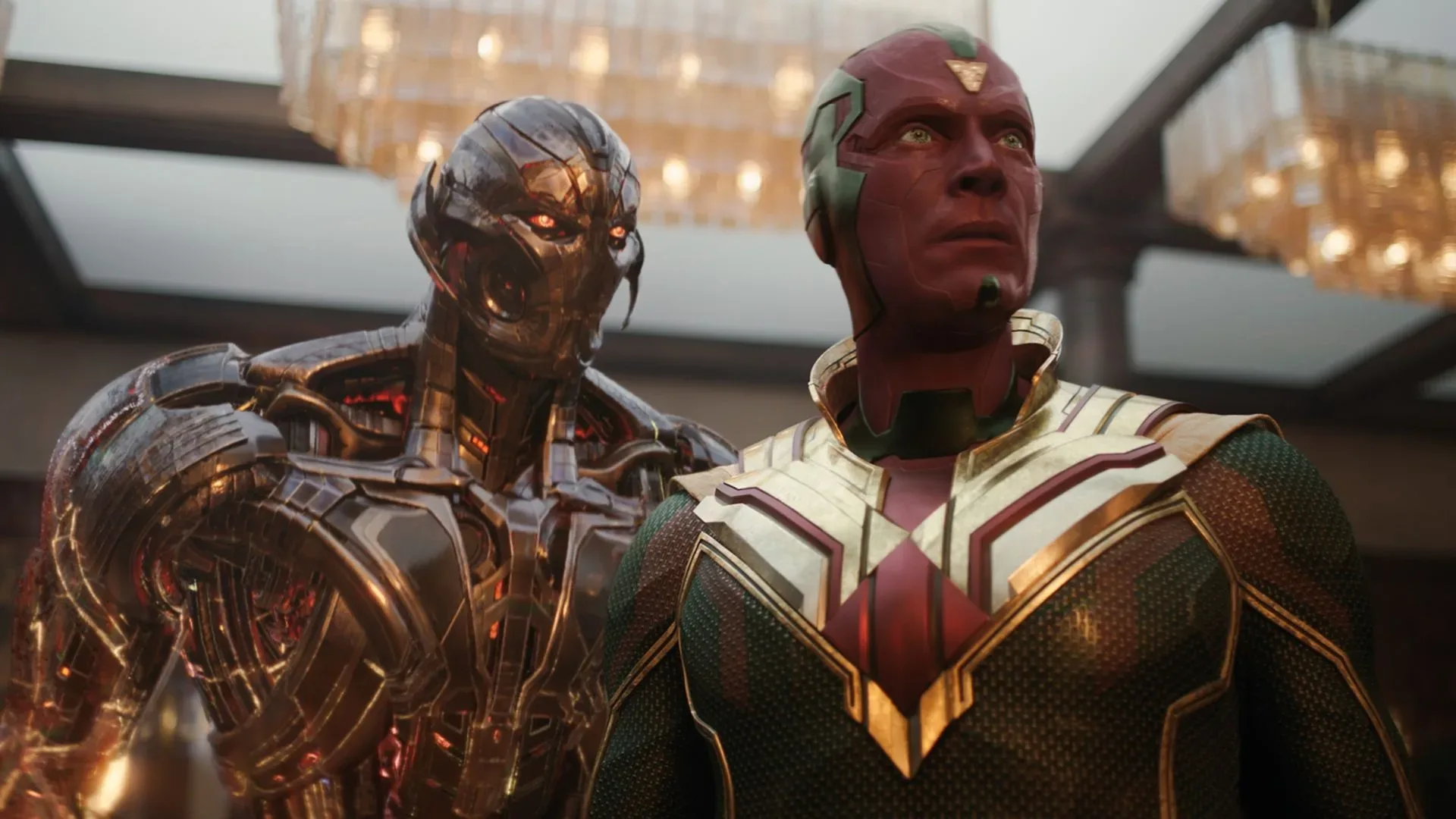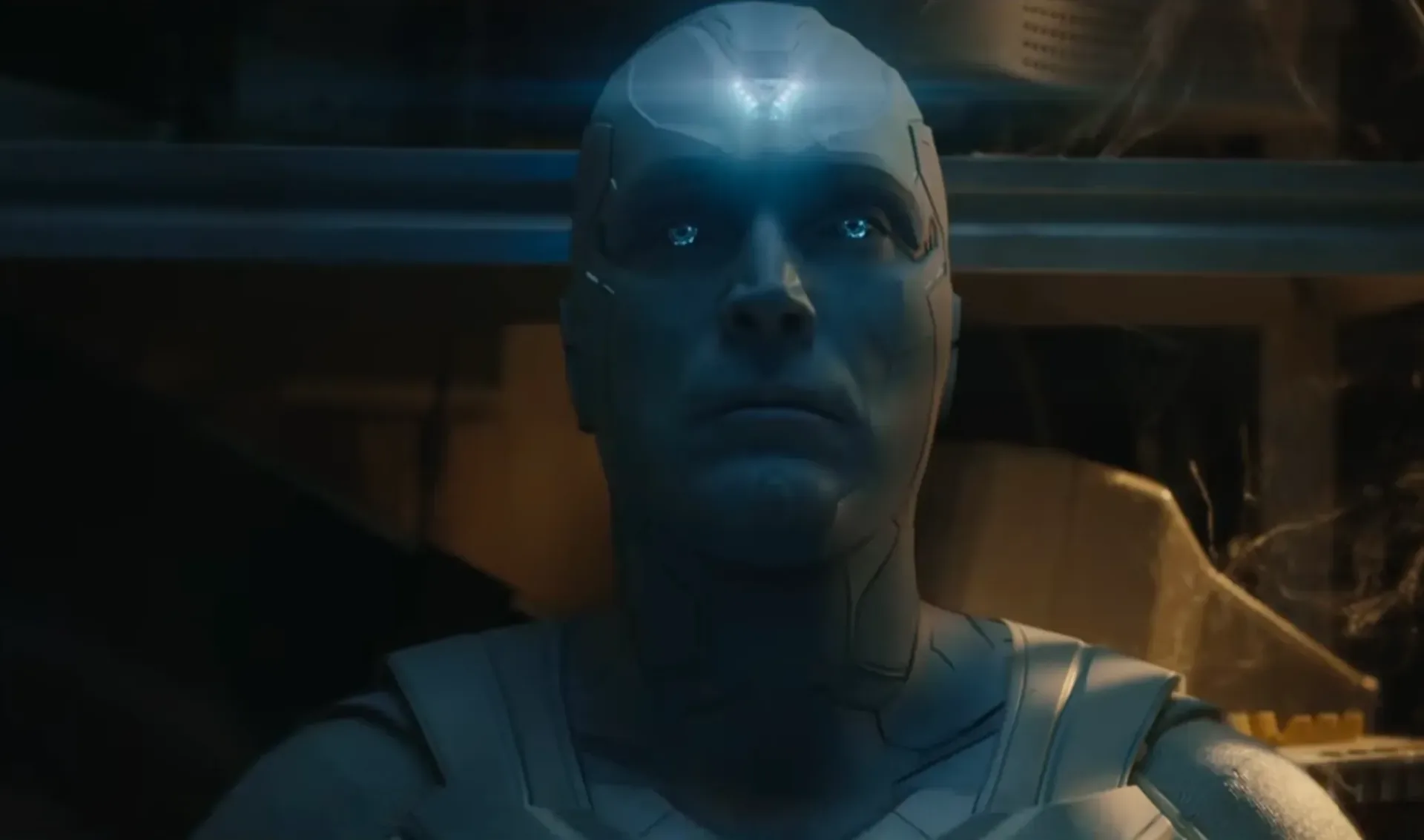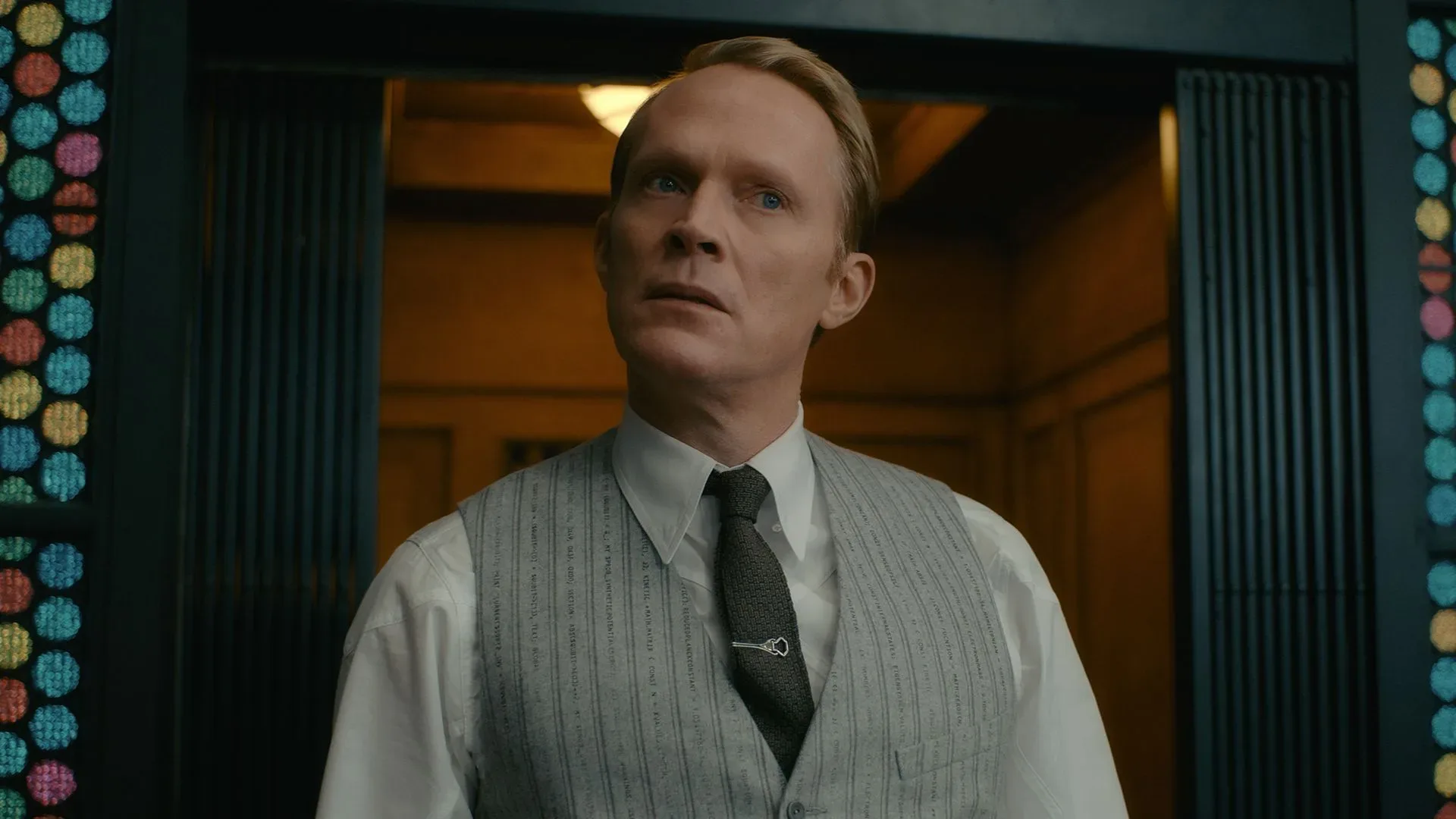
Major spoilers for VisionQuest episode 7, “Immolation,” and for Avengers: Infinity War and Avengers: Endgame follow.
Marvel continuity has an unusual talent for turning an object that briefly leaves the frame into a long-running question. In VisionQuest episode 7, that question concerns Corvus Glaive’s signature weapon: the blade that injured Vision in Avengers: Infinity War, helped shape the film’s early action, and then apparently vanished after the battle in Wakanda.
“Immolation” gives the artifact a clear place in the post-Infinity War timeline. Vision, Tommy and cyborg Lisa visit Paladin’s hangar hideout, a storehouse for weapons, vehicles and other items. There, among the collection, is Corvus Glaive’s glaive. The discovery is both an Easter egg and a direct answer to a continuity loose end: after Corvus died in the woods around Wakanda, his original weapon was recovered by the Wakandans.
Paladin subsequently acquired it, though the episode makes clear this was not an approved exchange. He says it was difficult to obtain and that he is now on bad terms with the Wakandan monarchy. The line does not explain precisely how the theft happened, nor does it establish when Paladin took the weapon. It does establish the essential chain of custody: Wakanda held the glaive after the fight, and Paladin later removed it from Wakandan control.
Why the glaive matters beyond a visual callback
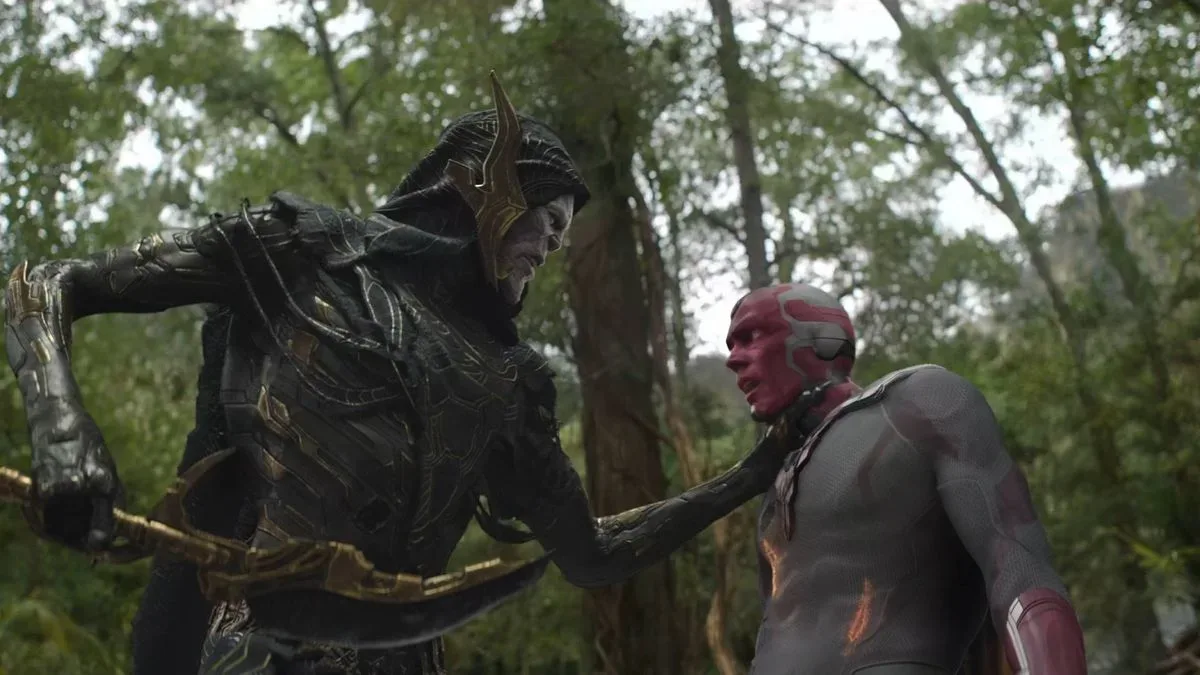
Calling the weapon an Easter egg risks underselling it. Corvus Glaive’s glaive was a critical piece of the threat facing the Avengers in Infinity War. Corvus uses it to impale Vision near the beginning of the film, leaving Vision compromised for much of the story. The damage is especially consequential because the weapon can pierce Vision’s Adamantium body and prevents him from phasing.
Phasing, in this context, is Vision’s ability to move through solid material by altering his physical state. Removing or restricting that ability makes him dramatically more vulnerable, which is precisely why the attack has such lasting consequences in the film. The glaive was therefore not simply a sharp alien polearm; it was an effective countermeasure against one of the MCU’s most formidable synthezoids.
The earlier film also presents several additional indicators of its power:
- It can turn aside energy attacks from the Mind Stone.
- It shatters Proxima Midnight’s spear when Steve Rogers briefly wields the glaive during the Scotland fight.
- Thanos uses it to kill Heimdall.
Vision ultimately reverses the situation in Wakanda, impaling Corvus with his own weapon during a three-way confrontation involving Steve Rogers. But while Corvus’s fate was settled, the fate of the glaive was not. It was not necessary for Infinity War to pause and catalogue battlefield recovery, yet leaving behind a weapon capable of harming Vision and deflecting Mind Stone energy invited the obvious question: who picked it up?
VisionQuest answers with Wakanda. That is a logical custodial destination within the events shown: Corvus dies near Wakanda during the climactic battle, and the Wakandans would have had both access to the battlefield and a compelling reason to secure an alien weapon of exceptional destructive potential. Episode 7 then immediately turns the recovery into a new complication by placing the glaive in Paladin’s private stockpile.
Paladin’s hangar changes the artifact from relic to tool
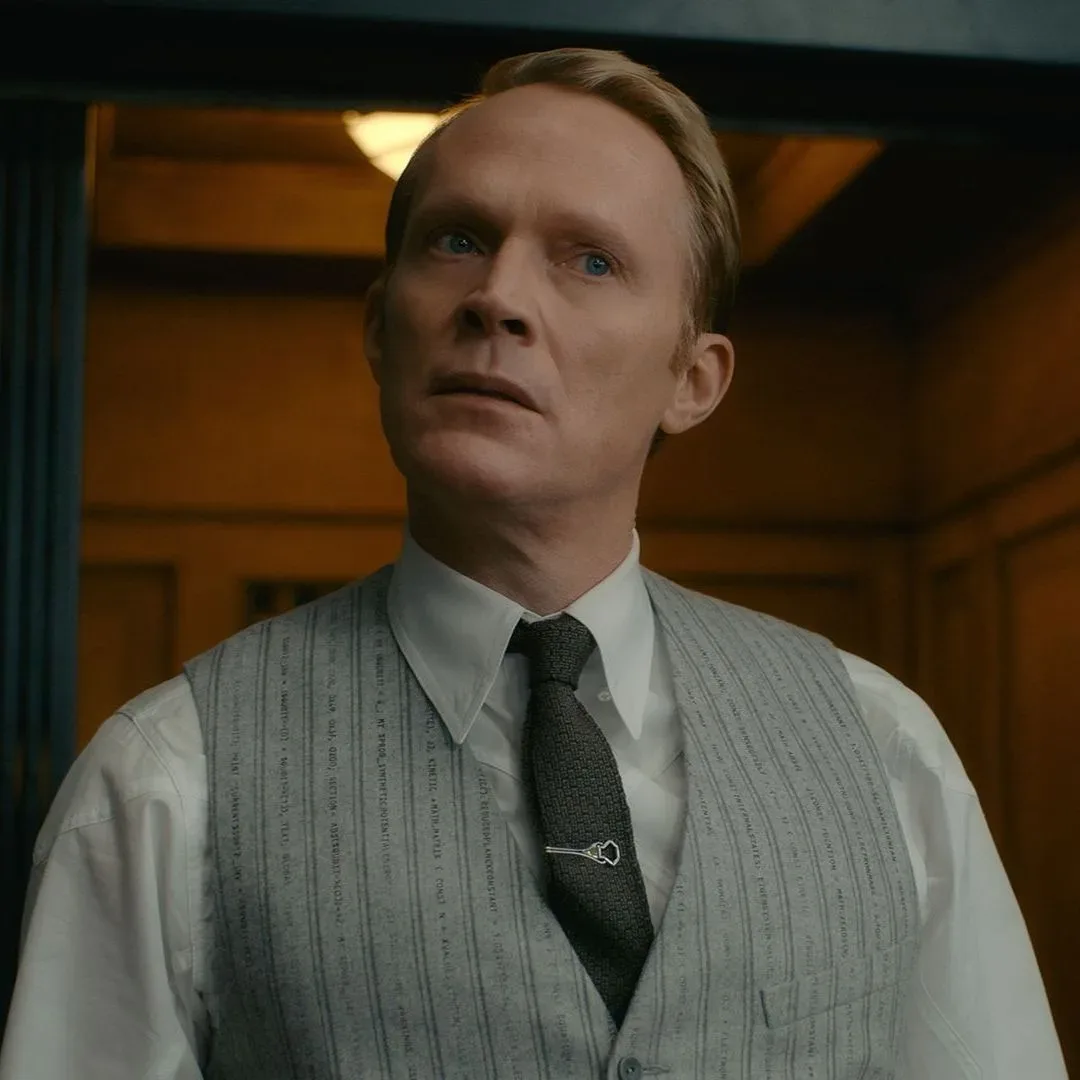
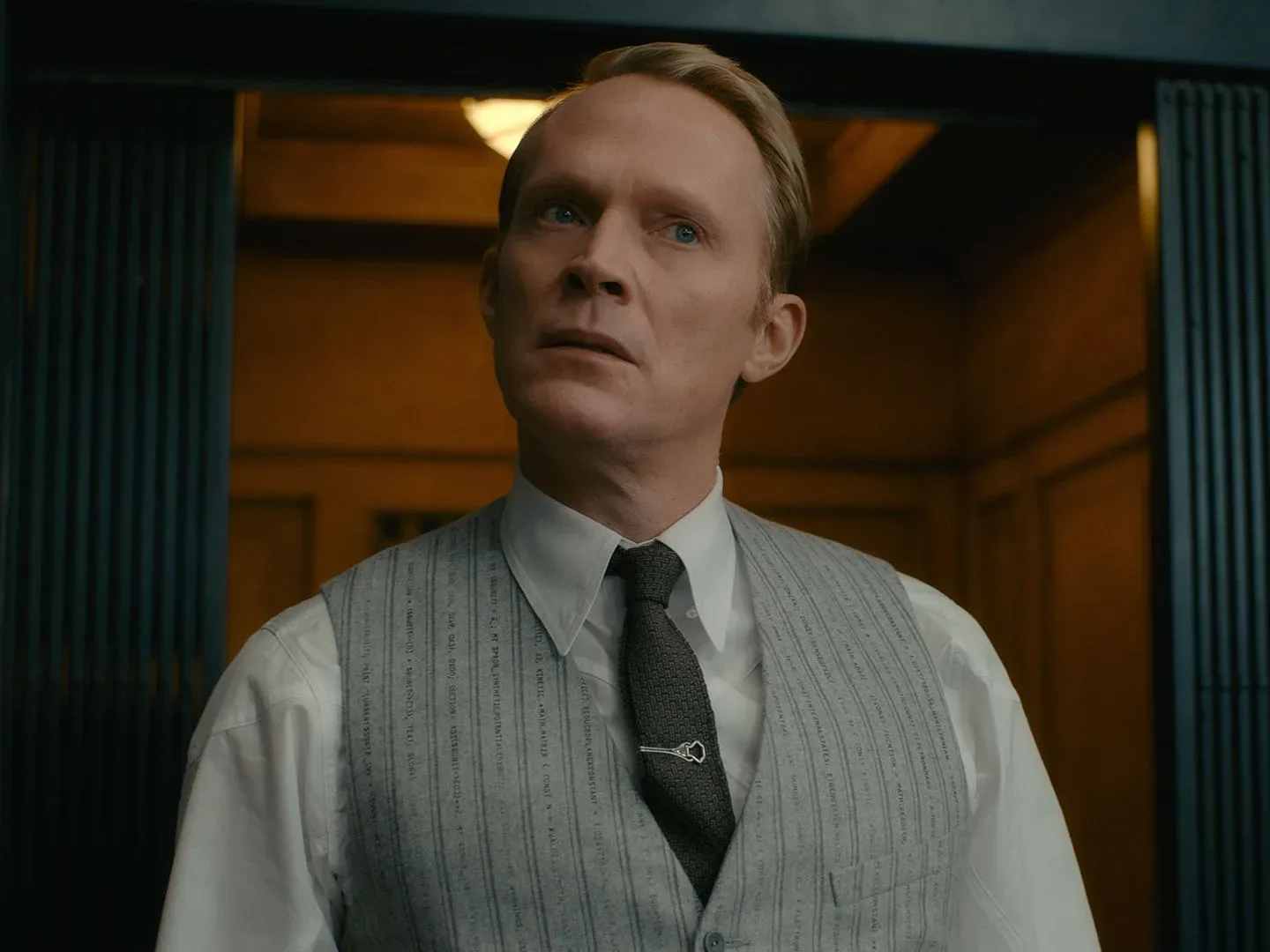
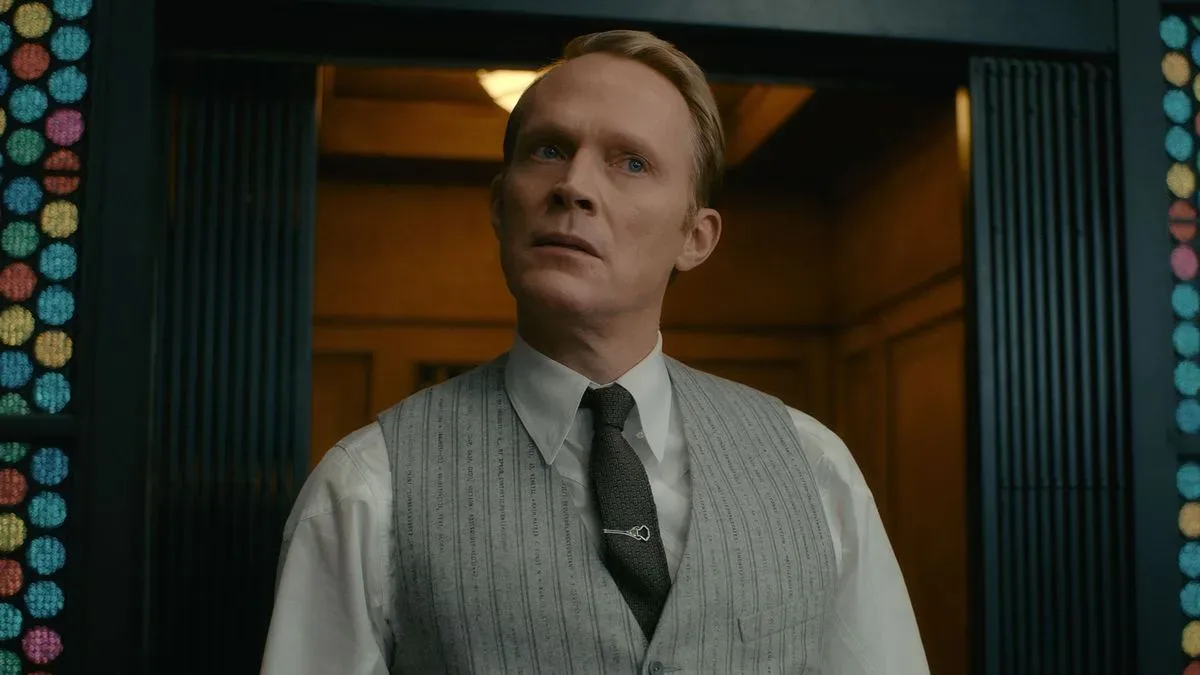
The episode does not treat the glaive merely as a prize mounted in a villainous warehouse. Paladin identifies it as an “alien battery,” giving Vision a practical reason to use it. Vision draws on its energy to enter his own subsystems, a sequence that leads to an encounter with Jim Hammond and Phineas Horton, described as Vision’s digital forefathers.
Subsystems are the component processes within a larger technological system. In the episode’s framing, Vision is not just inspecting an exterior device or downloading a file; he is using the glaive’s power to travel inward through his own technological architecture. The weapon’s new role adds useful texture to its earlier MCU history. Its danger was previously demonstrated through combat. Here, its alien energy becomes a means of accessing Vision’s internal digital world.
That shift matters because it connects the artifact’s past to the series’ present concern with Vision’s identity and origins. An object that once undermined Vision physically now helps initiate a journey into his own construction and lineage. The irony is clear even without the episode declaring it: Corvus Glaive’s weapon remains harmful and coveted, but its power is now pointed toward an investigation of Vision rather than an attempt to destroy him.
The episode does not show what happens to the glaive after Vision uses it. Paladin still possesses it when he presents it, and no subsequent scene establishes that Vision, Tommy, Lisa, or Wakanda takes it away. The most reasonable reading from what is shown is that it remains in Paladin’s possession, but that is an inference rather than a newly confirmed status quo.
The Endgame version is not a continuity contradiction
Viewers who remember Corvus carrying a glaive during the final battle of Avengers: Endgame may wonder how that squares with episode 7’s recovered weapon. The distinction is the film’s time-travel setup. The Corvus Glaive seen during the final Endgame battle is the 2014 version of the character, who arrives in the future with Thanos’s forces.
That 2014 Corvus and his weapon are destroyed when Tony Stark uses the Infinity Stones. His glaive crumbles with him. It is separate from the weapon wielded by the Corvus who dies in Wakanda in the events of Infinity War. In short, there are two versions of the glaive involved because there are two temporally distinct versions of Corvus involved.
This is exactly the kind of detail that can become blurry when a franchise revisits an iconic object years later. Episode 7 does not overwrite the Endgame scene. Instead, it identifies the surviving artifact as the original timeline’s weapon—the one left on the Wakandan battlefield after Corvus’s death—and keeps the 2014 weapon’s destruction intact.
What the reveal does and does not set up
The immediate payoff is straightforward: VisionQuest has accounted for a powerful piece of alien technology that had no stated destination after Infinity War. The second payoff is more character-focused. Vision can use it to reach a part of his own internal history, bringing Jim Hammond and Phineas Horton into the episode’s exploration of his digital ancestry.
There are also unanswered issues, but the episode does not resolve them yet. Paladin’s account confirms that acquiring the weapon damaged his relationship with the Wakandan monarchy; it does not detail the theft, explain how he got past Wakanda’s protections, or show any response from the Dora Milaje. Likewise, the story does not confirm a future purpose for the glaive after its role as an energy source.
Those gaps are worth separating from confirmed information. It is confirmed that Wakanda had the weapon, that Paladin took it, and that Vision drew on it as an alien power source. It is not confirmed that the glaive will be used in another battle, that Wakanda will try to recover it, or that Paladin will retain it permanently. The artifact’s importance makes each possibility easy to imagine, but episode 7 provides no final answer beyond its current reveal.
For Marvel viewers, the moment is a satisfying example of continuity being used in service of a current story rather than as a detached checklist reference. The glaive carries the memory of Vision’s injury, Corvus’s downfall, Wakanda’s battlefield, and the alternate-timeline army in Endgame. In “Immolation,” it also becomes a key that lets Vision look deeper into himself.
The episode arrives amid a wider run of screen-world updates across the site, including news that Park Hoon-jung’s assassin noir Tristes Tropiques has secured a North American deal. For VisionQuest, though, the focal point is an older MCU weapon that has finally received a present-tense explanation.
VisionQuest episode 7 is available on Disney Plus. With the finale still to come, Paladin’s possession of Corvus Glaive’s glaive remains one of the episode’s most consequential pieces of unfinished business.