
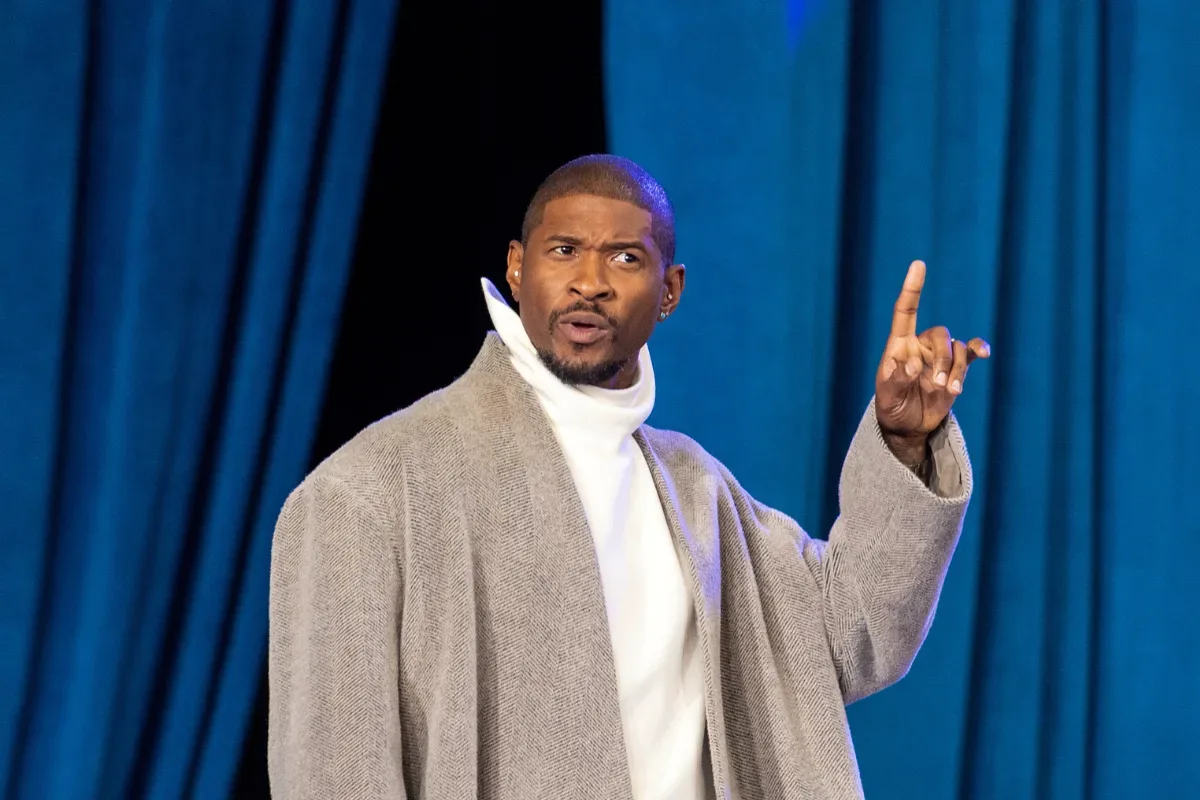
Usher is escalating his legal dispute over a proposed Atlanta restaurant project, seeking sanctions against attorney Alcide Honore over the handling of an alleged $700,000 unpaid balance from a $1.7 million loan.
The new request is an allegation about conduct in the case, not a finding that sanctions are warranted or have been imposed. Honore has denied wrongdoing. The central disagreement is sharply defined: Usher alleges wire-transfer records show that Honore received funds connected to the deal, while Honore has reportedly denied receiving Usher’s money.
That dispute matters because the restaurant transaction itself did not move forward as expected. Usher’s lawsuit says he agreed to lend money for Homage ATL, a restaurant planned for Buckhead, rather than buy an ownership stake in the venture. The complaint alleges that $1 million was repaid in August 2025, but that the final $700,000 was not returned.
A loan, not an equity bet, is at the center of the case
The distinction between a loan and an ownership investment is fundamental to understanding the conflict.
An equity investment generally means putting money into a business in return for an ownership interest. Its return can depend on the company’s performance, and an investor may face the risk that the business never produces profits or loses its capital. A loan, by contrast, is money advanced with an obligation to repay it under the agreed terms. In this case, Usher’s complaint characterizes the $1.7 million as a loan, placing repayment—not a future slice of restaurant earnings—at the center of the allegations.
The proposed project involved the former Ocean Prime property at 3102 Piedmont Road in Atlanta. The plan was reportedly presented after producer Bryan Michael Cox approached Usher about acquiring the site. Usher’s complaint says he declined the opportunity to take an ownership position but agreed in January 2025 to lend $1.7 million. The money was placed in a trust account while the property purchase was expected to happen quickly.
A trust account, in this context, is an account used to hold money for a particular purpose or transaction rather than treating it as ordinary operating funds. The case now turns in part on what happened to the funds in that arrangement, who received them and what documentation establishes their path.
Why the sanctions request is a separate issue
Requests for sanctions are procedural moves inside a lawsuit. They are not the same as winning the broader case, and the filing of a request does not establish that the allegations behind it are true.
Related coverage includes Usher Seeks Sanctions in Dispute Over $700K Restaurant Loan Balance.
Usher’s reported sanctions request concerns Honore’s answers about whether he received the money. Usher alleges those answers were evasive and inconsistent with wire-transfer records that, in the singer’s view, establish the payment. Honore disputes wrongdoing.
The immediate question raised by the request is therefore narrower than the full restaurant dispute: whether the court should take action over a party’s or attorney’s conduct during the litigation. The larger case remains focused on the alleged nonreturn of money advanced for the transaction, the failed property purchase and the claimed use of funds for other purposes.
That distinction is worth keeping clear as the case develops. A sanctions decision, if one is ever made, would address litigation behavior. It would not automatically resolve every underlying claim about the loan. Conversely, the absence of sanctions would not by itself decide whether the $700,000 is owed. The facts alleged in the complaint still need to be tested through the court process.
What the complaint alleges happened to the money
According to the lawsuit, the planned purchase had still not happened by the summer of 2025. Usher then sought the return of his money. The complaint alleges that $1 million was repaid in August, leaving $700,000 outstanding.
The original filing also alleged that Honore said it would be difficult to return the remaining balance because funds had been used for other purposes. The newer disagreement over whether Honore received Usher’s money brings the case back to a practical question common to financial disputes: the trail of records.
Wire-transfer records can identify where funds were sent, but the legal meaning of a transfer may still be contested. Parties can disagree over the intended recipient, the role of an intermediary, what authority existed over an account, whether money was held for a limited purpose and whether later disbursements were permitted. Those are the types of factual questions that can become especially important when a transaction is arranged through a trust account.
Nothing in the sanctions request itself should be confused with a final determination on those questions. At this stage, the public account consists of competing positions: Usher’s allegation that records show receipt of the funds and Honore’s denial of wrongdoing.
The defendants and the connection to Usher’s music career
Usher filed the lawsuit in Fulton County Superior Court. The case names Cox, Keith Thomas and Charles Hughes alongside Honore.
Cox’s involvement makes the dispute notable beyond the restaurant proposal. He is a longtime collaborator of Usher’s and helped create songs including Burn and U Got It Bad. Their professional relationship also includes work on Confessions, giving the dispute an added personal dimension: this was not described as a pitch from an unfamiliar business contact, but a deal connected to a collaborator of more than two decades.
Still, Cox has sought to draw a line between the project and the alleged handling of its finances. He has described himself as a passive minority shareholder without an operational role. He has also maintained that the business dispute did not end his 27-year friendship with Usher.
That position is important because a shareholder’s role can vary widely. A passive minority shareholder generally means someone with a smaller ownership interest who does not direct daily operations. Whether that description affects liability in this particular case will depend on the claims, evidence and legal arguments presented to the court; it is not answered merely by adopting the label.
The $4.9 million demand goes beyond the alleged missing balance
Usher’s original lawsuit sought $4.9 million across seven claims, plus attorney fees and litigation costs. That figure is substantially higher than the alleged unpaid $700,000 balance, but it should not be read as a finding of damages.
In civil litigation, a complaint can seek several kinds of relief tied to different legal theories. The requested amount may include alleged direct losses as well as other forms of damages or remedies claimed under the filing. A court has not awarded the requested sum simply because it appears in a complaint. Defendants can contest both liability and the amount sought.
For now, the most concrete financial allegation remains straightforward: of the $1.7 million Usher says he lent for the proposed restaurant acquisition, he alleges $1 million came back and $700,000 did not.
What to watch next
The next meaningful developments will likely concern the court’s response to the sanctions request and the evidence offered on the movement of the funds. Documents tied to the wire transfers, the trust account and the anticipated property purchase could all be relevant to the competing accounts.
It will also matter whether the parties’ descriptions of their roles align with the transaction records. Cox’s assertion that he was a passive minority shareholder, Honore’s denial of wrongdoing, and Usher’s allegations about the loan and its repayment are distinct positions that the case will need to address separately.
The dispute sits at the intersection of entertainment relationships and a proposed business venture, but its key questions are less glamorous than the names involved: what was agreed, where the money went, who controlled it and whether the remaining balance must be repaid. As with other Atlanta-centered music stories, including this look at a public choice surrounding Atlanta rap collaboration, the public-facing narrative can be only one part of a situation whose consequences play out through business decisions and documentation.
At present, there is no sanctions ruling and no final court resolution of Usher’s underlying claims. The case remains an active dispute, with allegations by Usher and denials by Honore that have yet to be conclusively resolved in court.