Offset is not merely offering a diplomatic answer when he talks about Gunna. By placing Gunna on “Spit Propane,” from his November 13 album GMFU, he has made a public creative decision at a time when many Atlanta rap relationships remain defined by distance, silence or unresolved tension.
His point is straightforward: Gunna is his friend, and that friendship existed before the circumstances that made it contentious. Offset has said their connection is rooted in mutual support rather than shared exclusion. He described Gunna as somebody who calls to redirect his focus away from online noise and back toward making music. In an industry where social-media reactions can rapidly become treated as proof of allegiance, that is a notable description of what the relationship is actually for.
“Spit Propane” is therefore more consequential than a routine guest appearance. It is evidence that Offset is willing to continue working with Gunna rather than treat the controversy surrounding him as a veto on future music. That stance does not settle every disagreement around Gunna, nor does it require every Atlanta artist to adopt it. But it does challenge the idea that maintaining a friendship is automatically an act of hostility toward someone else.
A collaboration that follows through on the message
Offset’s support is not new. In March 2024, “Prada Dem” made him Gunna’s first rap feature after Gunna’s December 2022 release from jail. The new GMFU appearance shows that the earlier collaboration was not a one-off gesture made to test the temperature of public reaction. Their working relationship has continued.
That continuity matters because the debate around Gunna has frequently been reduced to a binary question: collaborate or do not collaborate. Offset instead frames the situation through the longer history between the artists. He rejected the suggestion that their recent proximity comes from being isolated in parallel, saying their collaborations predated the later turmoil. In practical terms, he is asking listeners to view the partnership as an existing relationship that survived pressure, not a new alliance created by controversy.
It is also a reminder that features carry meaning beyond their musical function. A guest verse can introduce audiences, expand a song’s appeal or simply pair complementary artists. Here, it additionally signals professional trust. The choice is visible to fans, peers and prospective collaborators alike, which makes it harder to dismiss as a private conversation or an ambiguous social-media interaction.
Why Gunna remains a flashpoint
The tension stems from Gunna’s release after he entered an Alford plea to a racketeering-conspiracy charge. An Alford plea is a legal arrangement in which a defendant maintains innocence while accepting a negotiated sentence. That distinction is central to Gunna’s position: he has denied cooperating against his co-defendants and did not testify against Young Thug during the trial.
Still, the plea became a durable source of conflict among some former collaborators and observers. Legal terminology does not automatically settle a cultural dispute, particularly in a scene where loyalty, public perception and personal relationships may be judged through different standards than courtroom procedure. The gap between what an artist says happened, what a legal agreement means, and what audiences infer from it has left ample room for suspicion and public argument.
Related coverage includes Offset Backs Gunna With New ‘GMFU’ Collaboration as Atlanta Rap Divisions Persist.
That is why Offset’s language is significant. He is not presenting an exhaustive legal case or claiming that every relationship must be repaired. He is speaking about his own friendship and his belief that Atlanta’s creative ecosystem functions better when artists can support one another despite politics and disagreements.
His argument is also carefully broader than one artist. Offset has said Atlanta always had politics, but that its artists previously displayed enough unity to rise together. This is analysis rather than a measurable rule: there is no single way to quantify a city’s artistic solidarity. Yet his underlying concern is easy to understand. When every association is turned into a loyalty test, collaboration becomes harder, conversations become more guarded and the music can become secondary to the public scoreboard.
Success did not erase the dispute
Gunna’s audience remained substantial after his release. His 2023 album A Gift & a Curse reached No. 3 on the Billboard 200, while “Fukumean” rose to No. 8 on the Hot 100. Those results demonstrate continued commercial reach, but they do not resolve the relationship issues around him. Chart performance measures consumption; it cannot determine whether a former collaborator feels comfortable reconnecting, or whether an audience agrees on what loyalty requires.
That distinction is important in discussions that treat popularity as a final verdict. A hit can show that listeners are still engaging with an artist’s work. It cannot turn a private grievance into a nonissue. Conversely, ongoing disagreement does not make an artist’s listeners disappear. The coexistence of commercial success and professional estrangement is precisely what makes this story more complicated than either side of an online argument often allows.
Offset’s decision to keep collaborating with Gunna adds another real-world layer. It does not claim that the controversy never happened. Rather, it shows that the controversy has not prevented every meaningful partnership. Music is functioning here as action, not simply commentary.
Different approaches to an Atlanta-wide problem
Lil Baby has described a different response to the same strain. He has said that any disagreement with Gunna should stay private because a public fight would hurt both artists and Atlanta. That is not an announced reconciliation, and it should not be presented as one. It is, however, an acknowledgment that public escalation has costs beyond the immediate parties.
The contrast with Offset is instructive. Lil Baby’s position emphasizes containment: do not turn a personal rift into entertainment that damages everyone involved. Offset emphasizes continued friendship in public: if the bond is real, he will not hide it or abandon the musical work that comes from it. Neither approach erases the other. They represent two ways artists can try to resist the pressure for an endlessly escalating feud.
For listeners, the useful takeaway is to avoid reading every small signal as a definitive settlement. A feature is meaningful, but it does not mean the entire scene has reconciled. A statement about keeping matters private can be constructive without confirming a renewed partnership. Atlanta rap is not a single person with a single response, and reducing it to one unified camp obscures the individual choices artists are making.
What unity means in this context
Offset’s version of unity is not the same as universal agreement. He explicitly recognizes that politics exist. The distinction is between disagreements that are managed within a community and divisions that become so consuming they limit collaboration, drown out music and demand a permanent choice of sides.
That makes his defense of Gunna less about insisting everyone share a judgment and more about defending the space to exercise personal judgment. Offset can consider Gunna a friend; another artist can keep distance; Lil Baby can argue against airing conflict in public. These positions may be incompatible in places, but they do not have to produce a nonstop public campaign against one another.
For a music community that has built its influence through stylistic exchange, guest appearances and overlapping circles, the practical implication is substantial. Collaboration is one of the ways scenes remain dynamic. When artists stop working together, fans lose potential records, but artists also lose networks of creative encouragement and professional opportunity. Offset’s description of Gunna steering him back toward music points to that quieter benefit: the relationship is not just symbolic, but a form of accountability that helps keep the focus on work.
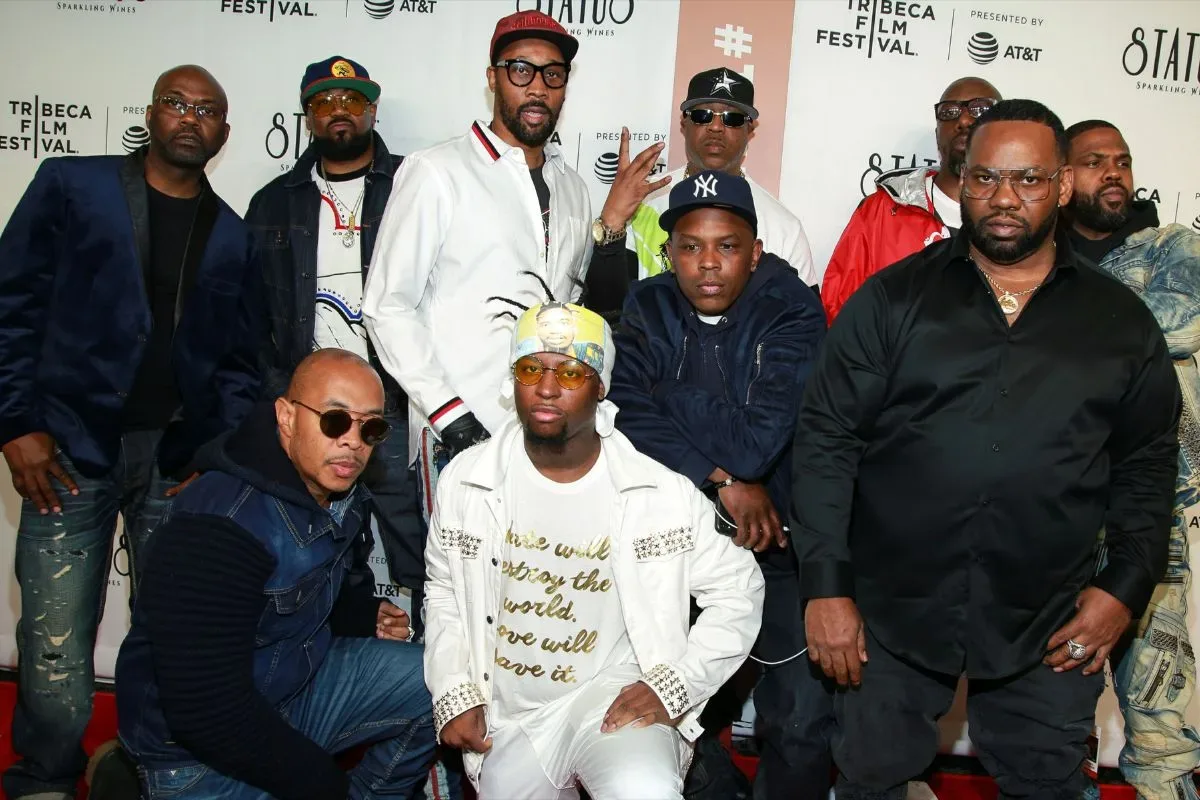
There is precedent for rap’s biggest cultural moments being shaped by collective momentum, and the broader hip-hop conversation continues to spotlight the impact of shared legacy, as seen in Wu-Tang Clan’s Rock Hall recognition. Offset’s comments concern a current Atlanta conflict, not a claim that unity solves every dispute. Still, they underline a familiar truth: scenes are strengthened when artists can create alongside one another without every connection becoming a referendum.
Gunna’s next moves extend beyond features
Gunna has also begun building a new platform with SB THE LABEL, launched in October. Its initial roster includes Atlanta artists Casper Bluff, Nechie and Dracc. The label is a separate development from the Offset collaboration, but together they show that Gunna’s activity is not limited to defending his position or responding to backlash. He is still recording with established peers while putting resources behind newer artists.
It would be premature to assign outcomes to that label effort or to treat its launch as proof that the larger dispute has faded. What is clear is that it creates another channel for Atlanta artists to work and be heard. In the context of Offset’s unity argument, that is a tangible example of investment in the city’s musical future rather than a purely rhetorical appeal for solidarity.
Ultimately, “Spit Propane” does not close the book on the tensions surrounding Gunna. It does establish where Offset stands. He has chosen to prioritize a longstanding friendship, acknowledge the value of mutual encouragement and keep the collaboration visible. In a period when public narratives can demand rigid sides, that decision is both personal and professional—and it places the music back at the center of the conversation.