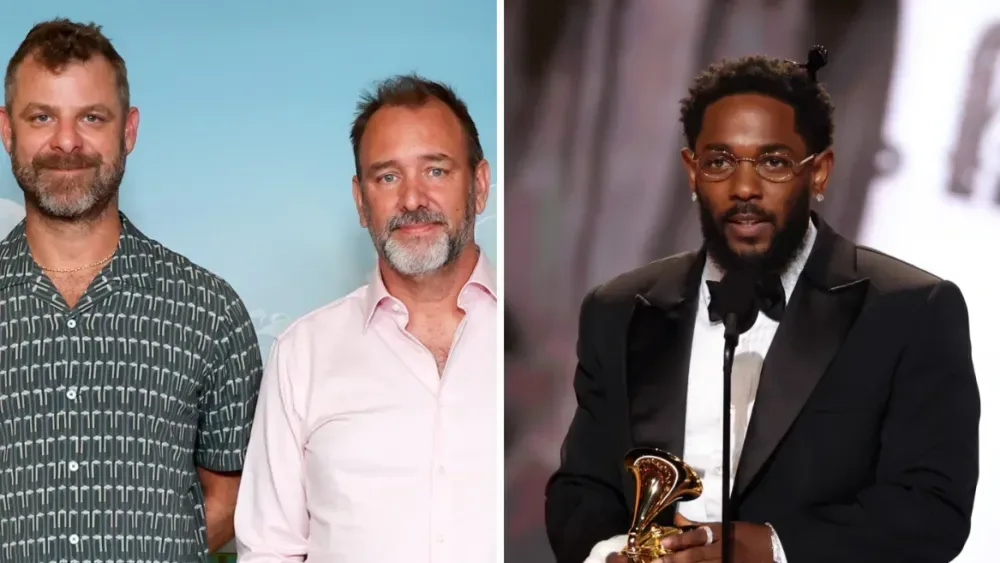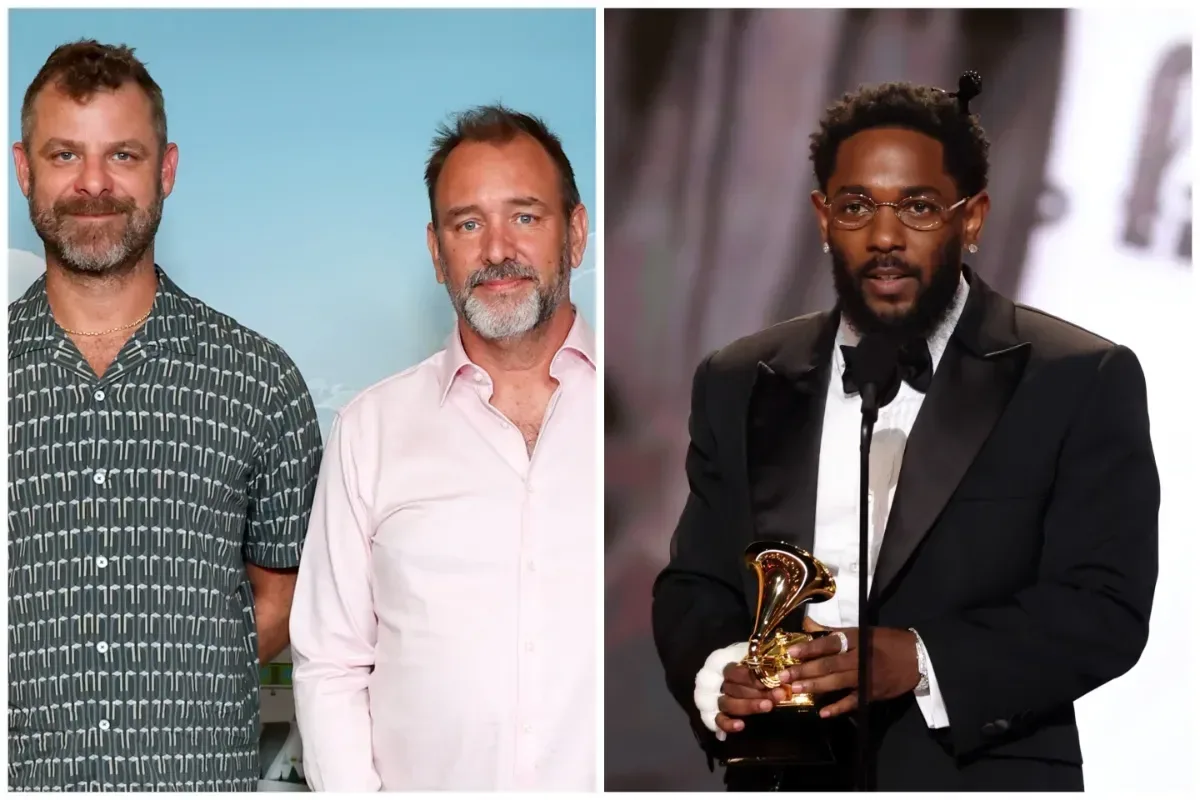
Trey Parker and Matt Stone have addressed the delayed schedule of their film collaboration with Kendrick Lamar, offering an apology to the project’s partners while maintaining that they still believe in the movie. The musical comedy is operating under the working title Whitney Springs and remains in production at Paramount.
The pair said they are taking responsibility for the delay, directing their apology toward Lamar’s pgLang and Paramount. Their explanation was bluntly practical rather than dramatic: the demands of South Park, along with unspecified life circumstances, interfered with the movie’s schedule. Crucially, the statement does not indicate that the project has been abandoned. Instead, it frames the setback as a scheduling issue around a film they still intend to bring forward.
For a collaboration involving Parker and Stone’s aggressively irreverent comedy sensibility and Lamar’s musical and cultural reach, even a modest update draws attention. Yet there is still plenty that has not been formally detailed, including a revised release date, a finished title, a cast list beyond one reported role, or a clear timeline for when audiences might see footage. For now, the most concrete status is that Whitney Springs is in production and delayed.
A project built around unusually potent creative ingredients
Whitney Springs is being made at Paramount, the studio also associated with South Park. Parker and Stone are working through their Park County banner. Lamar is producing with Dave Free through pgLang, the company they co-founded. The stated combination is notable because it brings together creators with sharply identifiable voices, but it does not automatically reveal what the final movie will feel like.
Parker and Stone have spent decades creating satire that is frequently abrasive, musical, political, and deliberately willing to make an audience squirm before it laughs. Lamar, meanwhile, is attached as a producer and has reportedly recorded original songs for the film. A musical comedy is therefore a meaningful descriptor, not a decorative label, but the exact role that music will play in the narrative has not been officially outlined.
That uncertainty is important. A project with a working title can evolve in visible and invisible ways: characters may shift, story details may be refined, songs may change, and the public-facing description may be simplified long before a marketing campaign begins. It would be premature to treat the early material as a locked plot blueprint or to assume every reported detail has survived the production process unchanged.
What has been said about the story
An early description of Whitney Springs centers on a Black man employed as a slave reenactor at a living-history museum. He learns that his white girlfriend’s family once owned his ancestors. That premise suggests a movie prepared to confront race, historical memory, performance, local mythology, and the uncomfortable business of packaging the past for public consumption.
A separately reported variation says the protagonist clashes with a racist mayor in a Midwestern town, with Parker set to play that mayor. The two descriptions are not necessarily contradictory, but neither should be treated as a full official synopsis. They point toward overlapping ideas: a historical reenactment setting, a contemporary racial conflict, and a character whose connection to the town’s past is personal rather than abstract.
The premise also explains why the project has attracted interest before its finished title, trailer, or release schedule has been disclosed. It is provocative territory, especially in the hands of artists known for work that resists tidy tonal categories. Still, provocative subject matter alone does not tell viewers whether the movie will emphasize broad farce, character-driven comedy, pointed satire, music-led storytelling, or some volatile mixture of all four. That remains part of the film’s mystery.
There is a practical reason to keep that mystery intact. Early loglines are designed to communicate a hook, not to provide a scene-by-scene account. The project’s public identity may become clearer when Paramount and the producers decide it is time to identify the cast, confirm a title, share a trailer, or establish an actual release plan. Until then, “working title” is doing valuable work in the phrase Whitney Springs.
The scheduling pressure behind the apology
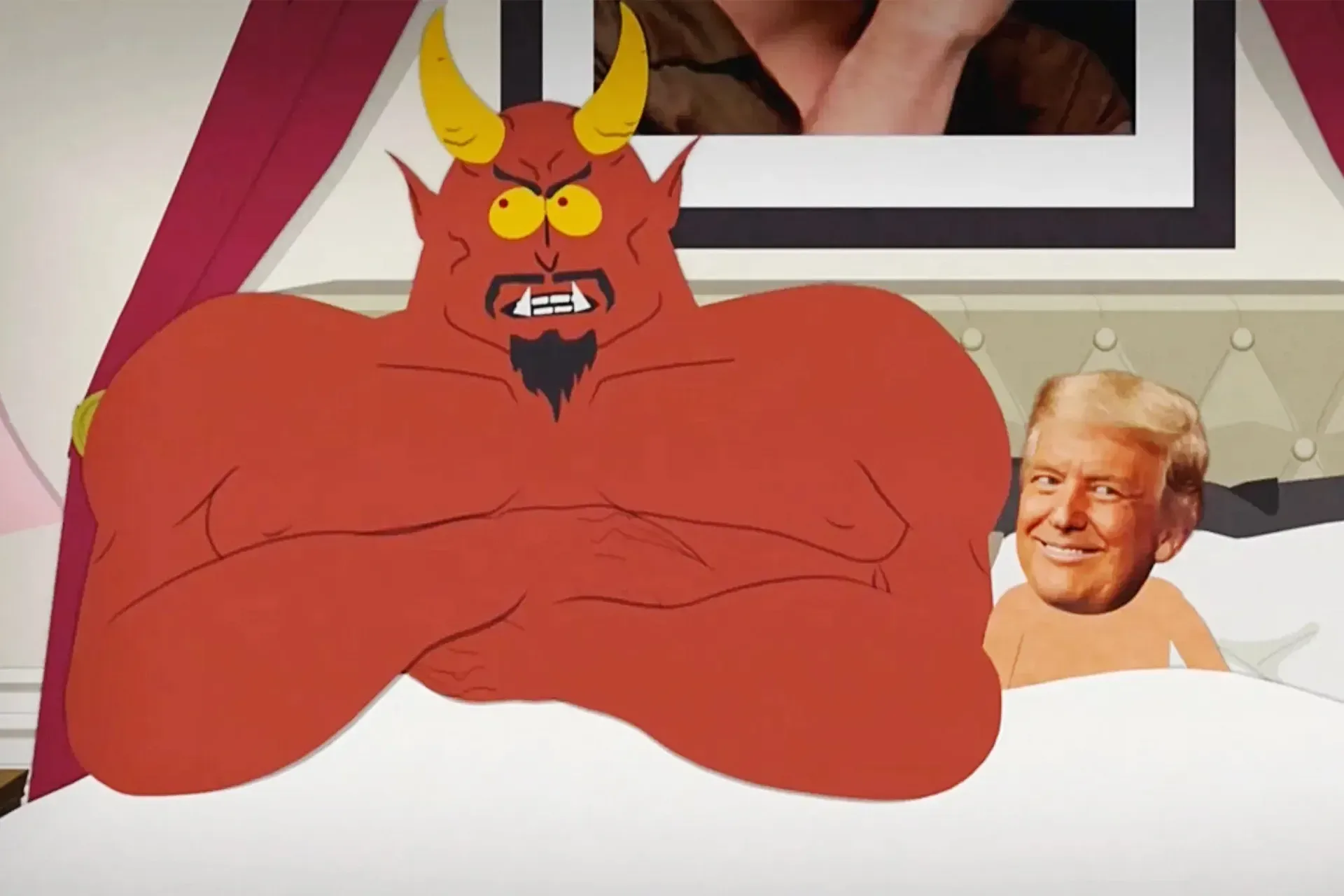
The delay arrives as Parker and Stone prepare South Park Season 29 for a September 16 debut. The show’s recent history makes clear why a new season can be an enormous demand even for its veteran creators. Seasons 27 and 28 followed a two-year hiatus, and the series returned with Donald Trump positioned as a major antagonist, a move that continued the program’s long-running tendency to make current events part of its combustible comic machinery.
The off-season has not exactly been quiet, either. Parker and Stone recently changed the show’s name to South America, apparently as a jab connected to Trump’s renaming of the Gulf of Mexico as the Gulf of America and Lake Ontario as Lake America. The gag is vintage South Park: quick, confrontational, and less interested in subtle diplomacy than in shoving a satirical button until it starts smoking.
That ongoing work provides context for the apology, though it does not supply a detailed production calendar. Creating television while shepherding a feature is a complicated undertaking, particularly when the same creators are central to both. The statement acknowledges that competing responsibilities got in the way, but it does not establish how far the film moved from its initial timetable or whether the delay affects shooting, post-production, music, marketing, or a planned release window.
There is a difference between information and inference here. It is reasonable to say that a new South Park season has been part of Parker and Stone’s workload. It is not reasonable to turn that into a precise claim about which day of filming, recording session, or editing decision created the scheduling conflict. The filmmakers have owned the disruption; the granular mechanics behind it have not been publicly explained.
Why the project remains worth watching
Delays are rarely exciting news, but they can still clarify a project’s status. This one is not being presented as a cancellation, a recasting announcement, or a creative split. Parker and Stone’s message is an expression of responsibility and continued faith in the movie, while the production remains tied to Paramount, Park County, pgLang, Lamar, and Free.
That gives Whitney Springs a stable core, even while its schedule is unsettled. The challenge now is simply that the public has more questions than answers. Will the working title remain? When will the wider cast be confirmed? How extensive are Lamar’s original songs? Will Parker’s reported mayor role be a major on-screen part or a supporting comic foil? None of those questions has an official answer in the information currently available.
Film projects can also carry a long public runway without revealing their final form, particularly when their creators are balancing established franchises and separate production obligations. Entertainment audiences have seen plenty of seemingly left-field partnerships eventually arrive as convention-bending releases, and cross-medium creative teams can produce work that is hard to summarize before marketing begins. Recent theatrical events built around familiar pop-culture names show how widely film programming can range; for another example, see the September Batman Day theatrical return plans.
For now, the most sensible read is also the least dramatic one: Whitney Springs has hit a delay, its creators have apologized, and the people at its center say they remain committed to it. The film’s premise, musical element, and creative team make it an unusual prospect. But its eventual title, timetable, and final shape are still waiting for a more substantial official reveal.