Spoilers for The Rings of Power season 3, episode 2 follow.
The mystery around Theo’s biological father has finally received an answer, but it is the kind of answer designed to make every earlier warning sign around the Southlander look worse. Season 3 identifies Theo’s father as Fäldred, son of Hammethreg, a man Sauron describes as part of an old and powerful lineage connected to Mordor. The revelation does not simply add a name to Theo’s family tree. It recasts his link to the broken sword hilt, his mysterious arm mark, and Sauron’s interest in him as parts of one much larger—and much darker—inheritance.
The episode still leaves essential questions open. Viewers do not yet know exactly what Fäldred was, what powers his house possessed, what Bronwyn discovered before his death, or whether Sauron’s account of events can be trusted. But Sauron’s purpose is clear enough: he wants Theo to see his past as destiny, and he appears to be steering him toward becoming one of his ring bearers.
Theo’s father is Fäldred, son of Hammethreg
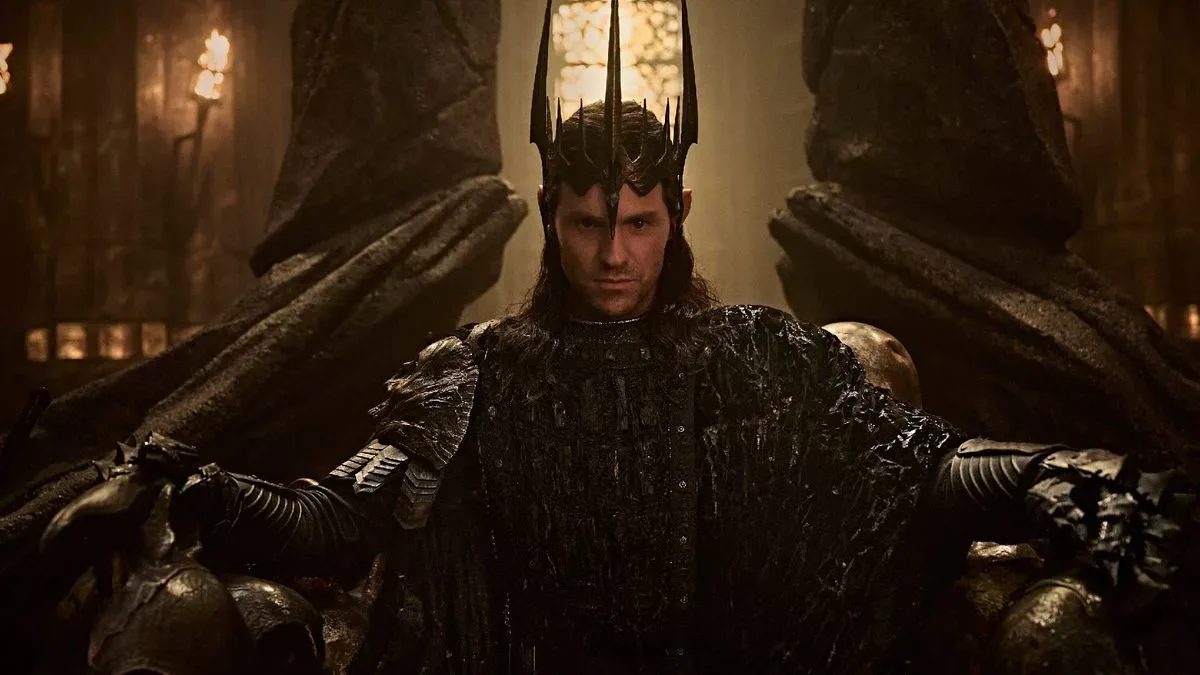
In season 3, episode 2, Theo is pulled into Sauron’s orbit and made to fight other prospective recruits for the right to become a ring bearer. During the struggle, Sauron notices the distinctive mark on Theo’s arm. He ends the fight by killing Theo’s remaining opponent, then uses a ritual that lets Theo communicate with his dead father.
That encounter produces the long-hidden identity: Fäldred, son of Hammethreg. The names do not carry an established history in J.R.R. Tolkien’s published writings, at least from the information currently presented on screen. That matters because the series is not unveiling a familiar figure whose entire fate is already known. Instead, it is building a new branch of its Southlands and Mordor story around Theo’s family.
Fäldred addresses Theo in Black Speech, and the exchange is not subtitled. When Theo asks who is speaking, the flame gives a response that is likewise not translated. It sounds approximately like “Gorth Mundor,” though that wording is uncertain without subtitles. “Gorth” is a Sindarin term associated with horror, but that possible linguistic overlap is not enough to establish a definite translation, identity, or title for Fäldred. It is a clue worth noting, not a solved riddle.
What Sauron says Theo inherited
Sauron calls Fäldred’s lineage a “noble house of old,” describing it as the sworn stewards of Mordor. He says that this family was blessed with certain powers and that the heritage passes from father to son. That explanation is deliberately broad. No specific ability is named, no rules are laid out, and Theo has not yet demonstrated a clearly defined supernatural skill linked to his father.
Still, the wording establishes three important things within the episode’s story:
- Theo’s connection to Mordor is familial, not merely accidental.
- Sauron believes Theo is a legitimate heir to something politically and possibly supernaturally significant.
- Theo’s pull toward the sword hilt may have been part of that inherited legacy rather than a random encounter.
“Stewards” is particularly loaded language even before the show explains its exact local meaning. A steward is generally someone entrusted with care, administration, or authority on behalf of a greater domain or ruler. Sauron’s phrasing suggests Fäldred’s house had a recognized place in Mordor’s power structure. Whether that status came before Sauron’s rise, served Sauron directly, or reflects a more complicated history remains unresolved.
The claim that Theo might have ruled the Southlands had Bronwyn not concealed the truth turns the revelation into more than a supernatural family secret. It gives Sauron a political temptation to offer: status, belonging, authority, and an explanation for why Theo has repeatedly been caught near objects and forces connected with Mordor.
The arm mark and sword hilt now look even more important
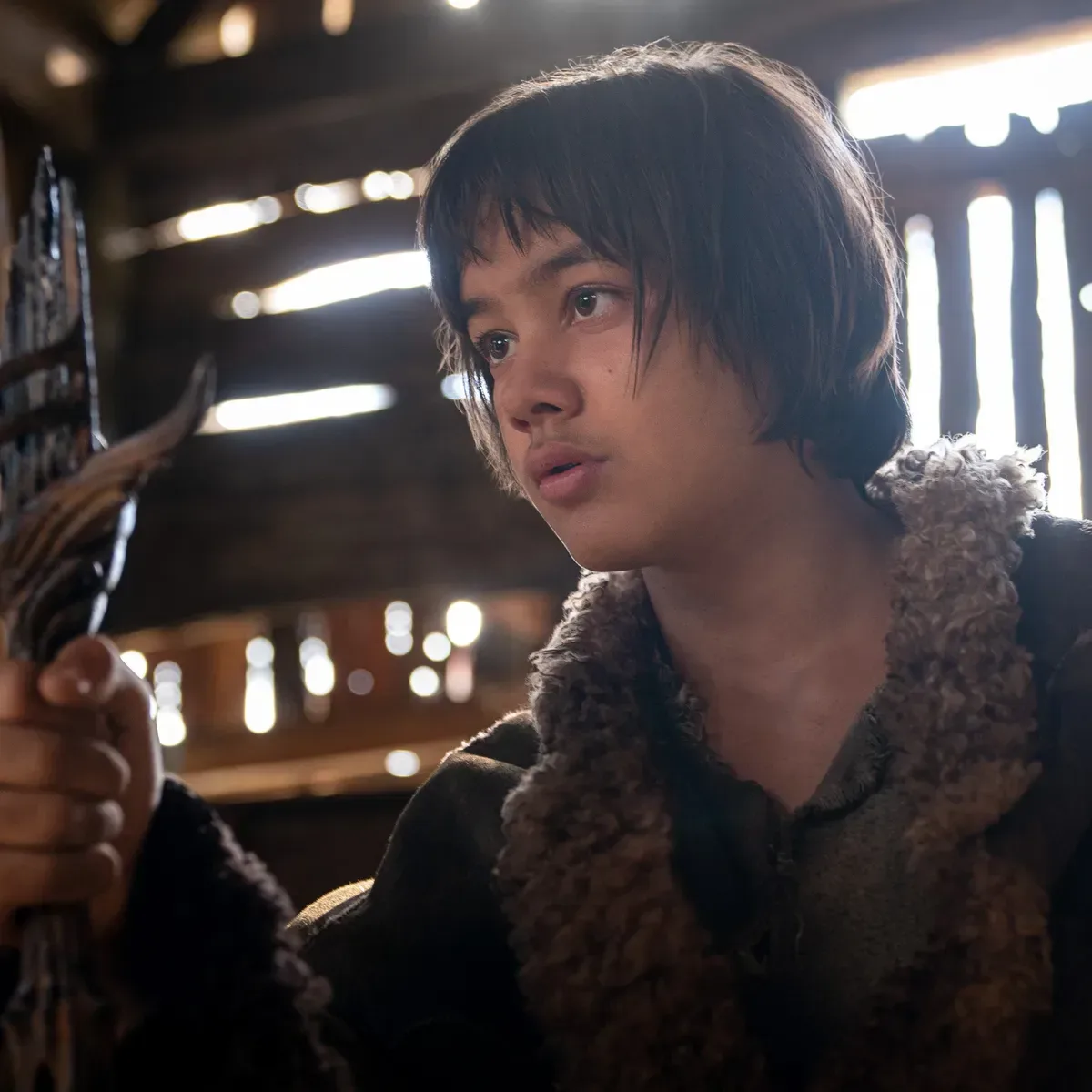
The episode’s most immediate piece of evidence is the mark on Theo’s arm. It originated in season 1 through the broken sword hilt that Theo found and activated with his blood. The object could become a complete sword after blood was spilled on it, and it was ultimately used as a key in the chain of events that formed Mount Doom.
That history already made the hilt one of the Southlands plot’s defining artifacts. It was dangerous, personal to Theo, and directly tied to Mordor’s creation. Season 3 adds an apparent hereditary dimension. Sauron tells Theo there is a reason he was drawn to the hilt and that the hilt was drawn to him.
That does not necessarily mean Theo consciously chose darkness, nor does it prove that he has no agency. The more immediate implication is that the weapon recognized, responded to, or was accessible through a bloodline Sauron understands. The mark functions as visible proof of that encounter—and, crucially, it is what makes Sauron stop and reassess Theo during the ring-bearer trial.
For viewers tracking the show’s connected mysteries, this makes the hilt a bridge between Theo’s private grief and Mordor’s broader history. It was never only an ominous weapon in the hands of a curious boy. The new reveal frames it as an artifact tied to a family Sauron considers valuable enough to reclaim.
Bronwyn’s role is now a central unanswered question
Bronwyn’s relationship with Arondir had already been emotionally important to Theo’s story, but Arondir was not Theo’s biological father. The new account places Bronwyn at the center of an older secret. Sauron says that she discovered what Fäldred was and murdered him.
That accusation should be treated cautiously. It comes from Sauron, who benefits enormously from separating Theo from the memory of his mother and reshaping grief into anger. The episode does not yet provide Bronwyn’s perspective, details of Fäldred’s death, or independent confirmation of the circumstances. Sauron may be speaking literally, selectively, or manipulatively. Those are distinct possibilities, and the available information does not establish which is true.
Even so, the accusation gives Sauron an effective pressure point. Theo is being told that his mother hid his heritage, denied him a possible claim to rule, and killed the father he never knew. It is exactly the kind of story that can make a vulnerable character feel robbed of an identity. By presenting himself as the one willing to reveal the “truth,” Sauron positions himself as both tempter and supposed liberator.
That framing also makes Bronwyn’s absence more consequential. Theo cannot immediately challenge her version of events, and the information arrives in a ritual controlled by Sauron. Arondir remains a potentially vital counterweight because of his relationship with Bronwyn and his care for Theo, but the episode’s setup leaves Theo exposed at the moment Sauron is offering him an alternative family history.
Why Sauron wants Theo
Sauron’s interest is not presented as sentimental curiosity. He wants Theo among his ring bearers, and the violent selection process makes clear that this is a role obtained through survival and submission, not a ceremonial honor. His intervention when he sees the arm mark suggests Theo’s heritage makes him more useful than the other candidates.
A ring bearer, in this context, is someone selected to carry one of Sauron’s rings. The episode does not explain the full mechanics or consequences of Theo’s potential ring, so it would be premature to claim what particular powers or fate it would bring him. What is clear is that Sauron sees a ring as a means to bind Theo closer to his cause. The father reveal supplies the emotional argument; the ring supplies the instrument of control.
That combination is why the episode’s answer is ominous rather than reassuring. Theo is not merely discovering where he came from. He is being given a curated version of that origin by the Dark Lord at precisely the moment he is vulnerable, isolated, and facing an apparent offer of power.
What remains speculation
Several theories may follow naturally from the scene, but season 3, episode 2 does not settle them. There is no confirmation that Fäldred was a servant of Sauron, that the unidentified word from the flame is his true name or a formal title, or that Theo will definitely accept a ring. Nor has the show explained the nature of the powers said to pass through Fäldred’s line.
It is also unknown whether Theo’s supposed claim to the Southlands is a genuine fact, an exaggeration, or a calculated lie. Sauron’s statements are important because they influence Theo, not because the audience has been given reason to accept every detail uncritically. The episode’s tension depends on that uncertainty.
The strongest reading for now is a narrower one: Theo has an inherited connection to a house associated with Mordor; the sword hilt and his mark are linked to that inheritance; and Sauron is exploiting those facts to recruit him. Whether Theo embraces, rejects, or redefines that legacy will determine how much of Sauron’s plan becomes reality.
The reveal also lands alongside other season 3 mysteries involving visions, ancient power, and contested interpretations of the past. For more on another thread in that wider puzzle, read our explanation of Gandalf’s Rhûn vision and the Secret Fire.
The immediate danger for Theo
Fäldred’s name answers the literal question of who Theo’s father was. The more important dramatic question is what Theo does with the story Sauron has handed him. He has been told that his family was noble, that he possesses an inheritance, that his mother denied him his birthright, and that he could have been a ruler. Those promises are tailored to make darkness feel like self-discovery rather than corruption.
Theo’s past has now become a weapon Sauron can use against him. Until the unanswered details around Fäldred, Bronwyn, the house of Mordor, and the intended ring are clarified, Theo’s path remains uncertain. But season 3 has made the stakes unmistakable: his bloodline is no longer a background mystery. It is at the center of Sauron’s recruitment effort.