Warning: major spoilers for The Lord of the Rings: The Rings of Power season 3, episodes 1-4.
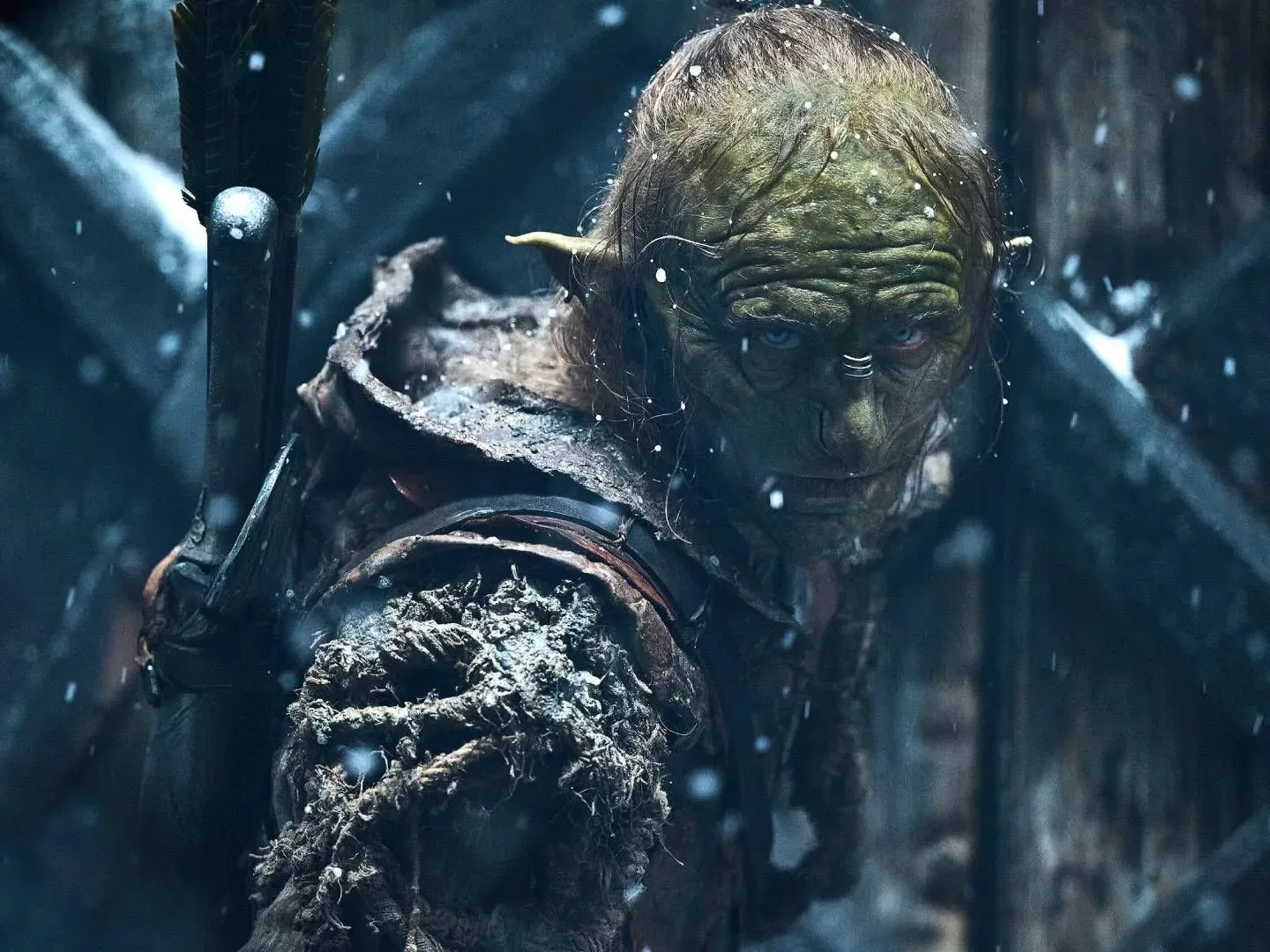
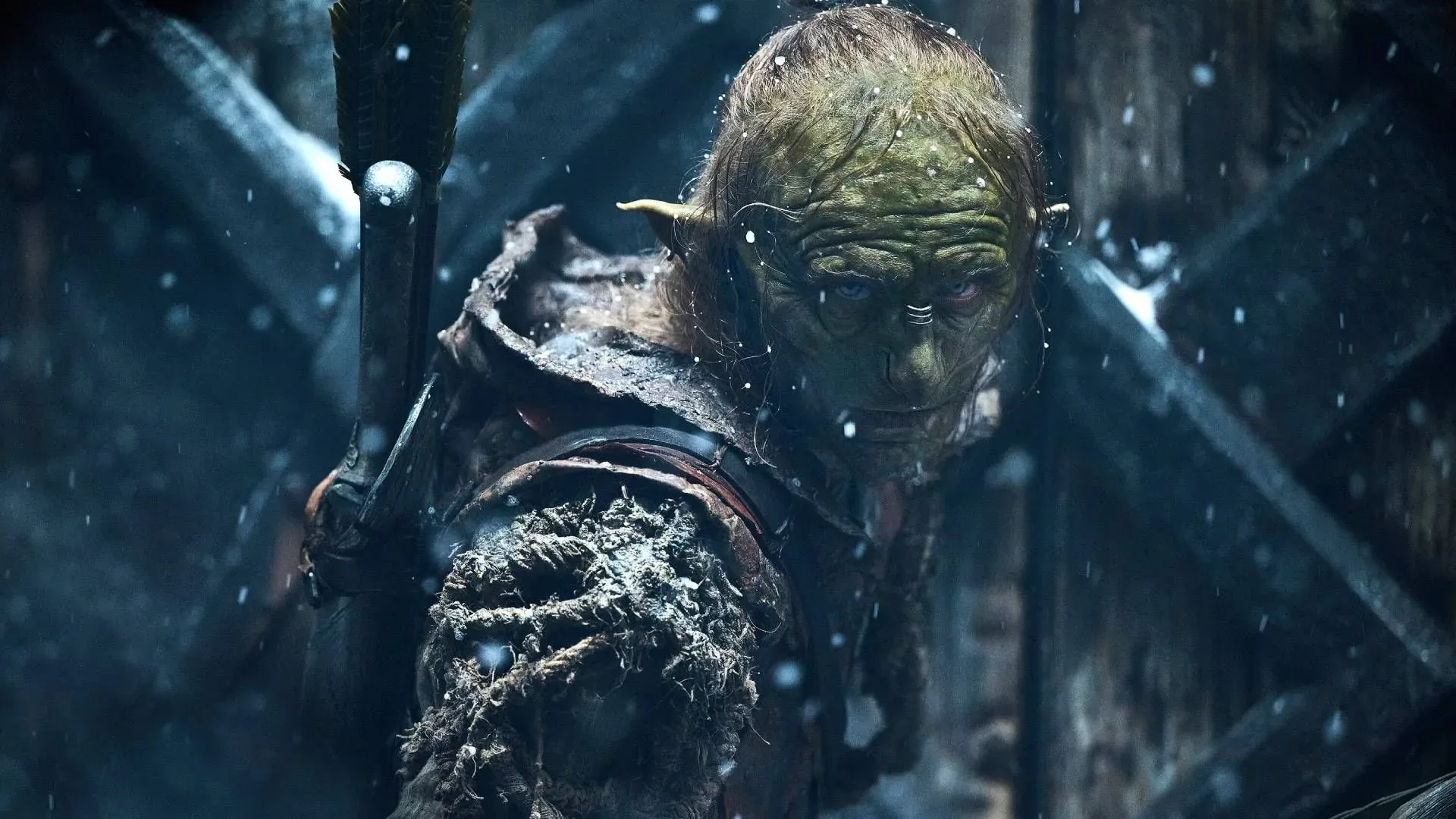
The Rings of Power has spent much of its run widening the map and moral scope of Middle-earth, visiting places and dramatizing relationships outside the core path familiar from The Lord of the Rings. Season 3’s most meaningful expansion may be more intimate: Marnûkh, played by Adam Young, is an Orc who actively opposes Sauron.
That premise is deliberately disruptive. Orcs have long occupied a largely functional role in this kind of story: the massed army beneath the Dark Lord, dangerous in a fight but rarely treated as people whose decisions need to be understood. Marnûkh does not erase the cruelty of Sauron’s forces or transform the wider war into a simple tale of misunderstood enemies. Instead, he supplies a single, precarious point of view from within that army—and makes Galadriel and Arondir confront the limits of their assumptions.
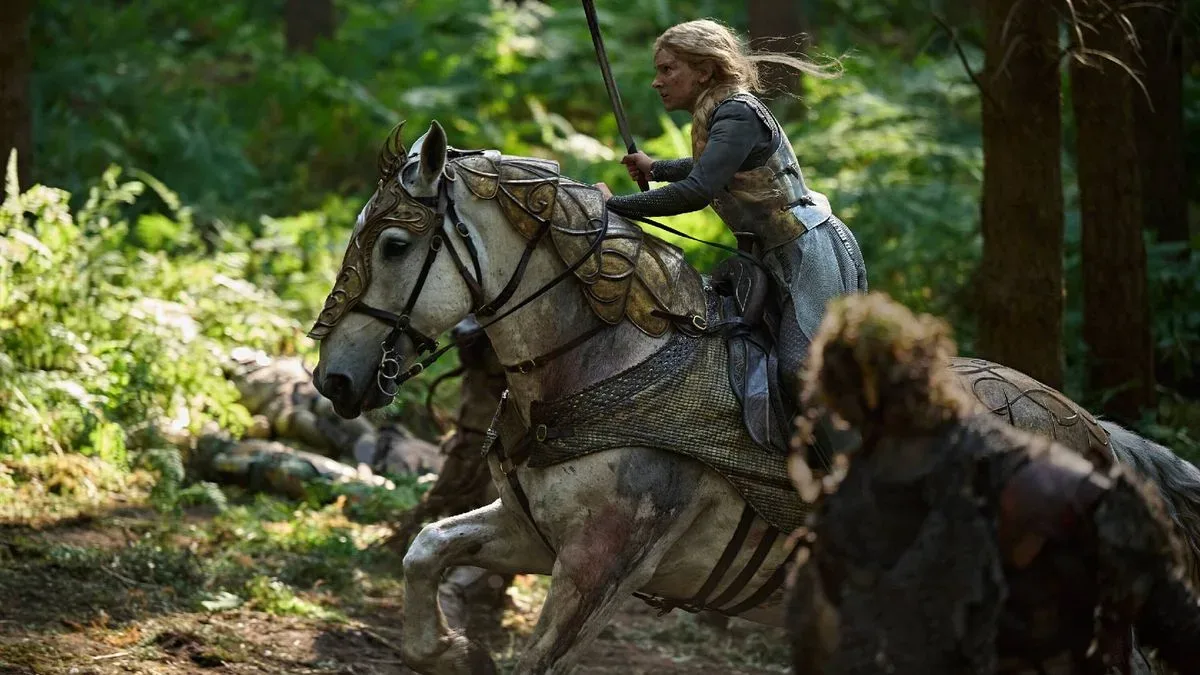
His arrival in episode 2 launches a dangerous alliance. Marnûkh approaches Galadriel with intelligence about Sauron’s intended “master ring” and a proposal: he can guide her and Arondir to Gundabad, where an elven smith has been held prisoner for years. Reaching the smith before Sauron does could deny him knowledge needed for the creation of the One Ring. The goal is enormous, but the group itself is fragile. Galadriel sees the potential value of the information. Arondir sees an Orc who may be setting a trap.
Marnûkh turns an Orc into a participant, not scenery
The show’s first two seasons had already opened a narrow crack in the standard Orc narrative. Adar, the fallen Elf who led an Orc army, gave his followers a political objective beyond simple obedience to Sauron: an independent homeland. His rule was brutal and the people following him were not presented as harmless, but their wish to escape another master created the possibility that Orcs could want something other than conquest.
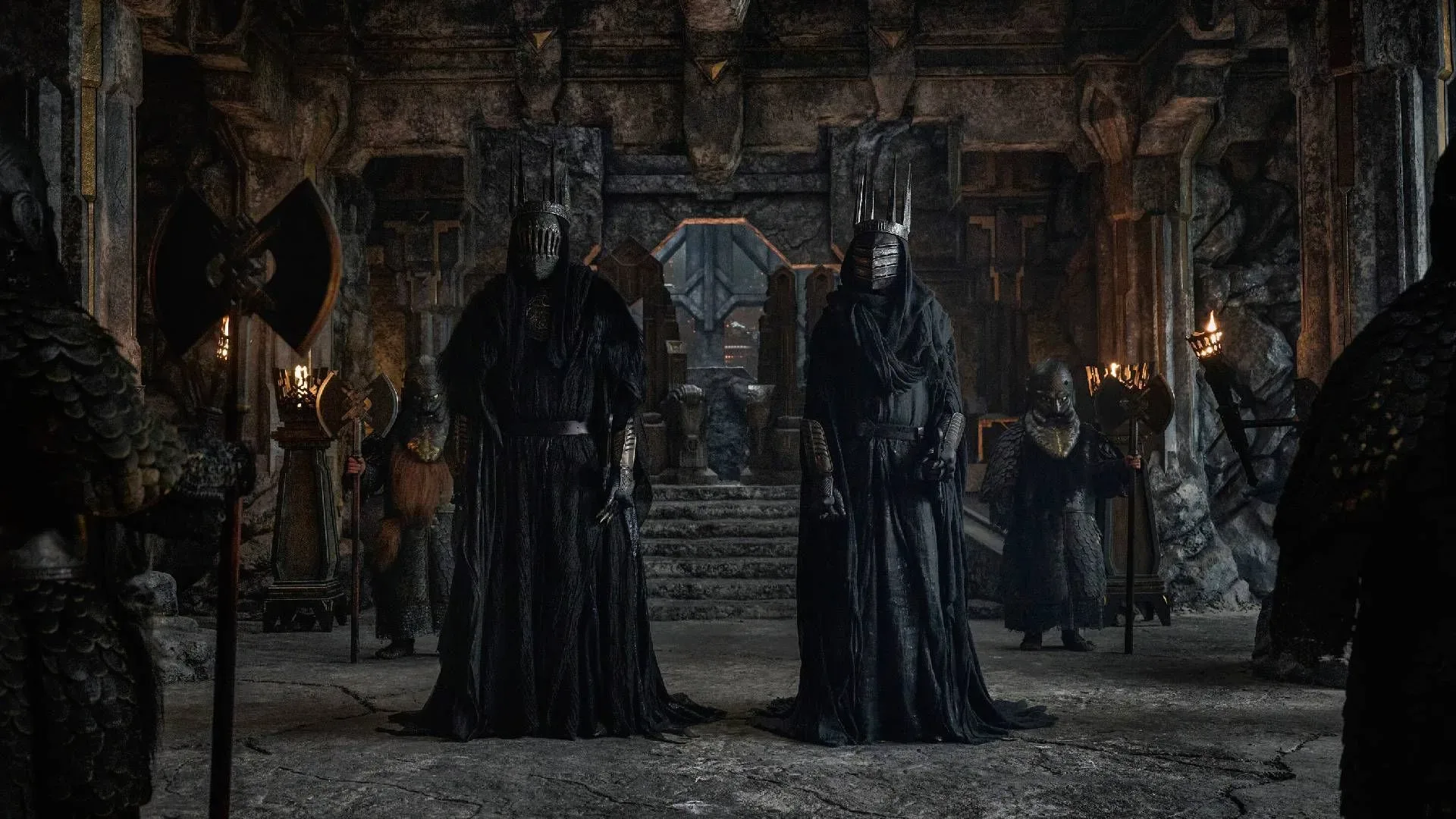
Adar’s death in season 2 closes off that particular route. During the five-year gap before season 3, his former followers appear to have been brought under Sauron’s control. In that environment, Marnûkh is not a representative for all Orcs. He is a dissident operating in secret, with immediate and personal reasons to dread what Sauron is building. He believes the completed ring would make Orcs disposable soldiers in a conflict they cannot survive.
That distinction matters. A dissident is someone who breaks with the authority or ideology governing their own group. Marnûkh is not asking Galadriel and Arondir to forget what Orc armies have done. He is asking them to accept that he has an interest separate from Sauron’s, even when helping them could get him killed.
It also makes his heroism more conditional and more interesting than a tidy redemption story. The series does not establish him as virtuous in every respect. He is crass, abrasive, and entirely capable of provoking the two Elves travelling with him. One particularly telling detail has him catching butterflies as a snack, a grotesque little habit that preserves his Orcish roughness rather than sanding it down for audience comfort.
In practical storytelling terms, Marnûkh is valuable because the show does not make acceptance easy. Had he been written as conventionally noble from his first scene, Arondir’s caution would seem unreasonable. Had he been written only as comic relief or an inevitable traitor, the premise would amount to nothing. Instead, season 3 lets suspicion remain justified while slowly demonstrating that Marnûkh’s knowledge, nerve, and commitment are real.
The Gundabad mission makes trust the real conflict
The rescue mission turns those ideas into action. Gundabad is not neutral ground where mistrust can be debated safely. It is an Orc prison and fortress, filled with enemies who would torture Galadriel and Arondir if their deception fails. To get inside, the Elves pose as Marnûkh’s captives. That requires them to make themselves dependent on someone Arondir has spent his life regarding as an enemy.
There is a clear structural echo here with the stretch of The Lord of the Rings in which Gollum guides Frodo and Sam through Mordor. In both cases, a distrusted guide holds knowledge essential to a journey through hostile territory. But the similarity also highlights a difference. Marnûkh is not simply a compromised figure leading heroes toward doom or danger. His stated aim is to prevent Sauron from gaining power, which makes him an active, if uneasy, ally.
The stakes intensify once the party reaches the prison cells. Marnûkh guides Arondir through the fortress and assists in freeing not only the imprisoned elven smith but Celeborn, Galadriel’s long-lost husband. The revelation adds urgency to the escape without changing the basic dynamic: survival depends on the Orc whom Arondir still finds difficult to trust.
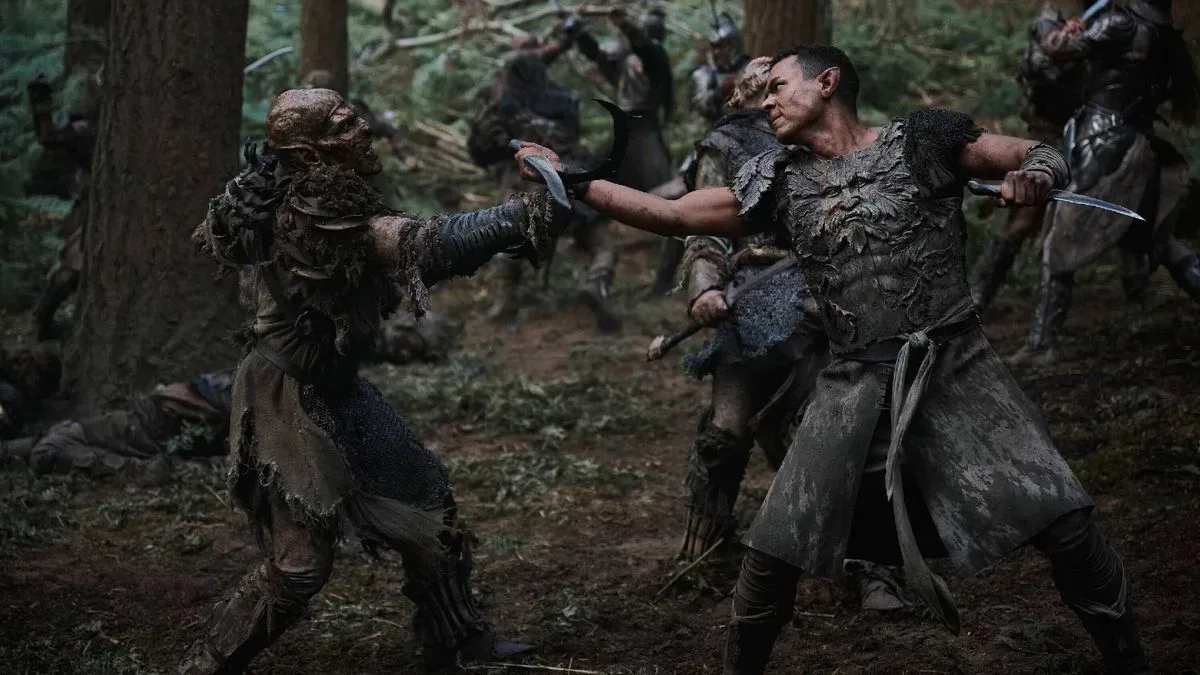
By episode 4, that relationship receives its strongest reversal. During the attempted flight from Gundabad, Arondir saves Marnûkh in battle and helps him back to his feet. The moment signals a change in Arondir’s view—not necessarily the end of every fear or prejudice, but a recognition that Marnûkh has earned solidarity through his actions.
Arondir then dies later in the same sequence. Marnûkh is struck down as well, though the season leaves his fate unclear because he is not explicitly shown dying onscreen. That ambiguity matters for more than sequel speculation. If Marnûkh survives, he represents a continuing challenge to Middle-earth’s established categories. If he does not, his brief alliance still changes the terms on which the heroes—and viewers—have been asked to see Orcs.
Why the Orc question is difficult for fantasy
Marnûkh’s storyline reaches into a long-running conversation around fantasy fiction: what happens when an entire invented people is treated as naturally evil, ugly, and permanently subordinate to a villain? Tolkien’s Orcs are frequently depicted as anonymous forces in Sauron’s wars, rather than individuals with interior lives and relatable motives. That approach has been influential across fantasy, including conversations around role-playing games such as Dungeons & Dragons.
The modern criticism often described as “fantasy racism” is not a claim that every story involving monsters is automatically making a real-world statement. It is a question of construction: when a narrative assigns vice, inferiority, or violent disposability to a whole race, what does it imply about personhood, moral agency, and who the story permits audiences to care about? The question becomes sharper when the group is humanoid, can speak, form families or factions, and can apparently make choices.
The Rings of Power does not fully overturn its source material’s broad conflict. Most Orcs shown in the season remain part of Sauron’s hostile military power, and the show remains a wartime narrative in which the heroes fight them. Marnûkh does not make every battle morally uncomplicated. If anything, the series keeps the tension visible: it asks viewers to consider an Orc’s capacity for fear, self-preservation, and resistance while still depicting a world where Orc forces are a lethal threat.
That is why calling him merely “a good Orc” would flatten what the show is attempting. He does not need to become Elvish in manner or values to reject Sauron’s rule. The Elves’ discomfort with his jokes, habits, and manners is part of the point. Arondir’s initial reaction is not based only on a reasonable appraisal of danger; it is also tied to a lifetime of seeing Orcs as a single undifferentiated enemy.
The season therefore separates two ideas that are often bundled together in fantasy: an individual’s culture or behavior, and an assumption that their moral destiny is fixed at birth. Marnûkh remains recognizably Orcish in the show’s visual and behavioral language, yet he makes a self-sacrificing choice against tyranny. The character does not settle every philosophical issue raised by Orcs in Middle-earth, but he makes the issue impossible to ignore.
Sauron’s rule is the key context
The strongest part of Marnûkh’s arc is its focus on power. He does not abandon Sauron because he suddenly decides that Galadriel and Arondir are friends. He understands what it means to live beneath a ruler whose ambitions place his own followers at risk. His opposition is rooted in survival, which gives it credible urgency.
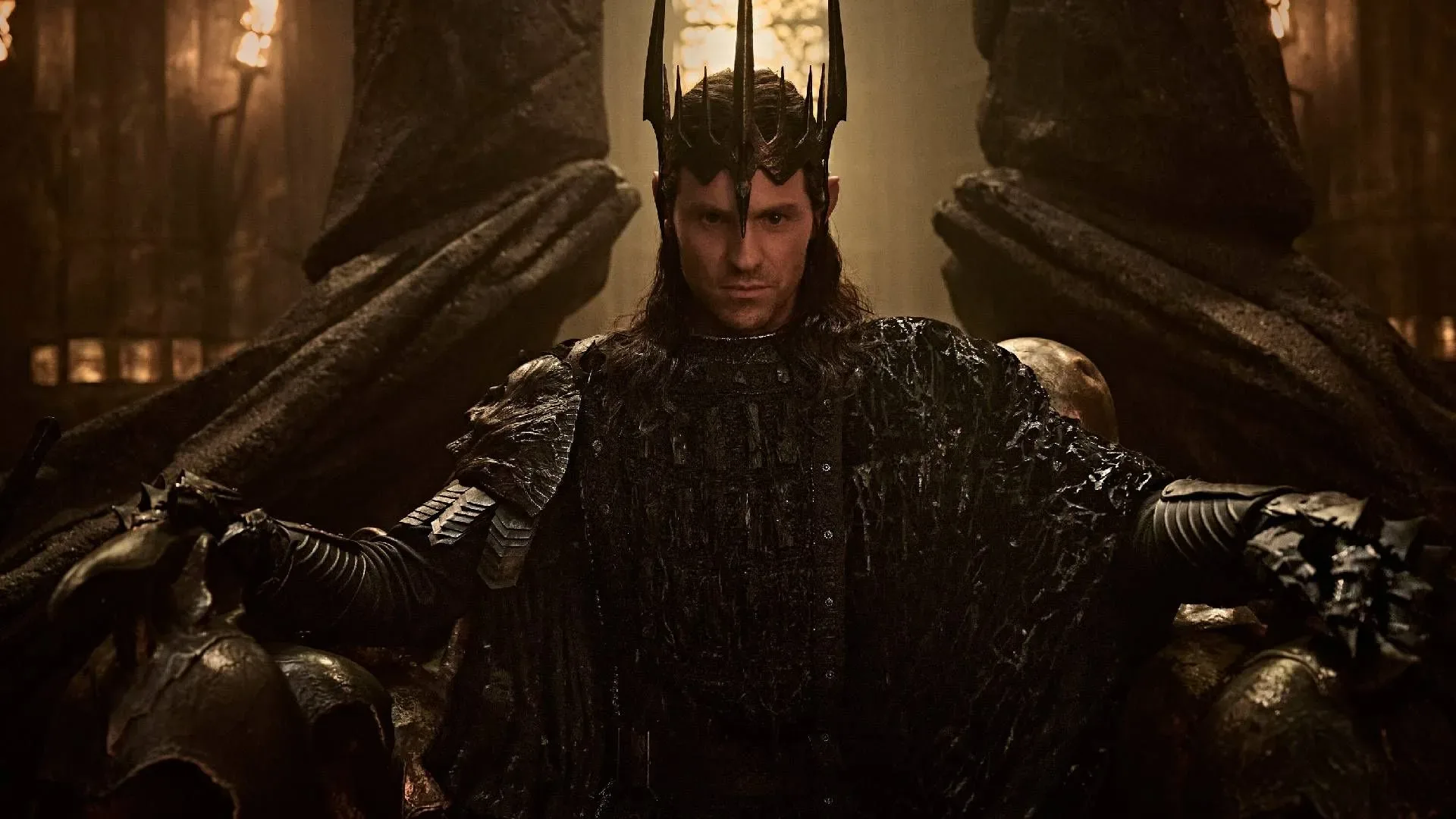
This is also where the earlier Adar storyline gains retrospective weight. Adar’s faction suggested that Orcs could imagine a home not dictated by Sauron. Marnûkh now shows what resistance looks like after that hope has been crushed: quieter, more isolated, and dependent on collaboration with people who do not want to trust him.
For Galadriel, the arrangement is strategically necessary. The imprisoned smith may hold the knowledge Sauron needs, and speed is essential. For Arondir, it is a direct personal test. He cannot accomplish the mission merely by tolerating Marnûkh’s presence; he has to allow an Orc to determine their path through a fortress designed to kill them. The eventual act of saving Marnûkh marks a meaningful change because it happens under pressure, not in a detached conversation about tolerance.
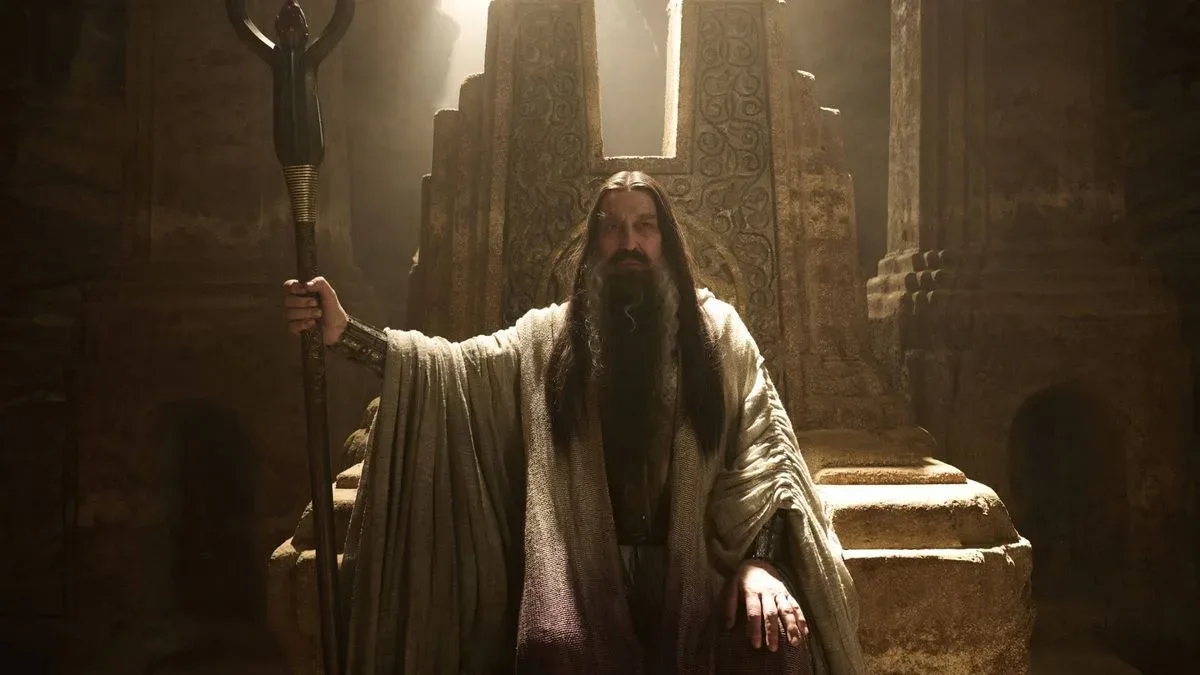
There is a useful irony in the pairing. Sauron seeks mastery through domination, attempting to consolidate knowledge and force around the One Ring. The effort to stop him succeeds, at least in part, through a fragile act of cross-boundary trust. It is neither sentimental nor assured. The alliance survives because each party repeatedly chooses it in circumstances where betrayal would be easier to expect.
What Marnûkh changes for the season
Whether Marnûkh returns after the events of episode 4 remains unresolved. What is clear is that his place in the story is larger than an unexpected companion for a single quest. He introduces a perspective that has been notably scarce while Sauron’s power rises: the view from those expected to fill his ranks.
That perspective does not demand that viewers excuse violence committed by Sauron’s armies, nor does it pretend that a single character can speak for every Orc in Middle-earth. It does ask a more pointed question: how much of their apparent loyalty is true devotion, and how much is the product of coercion, defeat, and having no safe alternative?
Season 3 has therefore given its Gundabad storyline two layers of suspense. On the surface, it is a race to recover an elven smith and obstruct the making of the One Ring. Beneath that, it is about whether Galadriel and Arondir can recognize courage when it appears in someone they were taught to see only as an enemy. Marnûkh makes that question tangible, unpleasant, funny at times, and dangerous—which is precisely why he leaves a mark.
For more television news beyond Middle-earth, see the confirmation of Denise’s return for The Fall and Rise of Reggie Dinkins season 2.