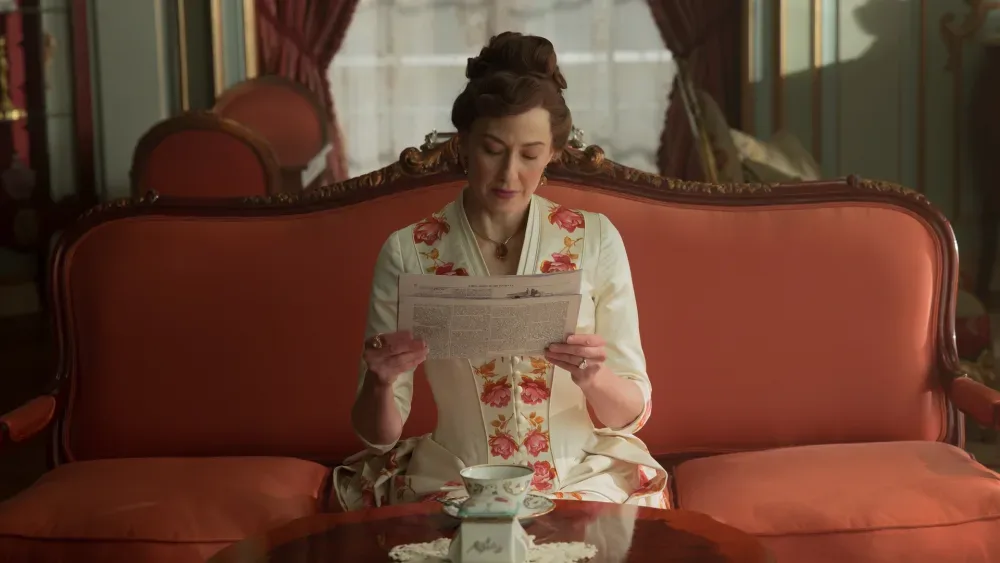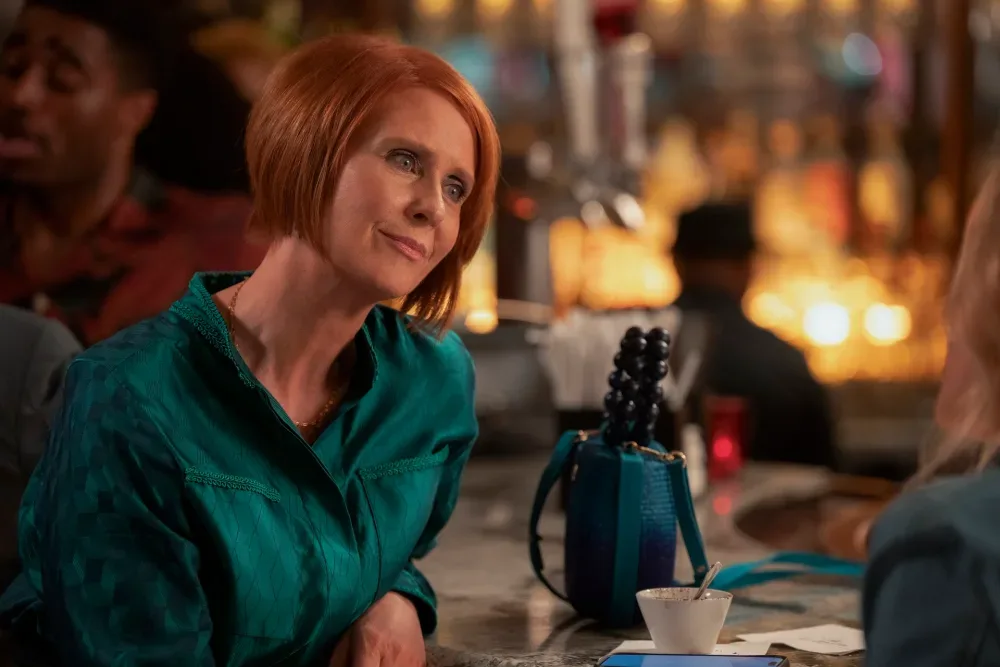
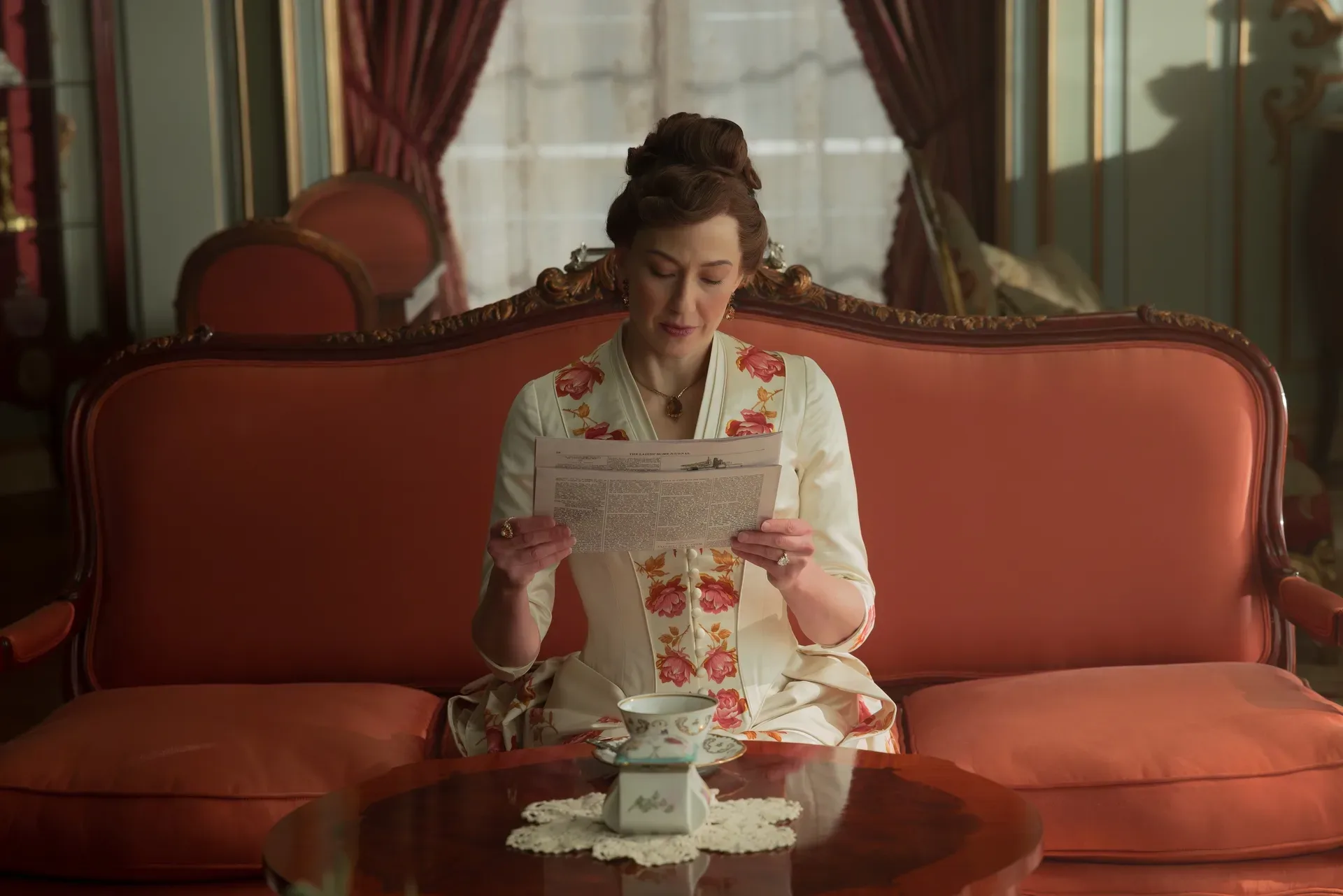
The Gilded Age is officially returning for Season 5. HBO has renewed the Julian Fellowes-created period drama before Season 4 has finished its eight-episode run. Only three episodes of the current season have aired, leaving five still to come—and making this the earliest renewal in the series’ run to date.
The early pickup arrives alongside encouraging audience figures. Season 4 is averaging 5.9 million U.S. multiplatform viewers per episode so far, HBO says, an increase of nearly 20% against Season 3’s episodic average. Its third episode reached 4.3 million viewers over three days.
“Multiplatform” means the figure is intended to cover viewing across more than one way of watching, rather than treating a single linear-TV airing as the complete picture. It is a useful measure for a drama that audiences may watch on different schedules, though the supplied figures are still explicitly U.S.-only and the season has not yet completed its run. The five remaining episodes could change the final Season 4 average.
An early renewal gives the drama room to keep building
A Season 5 commitment is more than a vote of confidence in a single episode’s performance. In practical terms, it keeps the creative team’s larger character canvas intact while Season 4 developments are still unfolding. The series’ story involves interconnected families, social positions, ambition and the consequences that arrive after apparent victories; an early continuation helps assure viewers that the world will not be required to wrap up immediately.
HBO Drama Series and Films president Francesca Orsi framed the show’s ongoing appeal around a growing audience and its ability to capture the current cultural conversation. Orsi also pointed toward a return to 61st Street, where the Russells, van Rhijns and Kirklands will continue to confront “the cost of ascent.” That phrasing is especially telling: the story is not simply about reaching a higher rung of society, but about what people sacrifice, disrupt or owe once they get there.
For viewers keeping up with the current season, the renewal does not establish a Season 5 premiere date, story outline, episode count, platform change or casting list. Those details were not included with the renewal news. What is confirmed is that the drama is set to continue after the current season.
Where Season 4 leaves its central players
The official Season 4 setup makes clear that status remains an unstable currency. Bertha Russell, played by Carrie Coon, has changed Society—but the achievement carries a cost that her family must now reckon with. “Society,” capitalized in the season description, refers to the powerful social circle whose approval and rank matter enormously in the series’ setting. Bertha’s movement within that world is therefore not merely personal success; it reshapes the terms on which her household and rivals must operate.
Christine Baranski’s Agnes van Rhijn sees an opening to reclaim her position. Elsewhere, Louisa Jacobson’s Marian is forging a new path, while Denée Benton’s Peggy attempts to win acceptance from her future in-laws. The season’s warning—be careful what you wish for—connects these storylines. A long-sought opportunity can have repercussions, and a gain in one relationship or social sphere can create new obligations in another.
That structure explains why a fifth season is meaningful even with Season 4 in progress. The show is built around an ensemble rather than a single isolated protagonist. Choices made by Bertha, Agnes, Marian and Peggy can reverberate beyond their own immediate plotlines, while the family names emphasized by HBO suggest further pressure points to explore.
A large ensemble remains central to the series
The continuing cast includes Coon, Baranski, Cynthia Nixon, Morgan Spector, Jacobson and Benton, alongside Taissa Farmiga, Harry Richardson, Blake Ritson, Ben Ahlers, Ashlie Atkinson, Dylan Baker, Kelley Curran, Jordan Donica, Jessica Frances Dukes, Amy Forsyth, Jack Gilpin, Simon Jones, Celia Keenan-Bolger, Ben Lamb, Audra McDonald, Brian Stokes Mitchell, Debra Monk, Hattie Morahan, Donna Murphy, Kristine Nielsen, Kelli O’Hara, Taylor Richardson, Douglas Sills, Erin Wilhelmi, John Douglas Thompson, Taylor Trensch, James Scully, Dennis Haysbert, Maggie Kuntz, Neal Huff, Bonnie Milligan, Jim Gaffigan, Dallas Roberts, Andrew Burnap, Elizabeth Marvel and Adrienne Warren. Bill Camp and Phylicia Rashad are also part of the ensemble.
That is an unusually broad roster, and it has a storytelling consequence. A large cast enables the series to approach its core tensions—social standing, family, relationships and aspiration—from several directions at once. It also means that the show’s “operatic stakes,” as Orsi described them, need not depend on one character carrying every major turn. One household’s rise can become another’s threat; an intimate decision can have wider social consequences.
Of course, the size of an ensemble alone does not confirm who will appear in Season 5 or how prominently. The renewal announcement identifies the show’s expansive current cast, but it does not provide character-specific Season 5 commitments. Audiences should separate the confirmed continuation from details that have not been announced.
The creative team behind the continuation
Fellowes remains the series’ creator, writer and executive producer. Sonja Warfield also writes and executive produces, while Salli Richardson-Whitfield is a director and executive producer. Gareth Neame, David Crockett, Robert Greenblatt, Kate Churchill, Davita Scarlett and Elaine Aronson are additional executive producers. Erica Armstrong Dunbar and Holly Rymon serve as co-executive producers.
Executive producers generally hold senior creative and/or production responsibilities, although a title alone does not specify the exact day-to-day duties of every individual. Here, the credit list confirms continued leadership across writing, direction and production rather than offering a scene-by-scene account of how Season 5 will be made.
Universal Television produces the series with HBO. Universal Television president Erin Underhill said the team has found it “deeply satisfying” to see audiences embrace the show more strongly from season to season, crediting its cast, writers and creative team with making its world feel timeless and resonant.
What the viewer numbers do—and do not—say
The current 5.9 million average is the key performance indicator supplied with the renewal, because it describes Season 4 as a whole to this point rather than spotlighting one installment. The near-20% rise over Season 3 indicates momentum for the drama, at least by HBO’s reported U.S. multiplatform measure.
- 5.9 million: Season 4’s reported U.S. multiplatform average per episode to date.
- 4.3 million: viewers reached by Episode 3 within three days.
- Nearly 20%: the reported increase in the Season 4 episodic average compared with Season 3.
- Five episodes: still left to air in the eight-episode fourth season.
The figures should not be treated as a complete final-season tally. They are a snapshot released partway through the season, and no comparable episode-by-episode breakdown was provided. Still, paired with an early fifth-season renewal, they show why the drama’s next chapter is already moving forward.
For more viewing ideas while waiting for the remaining episodes, see our weekend streaming roundup.
Season 4 therefore remains the immediate focus: Bertha’s victory has consequences, Agnes has an opportunity, Marian is charting a new course, and Peggy faces a crucial family acceptance test. Season 5 ensures those threads—and the broader contest over status and ascent—will have another season in which to develop.