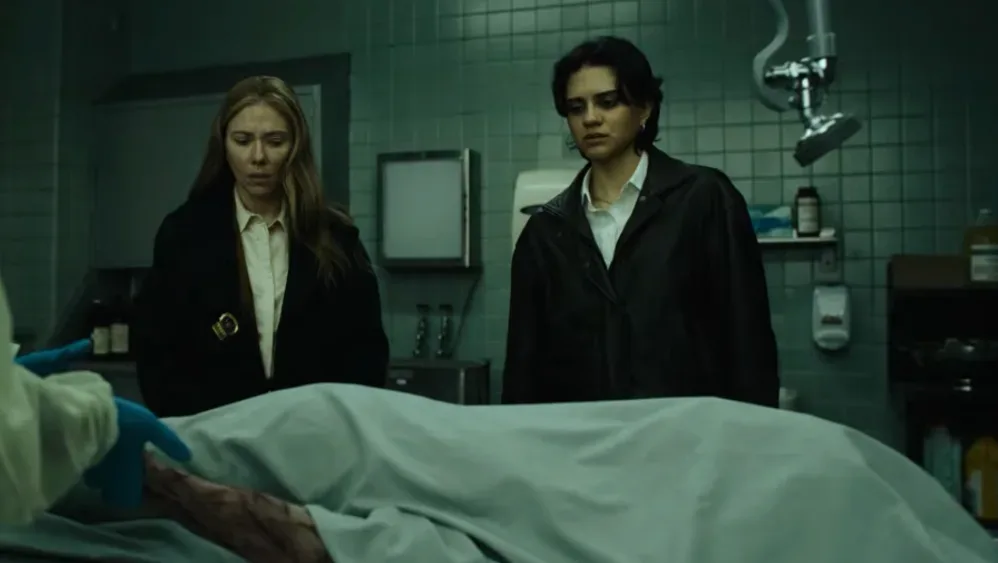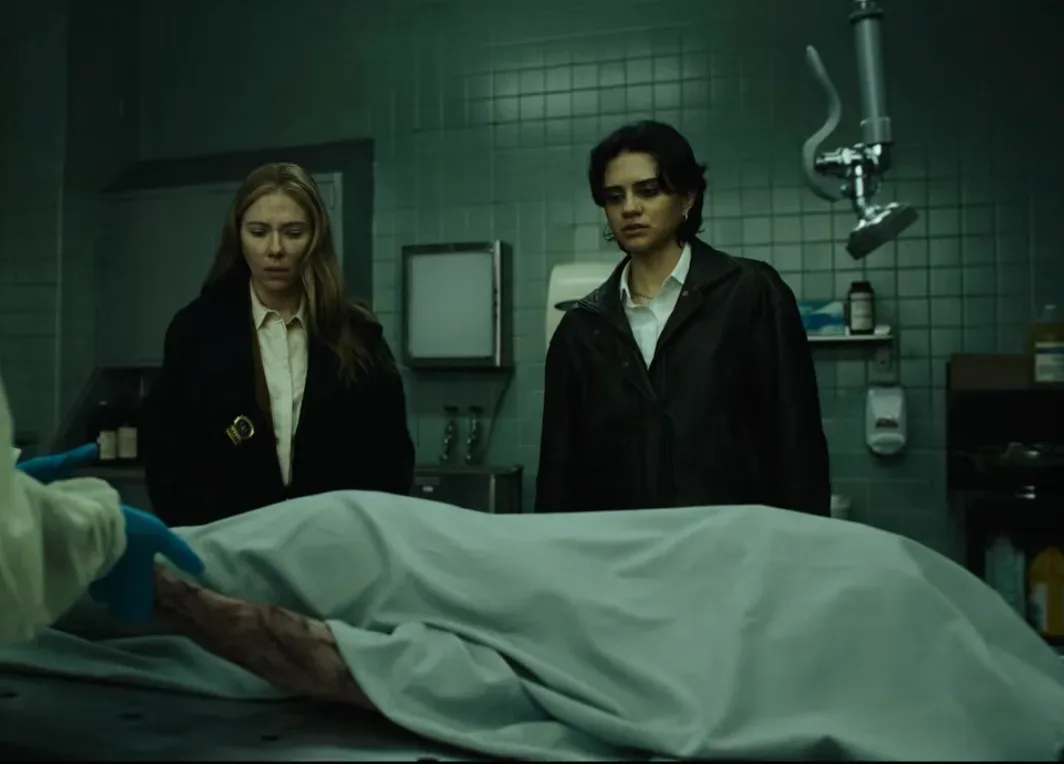
The Exorcist: Martyrs has unveiled its first trailer, introducing a new investigative route into the long-running horror franchise. Scarlett Johansson plays a homicide detective examining a series of gruesome killings inside a church. The apparent case becomes considerably more troubling when she confronts a possibility that initially sounds like an excuse: earlier killers who said Satan possessed them may have been telling the truth.
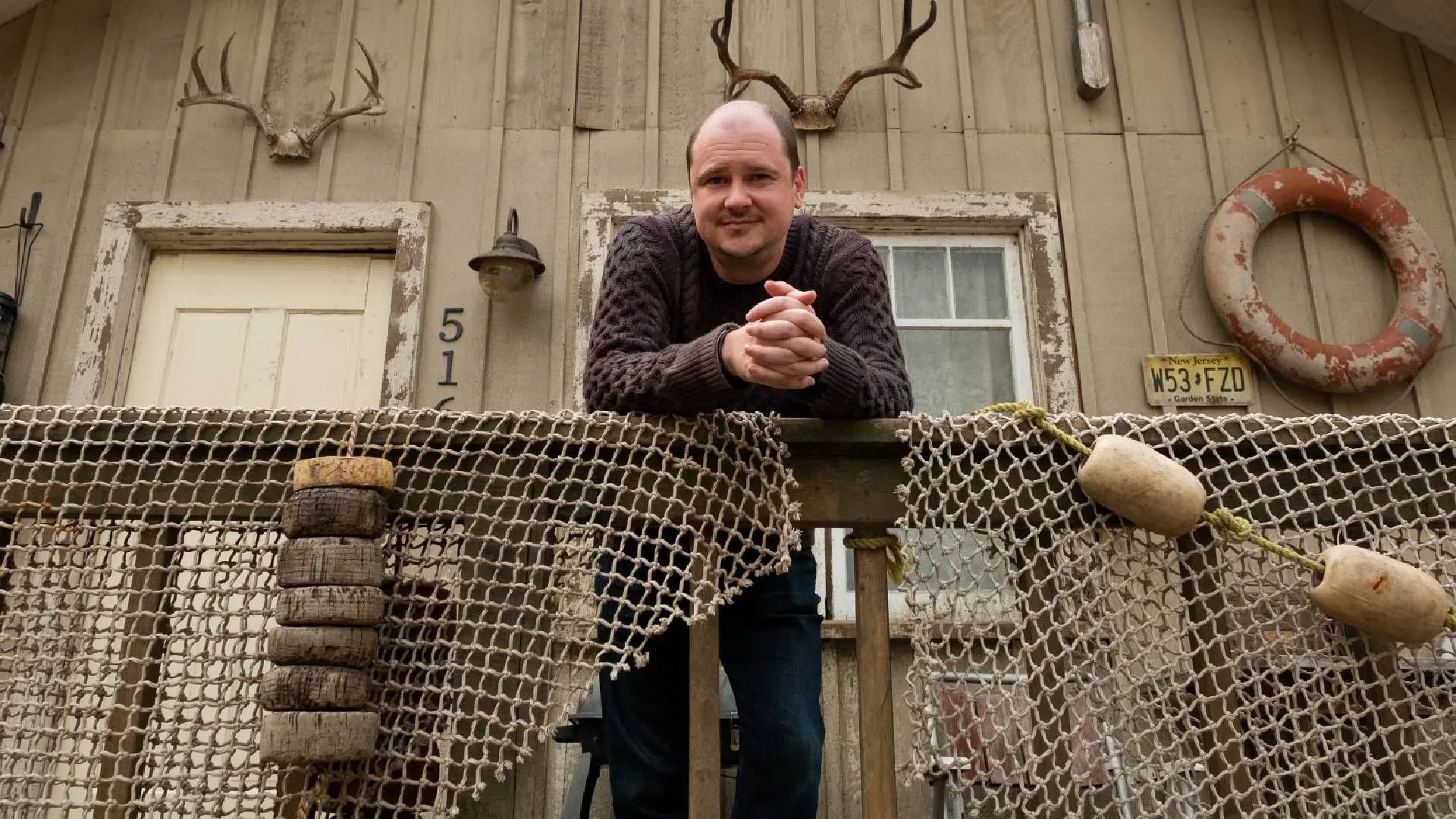
The film is expected in theaters on March 12, 2027, following a production delay that moved it from an earlier March release. Chiwetel Ejiofor and filmmaker Mike Flanagan presented the trailer at New York City Comic Con. While the footage establishes murders and a police investigation, its key hook is less about identifying an ordinary human culprit than determining whether the violence has a supernatural source.
That is an important distinction for a series built around possession. Rather than simply positioning its lead character as a witness to an already-defined demonic crisis, Martyrs appears to begin with a detective’s doubt. Johansson’s character has to weigh physical evidence against claims that sound impossible. In practical genre terms, the setup gives the story two pressures at once: the urgency of a homicide inquiry and the destabilizing prospect that conventional explanations will not solve it.
A new story, not a follow-up to 2023’s film
Flanagan has said the team intended to take the franchise in a completely different direction, and he described the project as designed to be frightening at a fundamental level. The available details support that idea of a reset in approach. The Exorcist: Martyrs is set within the broader Exorcist universe, but it is not a sequel to 2023’s The Exorcist: Believer.
That clarification should shape expectations. A franchise entry can share a fictional world, themes, or supernatural rules without continuing the plot and characters of the immediately preceding installment. Here, “not a sequel” means viewers should not assume that the new film exists to resolve the story from Believer. The title instead signals a new, self-contained creative direction under Flanagan.
It is also a major assignment within a property whose identity is closely tied to fear, faith and uncertainty. The original The Exorcist, directed by William Friedkin and released in 1973, follows a mother, played by Ellen Burstyn, who seeks the help of Catholic priests after her 12-year-old daughter, played by Linda Blair, becomes possessed by a demon. That film earned $441 million worldwide and received 10 Academy Award nominations.
The new trailer’s church setting naturally places religious imagery near the center of its mystery, but the provided information does not establish what form possession will take, who may be possessed, or how directly the story will connect to the original film’s characters and events. Those are meaningful unknowns. What is established is that the murders force Johansson’s detective to reconsider statements associated with previous killers.
What the trailer’s premise suggests
A homicide detective is a useful protagonist for a supernatural horror story because the role demands proof. Detectives are trained to turn chaos into a sequence of motives, methods and evidence. Possession disrupts that process: if an outside evil force is responsible, questions of intent and culpability become much harder to define. The trailer’s premise therefore gives Martyrs a built-in collision between investigation and belief.
That does not mean the film has been identified as a procedural, a term generally used for stories structured around the step-by-step work of solving a case. The trailer’s setup simply borrows the stakes of one. The detective’s pursuit of an explanation may offer a grounded point of entry before the story pushes toward the demonic. It is a potentially different starting point from a possession narrative that immediately establishes the supernatural threat for both characters and audience.
The emphasis on murders within a church also puts sacred space under threat. In horror, a familiar protected setting can become unnerving when its normal meaning is violated. Here, the church is not described merely as scenery; it is the location of the crimes that draw the detective into the case. That fact makes the setting part of the premise rather than a decorative backdrop.
Fans should also be cautious about reading every implication of a trailer as a confirmed plot point. The footage indicates that Johansson’s character questions whether Satanic-possession claims have merit. It does not reveal the full explanation for the killings, the ultimate nature of the threat, or the final role of every principal cast member. A trailer is designed to establish atmosphere and a central question, and the film’s central question is clearly whether the detective is confronting something beyond a serial killer.
Flanagan returns to Blumhouse
The Exorcist: Martyrs is Flanagan’s fourth collaboration with Blumhouse. He previously wrote and directed Oculus in 2013, Hush in 2016 and Ouija: Origin of Evil in 2016. Trevor Macy produced those three films and returns as a producer for the new feature through Intrepid Pictures.
Flanagan also serves as writer, director and producer on Martyrs. Those credits indicate unusually broad formal involvement: the writer shapes the screenplay, the director guides the film’s performance and visual execution, and a producer credit reflects a role in shepherding the project’s overall production. They do not, by themselves, explain the creative decisions behind any particular scene, but they make clear that Flanagan is central to this iteration of the franchise.
He previously called The Exorcist one of the reasons he became a filmmaker and said he viewed the chance to make a fresh, bold and terrifying entry in its universe as an honor. That stated admiration matters because legacy horror presents a difficult balance. A new installment needs enough of the underlying premise to be recognizable while still giving audiences a reason to see it as more than repetition. Flanagan’s comments, along with the detective-driven trailer, point toward an attempt to change the route into the familiar subject of demonic possession.
For another recent example of a well-known supernatural property resurfacing in seasonal pop-culture form, see Bill Murray’s Peter Venkman return for a Ghostbusters Halloween car update.
The cast and production team
Johansson and Ejiofor lead an ensemble that includes John Leguizamo, Laurence Fishburne, Diane Lane and Jacobi Jupe. The trailer information identifies Johansson specifically as the homicide detective, but it does not provide character names or roles for the other actors. As a result, any assumptions about who is a suspect, victim, investigator, religious figure or supernatural presence would be speculation.
The production is a Blumhouse-Atomic Monster and Morgan Creek Entertainment film, made in association with Flanagan’s Red Room Pictures. Producers are Trevor Macy, Karl Frankenfield, David Robinson and Roy Lee. Jason Blum is listed as a producer, while Ryan Turek is listed as a producer and executive producer for Blumhouse-Atomic Monster. Alexandra Magistro is executive producer for Red Room Pictures; Topher Merrill and John Baden are executive producers for Morgan Creek Entertainment.
Producer and executive-producer designations identify senior creative and business participation in a project, though the precise division of duties can vary between films. The confirmed credits are most useful here as an outline of the companies and longtime collaborators supporting Flanagan’s new Exorcist entry, rather than as a guide to the movie’s plot.
Where Martyrs fits in the franchise’s larger plans
Universal acquired rights for a new Exorcist trilogy for $400 million in 2021. The initiative began with The Exorcist: Believer two years later. Yet Martyrs will not continue that 2023 film directly, making it a notable example of a franchise pursuing a new creative branch within an existing rights arrangement.
That context helps explain why the word “universe” is more useful than “continuation” when discussing the new film. The property’s central horror idea—demonic possession—remains available, while the story can shift its characters, location and structure. In this case, the shift is from the established 1973 premise of a family seeking priests for a possessed child to a church-crime investigation led by a homicide detective. The shared territory is supernatural evil; the immediate narrative doorway appears to be very different.
With its March 12, 2027 theatrical date approaching, the trailer leaves a deliberately narrow but potent set of facts: a church, brutal murders, a detective, killers who invoked Satan, and the growing fear that they may not have been lying. Whether that mystery delivers the radically different franchise chapter Flanagan has promised will depend on what the film holds back beyond its first preview.