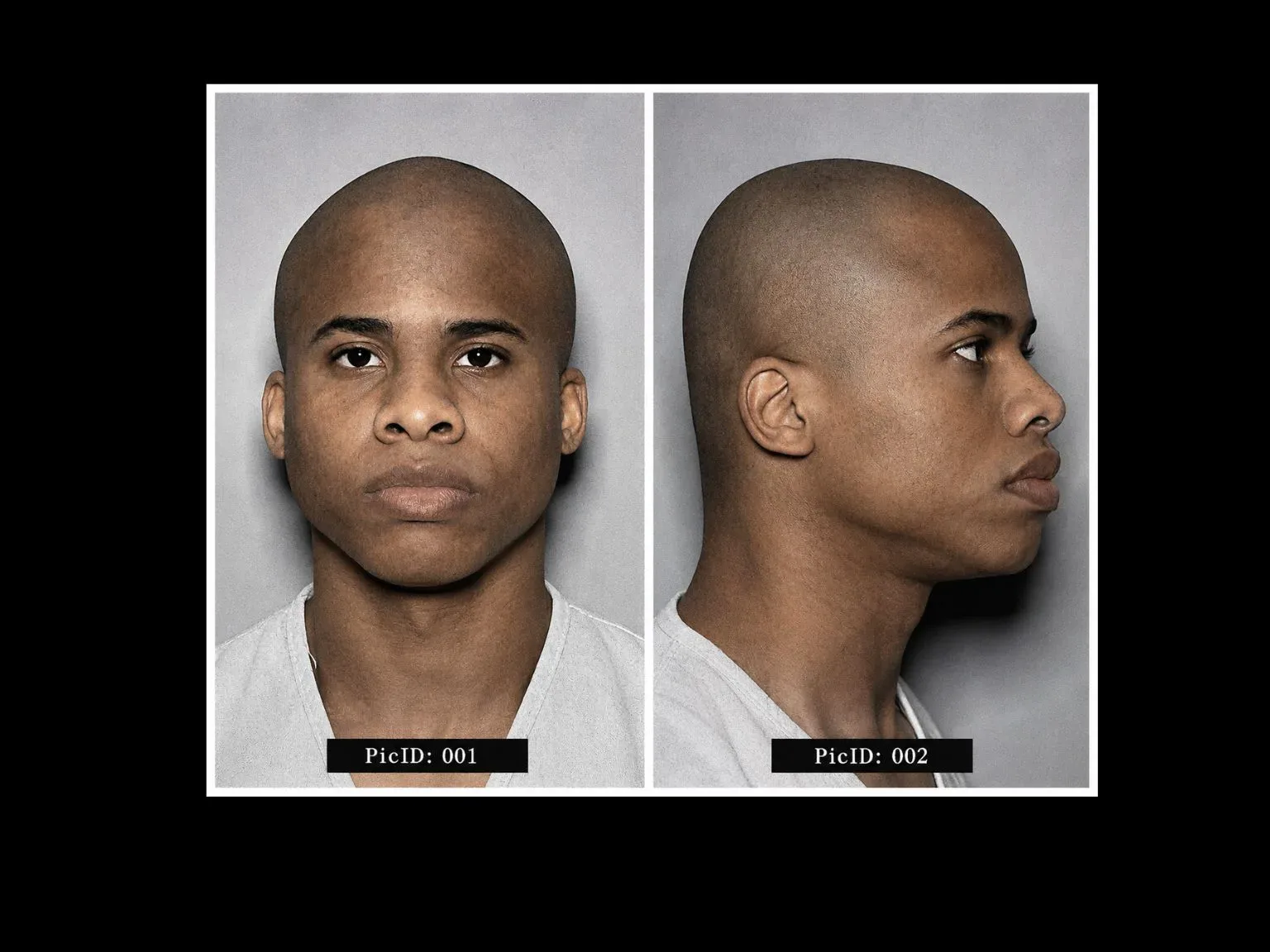
Tay-K has announced #MonstersUnderMyBed, a project scheduled for release on Nov. 13 after three years of development with producers John Cunningham and Warpstr. The release is framed as music assembled through prison-phone collaboration in Texas, and it arrives alongside the single “F**K U,” a track said to address Tay-K’s childhood and incarceration.
That basic description makes the project more complicated than a standard album rollout. A contemporary recording is usually the result of many small decisions: writing and revising lyrics, choosing a beat, recording multiple vocal takes, selecting the strongest lines, changing arrangements, mixing, mastering and clearing the final release. When the credited artist is in prison and outside collaborators handle the production process, the central question is not merely whether music can be made. It plainly can. The harder question is how much meaningful creative authority the artist retains from one stage to the next.
Tay-K has said he hopes to reclaim a right to artistic expression that he believes the justice system manipulated. That makes agency—the ability to make and approve one’s own creative choices—the defining issue around #MonstersUnderMyBed. The available announcement establishes sustained collaboration, but it does not explain how vocals were captured, which materials Tay-K personally approved, who selected final takes, or who authorized changes after the calls ended.
A prison-phone album is a collaboration shaped by distance
“Prison phone collaboration” describes the broad method, not a complete recording workflow. A telephone call can let an artist communicate lyrics, cadence, melody, ideas for a song’s mood and notes on an instrumental. Producers outside the facility can then build beats, revise arrangements and prepare finished recordings. But that arrangement is not equivalent to an artist being in a studio with an engineer, where they can immediately hear playback, request another take, adjust a word or decide a mix feels wrong.
Those differences matter because they affect what “artist-made” means. Songwriting and performance are distinct roles, and so are production and engineering. A producer shapes the musical construction: drums, samples where applicable, instrumentation, tempo and arrangement. An engineer records and processes audio, then helps turn separate elements into a cohesive mix. A performer may contribute the voice and lyrical identity that listeners recognize most immediately, while still relying on other people to execute technical work.
None of that automatically diminishes an incarcerated artist’s contribution. Music has always involved collaboration. The relevant issue is whether communications with the artist were detailed and ongoing enough for the finished record to reflect deliberate choices rather than broad instructions interpreted by others. The announcement does not provide enough information to answer that question track by track, and it would be wrong to fill in those gaps with assumptions.
What is clear is that Cunningham and Warpstr are presented as key creative partners on the project, including “F**K U.” The single follows “PUNCH YOU DOWN,” “Everywhere I Go” and “Erupt,” making it part of a continuing stream of material rather than an isolated archival release.
What listeners do—and do not—know about the vocals
The technical uncertainty is especially important. Tay-K’s description confirms telephone collaboration but does not specify whether final vocals were recorded directly through a phone line, whether separate audio was captured in another approved way, or how any recordings were edited and mixed. Those details influence both sound and authorship.
Telephone audio is inherently limited compared with a conventional studio recording. It is built for speech intelligibility, not a full vocal frequency range, nuanced microphone performance or clean music production. If phone audio is the vocal source, outside collaborators may need substantial editing and processing to fit it into a commercial release. If another method was used, the creative and technical process could look very different. Neither possibility should be presented as fact without documentation.
There is, however, a public example showing the general idea is technically possible. Tory Lanez’s Prison Tapes series began in July 2024. Lanez said he and his engineer, after repeated attempts, devised a way to record vocals through a jail telephone while maintaining what he described as professional sound quality, then turned those recordings into commercially released tracks. That is a possible model for telephone-based releases, not evidence that Tay-K used the same process.
The distinction is more than a technical footnote. Knowing whether an artist heard revisions, gave performance notes and signed off on final versions would provide useful context for listeners evaluating a record promoted as an effort to restore artistic expression. Until those specifics are offered, the most accurate reading is modest: Tay-K participated in an extended remote collaboration; the exact division of creative and post-production responsibilities remains undisclosed.
Approval is the practical test of creative control
Creative control is often discussed as a slogan, but an album makes it concrete. A release can be artistically directed in several ways:
- The artist can decide which songs belong on the track list.
- The artist can approve or reject beats and revised arrangements.
- The artist can choose between alternate vocal performances.
- The artist can authorize guest appearances, artwork and release sequencing.
- The artist can hear a final version and request edits before distribution.
In a typical studio setting, these decisions can happen quickly. Under incarceration, they may be distributed across calls, messages, approved contacts and intervals determined by institutional rules. That can turn normal back-and-forth into a slower process with more room for misunderstanding. It also places exceptional trust in outside producers, engineers, managers and rights holders.
The framing of #MonstersUnderMyBed invites attention to precisely that trust. Tay-K’s stated objective emphasizes recovery of expression, while the production setup necessarily relies on people outside prison to translate ideas into release-ready tracks. There is no inherent contradiction there. A strong collaboration can preserve an artist’s intent. But the amount of control cannot be measured simply by whose name appears most prominently on the cover. It rests on the unreported approvals behind the release.
Money is another unanswered part of the story
The project’s rollout also raises financial questions that have not been answered in the supplied information. A commercial song can generate different forms of revenue and rights interests, including compensation associated with songwriting, master recordings and uses of recordings on streaming services or elsewhere. Those categories are not interchangeable. The person who performs on a song, the people who write it, the producer and the party that owns or controls a finished master may have different stakes depending on their agreements.
There is no disclosed information here about ownership, contracts, royalties, distribution terms or where any proceeds may go. That absence does not prove a problem, nor does it establish that Tay-K lacks a financial interest. It simply means listeners cannot tell from the announcement how the project’s commercial side is organized.
That uncertainty is worth keeping separate from the creative question. An artist might have substantial input on a track but limited control over its business arrangements; conversely, a credited performer might hold rights while delegating many technical choices. Both forms of control matter, but they are not the same thing. The wider entertainment business repeatedly shows why access, ownership and revenue structure deserve scrutiny; similar issues arise in other digital industries, including the changing economics explored in the business of access in free-to-play games.
For this release, the responsible position is to identify the questions without inventing the answers. Publicly available information in the announcement does not establish who owns the masters, who receives what share of revenue, whether Tay-K gave final approval, or what contractual arrangements exist between the rapper and his collaborators.
The subject matter makes authorship especially significant
“F**K U” is described as addressing Tay-K’s childhood and subsequent incarceration. The reported themes give the issue of personal voice added weight. A song about formative experiences and confinement may be technically assembled by several people, but its emotional authority is tied closely to whether the performer can express events and perspectives on his own terms.
Tay-K also appears on “SPOTLIGHT / INNER CHILD,” the closing track of Dominic Fike’s How to Quit Smoking. That contribution reportedly also concerns childhood experiences. Taken together, the two appearances suggest a recent focus on autobiographical subject matter, though the supplied details do not support broader claims about the direction or full content of the album.
There is an unavoidable tension in any discussion of Tay-K’s artistic expression. He received an 80-year sentence in April 2025 after his murder conviction in the death of Mark Anthony Saldivar. A judge ordered that term to run concurrently with an earlier 55-year sentence. The seriousness of that conviction should not be minimized by treating an album campaign as a clean redemption narrative. At the same time, discussing the mechanics of creative work in prison is not an endorsement of the conduct that led to incarceration.
Both realities can be held at once: Tay-K is a convicted person serving a lengthy sentence, and he remains an artist whose work is being prepared for public release through intermediaries. The announcement’s value, beyond the music itself, is that it exposes how difficult it can be to define autonomy when communication, recording conditions and commercial execution are all constrained.
What additional detail would clarify the release
Fans do not need every private agreement to understand an album. But a few practical details would make claims of reclaimed artistic control easier to evaluate. Useful disclosures could include a general explanation of how vocals were obtained, whether Tay-K heard and approved final mixes, how track-list decisions were made, and what roles Cunningham and Warpstr played beyond their producer credits.
Those answers would not settle every legal, ethical or financial question surrounding prison-made art. They would, however, distinguish a release directly guided by its artist from one primarily assembled around material supplied at a distance. For now, #MonstersUnderMyBed is best understood as an announced, collaboration-dependent project whose stated purpose is artistic reclamation—and whose most important operational details remain unknown.