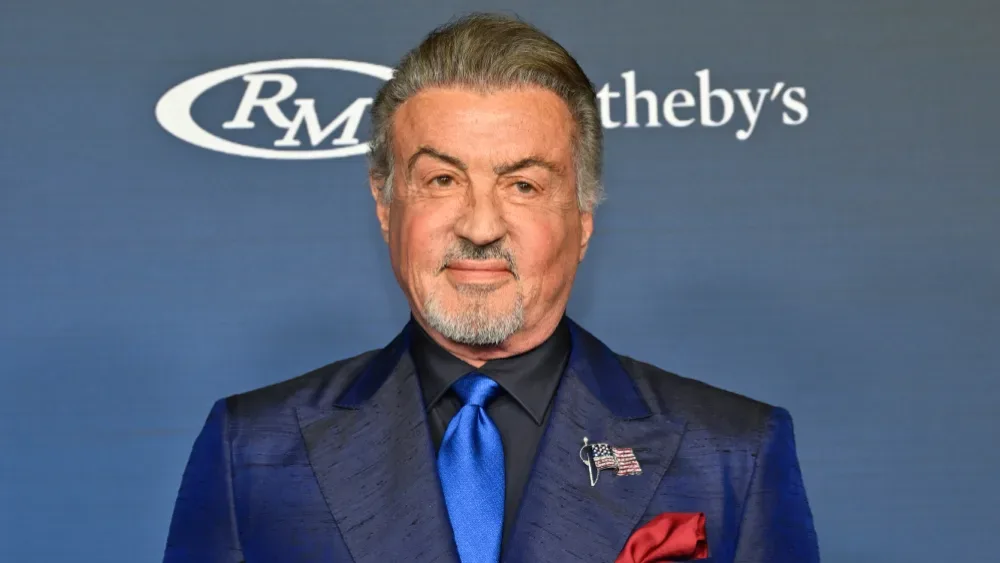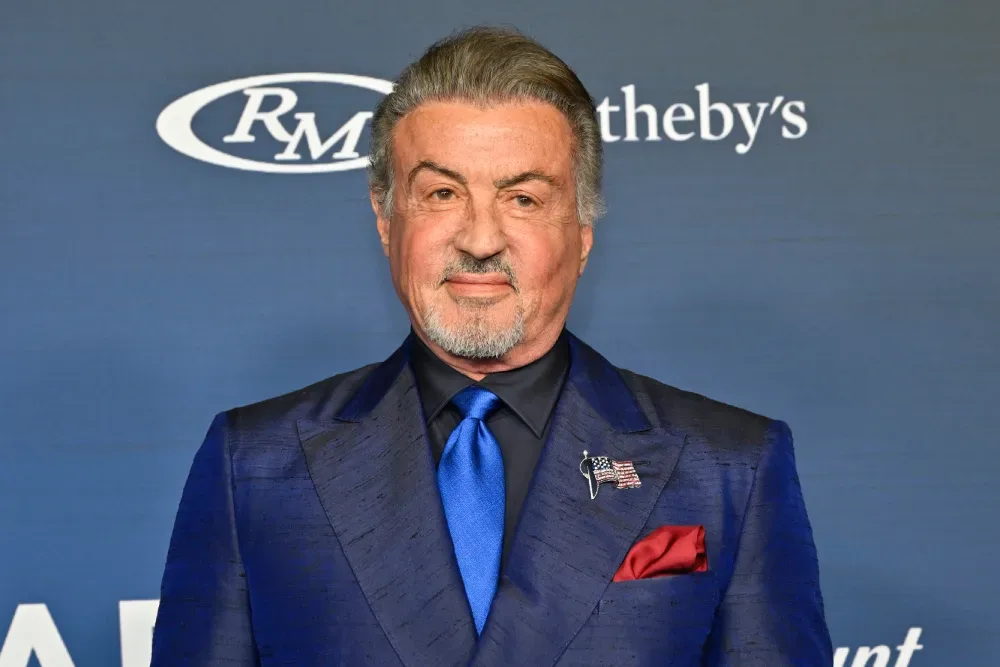
Sylvester Stallone is not trying to sidestep the family connection behind Scarlet Rose Stallone appearing alongside him in Tulsa King. He has called it nepotism directly, and his point is deliberately blunt: a parent with the ability to help a child get an opportunity is likely to do so.
Scarlet Stallone plays Spencer in the Paramount+ drama, which stars her father as Dwight “The General” Manfredi. Her character was introduced in the first season and has a larger presence in Season 4, where Spencer has moved from barista work into caring for horses and working as a stablehand at Fennario Ranch, an operation connected to Manfredi.
For Stallone, the important distinction is not whether access played a role. He does not dispute that it did. His argument is that opening a door and succeeding after walking through it are separate things.
Stallone’s answer does not deny the advantage
Nepotism is usually used to describe preferential access or opportunities granted because of family relationships rather than an entirely open, merit-only selection process. In entertainment, the word can cover many different situations: being introduced to influential people, obtaining an audition, landing a first professional job, or receiving the visibility that comes from working with a famous relative.
Stallone’s comments do not present Scarlet’s casting as an exception to that definition. Instead, he frames the advantage as an expected part of parenting. He said criticism begins with the claim that nepotism is terrible, before arguing that parents should want to help their children. In an even more pointed formulation, he said, “Of course it’s nepotism,” tying that acknowledgment to a parent’s desire to give their children the best possible chance.
That candor matters because public conversations around celebrity families often get stuck at the first question: did a recognizable surname help? In this case, Stallone’s response is essentially yes. There is no attempt to turn a plainly visible family relationship into a coincidence or to argue that access did not exist.
It is also a narrower statement than the claim that a family tie alone creates a durable career. Stallone said the ability to maintain a standard of excellence is outside a parent’s control. He can offer an opening, but whether someone can meet the demands that follow is, in his view, for the work itself to answer.
Access and performance are not the same test
That distinction is central to why nepotism remains contentious. Access is about who gets a first chance. Performance is about what happens after that chance: whether a performer can handle the role, continue to earn larger responsibilities, and stand up to the scrutiny that accompanies a high-profile production.
Related coverage includes Sylvester Stallone Calls Daughter’s ‘Tulsa King’ Casting Nepotism.
Those two questions can coexist. A relative can receive an opportunity that another actor might not have received, while still being required to learn the job and deliver on screen. Acknowledging the second point does not erase the first. Likewise, acknowledging the advantage does not predetermine the quality of the performance.
Stallone’s “open the door” language places the emphasis on that sequence. Family influence may get someone inside the room, but it cannot guarantee that audiences, collaborators, or future productions will respond positively. His warning to “be careful what you wish for” recognizes the other side of a coveted opportunity: visibility also means increased expectations.
For viewers, that can be a more useful lens than treating the word nepotism as either a complete defense or a complete verdict. The family connection is a fact. The on-screen role is another fact. The audience can account for both without pretending that either one answers every question by itself.
What the larger Season 4 role means for Spencer
The available character details give Spencer a clearer function in the newer season than simply being a familiar face around Dwight Manfredi. She is working at Fennario Ranch as a horse caretaker and stablehand after previously being a barista. The position places her in an area hired by Manfredi, giving the character a direct link to his expanding world and family business.
That setup also means Scarlet Stallone’s increased involvement is part of the show’s story structure, not merely an off-screen casting footnote. A recurring character with a defined job inside a central location can affect the range of scenes, relationships, and plot responsibilities available to the performer. It does not tell viewers exactly where every storyline will go, but it establishes why the role has greater practical significance in Season 4.
Tulsa King centers on Dwight, a mob boss sent to Tulsa, Oklahoma, after serving 25 years in prison. The show’s premise already combines a character rebuilding his place in the world with the creation of new relationships and business interests. Spencer’s work at the ranch fits that wider framework by connecting a member of Dwight’s orbit to an enterprise under his influence.
Audiences are accustomed to parsing both the material on screen and the circumstances around it. That kind of close reading also extends beyond casting, as seen when viewers were rechecking a possible trailer edit in an Avengers: Doomsday teaser. In Stallone’s case, however, there is little ambiguity around the central off-screen issue: he has explicitly identified the family advantage himself.
Why an admission changes the discussion, but not the debate
Stallone’s remarks are unlikely to end arguments about fair access in Hollywood. The criticism attached to nepotism is not only about whether a well-connected person has talent. It is also about the talented people without the same family networks, visibility, or ability to secure an early break. Acknowledgment does not solve that imbalance.
But it does make the discussion more precise. Rather than debating whether Scarlet Stallone benefits from proximity to a major star, the conversation can move to the questions Stallone raises: what does the role require, how does Spencer function in the series, and does the performer meet the standard expected by the show’s audience?
His position is unapologetic: parents will prioritize their children when they can. Yet he also draws a line around what that support can and cannot accomplish. Opportunity can be extended; long-term excellence cannot simply be handed over.
Season 4 of Tulsa King premiered on October 16. New episodes are scheduled to arrive weekly on Fridays at midnight PT. As Spencer takes on a bigger place at Fennario Ranch, the show provides the practical arena for the claim at the heart of Stallone’s comments: access may begin the story, but the performance is what viewers will ultimately judge.