Sumo wrestling has often been flattened into an easy visual gag outside Japan: huge athletes, ceremonial belts, a lightning-fast collision, roll credits. Sumo: Spirit Weighs Nothing, director Erik Shirai’s new documentary, is built as a firm response to that shallow shorthand. Rather than treating its subjects as curiosities, the 99-minute film turns its gaze toward the discipline, pain, pride and personal uncertainty behind a sport whose rituals can be as imposing as its athletes.
The result is a stately, carefully composed work that finds grandeur in sumo’s physical demands and in the people who accept them. Shirai, whose earlier documentary The Birth of Saké examined another deeply rooted Japanese tradition, approaches the sport with evident admiration. The film’s reverence is its central strength: it gives wrestlers the visual dignity that many Western depictions have historically denied them. Yet it is also its limitation. By favoring ceremony and endurance over conflict and institutional scrutiny, the documentary leaves important questions around sumo largely at the edge of the frame.
A film that looks beyond the punchline
The title Sumo: Spirit Weighs Nothing contains a light playfulness, but the broader approach is serious. Shirai is interested in the people occupying very different positions within professional sumo: trainees only beginning to understand the cost of the life, a young wrestler expected to rise, and a champion confronting the possibility that his body can no longer sustain the role that made him famous.
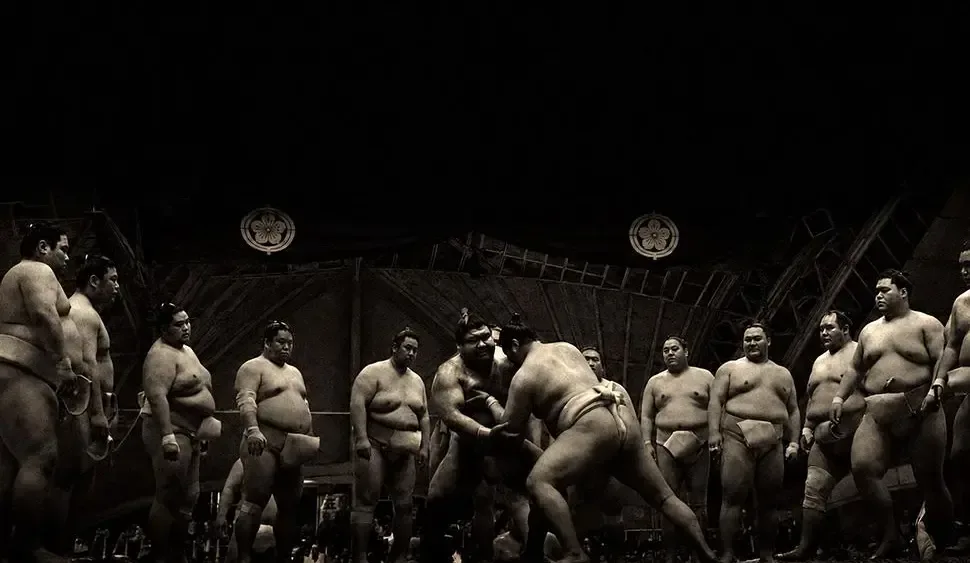
That perspective matters because sumo is not presented merely as competition. It is a system of tradition, hierarchy, communal living and relentless bodily labor. The documentary’s attention to training and ritual suggests that a bout inside the dohyō, the sumo ring, is only the public surface of a much longer process. It is not simply about mass, momentum or a dramatic shove over a straw boundary. The wrestlers’ bodies are the result of demanding routines, sustained sacrifice and an acceptance of risks that can be difficult to comprehend from the stands.
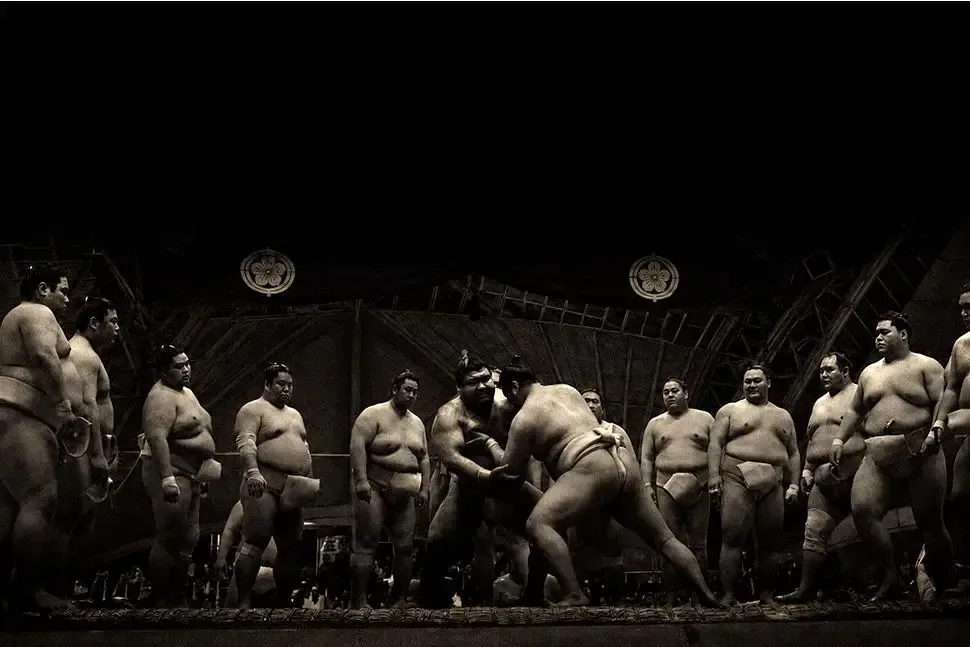
Shirai and cinematographer Hiroshi Hara reportedly shoot these bodies in high-contrast monochrome and sepia-leaning images. That aesthetic choice is more than decorative. It frames the athletes as figures of force, fatigue and near-mythic commitment, matching the way many of the men understand themselves: as warriors bearing a tradition larger than any individual tournament.
There is room for humor amid all that solemnity. One early image of newly washed mawashi, the thick belts worn in competition, hanging out to dry punctures the grandeur with an everyday detail. It is a useful reminder that even a heavily ritualized sporting culture still runs on chores, shared spaces and laundry.
Three lives at different stages of the climb
At the Tokyo stable led by 62-year-old Master Sakaigawa, the film observes young men learning the discipline’s expectations from the ground up. New recruits recite a pledge emphasizing responsibility, duty, strength of heart, kindness and courage. Such a scene establishes how sumo sees itself: not only as athletic achievement, but as a code of conduct.
Hiradoumi, 24 during the film’s focus, represents a hopeful future. He is regarded as a promising wrestler and a potential source of continued Japanese representation at the sport’s highest levels. The documentary places that expectation in the wider context of a changing competitive landscape, although it does not spend enough time examining what that shift means for the sport or the people inside it.
Younger still is Yonezawaryu, a teenager navigating the uncertainty that comes with entering such an all-consuming environment. His doubts are among the film’s most immediately human elements. Seeing the injuries and punishing physical decline around him makes the question of long-term commitment feel urgent rather than abstract. Sumo can offer status, fraternity and purpose, but the documentary does not romanticize the fact that it can extract a severe price.
That price is embodied most plainly by Terunofuji. Mongolian-born and 33 at the time depicted, he was the only active yokozuna, the highest rank in sumo, and a 10-time title winner. The honor is enormous, but so is the pressure attached to it. After 14 years in the sport, including five at its summit, he is portrayed as a veteran despite an age that would hardly seem old in many other professions.
His body’s deterioration gives the documentary its sharpest sense of mortality. Terunofuji speaks bluntly about the toll of competing, estimating that sumo could shorten his life by 10 to 20 years. He compares a professional wrestler’s hardship to a soldier going to war. With a wife and son, the stakes of that comparison become especially stark. The film allows the gravity of his situation to register, even if it stops short of pressing him on whether the sacrifice has been worth it.
Visual awe, and the risks of too much deference
There is genuine value in a documentary that refuses degrading, cartoonish ideas about sumo wrestlers. By centering stamina, technique, injury and aspiration, Sumo: Spirit Weighs Nothing insists on seeing its subjects as complete people. Its visual language appears designed to make that case without apology. In images of training and physical strain, Shirai finds beauty where a less thoughtful film might chase spectacle.
But respect is not the same as avoiding difficult history. The film’s warm, accessible portrait reportedly gives little attention to controversies involving hazing and match-fixing. It also sidesteps sumo’s continued exclusion of women from formal competition and ceremonies. These are not minor footnotes to be tucked away after the pageantry has done its work; they are part of the institution the documentary celebrates.
The sport’s declining popularity in Japan is addressed only lightly as well. A late observation that few yokozuna this century have been homegrown adds another compelling thread: Mongolia and the United States have helped fill the gap at the top level. That fact could open a much broader discussion of national identity, international recruitment, changing audiences and the meaning of tradition in a modern sport. Instead, it arrives too late to become a central line of inquiry.
Those omissions do not erase the film’s achievements, but they make its perspective narrower than its subject deserves. A documentary can honor athletes while still investigating the structures that govern their lives. In fact, the combination would likely make the emotional stories of Hiradoumi, Yonezawaryu and Terunofuji land even harder.
A notable festival showcase for a sports documentary
Sumo: Spirit Weighs Nothing premiered as the opening film in the audience-focused Spotlight competition at the Venice Film Festival. It is an ESPN Films presentation, produced by Rise Films in association with Real Lava and Generation11. Shirai directed and shared camera duties with Hiroshi Hara; Frederick Shanahan edited the documentary, while Rutger Hoedemaekers composed the music.
The international production brings together Japan, the United States, Denmark and the United Kingdom, fitting for a film that is consciously attempting to introduce a global audience to the inner life of a specifically Japanese institution. That outward-facing mission is understandable, and it helps explain the documentary’s desire to make sumo immediately legible to viewers who may know little beyond its visual stereotypes.
For viewers interested in nonfiction cinema that uses striking imagery to reconsider a cultural institution, it sits naturally beside other documentaries concerned with history and national memory. ‘Imperium’ explores the Soviet Union through rediscovered footage, though its archival method and political concerns are very different from Shirai’s close, portrait-driven approach.
What the documentary ultimately captures
At its best, Sumo: Spirit Weighs Nothing captures a contradiction at the heart of elite sport. Its wrestlers are asked to become extraordinary while enduring conditions that can make ordinary health, privacy and longevity feel remote. The rookies enter a world of rules and promise. The rising contender carries communal hopes. The yokozuna bears a rank so elevated that it can seem almost sacred, even as physical decline makes its demands impossible to ignore.
Shirai’s film is handsome, sober and empathetic, treating sumo as more than an imported novelty. It shows the labor that exists behind the ceremony and asks audiences to regard the men in the ring with seriousness. Its reluctance to confront the sport’s most troubling realities keeps it from becoming a fully rounded account, but its portraits still make a persuasive case for attention. The spirit may weigh nothing; the burden carried by the people devoted to sumo plainly does.