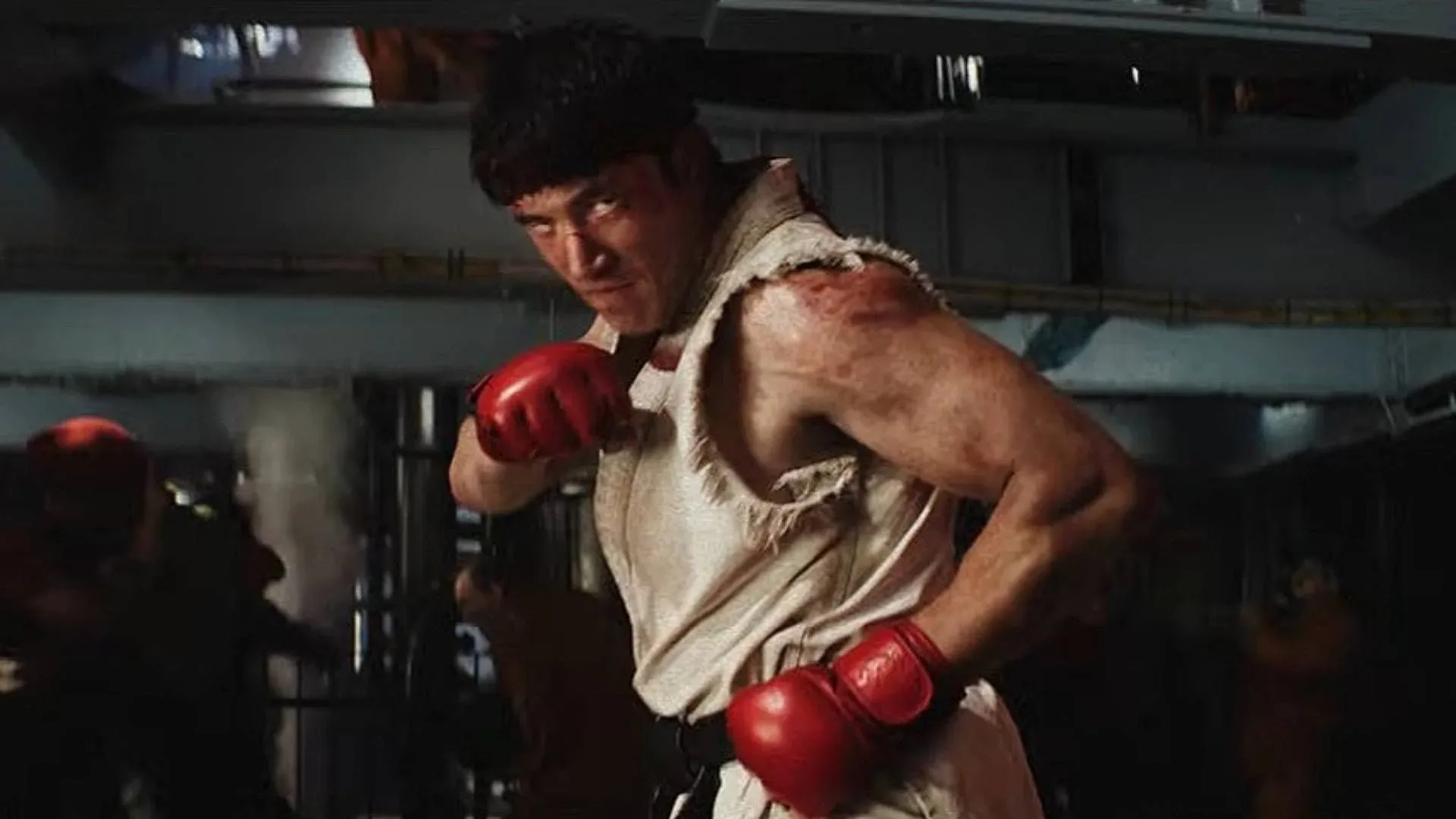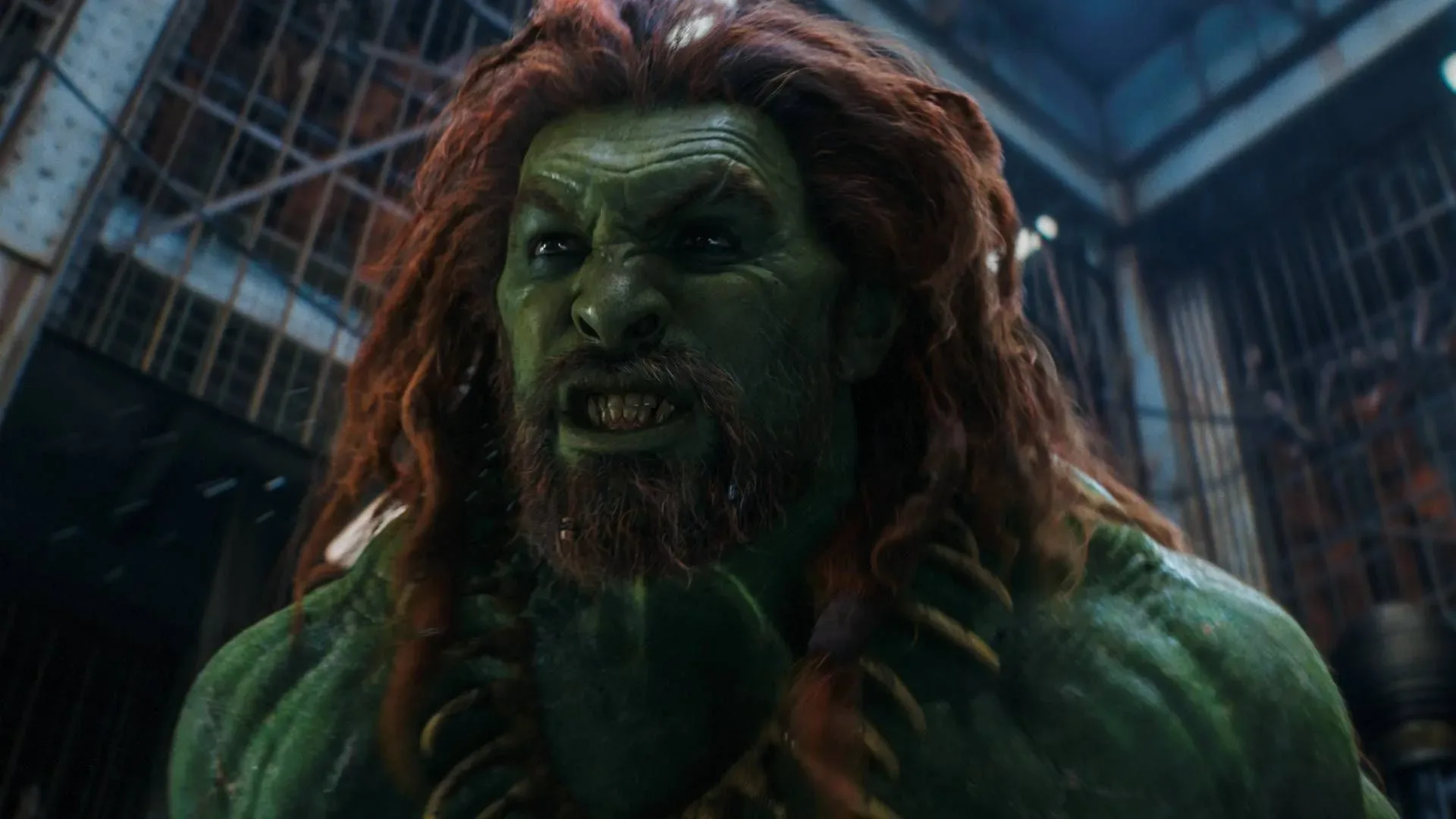
Street Fighter’s decision to place Justin Wong, IFC Yipes and Maximilian Dood among the prisoners watching Blanka fight Ryu is more than a quick celebrity spot. Director Kitao Sakurai has described the cameos as part of a deliberate effort to speak to the fighting-game community in an authentic way—an approach grounded in the idea that a Street Fighter movie should earn the confidence of its longtime fans before it tries to win over everyone else.
That philosophy is especially clear in Wong’s role. The veteran competitor and commentator gets the most immediately recognizable visual nod among the group: a “37” tattoo. It points to Evo Moment 37, the celebrated competitive Street Fighter sequence involving Wong and Daigo Umehara. The reference is a compact piece of fighting-game language, one that can exist as background texture for a casual viewer while carrying much more weight for people familiar with competitive play.
A cameo built around community recognition
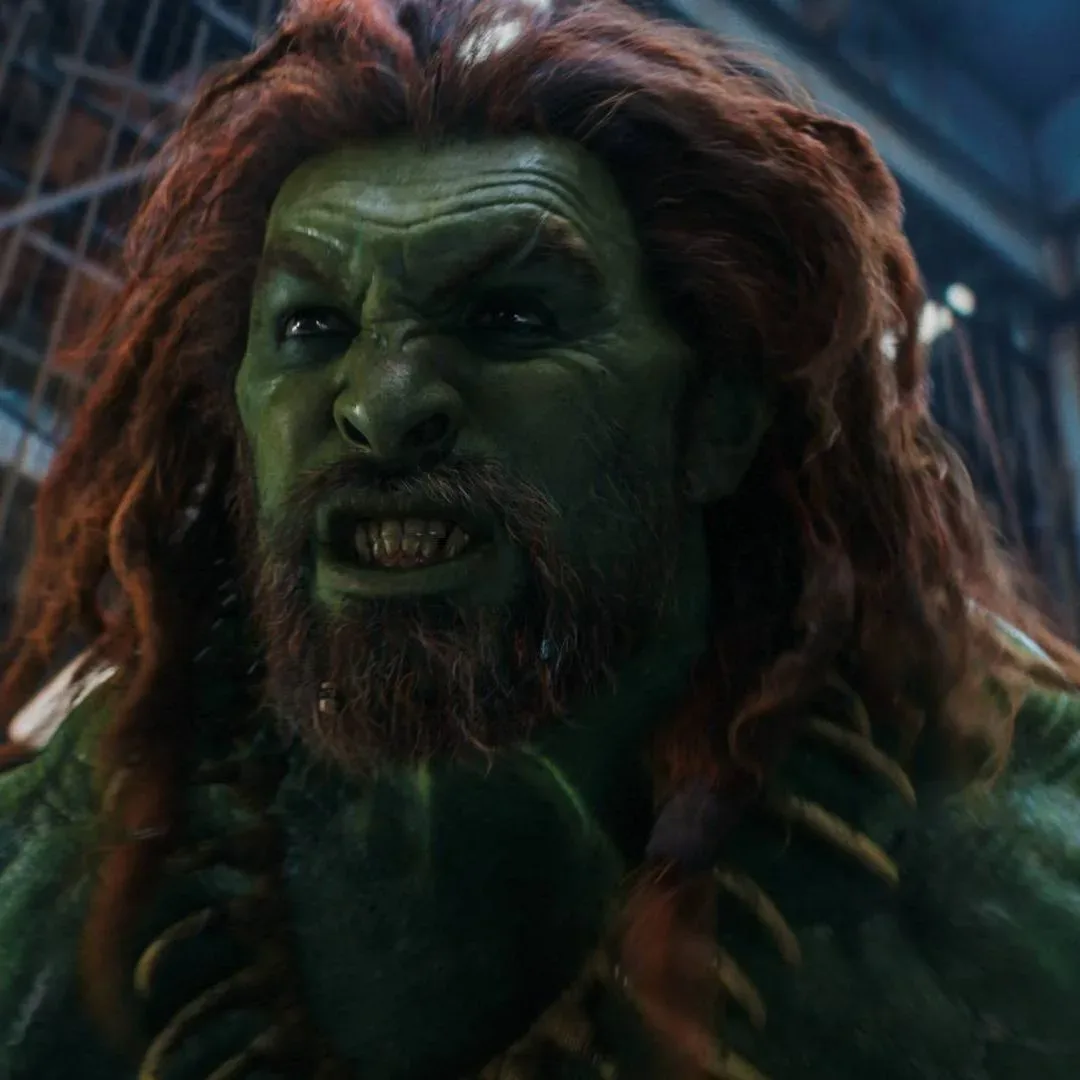
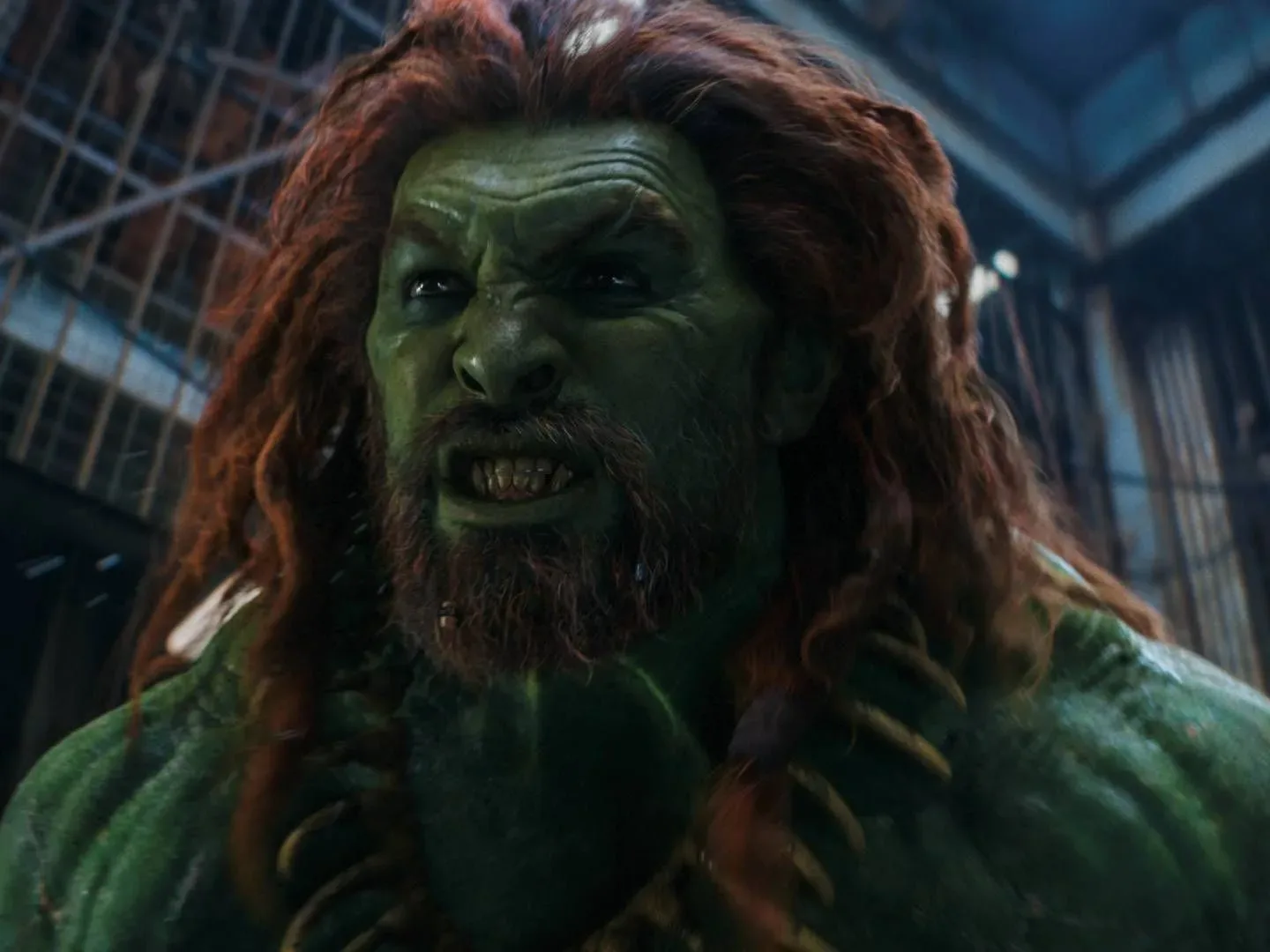
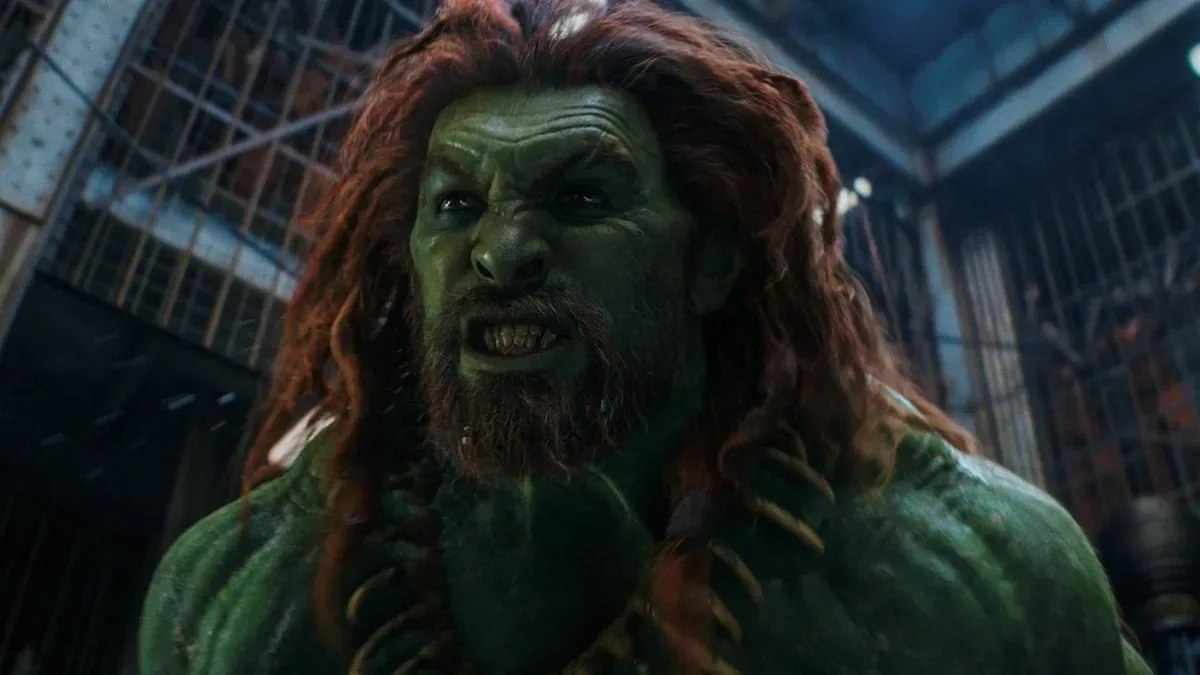
The cameos appear during the movie’s midway Blanka-versus-Ryu fight. Wong, IFC Yipes and Maximilian Dood are shown behind bars, providing running commentary as the battle plays out below. On a basic storytelling level, the scene gives the audience voices reacting to the action. On another level, it places three recognizable figures from fighting-game culture inside the world of the film.
That distinction matters. A cameo is often treated as a simple reward for people who recognize a face, but this one is tied to a community that has its own history, vocabulary and ways of watching games. Competitive fighting games are not only about characters and special moves. They are also about spectatorship: the tension of a close round, the ability to read a player’s decision-making in seconds, and the personalities whose reactions help define a match’s atmosphere.
By giving Wong, Yipes and Dood commentary duties, the scene acknowledges that culture rather than merely putting recognizable community figures in the background. The movie is not asking viewers to know every name to follow the fight. But it gives people who do know them another layer to appreciate.
Why “37” is such a specific reference
The number on Wong’s tattoo refers to Evo Moment 37, the famous exchange between Wong and Umehara. The moment is remembered for a nail-biting series of parries, with Umehara turning a seemingly dire situation into a victory. Wong’s loss became widely known beyond the immediate competitive community, even though the memory of it is inseparable from the pressure, skill and drama of a high-level fighting-game match.
For viewers outside that world, a parry is a precisely timed defensive input that neutralizes an incoming attack rather than simply blocking it in the usual way. In the context of the famous sequence, the drama comes from the fact that timing matters repeatedly and failure carries immediate consequences. It is the kind of play that communicates risk even before a viewer understands every underlying mechanic.
The “37” reference therefore does a little more than cite an old match. It recognizes a shared piece of Street Fighter history. The tattoo is also admirably economical: it does not stop the scene to explain itself, and it does not depend on a lengthy recreation of the event. Fans can identify it instantly; newcomers can simply read it as part of Wong’s on-screen character design.
Related coverage includes Street Fighter Director Explains Justin Wong Cameo and the Film's Fan-First Focus.
Sakurai’s fan-first standard
Sakurai’s explanation is straightforward: video-game adaptations have not always spoken to fans or their communities in a way that feels authentic. His stated aim for Street Fighter was to involve that community and make clear that the film was made with it in mind.
“Street Fighter, a movie, needs to work for fans first,” Sakurai said, while also recognizing that the film has a broader audience beyond the existing community.
That is a meaningful standard, because “for fans” can be an imprecise phrase. It does not necessarily mean a movie should only communicate through deep-cut references. Nor does it mean every scene must require knowledge of tournament history. Instead, the Wong cameo suggests a practical version of fan-first thinking: bring in people who matter to the culture, allow their presence to serve the scene, and include references with enough specificity that they feel intentional rather than generic.
It is also notable that the film’s chosen guests represent different avenues through which people engage with fighting games. Wong’s name is directly tied to competitive legacy and to Evo Moment 37. IFC Yipes is a recognizable commentator whose voice is part of the excitement surrounding fighting-game broadcasts. Maximilian Dood is a prominent creator associated with the genre and its audience. Their appearance together presents fighting games as a living community, not merely a catalog of legacy characters and famous attacks.
The practical challenge for game adaptations
There is a balancing act behind any fan-oriented reference. Make it too obscure or too central, and newcomers can feel locked out. Make it too vague, and dedicated fans may notice that the adaptation has reduced the culture to a collection of brand names. The strongest cameos tend to work on two levels: they contribute something understandable in the moment, while rewarding a viewer who recognizes their wider context.
The Street Fighter scene appears designed around that dual purpose. A viewer does not need to understand the significance of the tattoo to grasp that prisoners are reacting to a major fight. But for anyone who does recognize Wong—and recognizes the number—the scene becomes a statement about what kind of Street Fighter history the film wants to acknowledge.
That is a more useful model than treating references as a checklist. Fan service, at its weakest, simply pauses to announce that a familiar thing exists. At its best, it creates a point of connection without interrupting the story’s momentum. The Wong, Yipes and Dood appearances aim for the latter by tying their presence to commentary during an actual match-up rather than isolating them in a detached gag.
Authenticity is not the same as obscurity
There is another important implication in Sakurai’s comments. Authenticity does not have to mean making a film inaccessible. The director’s stated order of priorities is fans first, followed by the wider audience—not fans only. That suggests the intended entry point is trust: if people who know Street Fighter’s competitive scene feel recognized, the movie has a stronger foundation from which to introduce its world to others.
For a franchise with a long-running player community, that trust is valuable. It is built through details such as who is invited into the production’s orbit, what events are remembered, and whether the film understands that its audience has developed traditions beyond the games’ fictional storylines. Evo Moment 37 is one such tradition. It is a real competitive memory, associated with a particular matchup, a particular reversal of fortune and an enduring conversation around skill under pressure.
The film’s use of Wong makes that history visible without making him explain it. That restraint is likely why the tattoo works as a reference. It is there for the people who understand it, but it does not ask every viewer to stop and learn the lesson before the story can continue.
What the cameo says about Street Fighter’s audience
The broader message is that Street Fighter’s audience is not a single, uniform group. Some viewers know the franchise through its characters and arcade-era identity. Others follow modern competition, broadcasts and creators. Others may only know a handful of iconic images or names. A film trying to represent the series has to make room for all of those relationships with the property.
Wong, IFC Yipes and Maximilian Dood provide one answer: acknowledge the people who have helped keep the conversation around fighting games active. Their presence during Blanka and Ryu’s bout places community voices beside the movie’s fictional conflict. It says that watching, reacting and debating are part of Street Fighter’s identity too.
That is why the “37” tattoo carries more force than a random number would. It is a signal aimed at a particular audience, but it is also part of a wider creative approach. Sakurai’s fan-first framing positions these cameos as a bridge between the film and the people whose enthusiasm, competition and commentary have shaped how Street Fighter is experienced over time.
For more on how game creators and producers think about community expectations, see this discussion of development feedback and decision-making around Resident Evil 7.