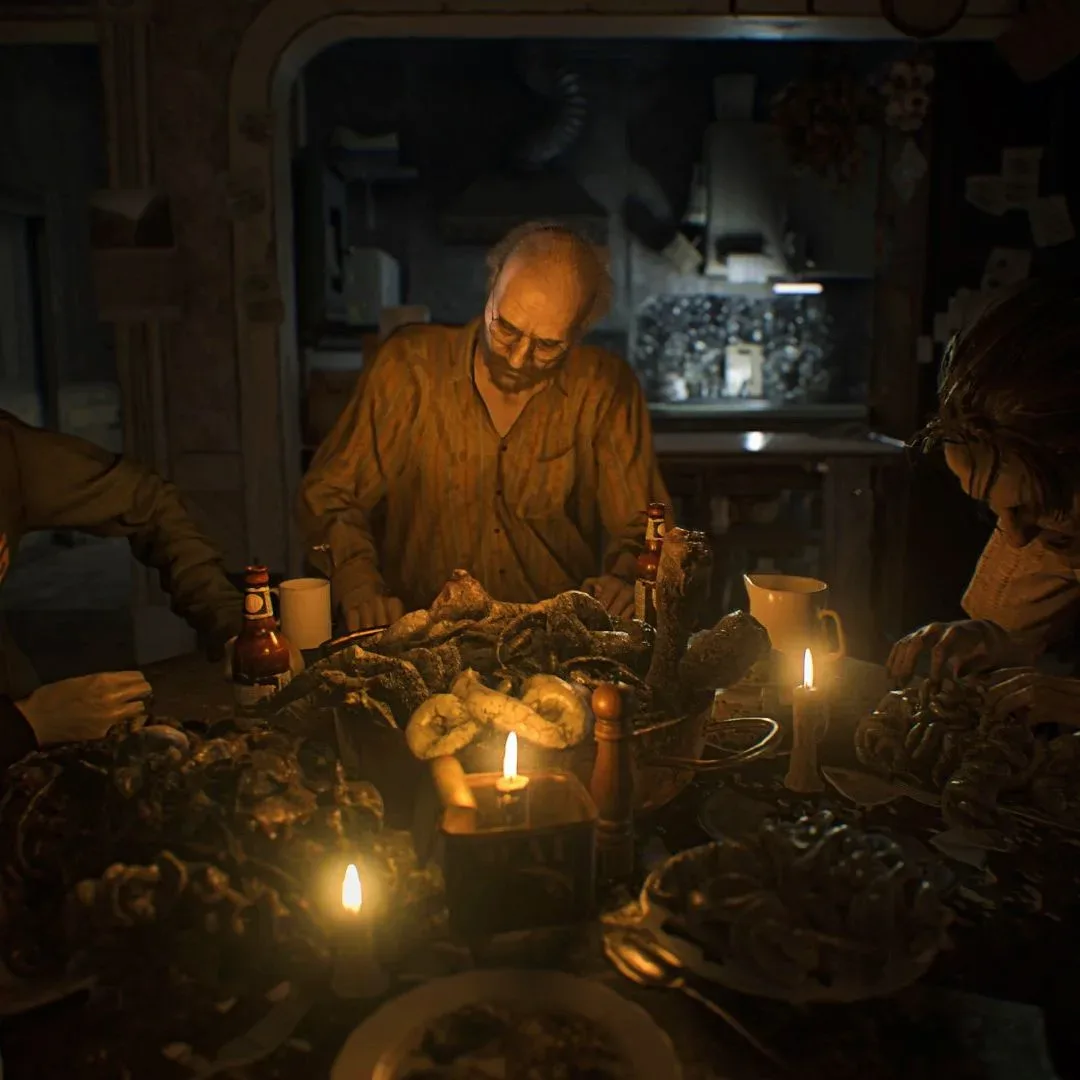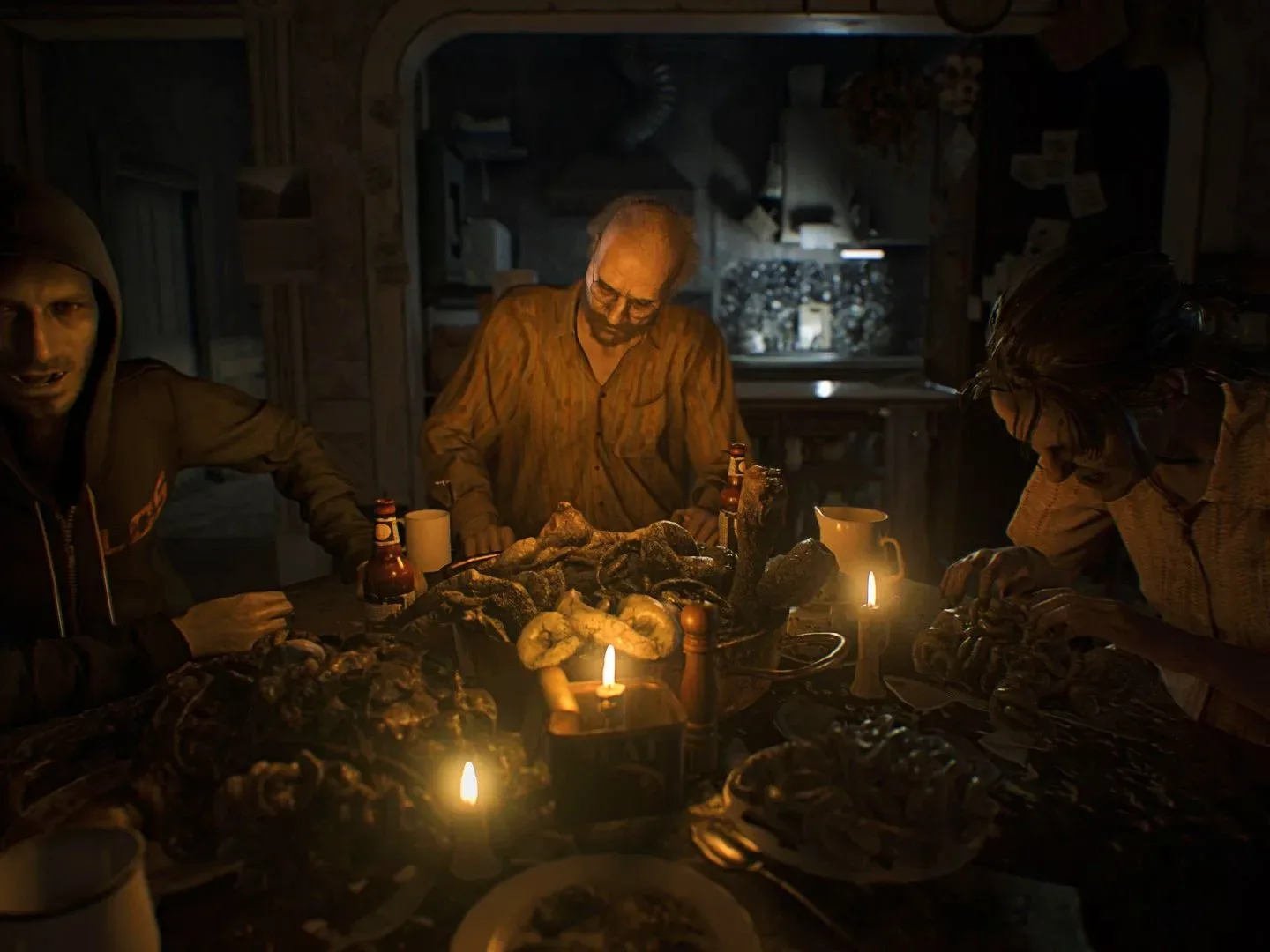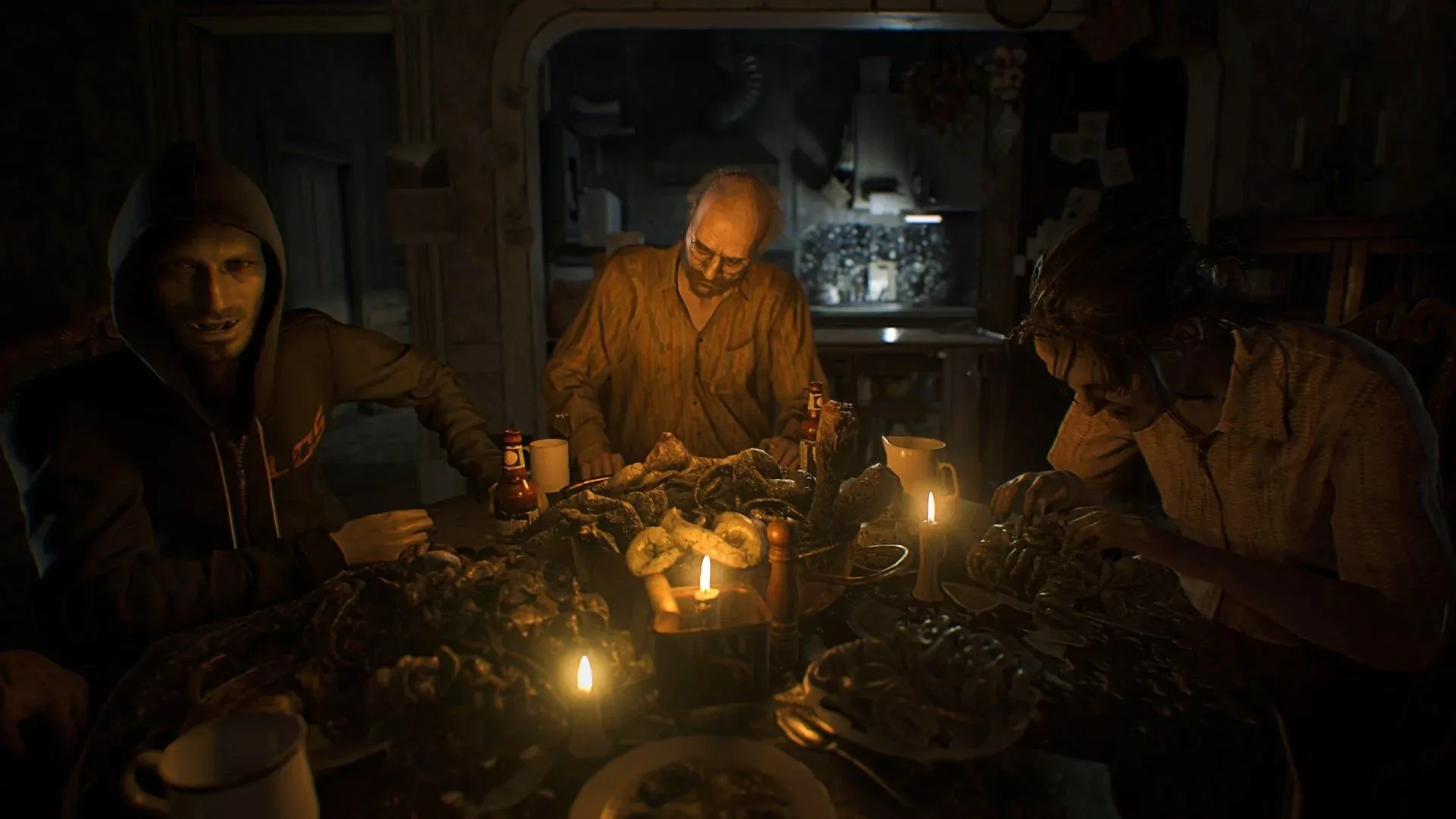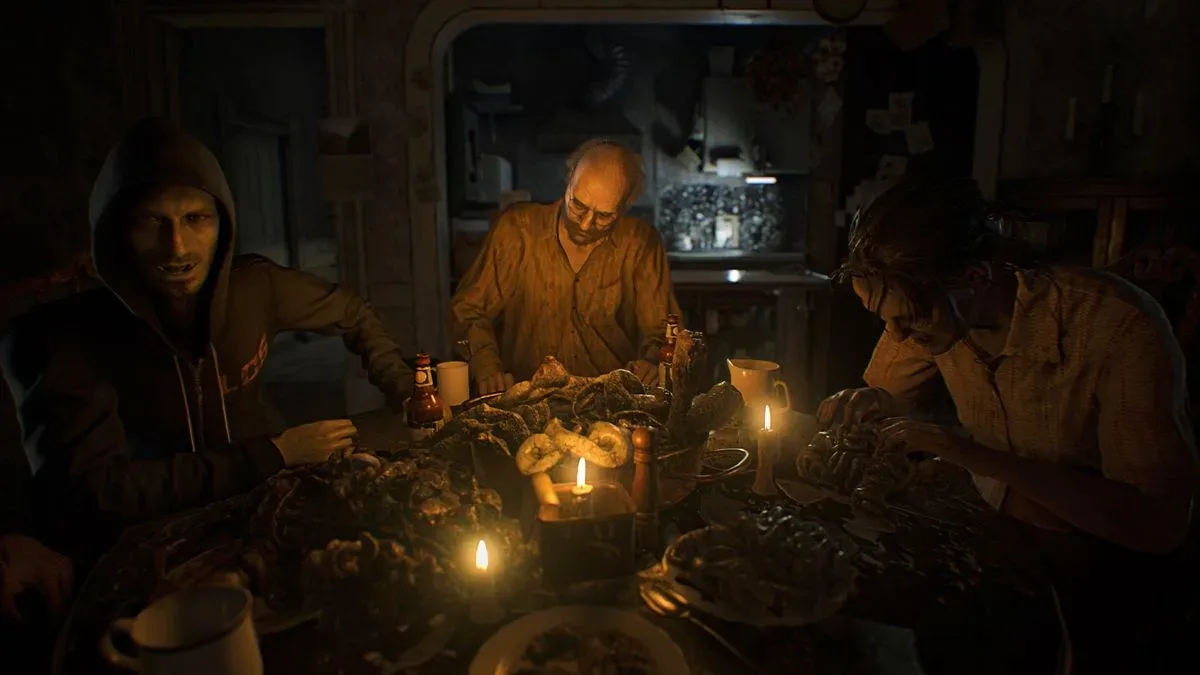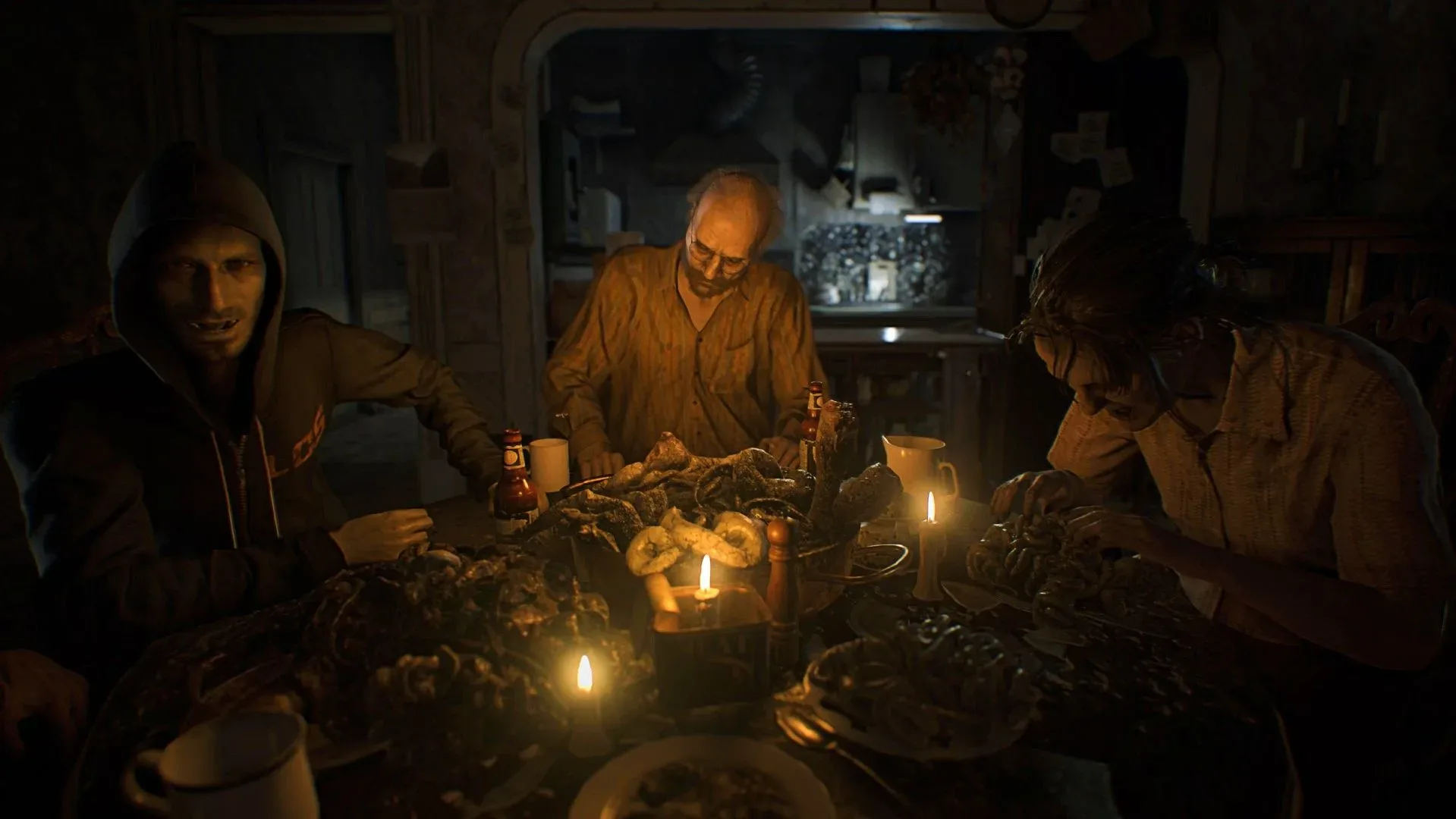
Resident Evil 7: Biohazard is often discussed as the moment Capcom pulled its signature horror series back toward dread, confinement and discomfort. But former Capcom producer Miguel Corti has offered a less tidy account of how that turnaround took shape: many of the game’s shortcomings, he says, were already obvious while it was being made, and the team did not meaningfully address them.
In a lengthy Bluesky thread, Corti said it was gratifying that the game still inspires serious discussion roughly a decade later. Yet he also argued that the flaws people identify today were not hidden by time or hindsight. In his telling, they were “vividly present” during production and “roundly ignored.”
That is not quite the same as saying Resident Evil 7 failed. Corti’s wider description instead presents development as a messy process in which a major franchise changed direction, shipped with compromises, initially struggled to win over parts of its intended audience, and only later earned a stature closer to the series’ most celebrated entry, Resident Evil 4. It is a useful reminder that a game can be both a successful correction and an imperfect work.
A response to Resident Evil 6, not a simple return to form
Corti traces much of Resident Evil 7’s origin to the internal and external response surrounding Resident Evil 6. He said company leadership was pleased with Resident Evil 6, while developers wanted the kind of critical recognition being received by other games—particularly games the developers viewed as clearly influenced by Resident Evil.
That distinction matters. Commercial satisfaction and critical ambition can point a series in different directions. Corti’s account suggests the people making the next game were not merely trying to repeat a known formula or mechanically reverse every decision associated with Resident Evil 6. They were trying to resolve a larger question: what should Resident Evil become when its horror identity, critical standing and blockbuster scale no longer seemed to align?
He described early sequel concepts as even more convoluted than the story ultimately associated with Resident Evil 6, saying the plans changed so frequently and became so tangled that he lost track of the versions. The implication is that the project did not begin with a sharply defined, modest horror premise waiting to be executed. It began amid uncertainty over plot, direction and the series’ future.
That kind of uncertainty is familiar in large game development, though it should not be mistaken for a universal creative virtue. Iteration is the repeated act of building, reviewing and changing a design. It can expose weak ideas before release, but it can also consume time and make it difficult for a team to settle on a coherent whole. Corti’s comments portray Resident Evil 7 as a game shaped by both sides of that tension.
The reset that changed Resident Evil 7
A major company reorganization proved decisive, Corti said. A mandate arrived to remake Resident Evil 7 from scratch, resulting in a new development team and director. That is a striking claim because “starting over” can mean more than discarding assets or revising a script. It can reset the people defining priorities, the assumptions guiding the project and the language used to describe what the game is supposed to be.
Related coverage includes Former Resident Evil 7 Producer Says Key Flaws Were Seen During Development but Ignored.
One particularly hands-on figure in the process, Corti said, introduced what he characterized as a bombshell idea: make Resident Evil 7 a first-person game.
In practical design terms, first-person perspective places the player’s viewpoint inside the character’s eyes rather than behind an on-screen character model. The perspective can dramatically alter a horror game’s relationship with space. A player can no longer simply read an entire room from a pulled-back camera position; doorways, corners and objects closer to the screen become more immediate. That does not automatically make a game scarier, but it changes how tension can be staged.
Corti framed such left-field choices as part of Resident Evil’s broader creative culture, saying many of the series’ wilder ideas begin because someone on a development team latches onto them. His anecdote makes the first-person switch sound less like an inevitable result of a market study and more like a forceful proposal that survived a volatile production.
For players, this helps explain why Resident Evil 7 can feel like both a sharp break and an unmistakable Resident Evil game. The break is in presentation and apparent scale. The continuity, at least at the level Corti describes, is in the franchise’s willingness to let an unusual idea redirect the experience.
Known problems and the limits of retrospective praise
Corti did not specify every flaw he believes the team saw and ignored. That limitation is important. His comments should not be expanded into a definitive list of particular missions, systems or narrative beats without further detail from him. What the thread establishes is his broader assessment: the game’s later comparison with remakes and sequels can make its rougher edges more visible, but those issues were not discovered only after launch.
This is a valuable distinction for criticism. A later, more polished game can reveal weaknesses in an earlier title, but it does not necessarily create those weaknesses. In Corti’s account, Resident Evil 7’s problems existed alongside the very decisions that made it a meaningful reinvention.
That does not diminish player criticism. If anything, it gives it a clearer production context. A development team may know a feature is weak yet lack the time, consensus or authority to change it. Sometimes a concern is recorded and deprioritized because the project has larger fires to put out. Sometimes people disagree over whether the concern is a flaw at all. And sometimes, as Corti bluntly puts it, problems are simply ignored.
The useful lesson is not that unfinished ambitions deserve a pass. It is that a finished game is an artifact of decisions about what to fix, what to preserve and what to accept. Resident Evil 7’s reputation can therefore coexist with a frank conversation about where it fell short.
Why its standing took time to build
Corti also pushed back against any assumption that Resident Evil 7 was immediately embraced on the scale its current reputation might suggest. He said it initially underperformed relative to Resident Evil 5 and Resident Evil 6, despite the latter two receiving poor critical responses. He described fans as confused by the new direction, while people outside the established audience were either reluctant to engage with horror or unsure what to make of the game. Capcom, he said, was disappointed.
It is a revealing picture of franchise expectations. A dramatic tonal or mechanical shift can be praised as reinvention while still asking loyal players to recalibrate. Meanwhile, a new audience cannot be presumed simply because a series pivots toward their tastes. Horror has its own barriers, and a long-running brand can carry assumptions that are hard to erase.
Corti credited Resident Evil Village and the memes it generated with helping Resident Evil 7 reach an “RE4-level” reputation. The point is not that memes alone determine a game’s legacy. Rather, his account suggests that the sequel helped a wider audience revisit or reframe the preceding game. Franchises are often judged in sequence: a follow-up can make an earlier experiment seem like a foundation rather than a detour.
That retrospective shift is especially relevant when considering how games age. Popular opinion is not fixed at launch. Sequels, remakes, changing community conversations and the visibility of a series can all change which entries are considered essential. For an adjacent look at how artificial intelligence is being positioned in another multiplayer game context, see The Finals’ Prime Time Update and its AI commentary plans.
Corti’s argument against generative AI
The thread also connected Resident Evil 7’s long and difficult development to Corti’s opposition to generative AI in games. Generative AI, often shortened to genAI, refers to systems that create material such as text, imagery, audio or other content from prompts and training patterns. Corti’s objection here was not a technical prediction about a specific tool. It was a creative argument about process.
He said that if the art director and executive producer had received everything they envisioned immediately, the result would have been a terrible game. In his view, Resident Evil 7 became what it was through the back-and-forth of development rather than through instant realization of an early vision.
That argument hinges on the difference between speed and judgment. A tool may make it faster to produce an output, but it does not automatically settle whether the output is the right one, whether it fits the rest of a game, or whether a better idea will emerge through disagreement and revision. Corti is essentially defending friction: the productive resistance created when different people test assumptions, challenge a direction and discover that an initial plan does not work.
It is not an argument that every delay improves a game. Corti’s own recollection of obvious flaws being left unresolved makes that impossible to claim. Instead, his point is narrower and more persuasive: creative development is not simply a delivery mechanism for pre-existing instructions. The process can change the instructions themselves.
Resident Evil 7, as Corti describes it, was not saved by a smooth route from concept to completion. It was reshaped by a reset, a radical perspective change and prolonged negotiation over what the game should be. Its remaining flaws are part of that story, not evidence against the larger transformation. For fans discussing the game today, the behind-the-scenes account adds an important complication: the title’s horror revival was real, but it was never as clean or unanimous as its legacy can make it appear.