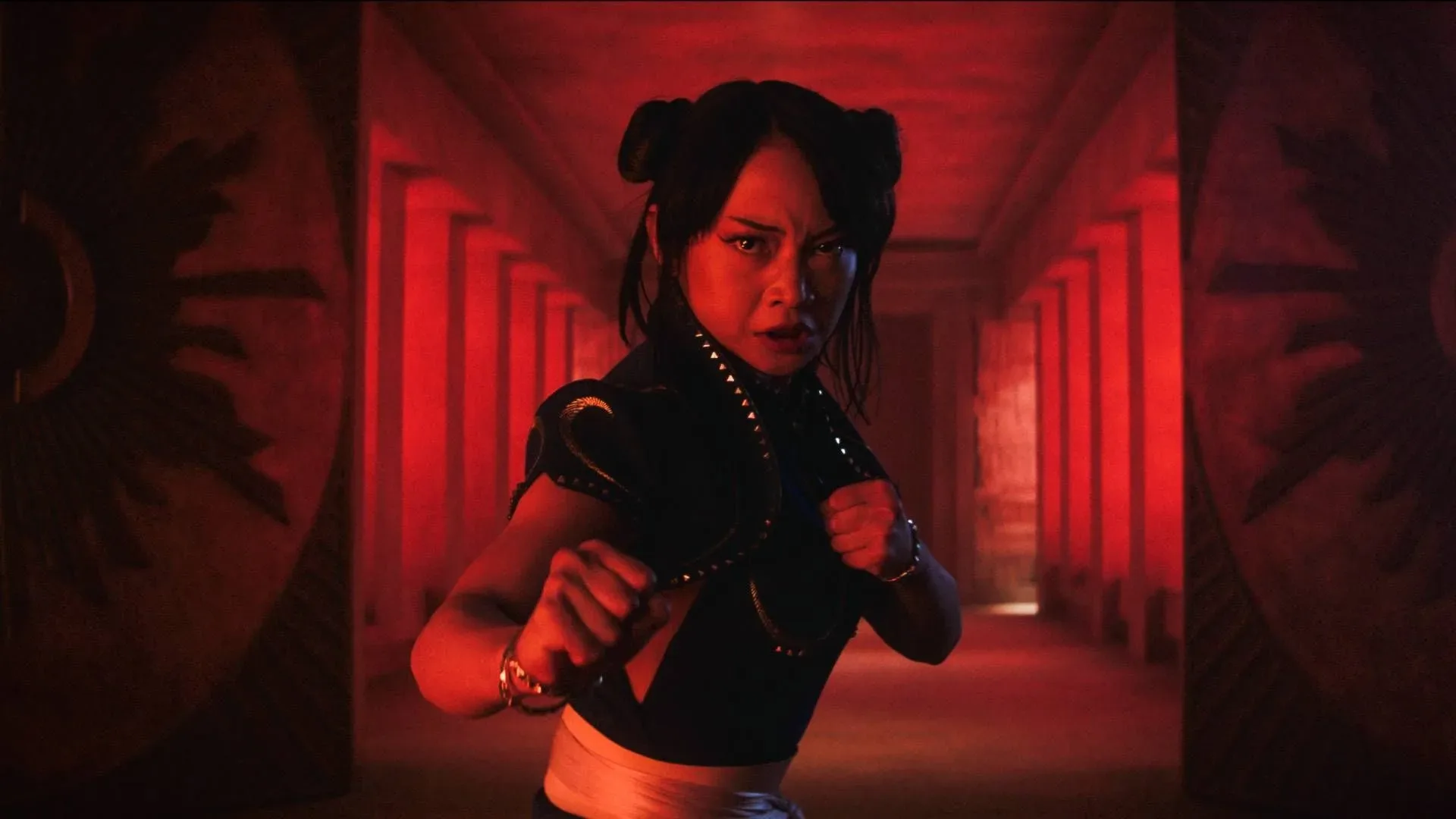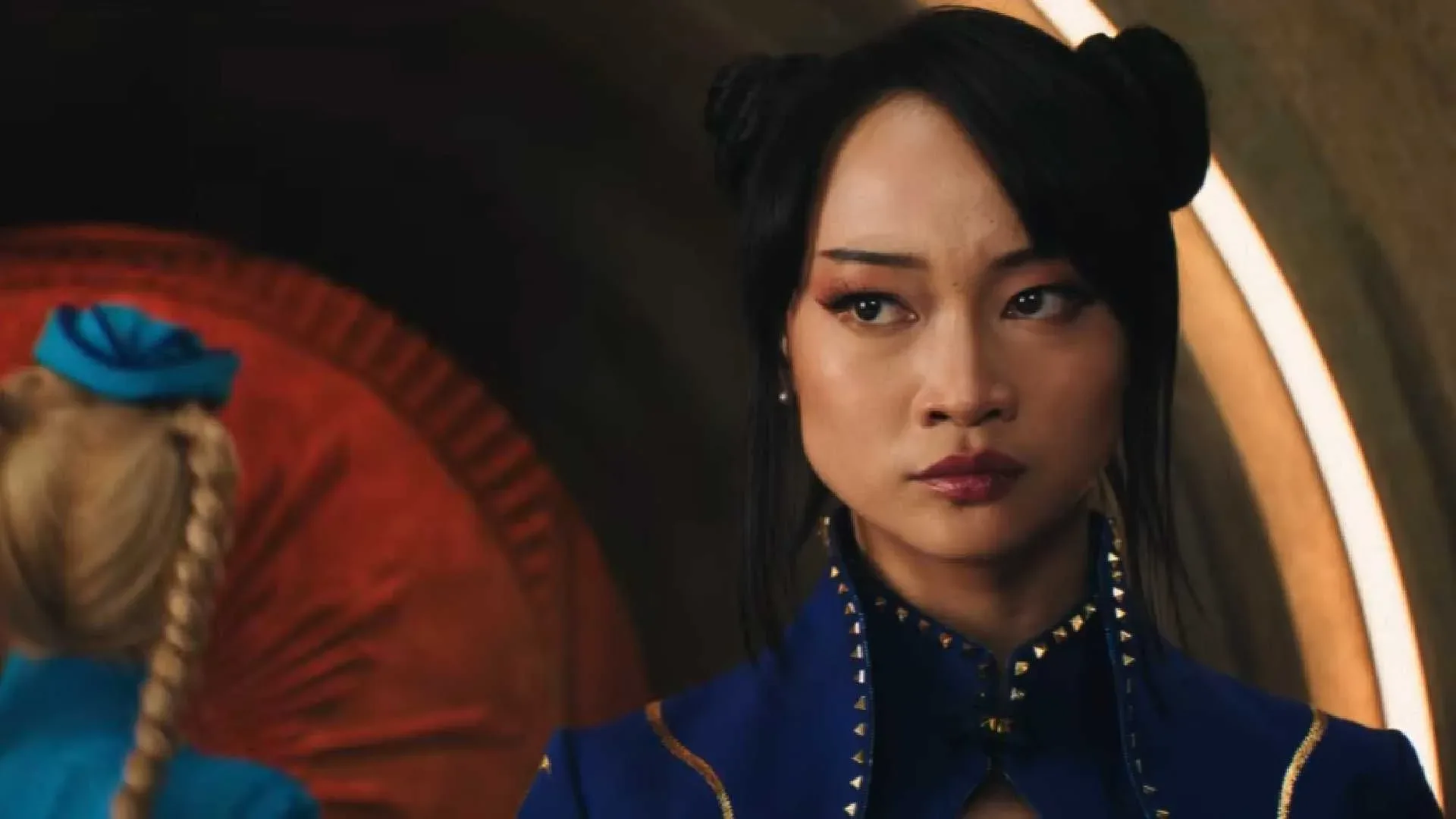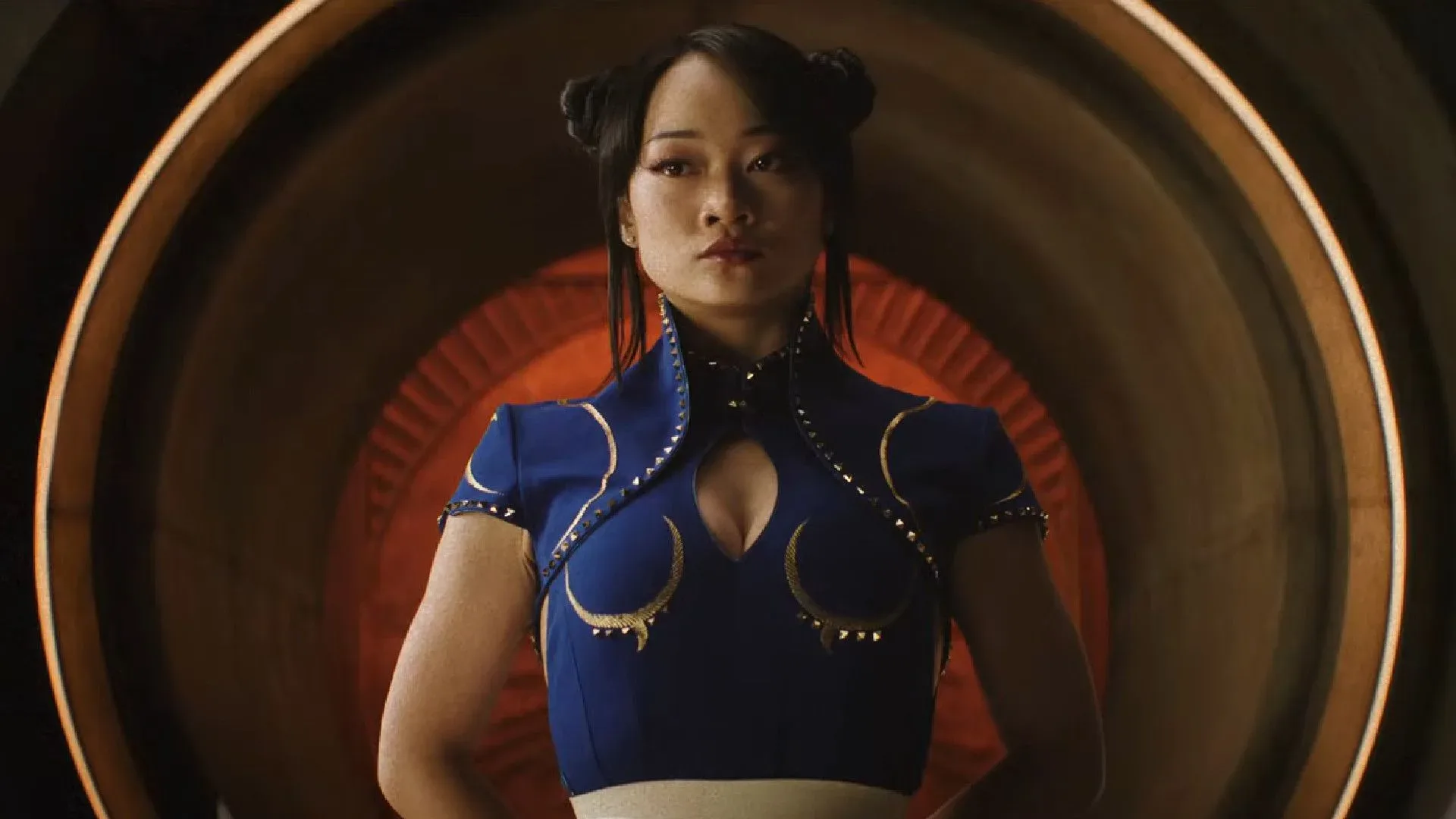
Chun-Li was nearly given a drastically more permanent undercover wound in Street Fighter. Callina Liang, who plays the fighter in the theatrical film, has said an earlier script required Chun-Li to cut off her finger as proof of loyalty while infiltrating Lord M. Bison’s criminal organization. That beat did not survive the process of adapting the script. Instead, Chun-Li is branded on the palm with the mark of Shadaloo.
The distinction may sound cosmetic in a story built around combatants, criminal organizations and an apparent power-draining tournament plot. It is anything but. A brand is a visible, painful consequence that can carry story meaning; a missing finger becomes a permanent alteration to an iconic character’s physical design. For a franchise with ambitions beyond one film, that difference affects continuity, effects work and the recognizability of Chun-Li wherever she appears next.
Why the finger scene changed
Liang explained that Capcom went back and forth on the script and ultimately preferred hand-branding over the amputation concept. Her central point was simple: removing Chun-Li’s pinky would leave the character physically altered for the rest of a potential series. In other words, the issue was not merely whether the moment was gruesome enough. It was whether the film should establish a version of Chun-Li who would need to be depicted without that finger every time she returned.
That is a notably practical decision for a character who has to work on two levels at once. Within the film, Chun-Li needs to convince Bison’s organization that her cover is real. The Shadaloo mark gives her a lasting sign of that ordeal. Outside the story, though, Chun-Li remains a long-running game character with an instantly legible silhouette and a familiar design. A hand injury that cannot be shrugged off in the next scene is not a one-off shock beat; it becomes part of her screen identity.
Character continuity is the useful term here. It means preserving established visual and narrative details from one appearance to the next. If a sequel followed this film, a missing finger would be a continuity obligation rather than a choice. The production would have to show it, explain an unexpected restoration, or risk a conspicuous inconsistency. The Shadaloo brand also creates continuity, but a mark can be shown, obscured, healed or incorporated into later storytelling with considerably more flexibility.
A story consequence without redesigning Chun-Li
The revised scene does not erase the undercover stakes. Chun-Li enters Bison’s organization while pursuing vengeance for her father’s death, and the branding leaves literal evidence of what it cost to maintain that infiltration. The mark on her palm is still an injury and a declaration of allegiance in the eyes of Shadaloo. It simply avoids changing the basic anatomy of a character expected to fight, pose and remain immediately recognizable across any future appearances.
That choice is also more compatible with the film’s apparent ongoing mission for Chun-Li. The supplied details make clear that she continues her objective after the branding. A permanent amputation could have pushed the scene toward a different sort of story: one centered on irreversible bodily damage and the adaptation required afterward. By contrast, the hand-brand communicates peril while keeping the narrative attention on her undercover operation and conflict with Bison.
It is worth separating what is confirmed from what can only be inferred. Liang confirmed that the finger sequence was in an earlier version, that Capcom was involved in script discussions, and that branding became the alternative. The practical consequences for a continuing production are straightforward analysis: a character missing a finger would need consistent depiction. But there is no need to treat that analysis as proof of a locked sequel plan. The reference to a “potential series” is precisely that—potential.
Related coverage includes Street Fighter Film Cut Chun-Li Finger Scene to Protect the Character's Future.
The production burden behind one permanent injury
The replacement also illustrates how franchise filmmaking has to consider more than the immediate intensity of a scene. If Chun-Li lost a finger and returned in another movie, later productions would need to account for it during filming and post-production. Depending on how a scene was staged, that could mean hiding the hand, using a physical solution, or relying on visual-effects work to remove the digit. None of those options is impossible, but all turn a single earlier story decision into an ongoing production consideration.
Visual effects, often shortened to VFX, are the digitally created or altered elements added after or alongside filmed footage. In this case, VFX could theoretically make a performer’s intact hand appear to be missing a finger. The source material does not claim that anyone had budgeted such work or determined its exact cost. Still, the broader creative logic is clear: choosing a palm brand avoids making a recurring digital alteration part of every later close-up, fight scene or promotional image where Chun-Li’s hand matters.
Merchandise is another consideration raised by the change. A character’s familiar appearance must translate to figures, artwork and other licensed products. A version of Chun-Li with a missing pinky would create an unusual design constraint for any items tied specifically to this film continuity. The brand, meanwhile, is an optional detail that can be reproduced when appropriate without redefining the basic character model. That does not make the decision bloodless; it makes the consequence portable across a franchise ecosystem.
For fans, the more interesting takeaway may be that brand stewardship is not necessarily the enemy of dramatic stakes. The brand still gives Chun-Li a physical reminder of her infiltration. What changed was the kind of lasting consequence. The film retains a visual scar and a connection to Shadaloo while avoiding a condition that would follow the character in every possible continuation.
Another removed moment: Chun-Li slaps Ken
Liang also described a second scene that changed before the finished cut. At one point, Chun-Li tries to persuade Ken Masters, played by Noah Centineo, that the tournament is a scheme by Bison to drain Rhu’s powers. In the earlier version, she was supposed to slap Ken. Liang said Centineo encouraged her to hit him for real, and the pair filmed multiple takes with actual slaps because there was no convincing way to fake the action for those takes.
That footage was ultimately left out of the final edit. The omission is separate from the finger-to-brand rewrite, but both examples show how the eventual theatrical version is shaped by decisions at different stages. A script change can restructure a character’s injury and long-term design. Editing can remove a completed performance beat even after it has been filmed. Neither revelation means the cut material was unusable; it means it did not fit the version released to audiences.
The Ken scene also helps define the film’s immediate conflict. Chun-Li is not simply infiltrating Bison’s operation in isolation; she is trying to convince Ken that the tournament itself is a trap. The details provided identify Rhu as the target of Bison’s plan, though no further explanation of Rhu or the proposed power-draining mechanism is established here. That uncertainty matters, because it is easy for cut-scene anecdotes to make a film’s plot sound more fully mapped than the available facts allow.
What the change says about adapting game icons
Video-game adaptation discussions often focus on whether a film reproduces moves, costumes, stages or references. Liang’s comments point to a less flashy question: how much can a screen story change a character before the change becomes a franchise-wide commitment? Chun-Li can be placed in a new film plot, given an undercover assignment and branded by Shadaloo. But severing a finger would have affected every later depiction of her body, including depictions far removed from that single scene.
That makes the hand-brand solution a compromise with a clear storytelling purpose. It is still proof of Chun-Li’s risk, still tied to Bison’s organization, and still visible enough to function as a dramatic reminder. At the same time, it leaves future filmmakers with a version of Chun-Li that retains her core visual identity. The edit is less about avoiding darkness altogether than choosing a consequence that does not permanently rewrite the character’s template.
The episode is also a reminder that official game-rights holders can influence adaptation choices without every decision being about a direct recreation of game material. Here, the disclosed concern was the prospect of “deforming” Chun-Li for future installments. That is a long-view calculation: protect the character’s recognizability while allowing the movie to place her in danger now.
Street Fighter is currently in theaters. For a broader look at the business realities that surround familiar game properties and the people who make them, read our coverage of rights, revival hopes and the hard reality behind a major game franchise.